Basic Dining Etiquette Everyone Should Know

Table Ediquette

The Reluctant Gourmet Newsletter Is Back!

Yes, I'm starting up a new newsletter with step-by-step recipes, helpful cooking tips, and my latest funny cooking cartoons. Would love to have you on board.

Dining Etiquette Without the Intimidation

Fast Answer: What Is Dining Etiquette?

  • Dining etiquette is simply knowing how to behave comfortably and respectfully at the table.
  • Use utensils from the outside in.
  • Keep your napkin in your lap.
  • Wait until everyone is served before eating.
  • Chew quietly and avoid talking with food in your mouth.
  • Most etiquette rules are really about making other people comfortable.

Start Here If Formal Dining Makes You Nervous

  • You do not need to memorize every fork.
  • Most people at the table are worried about themselves, not judging you.
  • If unsure, follow the host’s lead.
  • Use utensils from the outside inward as courses arrive.
  • Good manners matter more than perfect technique.

What Most People Worry About at Formal Dinners

  • Which fork to use first
  • What to do with the napkin
  • How to eat bread correctly
  • What utensils mean when resting on the plate
  • Whether to start eating before everyone is served
  • How to avoid looking inexperienced
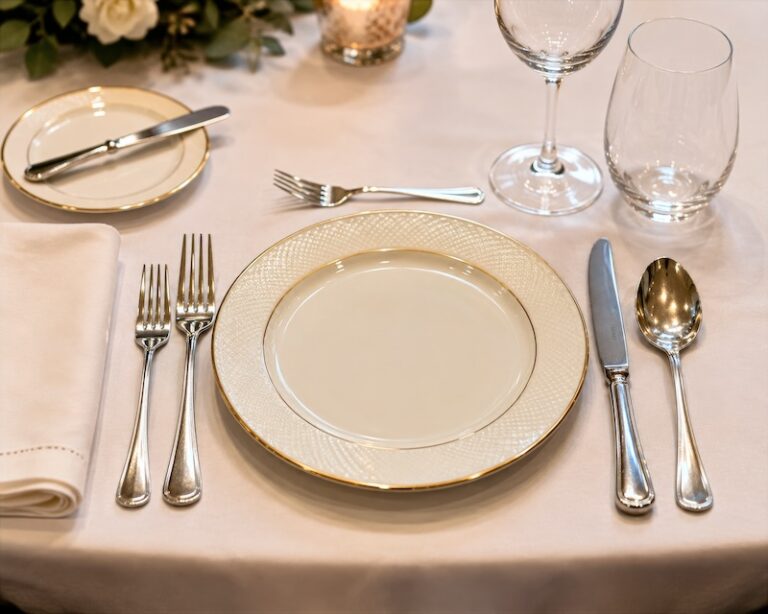
A formal dinner setup with proper untensils

Quick Rule for Using Utensils

  • Start with the utensils farthest from the plate.
  • Work inward with each course.
  • Salad fork is usually outermost on the left.
  • Soup spoon is usually outermost on the right.
  • Dessert utensils are often above the plate.

How Utensil Placement Signals the Server

In formal dining, your fork and knife quietly communicate whether you are still eating or finished with the meal. Think of them as a simple table-side language that helps the service flow smoothly without interrupting the conversation.

Still Eating

Fork and knife crossed or angled inward

  • Signals you are taking a pause
  • Server should not remove the plate
  • Common during conversation breaks

Finished Eating

Fork and knife placed parallel

  • Usually positioned around the 4 o’clock angle
  • Handles rest near the lower-right edge of the plate
  • Signals the server you are done

Continental Style

Fork remains in the left hand

  • Knife stays in the right hand while eating
  • Utensils often rest neatly together during pauses
  • Common in Europe and formal dining settings

American Style

Fork switches hands after cutting

  • Knife is set down after cutting food
  • Fork moves to the right hand for eating
  • More common in casual American dining

Salt & Pepper Etiquette

  • Salt and pepper shakers are traditionally passed together, even if someone asks for only one.
  • Think of them as a dining-table team.
  • Passing both avoids awkward moments and keeps the table flow smooth.
  • If someone asks for the salt, hand over both the salt and pepper together.

How to Remember Your Bread Plate and Water Glass

Worried about grabbing your neighbor’s water glass by mistake? Here’s the easiest dining etiquette trick to remember at formal dinners.

Left Hand = Bread

Make an “OK” sign with your left hand.

  • Your fingers form a lowercase “b”
  • B stands for bread
  • Your bread plate sits on the left

Right Hand = Drink

Make an “OK” sign with your right hand.

  • Your fingers form a lowercase “d”
  • D stands for drink
  • Your water glass sits on the right

Talking and Chewing Etiquette

  • Take smaller bites so conversation flows naturally.
  • Finish chewing before speaking.
  • Avoid talking with food in your mouth.
  • Dining etiquette is really about making others comfortable at the table.

Common Dining Etiquette Mistakes

  • Resting elbows on the table while eating
  • Spreading utensils or glasses into another guest’s space
  • Talking while chewing
  • Using the wrong utensil and panicking about it
  • Forgetting that relaxed confidence matters more than perfection
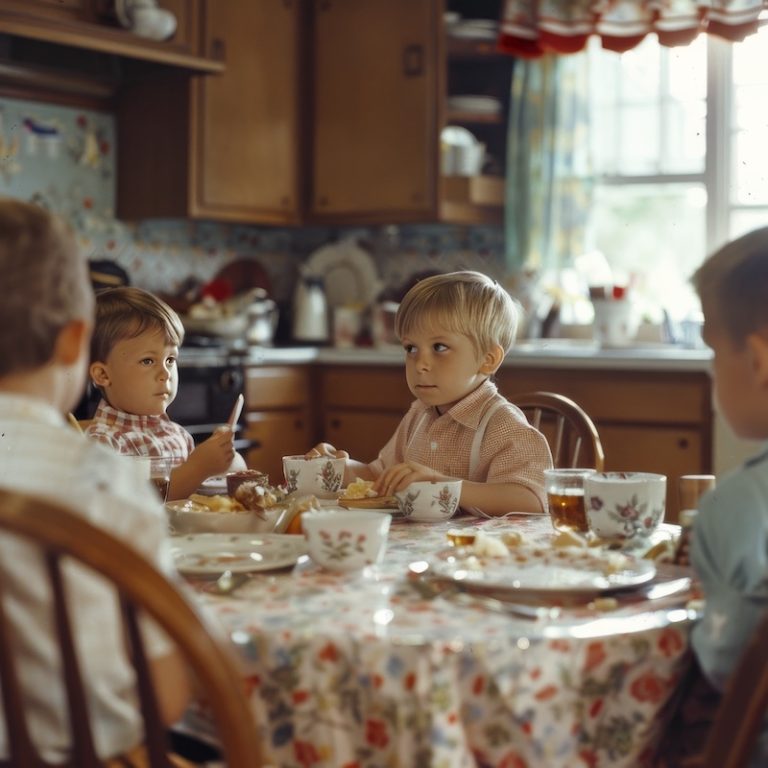
Family dinners are one of the easiest places to teach dining etiquette naturally. Children learn confidence, conversation skills, patience, and consideration simply by eating together regularly.

One Response

Leave a Reply

Your email address will not be published. Required fields are marked *

This site uses Akismet to reduce spam. Learn how your comment data is processed.