Bring Good Luck To The New Year With Black Eyed Peas
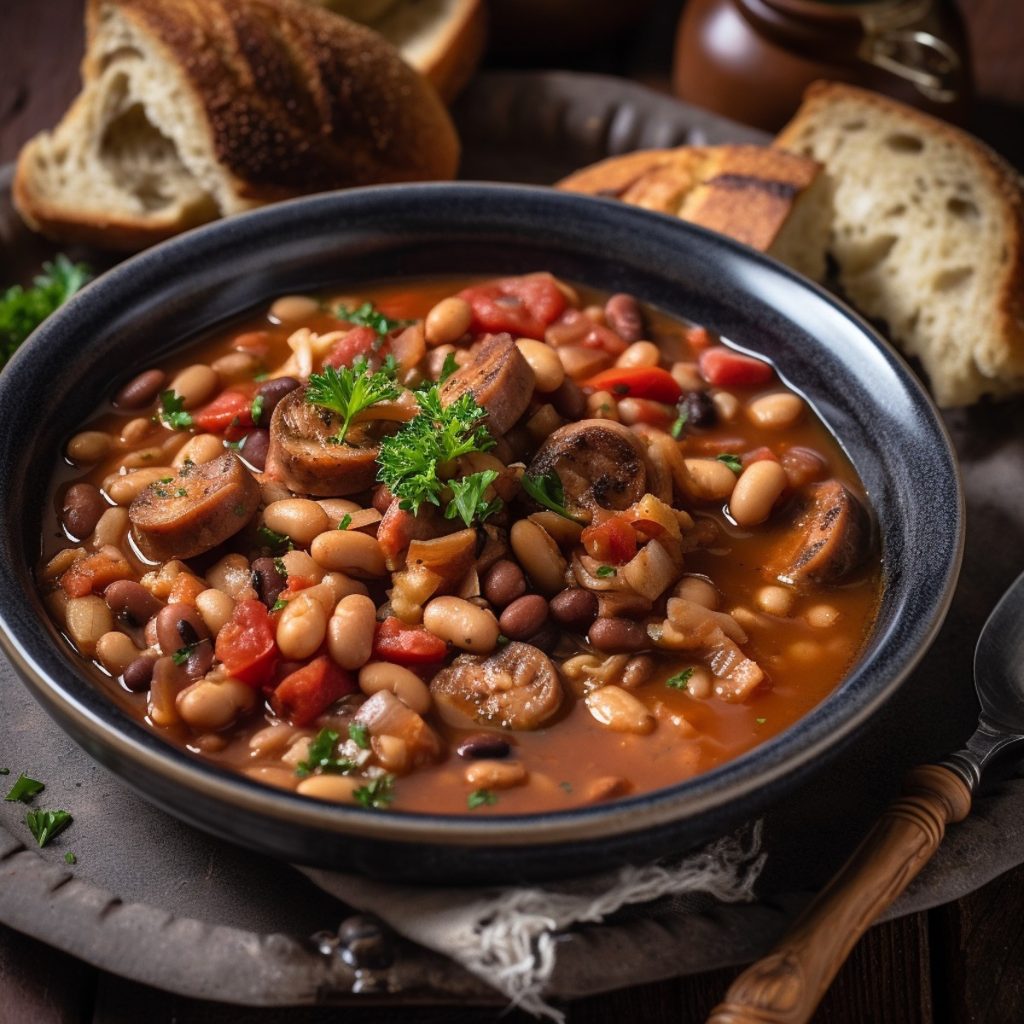
This black-eyed pea and Italian sausage stew is hearty, flavorful, and perfect for any day you crave comfort food. It starts with simple ingredients you probably already have in your kitchen. Fresh vegetables, bold Italian sausage, and tender black-eyed peas come together in a rich, savory broth. The process is straightforward, and the results are deeply satisfying.
You begin by prepping your ingredients. Chop the onion, bell pepper, and fennel. Mince the garlic. Rinse the black-eyed peas and check for any small stones. Prepping ahead makes cooking easier and more enjoyable.
Next, heat a large pot with a splash of canola oil. Brown the sausage until it is golden and cooked through. Remove it and let it rest. In the same pot, sauté the vegetables until they soften and develop flavor. Add the tomatoes and cook them down.
Combine the black-eyed peas with chicken stock and water. Let the stew simmer slowly until the peas are tender. Slice the sausage and return it to the pot, including all the flavorful juices. Finish with fresh cilantro for a bright, herbal touch.
This stew is rich, nourishing, and packed with layers of flavor. It warms the soul and fills the kitchen with irresistible aromas.
Black-Eyed Pea Stew With Sausage Recipe
Ingredients
- 3 tablespoons canola oil
- 2½ pounds hot and/or sweet Italian sausage
- 1 yellow onion diced
- 1 red bell pepper seeded, sliced and diced
- ½ fennel bulb diced
- 3 cloves garlic minced fine
- 14 ounce can chopped tomatoes drained
- 2 cups dried black-eyed peas
- 4 cups chicken stock homemade is great but commercial is good too
- 3 cups water t
- salt and pepper to taste
- 1 bunch cilantro
Instructions
- You can start by preparing your ingredients (mise en place). This is how the pros do it, making the entire job much more manageable. This means chopping and dicing your vegetables, rinsing the black-eyed peas, and ensuring no little stones are in them.
- Heat up a large soup pot or one of those nice cast iron casserole pots if you have one on medium high heat.
- Add the oil and wait until it gets hot enough to shimmer but not smoke.
- Add the sausages and cook until they are brown on the outside and cooked through on the inside. This should take about 10 to 12 minutes. Remove the sausages from the pot and transfer to a large plate or bowl.
- Brown the onion, bell pepper, fennel, and garlic in the same pot. The sausage should have enough oil and fat to cook them nicely. Be sure to move the vegetables around so they don't burn. Depending on your stove top and pot, this should take 5 to 8 minutes.
- Add the chopped tomatoes and let them cook down for about 5 minutes.
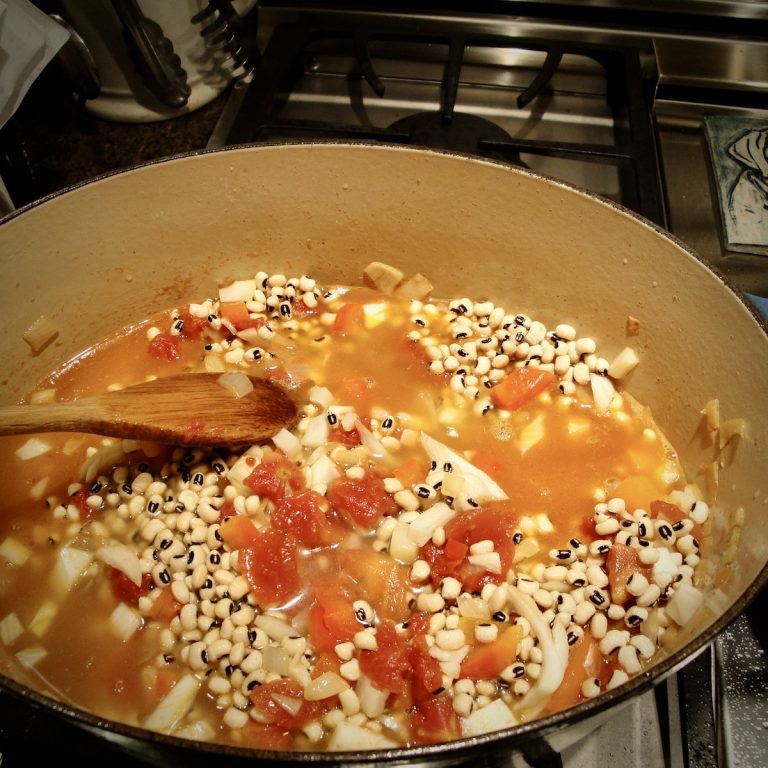
- Add the washed black-eyed peas, chicken stock, and water. Bring this to a boil, cover partially, reduce heat, and simmer until the black-eyed peas become tender. This can take 1¼ hours to 1½ hours.
- Slice the reserved sausage on the diagonal into ½ inch slices and add them to the pot. Be sure to add the accumulated juices from the sausages on the plate. It adds lots of additional flavor.
- Taste the stew and add the salt and pepper to taste.
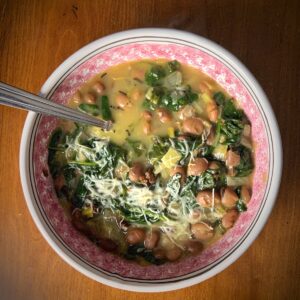
- Chop and add about ¼ cup of fresh cilantro to the pot and simmer for an additional 10 to 15 minutes. Stew is ready.
Notes
Helpful Cooking Tips
1. Prep everything first (mise en place).
Chop the onion, bell pepper, fennel, and garlic before you start cooking. Rinse and check black-eyed peas for stones. Prepping ahead saves stress and keeps cooking smooth.
2. Use the right pot.
A large soup pot or cast-iron casserole works best. These retain heat evenly and prevent burning when browning sausages and vegetables.
3. Don’t overcrowd the pan.
When browning sausage, give each piece space. Overcrowding traps steam and prevents a good sear.
4. Cook vegetables in sausage fat.
After browning the sausage, sauté onions, peppers, and fennel in the rendered fat. It adds flavor without extra oil.
5. Simmer gently.
Bring the black-eyed peas and stock to a boil, then reduce the heat to a gentle simmer. Slow cooking makes the peas tender without overcooking them.
6. Add sausage juices back in.
The juices left on the plate are full of flavor. Don’t waste them—add them when returning sausage to the pot.
7. Taste and season gradually.
Add salt and pepper at the end. Ingredients like sausage and stock already contain salt, so seasoning in layers helps avoid over-salting.
8. Finish with fresh herbs.
Cilantro added at the end brightens the stew. Herbs lose flavor if cooked too long.
9. Plan for resting time.
The stew tastes even better if allowed to sit for a few minutes before serving. Flavors meld beautifully.
Black-Eyed Peas
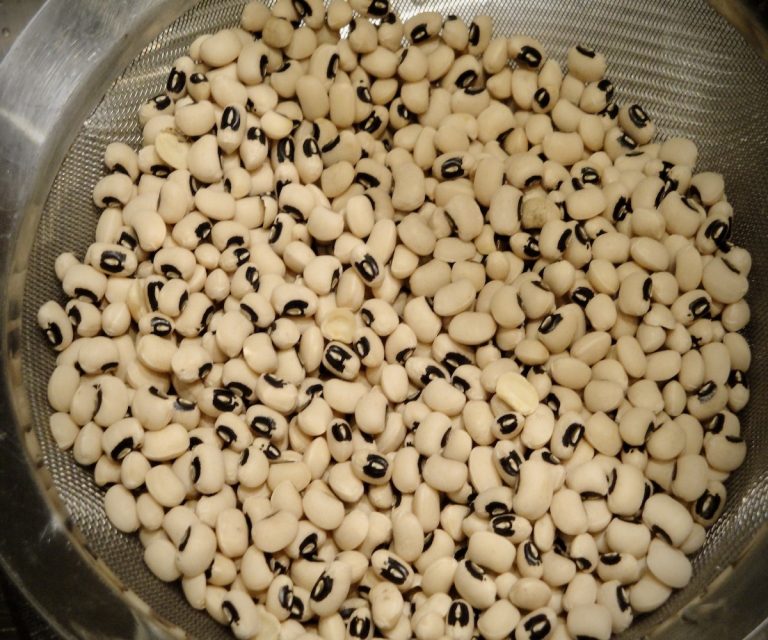
Of course, I’ve heard of black-eyed peas, and I’m sure I’ve eaten them when traveling down south, but I can’t remember ever cooking with them. They have their signature black spot on a pale, cream-colored outer layer.
Originally from India, they came to the United States via the West Indies in the 1600s.
I like cooking with black-eyed peas because you don’t have to soak them overnight like many other beans I often cook with. This makes it easy to make a soup or a stew like this at a moment’s notice and not have to resort to canned beans.
Another dish prepared in the South on New Year’s Day is Hoppin’ John, a version of a classic dish of rice and beans served in the Caribbean. It includes black-eyed peas, rice, onion, and bacon or fatback. Like the lentil, the black-eyed peas are supposed to symbolize coins. Again, according to Wikipedia,
On the day after New Year’s Day, leftover “Hoppin’ John” is called “Skippin’ Jenny,” and further demonstrates one’s frugality, bringing hope for an even better chance of prosperity in the New Year.
New Year’s Day Good Luck
The tradition of eating black-eyed peas on New Year’s Day is a long-standing Southern custom in the United States, often tied to hopes for good luck and prosperity in the year ahead. Its roots blend history, symbolism, and folklore.
During the Civil War, black-eyed peas were considered “lucky” because they were one of the few foods left untouched by invading armies, providing a reliable source of nourishment. Over time, they became associated with good fortune and survival. Eating them on January 1st symbolizes starting the year with abundance.
In Southern cuisine, black-eyed peas are often prepared in a dish called Hoppin’ John, typically cooked with pork, onions, and seasonings. Pork is seen as a symbol of progress and prosperity because pigs root forward while foraging, suggesting forward movement in life. Sometimes, greens—like collard or mustard—are served alongside, representing wealth, while cornbread symbolizes gold.
The combination of these foods makes New Year’s Day meals a symbolic blessing: peas for luck, greens for wealth, pork for progress, and cornbread for gold. Families pass down the tradition through generations, often sharing stories and recipes, thereby reinforcing both their cultural heritage and the hope for a prosperous year.
In short, eating black-eyed peas isn’t just about the food—it’s a ritual of optimism, prosperity, and continuity in Southern culture.


2 Responses
I just invested in some kitchen equipment and yours if the first recipe that I tried with my new setup! I loved the stew. I made it with chicken and turkey sausage instead of pork and it was great! This was a great recipe to ring in the new year.
Thanks Seth for sharing. – RG
Hi, do you have a cooking starter kit for dishes,including food and instruction dvd???