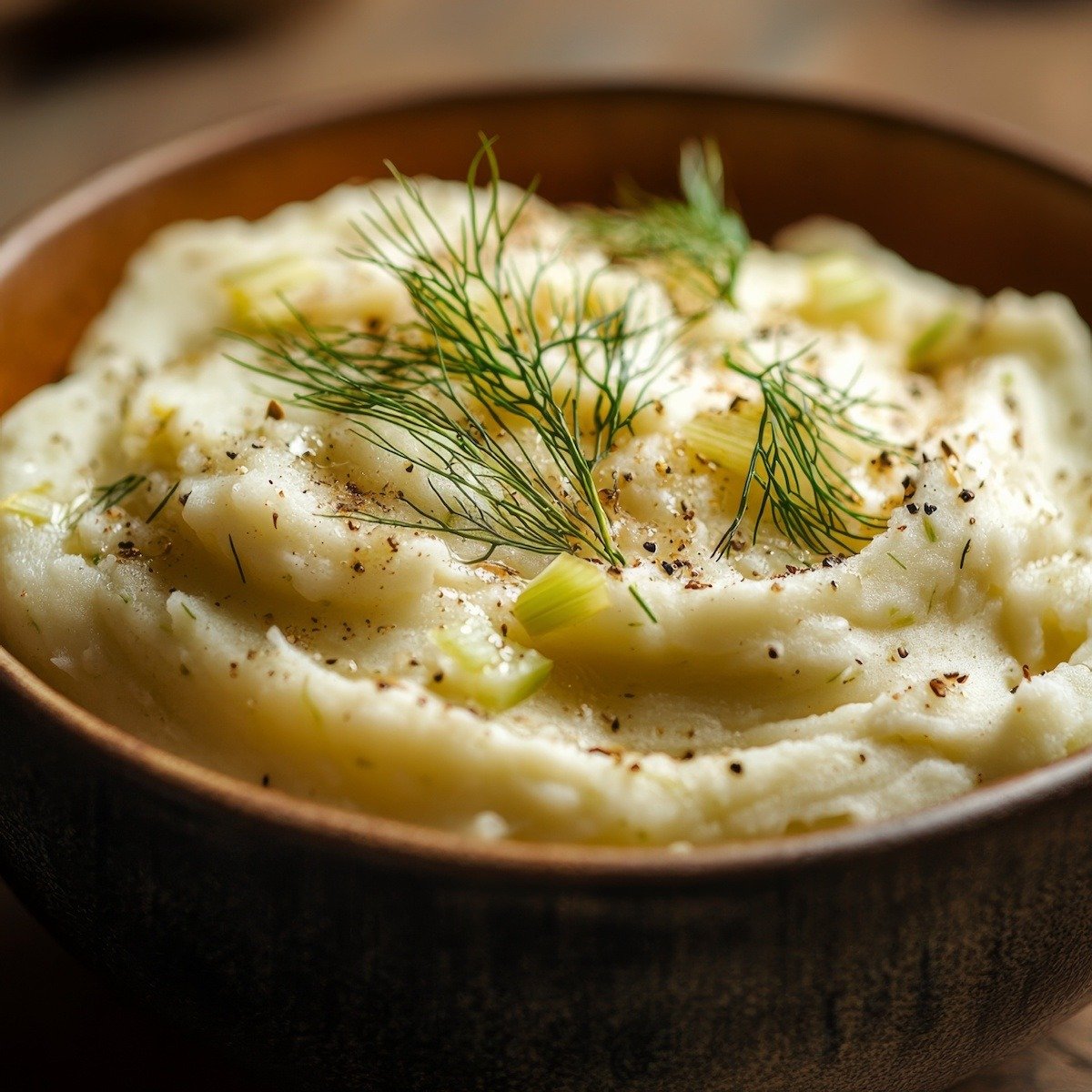
How to Make Creamy Fennel Mashed Potatoes
Creamy fennel mashed potatoes are a delightful twist on a classic side dish, bringing a subtle yet aromatic sweetness to the table. The anise-like flavor of fennel blends perfectly with the richness of creamy potatoes, creating a harmonious balance that elevates any meal.
Whether you’re preparing a holiday feast, a casual family dinner, or looking to try something new, this recipe will add a fresh dimension to your usual mashed potatoes. Often overlooked in everyday cooking, Fennel is a versatile vegetable with a delicate flavor that mellows beautifully when cooked.
In this recipe, I’ll sauté it until tender, then combine it with creamy mashed potatoes to create a smooth, comforting dish that’s sure to please. The added complexity of the fennel makes it a perfect pairing for roasted meats, fish, or even as a vegetarian main dish alongside sautéed greens.
This dish is simple to prepare and can be made beforehand, making it an excellent option for busy weeknights or special occasions. With just a handful of ingredients, you can transform plain mashed potatoes into a sophisticated and flavorful side that everyone will love.
Creamy Fennel Mashed Potatoes
Ingredients
- 3 russet potatoes scrubbed and peeled
- 1 teaspoon salt
- 3 tablespoons butter
- 1 fennel bulb cored, rough chop
- ¾ cup heavy cream
- salt and freshly cracked pepper
Instructions
- Cut the potatoes into uniform pieces and cover with cold water.
- Add salt and bring to a boil, reduce to a simmer and cook until potatoes are fork tender.
- While the potatoes cook, melt the butter on MEDIUM heat in a skillet til shimmery, let bubble a minute.
- Add the fennel, season with salt and pepper, stir well to coat with fat and disperse the salt.
- Cook softly for 15-20 minutes, til soft but not brown.
- Add the heavy cream and continue cooking until the cream is just beginning to bubble.
- Remove the mixture and allow to cool a bit. Carefully transfer the fennel and cream, to a food processor or blender. Process until mixture is smooth.
- When the potatoes are done cooking, drain and return to the pot and place over low heat for 2-3 minutes to remove any excess moisture.
- Mash them with a masher or a hand mixer (NOT a food processor which creates gum).
- Carefully stir in the fennel-cream mixture until well combined.
- Season to taste and serve.
Helpful Cooking Tips
Cut evenly: Make sure the potato pieces are the same size so they cook at the same rate. Uneven chunks can leave you with some underdone pieces.
Start with cold water: Cover potatoes with cold water before boiling. This helps them cook more evenly from the inside out.
Season the water well: The teaspoon of salt in the water is important—potatoes absorb salt better during cooking than after.
Cook gently: Keep the potatoes at a simmer, not a rolling boil, to prevent them from breaking apart and getting waterlogged.
Don’t rush the fennel: Let the fennel cook slowly until soft but not browned. This coaxes out its natural sweetness without turning bitter.
Warm cream blends better: Adding the fennel–cream mixture warm (not cold from the blender) helps it incorporate smoothly into the potatoes.
Dry the potatoes: Returning drained potatoes to the pot over low heat removes extra moisture, preventing watery mash.
Avoid gumminess: Use a masher or hand mixer, never a food processor, to mash potatoes. Overprocessing breaks down starch and creates gluey potatoes.
Season in layers: Taste after adding the fennel-cream mix and again before serving. Potatoes need a good amount of salt and pepper to shine.
Serve warm: This mash thickens as it cools, so serve right away for the creamiest texture.
Fennel
Fennel is a versatile and aromatic plant known for its delicate, sweet, and slightly anise-like flavor. The bulb and fronds are used in cooking, offering a unique taste that enhances various dishes.
The bulb, which is crunchy when raw, softens and becomes mildly sweet when cooked, making it a popular ingredient in Mediterranean and Italian cuisines. Fennel seeds, often used as a spice, bring a more concentrated licorice flavor to dishes.
Fennel is flavorful and nutritious, rich in vitamins A and C, fiber, and antioxidants. It supports digestion, helps reduce inflammation, and is low in calories, making it a great addition to a healthy diet. Whether shaved raw in salads, roasted with vegetables, or sautéed as part of a warm dish, fennel adds depth and complexity to your meals without overpowering other ingredients.
Entrees This Side Dish Pairs Well With
| Dish | Description | Why It Works |
|---|---|---|
| Roast Chicken | Golden, crispy-skinned chicken roasted with herbs and garlic. | The creamy fennel–potato mash balances the savory richness and soaks up the pan juices. |
| Grilled Salmon | Salmon fillets grilled until tender with a slight smoky flavor. | The light anise notes of fennel complement the natural sweetness of salmon. |
| Braised Short Ribs | Beef short ribs slow-cooked in red wine and aromatics until fork-tender. | The mash provides a silky, flavorful base to absorb the rich sauce. |
| Pork Tenderloin | Lean pork roasted or pan-seared with a spice rub or herb crust. | The creamy mash adds moisture and a subtle sweetness to balance the meat’s mild flavor. |
| Seared Scallops | Scallops quickly seared until caramelized on the outside, tender inside. | The delicate mash highlights the scallops’ sweetness without overpowering them. |
| Grilled Lamb Chops | Herb-crusted lamb chops cooked until juicy and flavorful. | The fennel in the mash pairs beautifully with lamb’s robust, earthy flavor. |
| Vegetable Ratatouille | A Provençal stew of eggplant, zucchini, peppers, and tomatoes. | The mash offers a creamy, grounding contrast to the bright, tangy vegetables. |
5 Fun Facts About Fennel
- Ancient origins: Fennel has been used for thousands of years, dating back to ancient Egypt and Rome, where it was believed to have medicinal properties and was even used to ward off evil spirits.
- A natural digestive aid: Fennel seeds are commonly used to aid digestion and reduce bloating. In India, they’re often chewed after meals to freshen breath and soothe the stomach.
- Dual-purpose plant: Fennel’s bulb and seeds are used in cooking, making it a highly versatile ingredient. The fronds, resembling dill, are also edible and can be used as a garnish or flavor enhancer.
- Wild and cultivated varieties: Fennel grows in the wild in many Mediterranean regions, where it thrives along coastlines, but it is also widely cultivated for culinary use worldwide.
- Symbol of strength: In Greek mythology, fennel was associated with Dionysus, the god of food and wine, and was believed to symbolize strength and courage.