
Most olive oil on grocery store shelves is already past its prime before you even open the bottle. That’s because olive oil is a fruit juice—and like any fresh juice, it fades fast. So what exactly is “fresh-pressed” olive oil, and does it really matter? I asked olive oil expert T.J. Robinson to find out.
What You Need To Know About Fresh Pressed Olive Oil
Why Fresh Olive Oil Matters
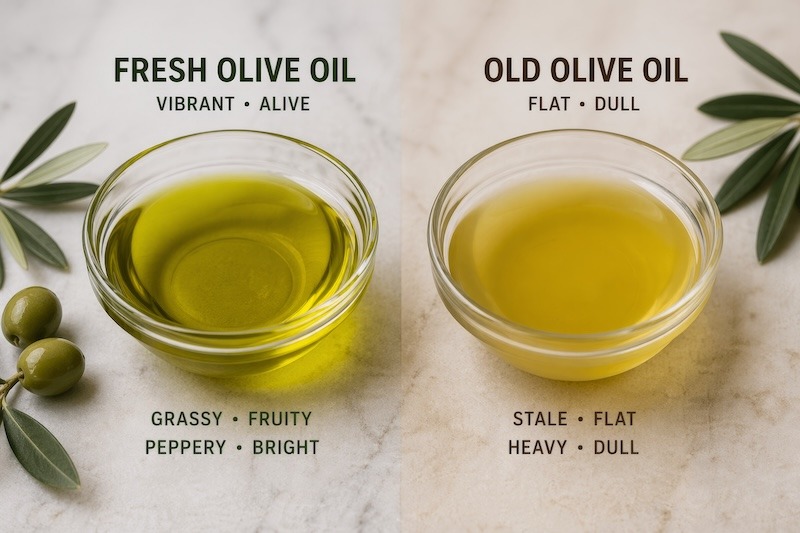
- Flavor drops fast: Olive oil doesn’t age—it fades. Many bottles lose their best flavor within months.
- You’re missing the good part: Fresh oil tastes grassy, vibrant, and peppery. Older oil tastes flat.
- More than just fat: Fresh olive oil adds real flavor, not just richness.
- Most oils aren’t fresh: By the time they hit store shelves, many are already past their peak.
What Most Cooks Get Wrong About Olive Oil
- “Fresh-pressed” means higher quality
It’s not regulated—any producer can use the term. - Olive oil lasts forever
It’s a fresh fruit juice. Light, heat, and time slowly dull its flavor. - Expensive equals better
Price doesn’t guarantee freshness or proper handling. - All extra virgin olive oil tastes the same
Flavor varies wildly depending on harvest, region, and age. - If it tastes mild, it’s high quality
Fresh olive oil should have some bitterness and a peppery finish.
This is why the idea of “fresh-pressed” olive oil sounds so appealing. It suggests you’re getting something closer to the source—something more vibrant and alive. But here’s the catch: as I learned from T. J. Robinson, the reality is a little more complicated.
Expert Insight (T.J. Robinson):
“Any olive oil can be called fresh-pressed—the real marker of quality is whether it meets extra virgin standards.
It is my pleasure to introduce you to T. J. Robinson, aka “The Olive Oil Hunter”.
Most olive oil on grocery store shelves is already losing flavor before you even open the bottle. That’s because olive oil is a fruit juice—and like any fresh juice, it fades over time.
So what exactly is “fresh-pressed” olive oil, and does it really make a difference? I spoke with T. J. Robinson to find out what matters—and what doesn’t—when choosing a great olive oil.
What Is Fresh-Pressed Olive Oil?
“Fresh-pressed” olive oil sounds like a meaningful standard—but it’s not an official classification. Unlike “extra virgin,” which has strict chemical and sensory requirements, “fresh-pressed” is a marketing term that can be used by almost anyone.
In simple terms, it usually refers to olive oil made from newly harvested olives and processed quickly after picking. That speed does help preserve flavor—but the label itself doesn’t guarantee quality.
“Any olive oil can technically be called fresh-pressed—the real measure of quality is whether it meets extra virgin standards.”
Does Freshness Really Matter?
Olive oil isn’t a shelf-stable pantry item in the way most people think. It’s closer to fresh fruit juice—pressed from olives and at its best shortly after harvest. Over time, exposure to light, heat, and air slowly dulls its flavor and aroma.
That’s why freshness matters. A recently produced olive oil tastes brighter, more complex, and more alive. Older oil can still be usable, but it often loses the very qualities that make olive oil special in the first place.
T. J. Robinson explains it simply:
Expert Insight: “Olive oil doesn’t improve with age—it fades. The closer you are to the harvest, the more vibrant the flavor.”
What Fresh Olive Oil Brings to Your Cooking
- Brighter flavor: Fresh oil tastes grassy, fruity, and lively.
- Peppery finish: A slight throat “kick” is a sign of freshness and antioxidants.
- Better dishes: Fresh oil enhances everything from salads to roasted vegetables.
- More aroma: You’ll actually smell the difference before you taste it.
Have you ever tasted a truly fresh olive oil? Did it surprise you? Tell me what you noticed—I’d love to hear how it changed your cooking.
🫒 Extra Virgin vs Fresh-Pressed: What’s the Difference?
Extra virgin olive oil and “fresh-pressed” olive oil are often used as if they mean the same thing—but they describe two completely different things.
Extra virgin is a regulated quality standard. To earn that label, an olive oil must meet strict chemical and sensory criteria, including low acidity and no detectable defects in flavor or aroma.
“Fresh-pressed,” on the other hand, is not regulated. It simply suggests that the oil was made from recently harvested olives and processed quickly—but there’s no official definition or enforcement behind the term.
T. J. Robinson puts it into perspective:
Expert Insight: “Fresh-pressed tells you when the oil was made—extra virgin tells you how well it was made.”
Fresh vs Quality — The Simple Breakdown
- Extra virgin: Guarantees quality, proper handling, and no defects.
- Fresh-pressed: Suggests recency, but doesn’t guarantee quality.
- Best choice: Look for oils that are both extra virgin and recently harvested.
- Watch out: A “fresh-pressed” label alone doesn’t mean the oil is high quality.
Think Like a Cook
If you had to choose, quality matters more than freshness alone. A poorly made oil that’s fresh is still flawed. But a well-made extra virgin oil that’s reasonably fresh will almost always deliver better flavor. The sweet spot is finding an oil that delivers both.
🫒 How to Choose a Great Olive Oil
Choosing a good olive oil isn’t about finding the most expensive bottle or the prettiest label. It’s about knowing what signals freshness, quality, and proper handling.
Once you understand a few key markers, picking a great olive oil becomes much easier—and far more consistent.
- Look for “extra virgin”
This is the only grade with strict quality standards. Skip anything labeled “pure” or “light.” - Check for a harvest date
Freshness matters. Look for oils from the most recent harvest, ideally within the past year. - Choose dark bottles or tins
Light degrades olive oil. Dark glass or metal containers help protect flavor. - Look for origin transparency
Single-origin oils (one country or region) are often more traceable than blended oils. - Buy from sources that move inventory quickly
Specialty shops and importers often carry fresher oil than large supermarkets.
What Labels Don’t Tell You
Olive oil labels can sound impressive—but many terms aren’t regulated or meaningful.
Words like:
- “fresh-pressed”
- “first cold pressed”
- “premium”
…can be used freely without guaranteeing quality.
That’s why understanding what to look for matters more than trusting what the label suggests.
What Actually Matters
- Quality standard: Extra virgin
- Freshness: Recent harvest date
- Storage: Protected from light and heat
- Source: Transparent and traceable
🧠 Think Like a Cook
Don’t shop for olive oil based on price or buzzwords—shop for flavor and freshness. The best olive oil is the one that tastes alive when you use it, not one that just sounds impressive on the label.
🫒 How to Taste Olive Oil Like a Pro
You don’t need to be a chef or a sommelier to evaluate olive oil. With a simple tasting method, you can quickly tell the difference between fresh, high-quality oil and something that’s past its prime.
Professional tasters use a structured approach—but you can do a simplified version right in your own kitchen.
- Pour a small amount
Add 1–2 tablespoons of olive oil to a small glass or cup. - Warm it gently
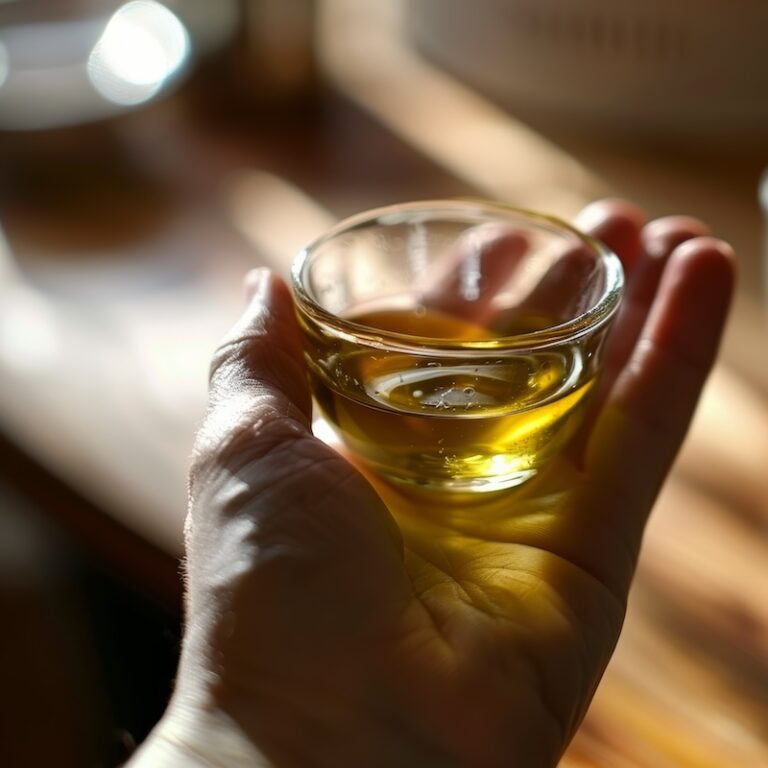
Cup the glass in your hand for 20–30 seconds to release aromas. - Smell first
Look for fresh, green notes—grass, herbs, tomato leaf, or fruit. - Take a sip
Let it coat your tongue, then lightly slurp to aerate. - Notice the finish
A slight bitterness and peppery “kick” in your throat is a good sign.
Signs of Fresh, High-Quality Olive Oil
- Fruity aroma: Smells like olives, grass, or fresh herbs
- Balanced bitterness: A pleasant, slightly bitter taste
- Peppery finish: A gentle throat tickle or kick
- Clean flavor: No waxy, stale, or musty notes
What to Avoid
If an olive oil tastes dull, greasy, or has no aroma, it’s likely past its prime—or never very good to begin with.
T. J. Robinson often emphasizes that freshness shows up immediately in both aroma and finish.
Expert Insight: “If you don’t smell much and don’t feel anything at the back of your throat, the oil has probably lost its character.”
🫒 How to Store Olive Oil (So It Stays Fresh)
Once you’ve found a great olive oil, proper storage is what keeps it tasting that way. Olive oil doesn’t spoil overnight—but it does slowly lose its flavor and aroma when exposed to light, heat, and air.
The goal is simple: protect the oil from its three biggest enemies.
- Keep it in a cool place
Store olive oil in a cupboard away from the stove or direct sunlight. - Avoid heat exposure
Heat speeds up oxidation and dulls flavor over time. - Protect it from light
Dark bottles or tins help preserve freshness longer than clear glass. - Seal it tightly
Air is the enemy. Always close the bottle after each use. - Use it within a few months
Once opened, olive oil is best used while it’s still vibrant and fresh.
What Shortens Olive Oil’s Life
Even a great olive oil can fade quickly if stored poorly.
- Light: Breaks down flavor compounds
- Heat: Accelerates oxidation
- Air: Gradually dulls aroma and taste
- Time: Even well-stored oil won’t last forever
🧠 Think Like a Cook: Treat olive oil like fresh juice, not a pantry staple. The better the oil, the more you’ll notice when it starts to fade—so use it, enjoy it, and don’t save it “for later.”
🧩 Bringing It All Together
Fresh-pressed olive oil may sound like the key to better cooking—but as you’ve seen, it’s only part of the story.
- Freshness matters
- Quality matters more
- And how you choose, taste, and store your oil makes all the difference
With a few simple habits, you can turn olive oil from a background ingredient into something that truly elevates your cooking.
Have you ever tasted an olive oil that really stood out—peppery, grassy, or surprisingly bold? Or have you been using the same bottle for months without thinking about it? I’d love to hear what you’ve experienced and what changed once you started paying attention to freshness.
14 Responses
I am very impressed by all this Olive oil work from TJ Robinson. When will the oil available in Canada?
Hi where could i get some of this fresh olive oil
In the Eastern Mediterranean–Lebanon, Syria, Turkey, Jordan and Israel, the harvest season is usually September through late November. If as I have understood olive oil loses its freshness and viability two months after pressing, how can one guarantee the benefits of oils packaged after January?
We produce about 800 liters of olive oil annually from our own family farm near Amman. How can be assure that it remains fresh and flavorful? We enjoy it, and so do our friends, it is a diet staple here.
I printed you article on The Great Extra Virgin Olive Oil Scandal. At the end of the article was a link to receive a free full-size sample bottle. Could you please provide me with the link and information how I can joint the club.
Thank you very much !
Hi Ibe, I’m in contact with the company via email and trying to restart that relationship. Once I do, I’ll prepare a post. – RG
Please cancel any further shipments. I haven’t even used the first one. Please let me know this has been don and there will be no further charges. Thank you, Anita Galvin
Anita, you need to contact the company directly. I have nothing to do with this club except to let my readers know about it.
Wow! This is very interesting! I did not know this about olives and olive oil!
Hi, I just signed up to try the 1st bottle free and the articles says you can cancel at any time if you want to, but there is no contact info on the website?
Would you please supply contact info if I decide not to keep ordering the oils?
thanks
Hi liona, here’s the information I have for them below but I also know there is a page on the website to pause or cancel your membership at https://oliveoilhunter.com/home.php
memberservices@freshpressedoliveoil.com
1854A Hendersonville Rd #20
Asheville, NC 28803
888-963-4582
he operates the business out of a UPS Store in Asheville, NC. Is this a real company? Seems like not.
Hi JC, not sure where the oil is shipped from but I have been member for a while now and I’ve never missed a delivery that I paid for so I would say it is a real company.
I left a message at 888-963-4582 – that on December I was promised that my first quarterly shipment would arrive in January. Well, it is February now but no shipment. I tried oliveoilhunter.com but “No Match”. Also tried “memberservices@freshpressedoliveoil.com” and all I got was an interview transcript. I am beginning to wonder about your club.
Cayetano Santiago
Hi Cayetano, thanks for contacting me but it’s important you know that it is not my club. I interviewed T. J. Robinson about his Olive Oil club years ago and have been a paying member since although I do take time off from time to time if my olive oil inventory gets too large. I’m surprised you have not heard back from them but I do know it is a small operation and maybe it takes a while for a response. I tried the link you left and it does work so I’m not sure why you are having problems with it. I also checked their FAQ on their website at https://oliveoilhunter.com/faq.php and saw this question and answer:
How will I know when a shipment is being sent? – Once your quarterly shipment has been sent, the UPS tracking number will be sent to you via email so you’ll know in advance when your oils will be arriving at your doorstep.
Please keep me updated to your situation.
Absolutely no better EVOO (nor likely healthier) than my cousin’s EVOO from Sicily: Ridiculously good.
I want a 3 liter can, not a small bottle. Can you advise?