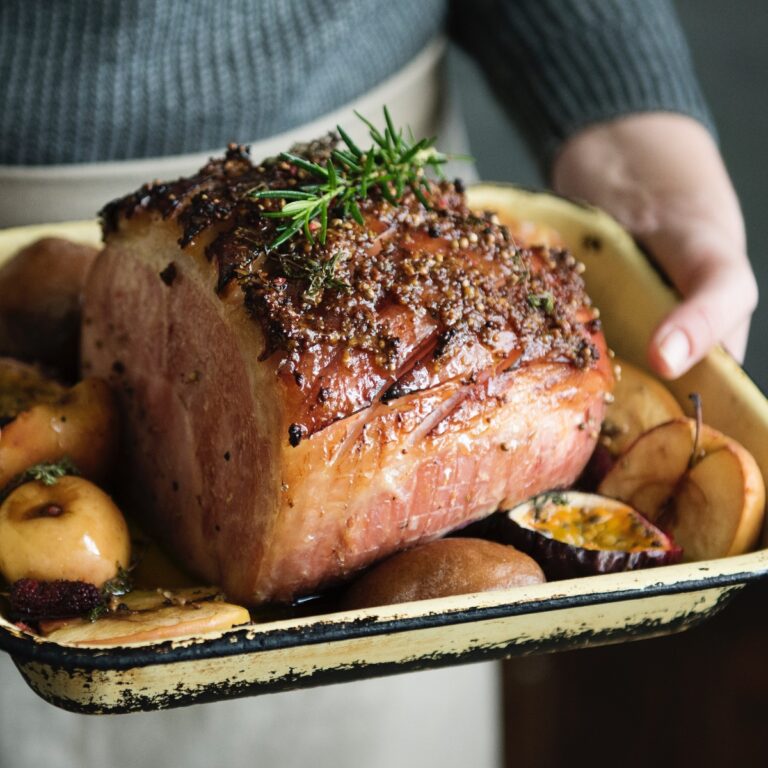

How to Bake A Ham For Thanksgiving or Christmas

Baked Christmas Ham Recipe

Baked hams, a culinary staple in many cultures, are a delightful centerpiece for festive gatherings and holiday meals. Renowned for their rich, savory flavor and tender texture, baked hams often highlight traditional feasts, evoking a sense of warmth and celebration.

Preparing baked hams involves curing the meat, which can be done through various methods such as dry curing or wet brining, each imparting a unique flavor profile. Once cured, the ham is typically coated with a glaze—commonly made from honey, brown sugar, mustard, or fruit preserves—which caramelizes during baking, creating a delectable, glossy crust.

The origins of ham preparation can be traced back to ancient times when salting and smoking were essential for meat preservation. While refrigeration has reduced the necessity of such methods, the curing process remains integral to developing the ham’s characteristic taste.  Baked hams are versatile, pairing well with a range of side dishes from roasted vegetables to creamy mashed potatoes, and they provide ample leftovers for sandwiches and other creative dishes.

Whether it’s the centerpiece of a Christmas dinner, an Easter brunch, or a casual family gathering, the baked ham continues to be cherished for its comforting flavors, cultural significance, and ability to bring people together around the table.

 
Baked Ham Recipe
Print Recipe
5 from 1 vote

How to Bake A Ham For Thanksgiving or Christmas

How to bake a great ham Christmas
Prep Time15 minutes
Cook Time1 hour 30 minutes
Total Time1 hour 45 minutes
Course: Main Course
Cuisine: American
Keyword: ham
Servings: 10 servings

Ingredients

  • 4 pounds spiral ham boneless
  • 2 whole cloves ¼ teaspoon ground cloves
  • 2 teaspoons orange zest
  • 1 teaspoon lemon zest
  • pinch salt
  • 1 orange juiced
  • 1 lemon juiced
  • cup brown sugar packed
  • ¼ cup honey
  • 1 tablespoon corn starch
  • 2 teaspoons mustard powder I like Coleman's brand

Instructions

  • Score the ham in a diamond pattern, and stud the center of each diamond with a clove.
    (If you are using a spiral ham, you may skip this step).
  • Arrange a rack in the bottom ⅓ of the oven, and preheat the oven to 325°F.
  • Place the ham on a roasting rack in a shallow roasting pan.
  • Insert a probe thermometer or regular meat thermometer into the meat, and roast until the internal temperature is 130° F.
  • Meanwhile, combine all the glaze ingredients in a saucepan. Leave out the ground cloves if you've studded your ham with whole cloves.
  • Bring to a boil over medium heat, stirring constantly until thickened and bubbly. Keep stirring, and let the glaze boil for about two minutes.
  • When the ham reaches 125°F, remove from the oven and brush with a thick layer of glaze. Continue roasting until the internal temperature is 135°F.
  • Brush on some more glaze and place the ham under the broiler for a few minutes, until the glaze is nice and bubbly. Watch carefully so it doesn't burn.
  • Remove the ham from the oven and let rest for about fifteen minutes before serving.
    If there is glaze left over, drizzle it over slices before serving, or pass it at the table. In fact, you might want to double the glaze recipe to make sure you have enough!

Baked Ham Variation

  • Here's something you might not know about Honey Baked Hams: the glaze is really a rub that is "glazified" with a blow torch. Honest.
    While you might not have a blow torch lying around, you can make this glaze into a paste by omitting all but 1 tablespoon of orange juice and all the cornstarch.
  • Substitute 1 tablespoon Dijon mustard for the mustard powder.
  • Mix all the ingredients to a thick paste.
    This is not an exact science, so you might have to increase your brown sugar or the orange juice to get a good consistency. Then, spread the paste onto the ham and continue as per the recipe.
    Any leftover paste can be made into a glaze for drizzling ham slices for serving by whisking some cornstarch into cold orange juice and adding it to the rub.
  • Bring it to a boil, stirring constantly, allowing the cornstarch to thicken the glaze. Alternately, just make a batch of the original glaze strictly for passing at the table.

Slicing and Serving

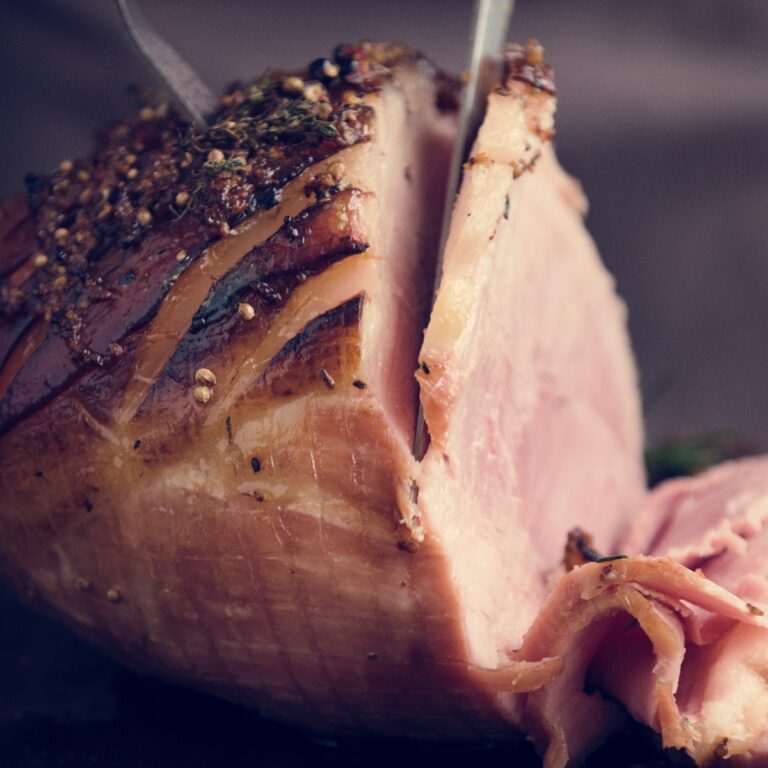
  • To slice a spiral cut ham, I generally make a horizontal cut, touching the top of the bone. This allows slices to fall off in nice half-round pieces.

Notes

If you have cooked a ham that is not pre-sliced, make the same horizontal cut as with a spiral-cut ham. Use a sharp slicer for this, and be careful.
Make sure the ham is on a non-slip surface, such as a cutting board with rubber feet, and that you are securely holding the meat with the fork from your carving set.
Once you've made the initial cut, you can slice down through the ham to the bone in whatever thickness you want.
You will end up with the same half-round pieces, it's just a little more work than it is with a spiral-cut ham.
Helpful Tips for Cooking a Baked Christmas Ham

  1. Choose the Right Ham: Decide between fully cooked, partially cooked, or fresh uncooked ham. Fully cooked hams are easiest for a stress-free holiday meal.
  2. Plan Ahead: Allow enough time for thawing if using a frozen ham—large hams may take several days in the fridge to thaw safely.
  3. Score for Flavor: Lightly score the surface in a diamond pattern. This helps glazes penetrate and creates a visually appealing presentation.
  4. Glaze Strategically: Apply glazes in the last 20–30 minutes of baking to avoid burning the sugar content while still giving a shiny, flavorful finish.
  5. Monitor Temperature: Use a meat thermometer to ensure the ham reaches an internal temperature of 140°F (for fully cooked) or 145°F (for uncooked hams), ensuring safety and optimal juiciness.
  6. Rest Before Slicing: Let the ham rest for 10–15 minutes after baking to lock in juices and make slicing easier.
  7. Creative Leftovers: Ham is versatile—use leftovers in soups, sandwiches, salads, or casseroles to extend its life beyond the holiday feast.
  8. Balance Sweet and Savory: Traditional glazes often combine honey, brown sugar, or fruit with mustard or spices. Taste and adjust to match your family’s flavor preferences.
  9. Presentation Matters: Garnish with fresh herbs, pineapple rings, or cloves for a festive and inviting centerpiece.
  10. Enjoy the Tradition: Remember the history—your baked ham isn’t just a meal; it’s part of a centuries-old holiday celebration.
Slicing Baked Ham

Side Dishes That Pair Well With Baked Ham

Side Dish Description Why It Works
Scalloped Potatoes Thinly sliced potatoes baked in a creamy sauce with cheese and sometimes onions. The rich, creamy texture complements the salty, savory ham and adds a comforting element to the meal.
Roasted Brussels Sprouts Brussels sprouts tossed with olive oil, salt, and pepper, then roasted until caramelized. The slight bitterness and crisp edges balance the sweetness of a ham glaze and add freshness to the plate.
Green Beans Almondine Fresh green beans sautéed with butter, garlic, and toasted almonds. Provides a crunchy texture and light, nutty flavor to offset the rich ham.
Sweet Potato Casserole Mashed sweet potatoes baked with brown sugar, butter, and sometimes a crunchy topping. The natural sweetness complements the ham’s glaze, creating a harmonious sweet-savory combination.
Cranberry Sauce A tangy sauce made from fresh or canned cranberries, often sweetened and spiced. The tartness cuts through the richness of the ham and brightens the overall flavor of the meal.
Dinner Rolls Soft, fluffy rolls perfect for mopping up juices or serving as a base for ham sandwiches. Adds a comforting, neutral side that lets the ham remain the star while providing a warm, fresh-carried texture.
Glazed Carrots Carrots cooked with butter, brown sugar, or honey until tender and lightly caramelized. The sweet glaze echoes the ham’s glaze and adds color and sweetness to the plate.
Mac & Cheese Creamy pasta baked with cheese, often golden on top. The rich, cheesy comfort food pairs with ham for a hearty, crowd-pleasing meal that appeals to all ages.

Baked Hams at Christmas: History

Baked hams are traditionally served at Christmas time for historical, cultural, and practical reasons. This custom dates back to ancient pagan rituals and later Christian practices that have influenced modern holiday celebrations.

  1. Pagan Roots: The tradition of serving ham during winter celebrations can be traced to ancient European pagan rituals. The Germanic tribes, for example, celebrated Yule, a winter festival, by sacrificing a wild boar to honor Freyr, the Norse god of fertility and prosperity. This practice was believed to ensure a good harvest in the coming year.
  2. Christian Adaptation: As Christianity spread through Europe, many pagan customs were integrated into Christian traditions. The Yule boar gradually transformed into the Christmas ham, symbolizing good fortune and feasting during the holiday season.
  3. Medieval Feasts: In medieval Europe, the winter months posed challenges for fresh food availability. Preserved meats, such as cured and smoked hams, became a practical choice for celebratory meals. Hams could be stored for long periods, providing a substantial and satisfying meal during the cold months.
  4. Victorian Influence: The Victorian era solidified many Christmas traditions we recognize today, including the Christmas feast. Ham, being both affordable and festive, became a popular choice for holiday meals, appealing to middle—and working-class families.
  5. Modern Convenience: Today, ham remains a popular choice for Christmas due to its ease of preparation, ability to feed large groups, and versatility in leftovers. Its rich, savory flavor, coupled with a sweet glaze, makes it a festive and flavorful centerpiece for holiday gatherings.


The tradition of serving baked ham at Christmas is rooted in ancient customs, adapted through Christian practices, and reinforced by practicality and convenience, making it a cherished part of holiday celebrations.

What Part of the Pig Do Baked Hams Come From?

A baked ham typically comes from the hind leg of a pig. Specifically, it is usually made from the upper part of the hind leg, the pork leg or pork hindquarters. This cut of meat is well-suited for curing and baking due to its balance of meat and fat, which contributes to its juicy and flavorful characteristics when cooked.

The pork leg undergoes a curing process to prepare a baked ham, which involves either dry curing (rubbing the meat with salt and other seasonings) or wet brining (immersion in a flavored saltwater solution). After curing, the ham is often smoked and baked or roasted to further develop its flavor and texture. The final step typically involves applying a glaze made from ingredients like honey, brown sugar, mustard, or fruit preserves, which caramelizes during baking, adding a sweet and glossy finish to the ham.

Due to its size and the way it’s prepared, baked ham is ideal for serving at festive occasions such as Christmas, Easter, and other celebratory gatherings, where it serves as a hearty and flavorful centerpiece.

One Response

  1. 5 stars
    Totally makes my mouth water to look at this. It’s like shopping when you are hungry. I shouldn’t catch up on my blog reading when I’m hungry 🙂

    Yummm

Leave a Reply

Your email address will not be published. Required fields are marked *

Recipe Rating


This site uses Akismet to reduce spam. Learn how your comment data is processed.