
Why Swordfish Is So Easy to Overcook
- Dense texture: Swordfish behaves more like lean meat than flaky fish, so it tightens up quickly when overcooked.
- Very low fat: Without much natural fat, it dries out fast compared to fish like salmon.
- Thick cuts: Steaks are often 1–2 inches thick, making it hard to cook evenly edge to center.
- Tiny doneness window: The line between juicy and dry is razor thin—timing matters.
- Carryover cooking: It keeps cooking after heat, often pushing it past perfect doneness.
- Moisture loss: It doesn’t self-baste, so it relies on technique to stay juicy.
- Method sensitivity: Grilling, broiling, and pan-searing can all overcook the exterior before the inside is ready.
Why Traditional Methods Fail
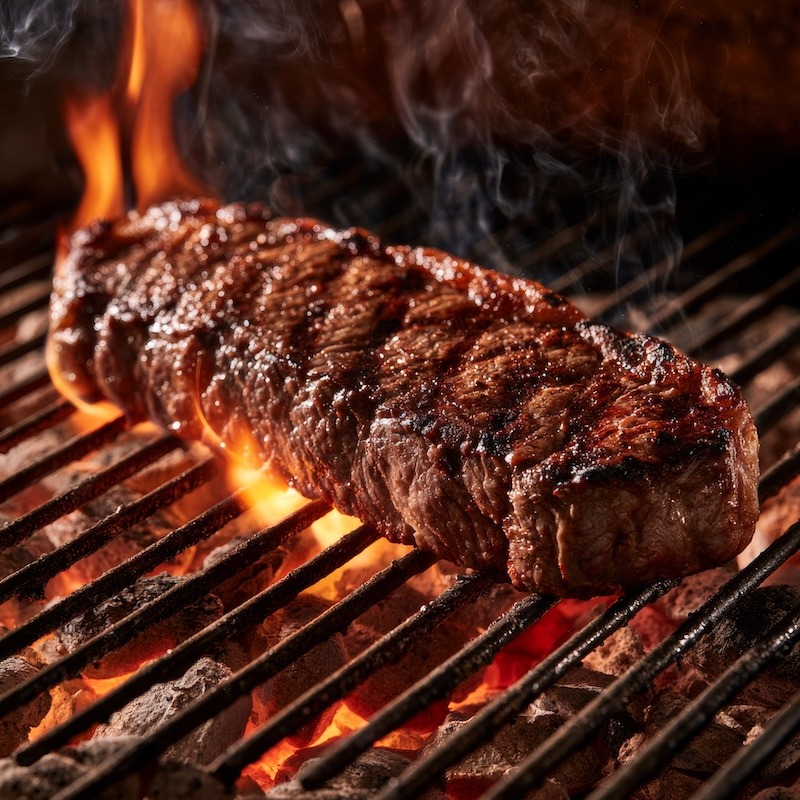
- Grilling dries it out: High heat cooks the outside too fast before the center is ready.
- Pan-searing overcooks: By the time you get a crust, the inside is often already past ideal.
- Oven cooking is inconsistent: It’s hard to control internal temperature precisely.
- Carryover cooking sneaks up: Residual heat keeps cooking the fish after you remove it.
- Seasoning guesswork: Swordfish needs balance—too little is flat, too much overwhelms.
- Timing pressure: You have a very small window between perfect and dry.
- No built-in safety net: Unlike fattier fish, swordfish doesn’t forgive mistakes.
Fast Answer
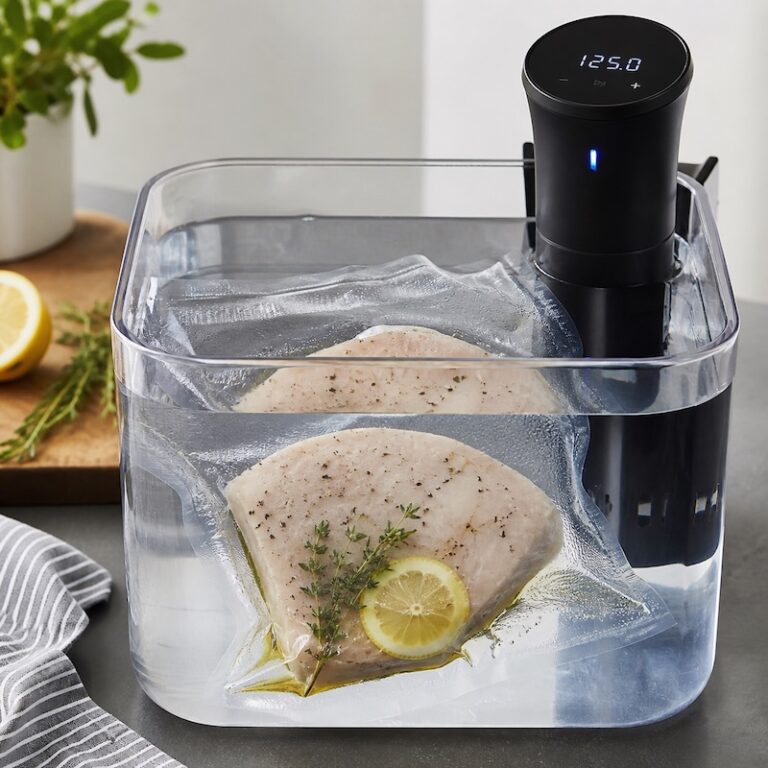
Sous vide swordfish at 125–130°F for 30–45 minutes for tender, juicy results. Finish with a quick sear to build flavor without drying it out.
Start Here
- Pick thick steaks: Aim for 1 to 1½ inches thick for even cooking and better texture.
- Season simply: Salt, pepper, and olive oil let the natural flavor shine.
- Set your temp: 125–130°F gives you moist, tender swordfish without drying it out.
- Bag it right: Use vacuum seal or water displacement to remove air.
- Finish hot and fast: A quick sear adds flavor without overcooking.
Sous Vide Temperature Guide
- 120°F (49°C): Very soft and translucent. Sushi-like texture. Best for adventurous eaters.
- 125°F (52°C): Tender and juicy. Slightly firm but still silky. Sweet spot for most cooks.
- 130°F (54°C): Firm and flaky. More traditional texture but still moist.
- 135°F (57°C): Fully firm and opaque. Starting to lose moisture.
- 140°F+ (60°C+): Dry and chalky. Not recommended.
Why This Recipe Works
- Precision cooking: Sous vide keeps the fish at an exact temperature, preventing overcooking.
- Even doneness: No dry edges and raw center—just consistent texture throughout.
- Moisture retention: Sealed cooking locks in natural juices.
- Quick sear finish: You get flavor from browning without sacrificing tenderness.
Sous Vide Swordfish Recipe for Tender, Juicy Results Every Time
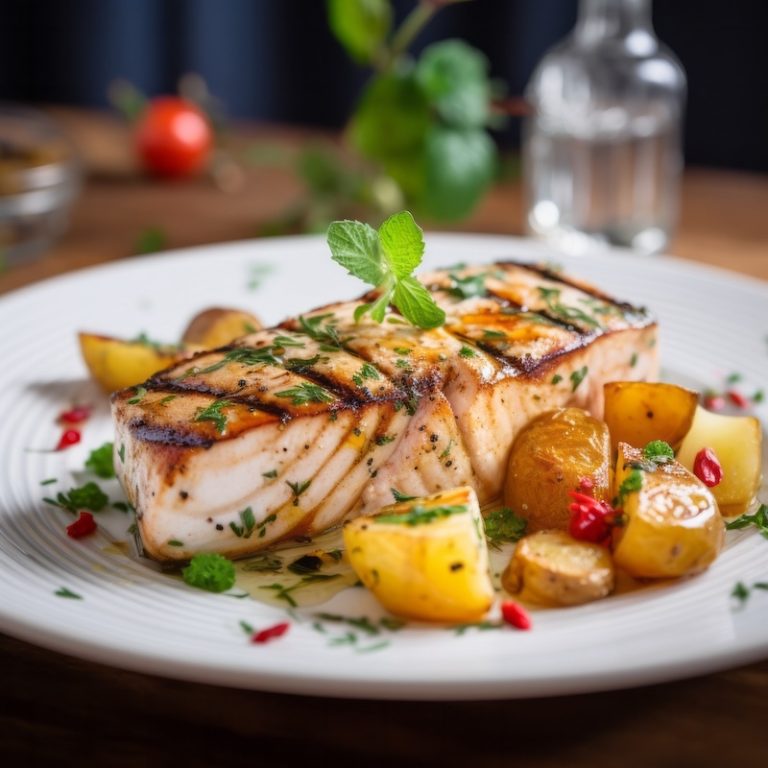
Sous vide swordfish solves the biggest problem with this meaty fish: dryness. Traditional methods can overcook it in seconds, but sous vide locks in moisture and gives you precise doneness from edge to center.
With a quick finishing sear, you get the best of both worlds—tender texture and rich flavor. This method turns swordfish into a reliable, restaurant-quality dish at home.
My Best Sous Vide Swordfish
Ingredients
- 2 swordfish steaks
- olive oil
- 4 leaves fresh basil
- twig fresh oregano
- salt & pepper to taste
Instructions
Preheat Water Bath
- Set sous vide to 125–130°F depending on your preferred texture.
Season the Fish
- Pat swordfish dry. Season with salt, pepper, and a drizzle of olive oil.
Seal the Bag
- Place fish in a bag with optional herbs or lemon zest. Vacuum seal or use water displacement.
Cook Sous Vide
- Submerge and cook for 30–45 minutes.
Remove & Dry
- Take the fish out and pat it completely dry.
Sear Quickly
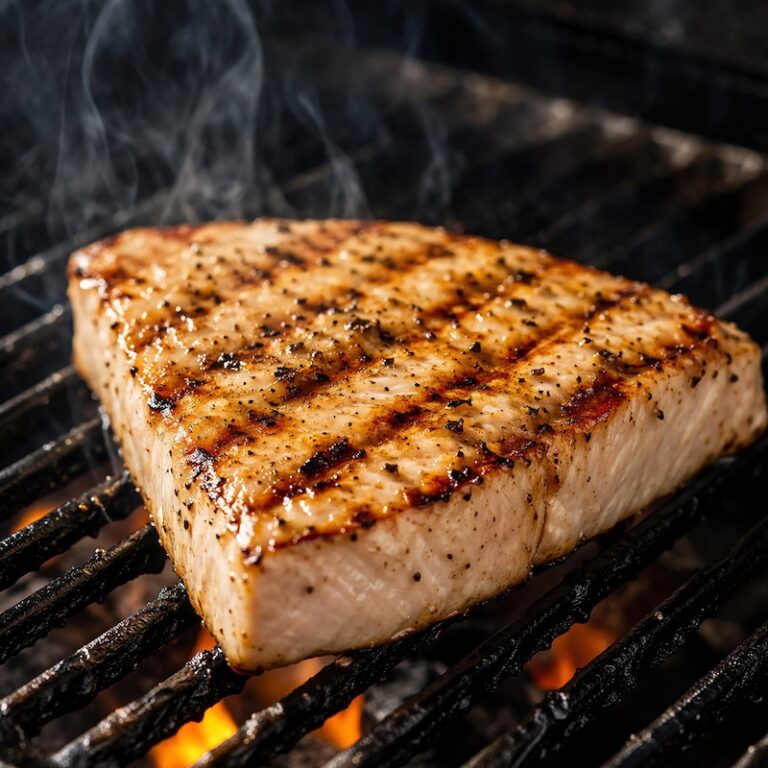
- Heat pan until very hot. Sear 30–45 seconds per side.
Rest & Serve
- Let rest briefly, then serve with lemon or sauce.
What Most Cooks Get Wrong
- Cooking too hot: Swordfish dries out fast above 135°F.
- Over-searing: Too long in the pan ruins the perfectly cooked interior.
- Using thin cuts: Thin steaks overcook quickly and lack that signature texture.
- Skipping seasoning: Swordfish needs salt to bring out its natural flavor.
Quick Fixes & Pro Tips
- Add fat in the bag: A little olive oil or butter boosts flavor and mouthfeel.
- Use herbs wisely: Thyme, rosemary, or lemon zest work well—keep it simple.
- Dry before searing: Pat fish dry to get a better crust.
- Use high heat: Sear in a hot pan for 30–45 seconds per side.
- Rest briefly: Let it sit 1–2 minutes after searing for juices to settle.
What You Can Serve With This
- Bright sides: Lemon couscous, arugula salad, or roasted asparagus.
- Rich pairings: Garlic butter potatoes or creamy risotto.
- Sauces: Tomato caper sauce, herb vinaigrette, or lemon butter.
- Wine pairing: Sauvignon Blanc, Chardonnay, or a light Pinot Noir.
Storage & Make-Ahead
Store cooked swordfish in the fridge for up to 2 days. Reheat gently in a low oven or warm pan to avoid drying it out. You can sous vide ahead of time, chill in an ice bath, then sear just before serving..
Sous Vide Swordfish FAQ
What is the best temperature for sous vide swordfish?
125–130°F for tender, moist texture. Higher temps make it firmer and drier.
How long should I cook swordfish sous vide?
30–45 minutes for most steaks. Thicker cuts can go up to 1 hour.
Can I sous vide frozen swordfish?
Yes. Add 15–20 minutes to the cooking time.
Do I need to sear swordfish after sous vide?
Yes. A quick sear adds flavor and texture.
Why is my swordfish dry?
You likely used too high a temperature or over-seared it.
Can I marinate swordfish before sous vide?
Yes, but keep it light. Acidic marinades can affect texture over time.
What does sous vide swordfish taste like?
It’s clean, slightly sweet, and meaty—similar to a tender steak.
Can I cook swordfish without a vacuum sealer?
Yes. Use the water displacement method with a zip-top bag.


6 Responses
I haven’t done swordfish in years due to the exploded price and mercury concerns, but when I did it on the grill, it had an anchovy filet on each piece. Great combination, and the filet would work well in the sous vide bag or at the end on the grill. Naturally, salt would be unnecessary, and there would be some olive oil from the filet, so less of that would also be added. I will likely try sous vide swordfish one day soon, with anchovy.
Followed recipe, 130 degrees, 30 minutes. Fish was a bit mushy do I decrease temperature or decrease time? Also seared for 1 minute on each side. Suggestions would really be appreciated.
Hi Charlotte, sorry to hear your swordfish was a little mushy. There can be many factors such as the quality of the fish, the thickness but I would try cutting down the time by 5 or 10 minutes and see if that makes a difference. If you think it is a little under cooked, you can make up for it when you do your sear.
I know your comment is over a year old, but I’m leaving this here in case it helps others.
Swordfish is a finicky bird… er… fish. It contains enzymes that start “decomposing” the proteins in its flesh when the fish is caught. That’s why the swordfish you find, even at the market, has been frozen right after being fished, thawed to sell, and should be eaten as soon as possible.
These annoying enzymes are particularly active around 130°F, so if the fish was not appropriately caught, frozen in time, or thawed more than a day before you ate it, cooking it at this temperature sous vide will make it very mushy.
The solution? Buy it frozen so you know you can sous-vide it from frozen. Add 50% to your usual cooking time. You’ll get better results if the fish has been frozen early and caught properly.
Thanks Fluff for your suggestions. Much appreciated.
Good to read about this. I’m sitting at this point now. Knowing this particular swordfish in front of me isn’t as great (from a friend’s experience as purchasing for themselves and me). Going to sous vide it. It’s frozen in its vacuum-sealed bag. I’ll have to cut open the bag, season it then keep it in the freezer until ready to cook. Let’s see how this goes