
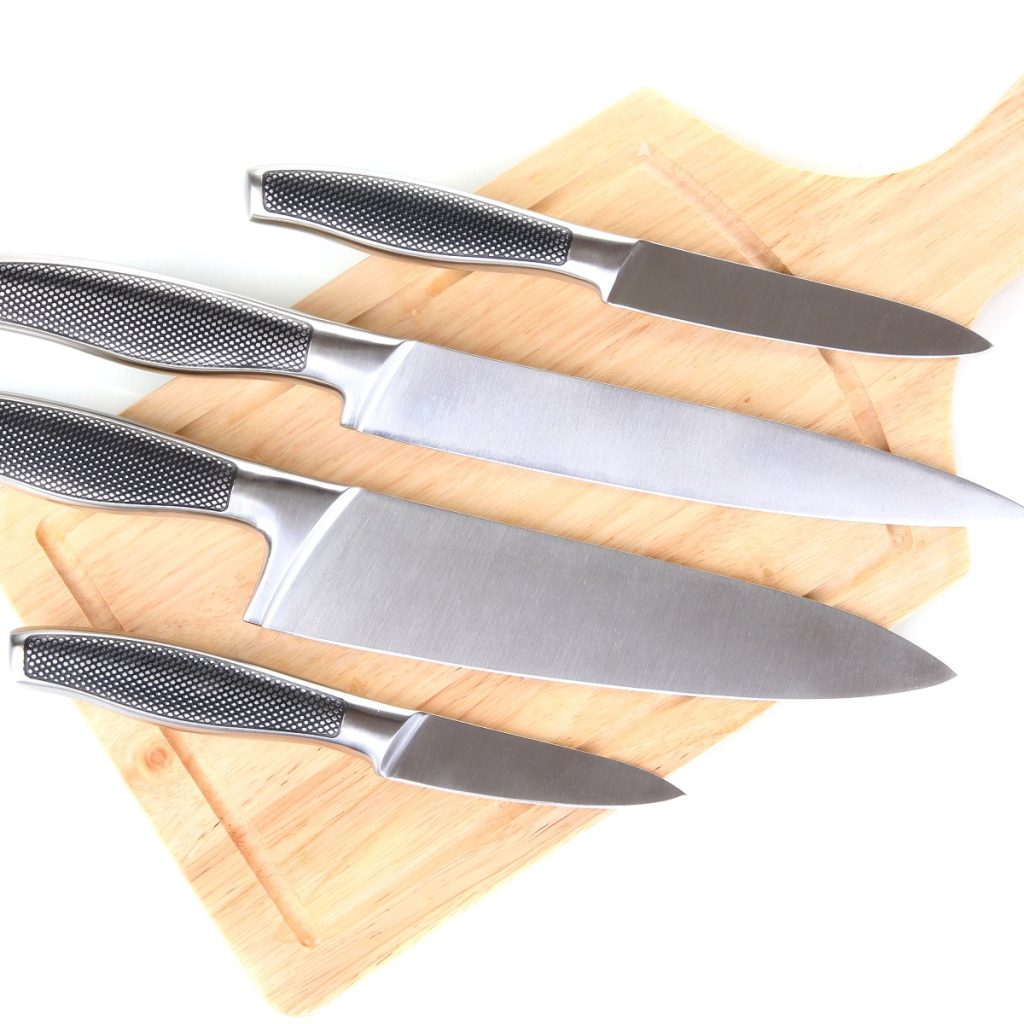

How To Choose a Kitchen Knife
Choosing the right kitchen knives can change the way you cook. A good knife makes prep faster, safer, and more enjoyable.
But with so many options out there, how do you pick the perfect one? Don’t worry — I’m here to help.
First, you need to know what kinds of knives you really need. Do you want just one all-purpose knife or a full set? What feels good in your hand? What fits your cooking style? These questions matter more than you might think.
Next, you’ll want to consider materials. Stainless steel is standard and easy to care for. High-carbon steel holds an edge longer but requires more frequent maintenance. Handle materials also affect comfort and grip.
Weight and balance play a significant role, too. A knife that’s too heavy or too light can tire your hand or make cutting tricky.
Finally, think about your budget. Good knives don’t have to cost a fortune, but cheap ones can be frustrating and dull fast.
In this post, I’ll guide you step-by-step. You’ll learn how to choose knives that feel right, cut well, and last. Let’s make your kitchen a place where you enjoy every slice!
Choosing a Kitchen Knive At a Glance
| Factor | Description | Why It Matters |
|---|---|---|
| Blade Material | Options include stainless steel, high-carbon steel, ceramic, and more. | Affects sharpness, durability, ease of maintenance, and rust resistance. |
| Handle Comfort | Handles come in wood, plastic, resin, and composite materials. | Comfort and grip affect safety and ease of use during long prep sessions. |
| Weight | Knives vary from lightweight to heavy-duty depending on the material and style. | Proper weight gives better control and reduces fatigue while chopping. |
| Balance | Well-balanced knives feel stable between blade and handle. | Improves control and precision, making cuts smoother and safer. |
| Blade Type | Includes chef’s knives, paring knives, serrated blades, and more. | Different blades serve different tasks — choose what suits your cooking. |
| Edge Retention | The ability of the knife to hold a sharp edge over time. | Less frequent sharpening means better performance and convenience. |
| Ease of Sharpening | Some metals sharpen easily, others require special tools or skills. | Important for maintaining a consistently sharp edge at home. |
| Price | Ranges from budget-friendly to high-end investments. | Buy the best quality you can afford — good knives are long-term tools. |
How To Choose & Buy a Kitchen Knife
Don’t buy a kitchen knife just because it looks good. You need to feel it in your hand. Grip it. Move it. See how it handles.
If the store allows, bring a couple of carrots from home. Yes, really. Carrots are firm and give you a good sense of how a knife cuts. Ask if you can test the knife. Some kitchen stores will say yes — especially the good ones.
Try slicing, dicing, and chopping. Pay attention to how the knife feels. Is it too heavy? Too light? Does it feel balanced? Comfortable?
Check the handle. Does it fit your grip? Any slipping or pinching? A knife that feels wrong in your hand will slow you down — or worse, cause injury.
Look at the length. If you’re overwhelmed by a long blade, you won’t use it. Choose a length you feel in control of.
Don’t choose a knife just because it looks sleek or expensive. A knife should feel like an extension of your hand, not a status symbol.
Trust your instincts. The right knife makes prep feel smooth and easy. It should feel good the moment you pick it up.
Parts of a Knife
| Knife Part | Description | Importance |
|---|---|---|
| Blade | The cutting edge of the knife, usually made of steel or ceramic. | Does the actual cutting; quality and shape affect performance and durability. |
| Edge | The sharpened part of the blade used for slicing and chopping. | Determines sharpness, cutting ease, and maintenance needs. |
| Tip | The pointed end of the blade, used for detailed cutting and piercing. | Helps with delicate tasks like mincing or scoring. |
| Spine | The top, unsharpened edge of the blade opposite the edge. | Provides strength and structure to the blade; thicker spines offer more power. |
| Heel | The rear part of the blade near the handle. | Used for tough cuts that need force, like cutting squash or chicken bones. |
| Belly | The curved part of the blade’s edge. | Ideal for rocking motions when chopping herbs or vegetables. |
| Tang | The part of the blade that extends into the handle. | Full tangs add balance and strength; partial tangs are lighter but less durable. |
| Bolster | The thick junction between blade and handle (not on all knives). | Adds balance, control, and a safe place for your fingers. |
| Handle | The part you grip, made from wood, plastic, or composite materials. | Affects comfort, grip, and control during use. |
| Rivets | Metal pins that secure the handle to the tang (on some knives). | Help keep the handle sturdy and prevent loosening over time. |
| Butt | The end of the handle. | Provides balance and can serve as a grip stop for safety. |
Length Matters
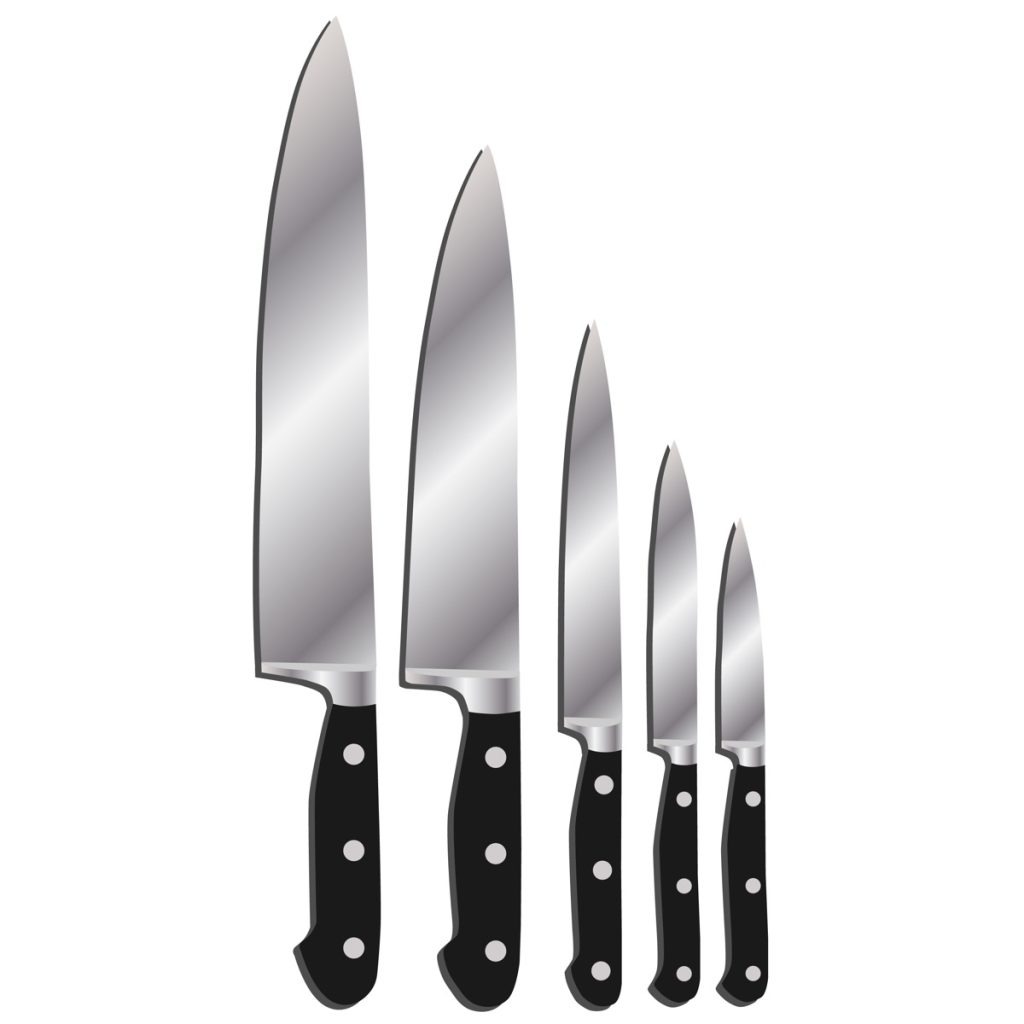
Choosing the right knife length depends on what you’re cutting and how comfortable you feel using it. A chef’s knife is your go-to tool for most kitchen tasks. Standard lengths range from 6 to 10 inches. An 8-inch chef’s knife hits the sweet spot for most people. It’s long enough for slicing and chopping but still easy to control. If you have smaller hands or limited space, a 6-inch version may feel more manageable.
A paring knife is much smaller, usually around 3 to 4 inches. It’s perfect for precise tasks like peeling, trimming, or cutting small fruits and vegetables.
The key is control. Longer blades work better for big jobs like cutting squash or slicing meat. Shorter blades give you more precision for delicate work.
Try holding different lengths to see what feels best. The right size will make your prep faster, safer, and more enjoyable.
Stamped or Forged?
The difference between a stamped knife and a forged knife comes down to how each one is made, and that affects their strength, balance, and performance.
Forged Knife
A forged knife is made from a single piece of steel that’s heated and hammered into shape. It typically has a thicker, heavier blade, a full tang (the metal runs through the handle), and a bolster (the thick junction between the blade and handle). These knives are usually stronger, more balanced, and hold an edge longer. They feel solid in your hand and are great for heavy-duty tasks.
Why it matters: Forged knives are durable and offer better control. They’re ideal if you cook often and want a reliable tool that can last for years.
Stamped Knife
A stamped knife is cut (or “stamped”) out of a sheet of steel, like a cookie cutter. It’s usually lighter, thinner, and more flexible. Stamped knives don’t typically have a bolster, and they may have a partial tang.
Why it matters: Stamped knives are more affordable and easier to maneuver, but they often need sharpening more often and don’t offer the same balance or longevity.
Feel Is Important!
Feel is everything when it comes to choosing a kitchen knife. You can buy the most expensive blade on the market, but if it doesn’t feel right in your hand, you won’t enjoy using it — and you might not use it at all.
A knife should feel like a natural extension of your arm. It should move easily, stay comfortable during long prep sessions, and give you confidence with every cut.
If it’s too heavy, awkwardly balanced, or the handle doesn’t fit your grip, it can lead to fatigue, poor control, or even injury.
That’s why it’s so important to try before you buy. Grip the handle. Make some slicing motions.
If the store allows, test it on a real ingredient. Pay attention to the weight, balance, and how the knife responds to movement. Everyone’s hands are different — what works for someone else might not work for you.
When a knife feels right, you’ll notice it immediately. It will move smoothly, feel stable, and make cooking feel easier. That’s the one you want.
Taking Care of Your Knife
Once you purchase that knife, how are you going to keep it as sharp as when it is new? Without getting into the details, remember that how you store the knife, how you clean it, what type of cutting board you use, and whether you chop or slice all affect how long your knife will remain sharp.


5 Responses
What a relief this article has been to me. You can’t imagine the abuse I have taken from my buddies about having my complete knife collection in one sheath. One Henckels 8 inch chef knife. I have forwarded this article to all of them. Now I have to convice them that my Arkansas stone and my steel beats their $100.00 gadget to keep a good edge. I have a $5.00 little knife somewhere but it never comes out until they show up. Then here comes more trash talk. All in fun, I must say.Thanks again.
I don’t disagree with anything in this article but I have another knife that I can’t do without. We eat quite a bit of shrimp and I have this very cool little knife with a curved blade that just draws down the shrimp vein like nobody’s business and makes de-veining my shrimp so easy. But since the blade is on the interior of the curve there is no good way to sharpen said blade so when it no longer moves easily through the shrimp, I will likely have to say goodbye.
I must disagree with the “two knives” idea. I find prep work faster when matched with the proper knife. A curved, reverse-edge peeling knife works wonders over a straight paring knife. I do agree however with the grande slicer as an extra knife. I would not like to carve a standing rib or ham without one. I could not do without a heavy cleaver either. I’m a nine-knife chef!
wonderful article. I have just retired at 78 and in 1990 i bought a 7inch EVER-SHARPE knife in a charity shop it was the best buy I ever made (knife wise). Some twelve years ago I went to the French Patisserie school and left the knife in the UK. My wife is sure that I pined more for the knife than I did for her. Well I must admit it was a close run thing. When working in Roune I did not seemed to have that ‘je ne sais quoi’ with the college knives.
Hi Steve, thanks for the post. Is the Ever-Sharpe knife you lost still available? I’ve seen something called Forever Sharp but I doubt this is the same brand.