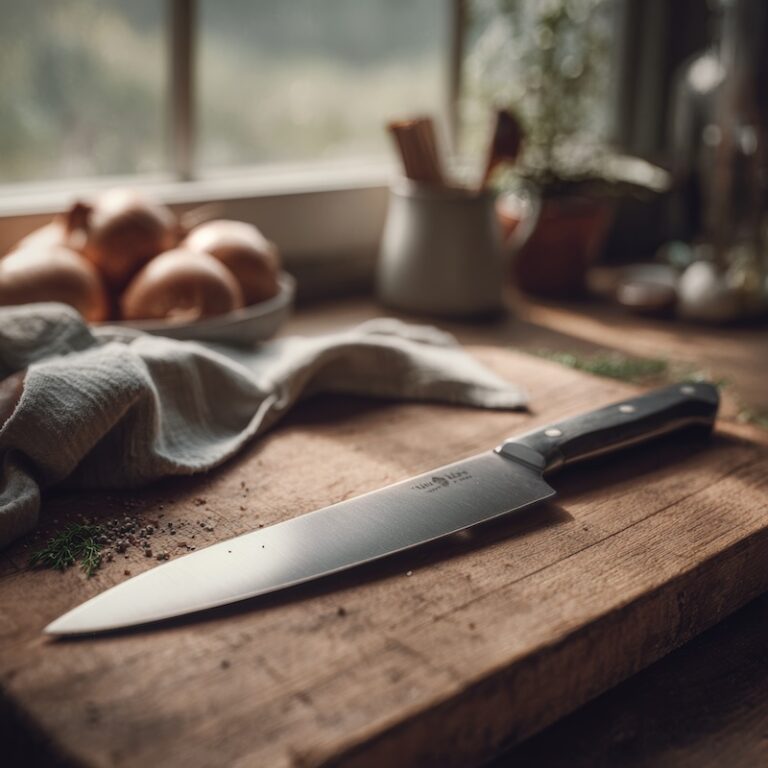
Choosing the right kitchen knife comes down to a few simple factors: fit, balance, and how you cook. Once you understand them, buying a knife gets much easier.
How to Choose a Chef’s Knife That Actually Feels Right in Your Hand
🔪 Find Your Perfect Kitchen Knife
Answer 3 quick questions and get a clear recommendation based on how you actually cook.
1. What do you cook most often?
2. What matters most in a knife?
3. How do you prefer your knife to feel?
⚖️ What a Good Knife Should Feel Like
- Balanced: Weight feels centered near the bolster.
- Controlled: The blade moves where you expect—no wobble.
- Comfortable: You can grip it firmly without strain.
- Effortless: It slices instead of forcing you to push.
The best knife doesn’t fight you—it quietly follows your lead.
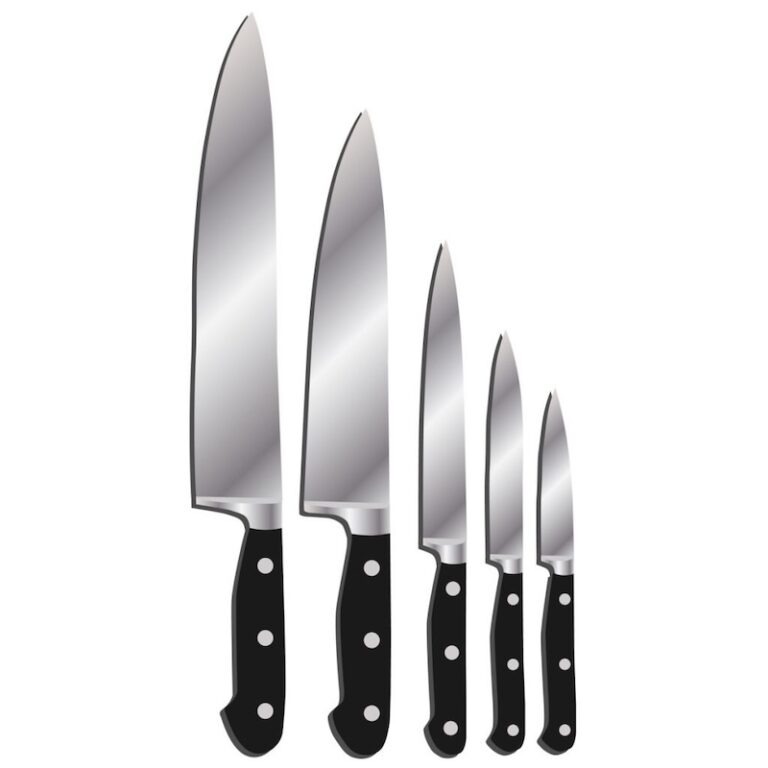
Parts of a Knife
Understanding the parts of a knife helps you focus on what actually affects performance—not just what sounds impressive.
Knife Attributes
These are the key features that determine how a knife performs in your kitchen—and which one you should choose.
Length Matters
Choosing the right knife length depends on what you’re cutting and how comfortable you feel using it. A chef’s knife is your go-to tool for most kitchen tasks. Standard lengths range from 6 to 10 inches. An 8-inch chef’s knife hits the sweet spot for most people. It’s long enough for slicing and chopping but still easy to control. If you have smaller hands or limited space, a 6-inch version may feel more manageable.
A paring knife is much smaller, usually around 3 to 4 inches. It’s perfect for precise tasks like peeling, trimming, or cutting small fruits and vegetables.
The key is control. Longer blades work better for big jobs like cutting squash or slicing meat. Shorter blades give you more precision for delicate work.
Try holding different lengths to see what feels best. The right size will make your prep faster, safer, and more enjoyable.
Available on Amazon
Feel Is Important!
Feel is everything when it comes to choosing a kitchen knife. You can buy the most expensive blade on the market, but if it doesn’t feel right in your hand, you won’t enjoy using it — and you might not use it at all.
A knife should feel like a natural extension of your arm. It should move easily, stay comfortable during long prep sessions, and give you confidence with every cut.
If it’s too heavy, awkwardly balanced, or the handle doesn’t fit your grip, it can lead to fatigue, poor control, or even injury.
That’s why it’s so important to try before you buy. Grip the handle. Make some slicing motions.
If the store allows, test it on a real ingredient. Pay attention to the weight, balance, and how the knife responds to movement. Everyone’s hands are different — what works for someone else might not work for you.
When a knife feels right, you’ll notice it immediately. It will move smoothly, feel stable, and make cooking feel easier. That’s the one you want.
🔍 How to Test a Knife in the Store (2-Minute Check)
- Grip it naturally: Hold it like you would at home—not awkwardly or carefully.
- Check balance: It should feel centered, not blade-heavy or handle-heavy.
- Simulate a cut: Gently rock the blade as if slicing an onion.
- Feel the handle: No sharp edges, slipping, or pressure points.
If it feels even slightly uncomfortable now, it won’t improve later.
⚠️ Common Knife Buying Mistakes
- Choosing by brand alone: Fit matters more than the logo.
- Going too cheap: Poor steel dulls quickly and frustrates you.
- Going too expensive too soon: You may not need it yet.
- Ignoring comfort: A slightly awkward knife becomes a daily annoyance.
A great knife is one you actually enjoy using every day—not one that just looks impressive.
Taking Care of Your Knife
Once you purchase that knife, how are you going to keep it as sharp as when it is new? Without getting into the details, remember that how you store the knife, how you clean it, what type of cutting board you use, and whether you chop or slice all affect how long your knife will remain sharp.
🔪 Kitchen Knife Buying FAQ
What is the best kitchen knife for most home cooks?
An 8-inch chef’s knife is the best all-around choice. It’s long enough to handle most tasks but still easy to control. If you only buy one knife, this is the one to get.
What’s the difference between forged and stamped knives?
Forged knives are made from a single piece of steel and tend to be heavier and more durable. Stamped knives are cut from a sheet of steel, making them lighter and more affordable. Both can perform well—it comes down to preference and budget.
Is a more expensive knife always better?
No. A knife that feels comfortable and balanced in your hand is more important than price. Many mid-range knives perform just as well as high-end models for everyday cooking.
What size chef’s knife should I buy?
Most people should choose an 8-inch blade. If you have smaller hands or prefer lighter tools, a 6-inch knife may feel more comfortable but is slightly less versatile.
What does “full tang” mean, and does it matter?
A full tang means the metal extends through the entire handle. This improves balance and durability, making the knife feel more stable during use.
How do I know if a knife is well balanced?
Hold the knife in your normal grip. It should feel stable and centered, not tipping forward or backward. A well-balanced knife makes cutting feel smoother and more controlled.
Should I choose a heavy or light knife?
Heavier knives help power through dense foods like squash or meat. Lighter knives offer better control and reduce fatigue. Most home cooks prefer a balanced, medium-weight knife.
What type of steel is best for kitchen knives?
Harder steel holds a sharp edge longer but requires more careful maintenance. Softer steel is easier to sharpen but dulls faster. For most home cooks, a high-quality stainless steel is the best balance.
Do I need more than one kitchen knife?
You can do most kitchen tasks with a single chef’s knife. Over time, you may want to add a paring knife or serrated knife, but they’re not essential to start.
How should a knife feel in my hand?
It should feel comfortable, secure, and easy to control. If it feels awkward or unbalanced right away, it’s not the right knife for you.
Some of My Favorite Cookware
Buying Kitchen Knives
Why It Matters: A good kitchen knife is the foundation of cooking efficiency. It affects speed, safety, precision, and overall enjoyment in the kitchen. The right knife should feel like an extension of your hand, not a tool you have to fight.
Check Quality: Look for a comfortable grip, balanced weight, and solid construction. Full tang knives offer better stability. The blade should feel steady when cutting, not flexible or hollow. Avoid knives that feel awkward or overly light for their size.
Where to Shop: Specialty kitchen stores, cookware shops, and department stores let you handle knives in person. This is the best way to test balance and comfort before buying.
Amazon Convenience: Amazon offers a wide selection of chef’s knives across all budgets, with user reviews, comparisons, and easy returns. It’s especially useful for comparing forged vs stamped options and different blade lengths before committing.
Storage & Care Tip: Store knives in a block, magnetic strip, or blade guard to protect the edge. Regular honing keeps performance sharp, and proper cleaning (hand wash only) extends lifespan significantly.
🛒 Check Prices for Kitchen Knives on AmazonAvailable on Amazon


5 Responses
What a relief this article has been to me. You can’t imagine the abuse I have taken from my buddies about having my complete knife collection in one sheath. One Henckels 8 inch chef knife. I have forwarded this article to all of them. Now I have to convice them that my Arkansas stone and my steel beats their $100.00 gadget to keep a good edge. I have a $5.00 little knife somewhere but it never comes out until they show up. Then here comes more trash talk. All in fun, I must say.Thanks again.
I don’t disagree with anything in this article but I have another knife that I can’t do without. We eat quite a bit of shrimp and I have this very cool little knife with a curved blade that just draws down the shrimp vein like nobody’s business and makes de-veining my shrimp so easy. But since the blade is on the interior of the curve there is no good way to sharpen said blade so when it no longer moves easily through the shrimp, I will likely have to say goodbye.
I must disagree with the “two knives” idea. I find prep work faster when matched with the proper knife. A curved, reverse-edge peeling knife works wonders over a straight paring knife. I do agree however with the grande slicer as an extra knife. I would not like to carve a standing rib or ham without one. I could not do without a heavy cleaver either. I’m a nine-knife chef!
wonderful article. I have just retired at 78 and in 1990 i bought a 7inch EVER-SHARPE knife in a charity shop it was the best buy I ever made (knife wise). Some twelve years ago I went to the French Patisserie school and left the knife in the UK. My wife is sure that I pined more for the knife than I did for her. Well I must admit it was a close run thing. When working in Roune I did not seemed to have that ‘je ne sais quoi’ with the college knives.
Hi Steve, thanks for the post. Is the Ever-Sharpe knife you lost still available? I’ve seen something called Forever Sharp but I doubt this is the same brand.