Fast Answer
There's no single right way to grill a steak — the best method depends on thickness, equipment, and how much precision you want. Thin steaks and quick nights favor direct heat; thick steaks and guests favor reverse sear, cast iron, or sous vide.
The Case for Learning More Than One Way to Grill a Steak
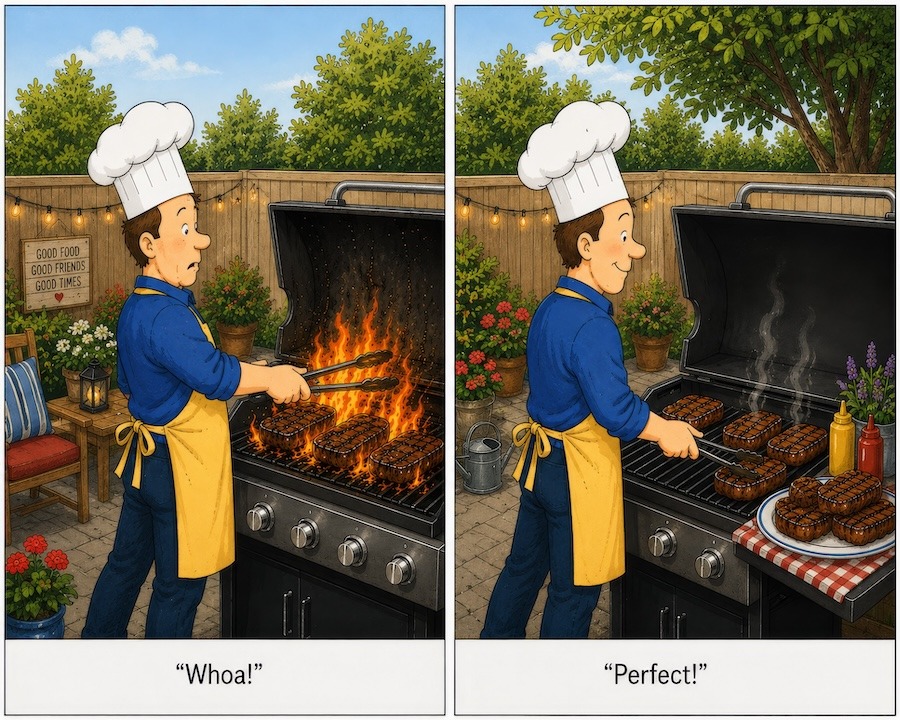
That panic-flipping I just described was me for years — the same high-heat, guess-and-hope method on every steak, regardless of thickness or occasion. Once I actually tried the other methods, I realized each one solves a different problem.
This page walks through all five ways I grill steak now, what each is actually good for, and which one probably fits what you’re cooking tonight — with a full guide for each method if you want to go deeper.
What Kind of Steak Griller Are You?
- Beginner? Start with ribeye or strip steak and two-zone grilling — it's the most forgiving method on this page.
- Cooking for guests? Use reverse sear or sous vide so doneness isn't left to guesswork.
- Love a crust? Cast iron + grill gives you more than any other method here.
- Always overcook steaks? Pull them earlier than you think, and consider reverse sear so you're not racing the clock.
- Short on time? Direct heat is the fastest option, full stop.
Think Like a Cook
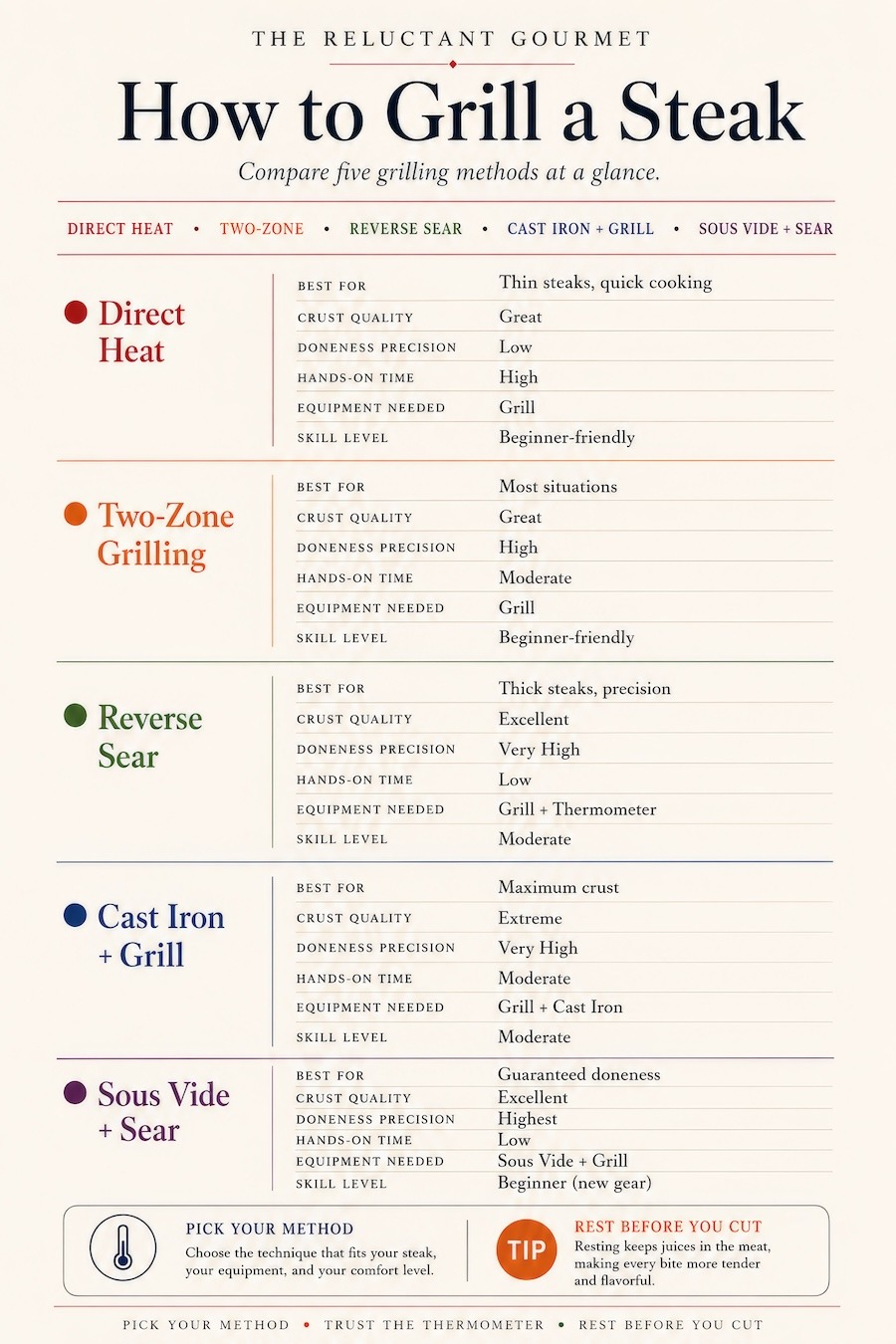
- Every method on this page is really just doing two jobs in some order: building a crust (high heat, direct contact, short time) and bringing the center up to temperature (lower heat, more control, more time).
- Direct heat tries to do both jobs at once, which is why it's fast but unforgiving on anything thick. The other four methods all separate those two jobs — they just sequence them differently.
- Once you see it that way, "which method should I use" stops being about following a trend and becomes about deciding which job you want to do first, and how much control you want over each one.
Control the Variables (What Actually Decides Your Method)
- Steak thickness: thin steaks (under 1 inch) work fine with direct heat. Anything over 1¼ inches benefits from separating the sear from the cook — which is what reverse sear, cast iron, and sous vide all do.
- Equipment on hand: two-zone and direct heat need nothing but a grill. Reverse sear needs a thermometer. Cast iron needs a pan. Sous vide needs an immersion circulator.
- How much hands-on time you want: sous vide and reverse sear are mostly hands-off once they're going. Direct heat and cast iron need your full attention the whole time.
- How much precision you need: cooking for guests or a specific doneness, lean toward reverse sear or sous vide. Cooking for yourself on a Tuesday, direct heat or two-zone is plenty.
How to Tell a Steak Is Grilling Properly
- Sound: a steady sizzle means good contact with the grill grates. Silence or a faint hiss means the heat isn't there yet.
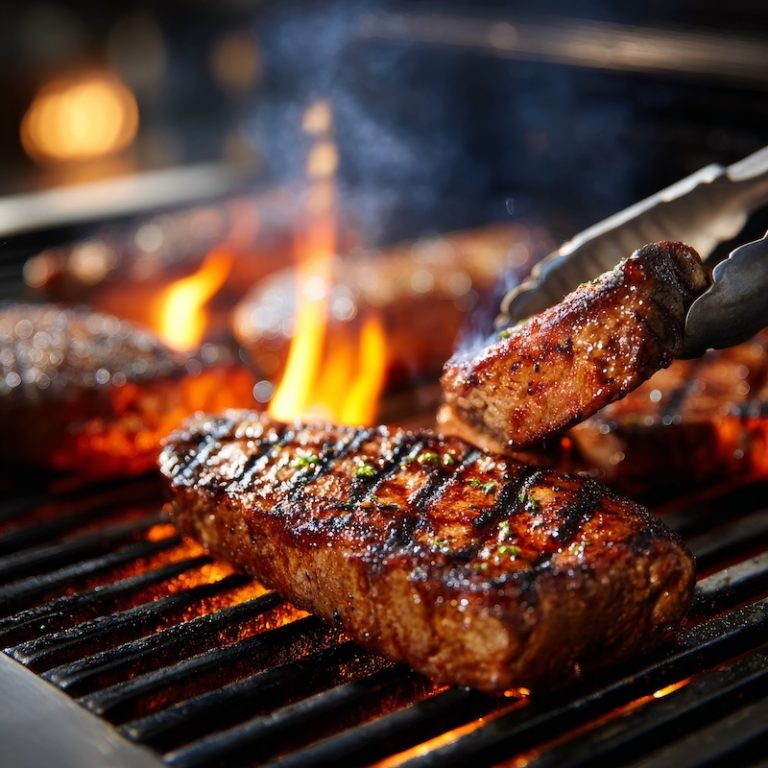
- Smoke: light smoke is normal and good. Thick black smoke usually means a flare-up, and it'll turn the crust bitter.
- Surface: a properly seared steak releases naturally from the grate. If it's sticking and tearing, it needs more time before you flip it.
What If the Steak Has a Thick Fat Cap?
- Don't ignore it. Left alone, a thick edge of fat stays pale and rubbery. Given direct heat, it renders, browns, and crisps.
- Use tongs to stand the steak on its edge, fat side against the grill or pan.
- Sear for 30–60 seconds, pressing gently until the fat sizzles, browns, and softens.
- Watch for flare-ups. A little flame is fine — big flames mean move the steak to a cooler part of the grill.
- This works alongside any of the five methods above — render the fat cap before or after the main sear, whichever fits your method.
What Most Cooks Get Wrong
- They assume there's one correct way to grill a steak, then get frustrated when the method that works for a thin sirloin doesn't work for a thick ribeye.
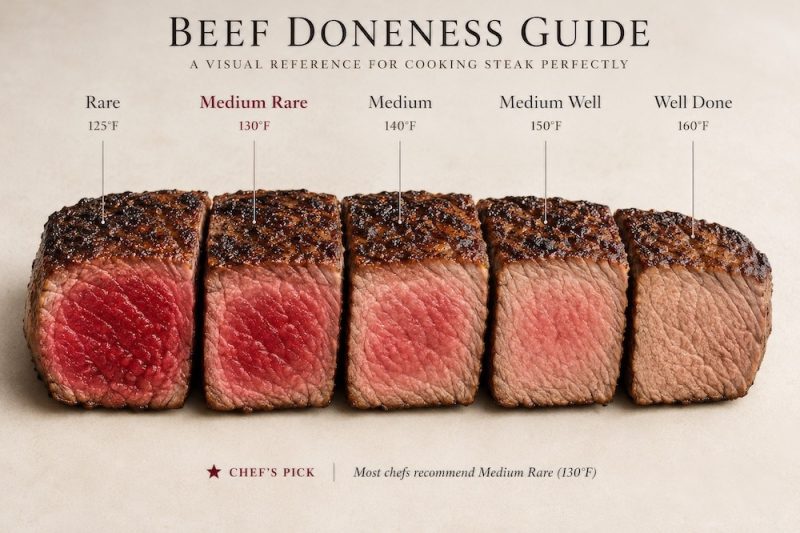
- They judge doneness by time or touch instead of temperature, regardless of which method they're using.
- They pick a method based on what's trending instead of what actually matches their steak's thickness and their equipment.
- They try reverse sear or sous vide once, find it slower than expected, and give up — instead of recognizing that's the tradeoff for more control, not a flaw in the method.
Frequently Asked Questions About Grilling Steak
What is the best way to grill a steak? There isn’t one best way. The right method depends on the steak’s thickness, your equipment, and how much precision you want — thin steaks do well with direct heat, thick steaks benefit from reverse sear, cast iron, or sous vide.
Is reverse sear worth it? Yes, for thick steaks. It trades a little extra time for a more evenly cooked center, and a stronger crust than direct heat alone can give you.
Is charcoal or gas better for grilling steak? Charcoal gives more smoky flavor; gas gives easier temperature control. Both work well with any method on this page as long as the grill gets hot enough and you can create two heat zones.
Do I need special equipment to grill a good steak? No — direct heat and two-zone grilling need nothing but a grill. A thermometer works with any method, and it’s nearly required for reverse sear and sous vide.
What’s the best steak for a beginner to grill? Ribeye or New York strip. Both have enough marbling and thickness to be forgiving, and they work well with beginner-friendly methods like two-zone grilling.
Why do people reverse sear instead of just grilling normally? Because it separates cooking the center from building the crust, which gives more control over both — especially valuable on a steak over 1¼ inches thick.
Can I use more than one method depending on the steak? Yes. Most people who grill a lot end up doing exactly that, picking the method based on the cut, thickness, and occasion rather than sticking to one.
- The most forgiving option on this page, worth mastering first: Two-Zone Grilling Explained.
- Short on time or grilling something thin? Start here: Direct Heat Grilling.
- The same doneness-by-temperature logic applies to everything you grill, not just steak: Meat Doneness Temperatures.