Fast Answer
Salmon sticks to the grill when it's flipped before it's ready — not because of the grates themselves. Wait for it to release naturally, usually 4–6 minutes per side over medium-high heat, and check for 125–130°F at the center for medium doneness.
Why Salmon Sticks, Flips Wrong, and Gets Overcooked — All for the Same Reason
Here’s the pattern once you see it: sticking, flipping too soon, and guessing at doneness are all the same signal showing up at different moments. Salmon releases itself from hot grates only once a crust has fully formed — try to flip before that, and it tears instead of lifting clean.
That same release is your cue for timing and, combined with color and firmness, for doneness too. This post walks through the mechanism, the exact cues to watch for, and the setup that prevents sticking in the first place.

What are the pros and cons of grilling salmon?
Grilling salmon is a popular cooking method that can result in a delicious and healthy meal. However, like any cooking method, grilling salmon has pros and cons. Grilled salmon can be a delicious and healthy way to prepare this nutritious fish.
Still, it’s important to be aware of the potential drawbacks and take steps to minimize them. You can enjoy perfectly grilled salmon every time with careful preparation and attention. Here are some of the main advantages and disadvantages:
| Pros | Cons |
|---|---|
| Flavor: Grilling salmon adds a smoky, charred flavor that’s hard to achieve with other cooking methods. | Risk of overcooking: Salmon can dry out and become tough if overcooked. Watch the time carefully. |
| Health benefits: Grilling lets fat drip away, lowering calories and fat. Salmon is rich in heart-healthy omega-3s. | Risk of sticking: Salmon can stick to grill grates, especially with skin on. Oil the grates well before cooking. |
| Quick cooking: Grilling is fast, perfect for weeknight dinners or quick meals. | Flare-ups: Flare-ups can burn or char salmon. Keep an eye on the grill and move fish away from hot spots if needed. |
| Versatile: Grilled salmon pairs well with many sides and sauces, making it a flexible meal choice. |
Start Here
- This is for you if: you've torn a fillet trying to flip it, or you've cut one open to check doneness and ruined the presentation.
- Use this method for salmon fillets, skin-on or skin-off, on a standard gas or charcoal grill.
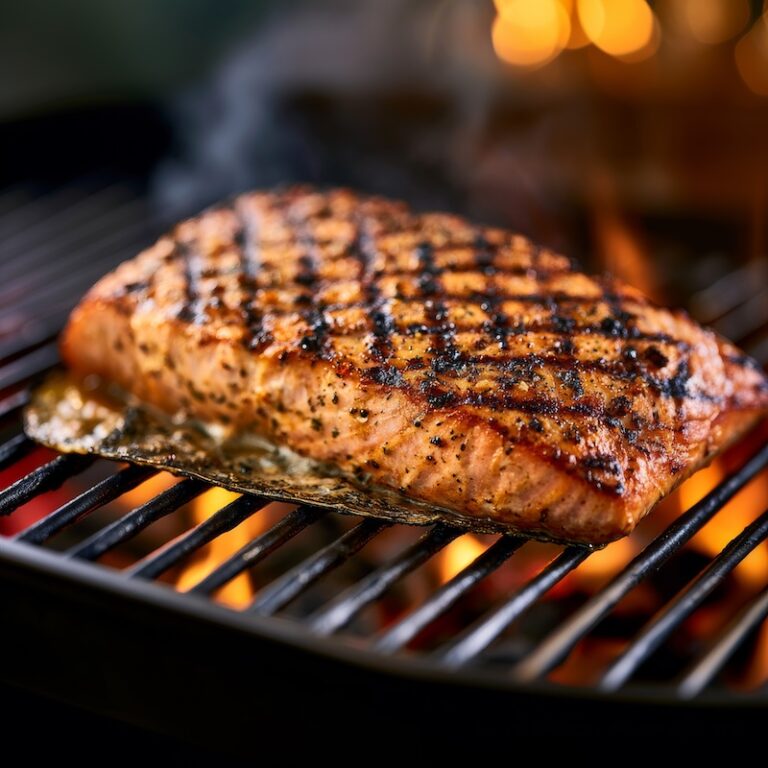
- Success looks like: clean grill marks, a fillet that lifts off the grates without resistance, and a center that's just opaque with a slight give.
Why This Technique Works
- Proteins bond to hot metal on contact — that's the actual cause of sticking, not the grates themselves being "bad."
- As the fillet cooks, a crust forms on the surface touching the grates. That crust is what eventually breaks the bond with the metal.
- Try to flip before that crust has fully set, and you're pulling the fillet apart at the bond instead of lifting it off a finished surface — which is why forced flips tear the fish.
- A hot, clean, well-oiled grate reduces the initial adhesion, but it doesn't eliminate the need to wait for that release — even a perfectly prepped grill will hold onto salmon that's flipped too soon.
Think Like a Cook
- The single rule that solves all three problems: if it's stuck, it's not ready. Don't force it.
- That's not a workaround — it's the actual signal. The same crust that releases the fish from the grates is what tells you it's time to flip, and its progress is part of what tells you doneness later.
- Once you trust that signal instead of fighting it, sticking mostly stops being a problem you have to manage.
Step-by-Step: Grilling Salmon
- Heat the grill to medium-high and clean the grates thoroughly with a grill brush.
- Oil the grates directly — a folded paper towel dipped in oil, run along the grates with tongs, works well.
- Oil the fillet itself too, not just the grates. Both surfaces need it.
- Place the fillet on the grates and don't touch it. Let it sit undisturbed for the first several minutes.
- Test for release with a thin spatula after about 4 minutes. Slide it gently under one edge — if it resists, it's not ready; if it lifts cleanly, it's time to flip.
- Flip once, cook the second side for roughly the same amount of time, watching color change up the sides of the fillet as it cooks through.
- Check doneness at 125–130°F at the thickest point for medium, or by pressing gently — it should give slightly and just barely flake, not fall apart.
- Rest for a few minutes off direct heat before serving.
What Most Cooks Get Wrong
- They force the flip when the fillet resists instead of waiting a little longer, which tears the crust and leaves half the fillet stuck to the grates.
- They oil the fish but skip oiling the grates, or the reverse — both surfaces need it to reduce initial sticking.
- They cut into the fillet to check doneness, which ruins the presentation and isn't even a reliable cue compared to color, firmness, and temperature together.
What Went Wrong (And Why)
- Salmon stuck and tore on the flip → flipped before the crust fully released → wait longer next time, and test gently with a thin spatula before committing to the flip.
- Fillet fell apart entirely → flipped too early and too aggressively, or the fillet was very thin → use a proper fish spatula, and consider a cedar plank for delicate, thin cuts instead.
- Outside charred, center still raw → heat too high, or too much oil dripping and causing flare-ups → drop to medium-high and trim excess oil or marinade before it hits the grates.
- Salmon dry and overcooked → pulled past 130°F internal, or left on too long after checking → pull a few degrees early and let carryover heat finish it during the rest.
Control the Variables
- Heat level controls speed and flare-up risk — medium-high is the sweet spot; full high heat increases both sticking risk and the chance of a charred exterior with an undercooked center.
- Skin on vs. off changes how forgiving the process is — skin-on gives you a buffer layer and an easier release point (flip skin-side up once, not skin-side down and back).
- Fillet thickness changes total time more than anything else — thin fillets need less time and are more prone to falling apart on the flip.
- Direct vs. indirect heat matters for thicker cuts — searing over direct heat, then finishing over indirect, reduces the risk of a burnt exterior before the center catches up.
Skin On or Skin Off
- Skin-on is the easier choice for grilling specifically — it acts as a buffer between the flesh and the grates, so it protects against sticking and gives you a built-in flip cue: the skin crisping and releasing tells you it's ready before the flesh ever touches metal.
- Skin-off gives you more surface to season and a fillet that cooks a little more evenly all the way through, but it also has less margin for error — no buffer means it's more prone to sticking or falling apart if you flip it too soon.
- My actual recommendation: leave the skin on if you're serving the fillet as-is. It's genuinely the more forgiving option on a hot grill, not just a matter of taste.
- Take it off first if the salmon is headed into a salad, sandwich, or anywhere the skin would be in the way rather than part of the dish.
Marinating Before Grilling
- Marinating is really about flavor, not tenderizing. That claim gets carried over from steak marinades, but salmon doesn't have the tough connective tissue a marinade breaks down in meat — what you're actually adding is flavor and a thin surface layer that affects browning.
- 30 minutes is usually enough. A few hours is fine for milder marinades, but watch high-acid ones — citrus or vinegar-based marinades left too long start to chemically "cook" the surface of the fish the same way ceviche works, leaving a mushy layer before it ever hits the grill.
- Soy-ginger, citrus, and herb marinades all work — the mechanism doesn't change with the flavor profile, so pick based on what you're serving it with.
- Pat the fillet dry and discard the used marinade before it goes on the grill. This isn't just food safety — the sugars in most marinades burn much faster than plain oil, so excess marinade left on the fish is one of the more common causes of flare-ups and a charred exterior (see What Went Wrong above).
When to Use This Technique
- Use it for standard fillets, skin-on or skin-off, when you want real grill flavor and char.
- Use a cedar plank instead for very thin or delicate fillets that are likely to fall apart with direct grate contact.
- Skip grilling if you don't trust your grates or don't have a proper fish spatula — a bad first attempt here is more frustrating than it needs to be.
Apply It to Real Food
- Skin-on fillets: the most forgiving option — the skin protects the flesh and gives you a natural flip cue.
- Skin-off fillets: works fine with a well-oiled grate and grill, but has less margin for error on the flip.
- Salmon steaks: handle similarly, but check doneness a bit later since they're often thicker through the center.
- Thin fillets or delicate cuts (trout, arctic char): better suited to a cedar plank than direct grate contact.
FAQ
- Why does my salmon always stick to the grill? It's almost always flipped before it's ready. The crust that forms on the grate side needs time to fully set before it releases cleanly.
- Should I grill salmon skin-on or skin-off? Skin-on is more forgiving — it protects the flesh and gives you a clear surface to flip from. Skin-off works fine too, just with less margin for error.
- How long do I grill salmon per side? About 4–6 minutes per side over medium-high heat, depending on thickness — but let the release test, not the clock, tell you when to flip.
- How do I know when grilled salmon is done without cutting it open? Check for 125–130°F at the thickest point, or press gently — it should give slightly and just barely flake.
- Do I really need a fish spatula? It helps a lot. A thin, flexible spatula lets you test for release gently instead of prying at a stuck fillet with a regular spatula.
- What heat setting should I use? Medium-high. Full high heat increases both sticking risk and the chance of charring the outside before the center is done.
- What if my salmon keeps falling apart on the grill? It's likely too thin for direct grate contact, or being flipped too early. Try a cedar plank for delicate cuts.