I spent years assuming baked and roasted salmon were basically the same thing, because on my stove, they always turned out the same. Then someone asked why my slow-baked salmon never had crispy skin. Turns out I'd been thinking about temperature all wrong.
Fast Answer
Baked and roasted salmon are the same method — dry oven heat, usually around 400°F for 12–15 minutes. Slow-baked salmon uses the same oven turned down to about 250°F for 30–40 minutes, trading speed for a more forgiving, custardy texture.
Why I Spent Years Confusing Baked and Roasted Salmon (And Why It Barely Matters)
Here’s what nobody explained to me for years: baked, roasted, and slow-baked salmon aren’t three different techniques — they’re one technique with the oven dial turned to different settings. What changes as that dial moves is speed, moisture, and whether the surface browns. Once you see it that way, you stop asking “which method is best” and start asking “what does this fillet actually need.” That’s what this post walks through — the mechanism, the numbers, and when to reach for each setting.
Start Here
- This is for you if: you've pulled salmon out of the oven either dry and chalky or barely cooked in the center, and you want to understand why — not just follow another set of numbers.
- Use standard baking when you want dinner in 15 minutes and don't mind a small margin for error.
- Use slow-baking when you want a nearly foolproof, custardy texture and don't mind waiting.
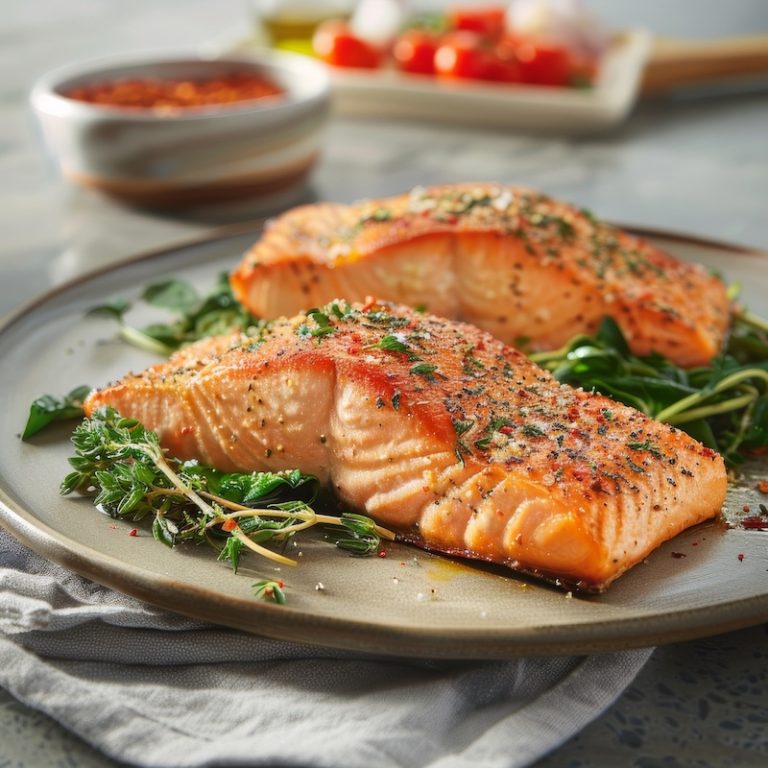
- Success looks like: salmon that's opaque all the way through but still glistens slightly at the center — not chalky, not translucent.
Why This Technique Works
- Salmon cooks by conduction — heat moves from the outside of the fillet inward. Oven temperature controls how fast that heat travels.
- Salmon protein is delicate. It goes from perfectly cooked to overcooked in a narrow window — often less than two minutes at high heat.
- At 250°F, that window stretches to several minutes, which is why slow-baking is so much more forgiving.
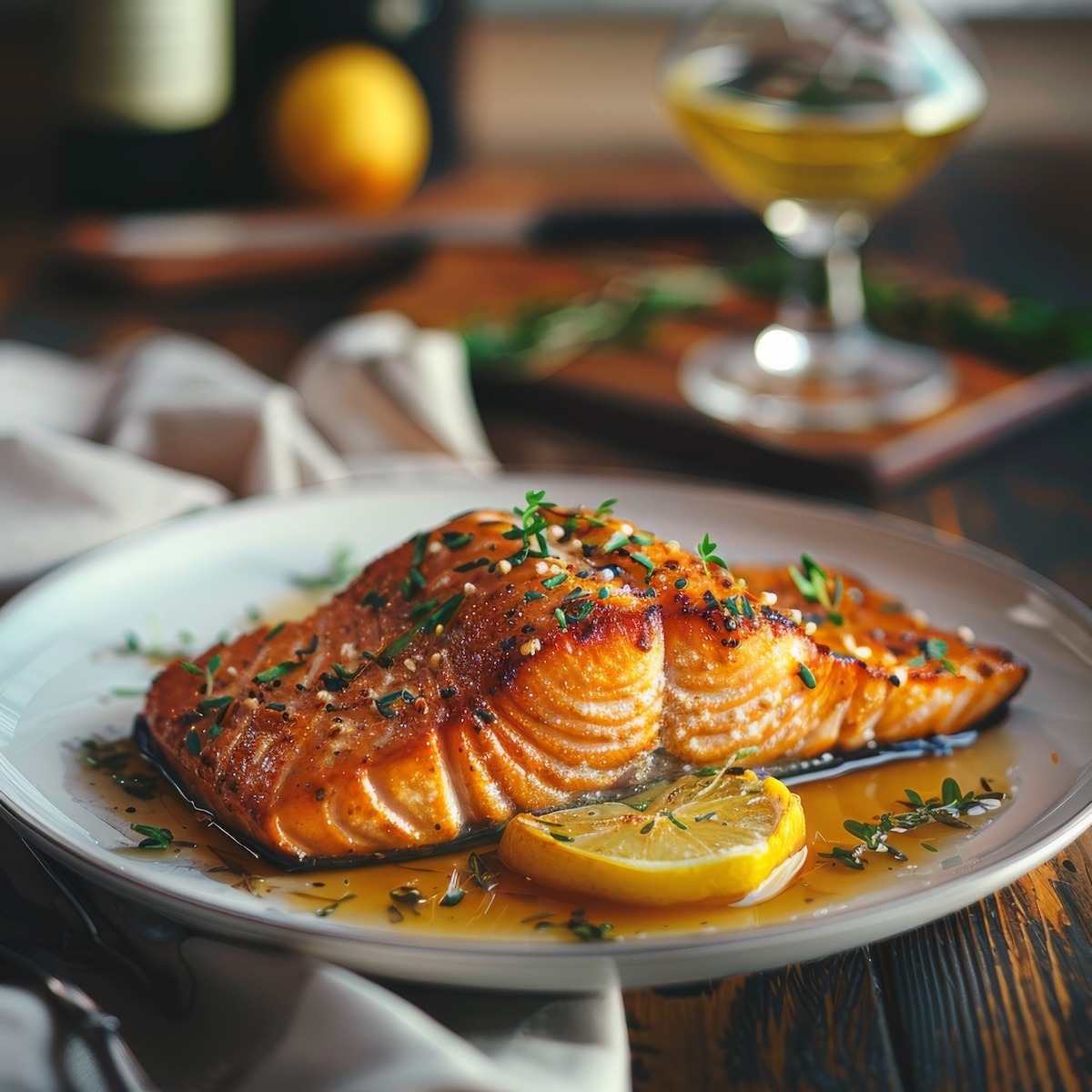
- Browning (the golden edges you get from "roasting") requires surface temperatures above roughly 300°F and a dry surface — it's a different chemical reaction than the cooking happening inside the fillet, which is why you can get a browned exterior and a raw center if you're not careful at high heat.
Think Like a Cook
- Baking, roasting, and slow-baking aren't separate techniques — they're one dial: oven temperature.
- Turn the dial up: you get speed and browning, but less room for error.
- Turn the dial down: you get a longer, more forgiving window, but no crisp exterior.
- Once you think of it as one dial instead of three methods, you can pick the setting based on what you actually want that night, instead of hunting for the "right" technique.
Step-by-Step: Standard Baked Salmon (400°F)
- Pat the fillets dry and season. A wet surface steams instead of cooking cleanly — dry skin also crisps better if you're leaving it on.
- Place skin-side down on a lined sheet or baking dish. Skin acts as a buffer between the flesh and direct heat, which helps prevent overcooking from underneath.
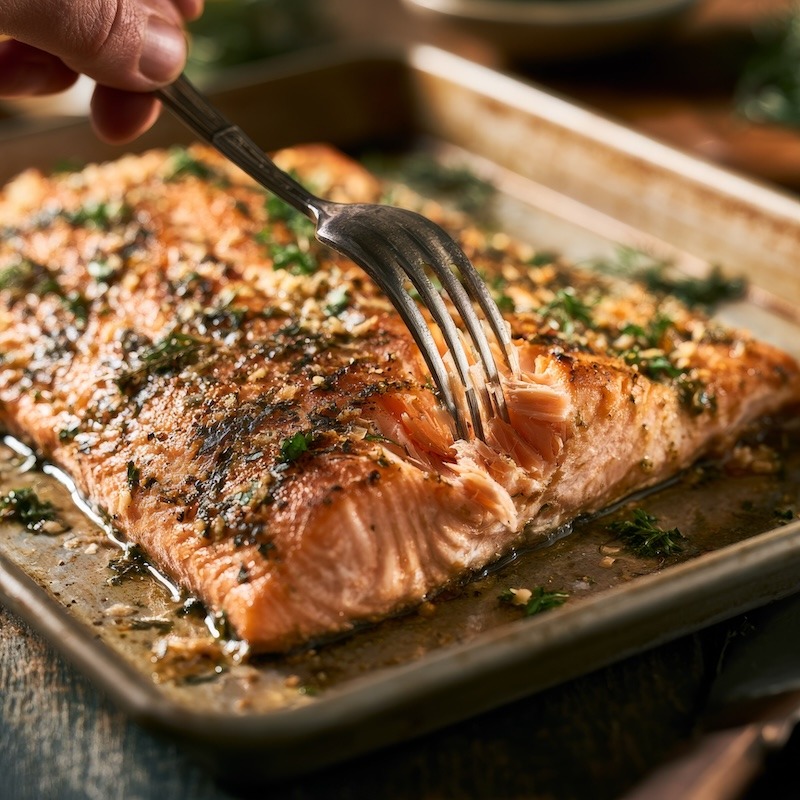
- Bake 12–15 minutes. Look for the flesh to turn from translucent to opaque, working from the outside in. At the thickest part, it should just barely flake with light pressure from a fork — if it flakes easily all the way through, it's already past ideal.
- Pull it slightly before it looks fully done. Carryover heat finishes the center over the next 2–3 minutes of resting.
- Rest 3–5 minutes before serving. Cutting immediately releases moisture you want to stay in the fish.
Step-by-Step: Slow-Baked Salmon (250°F)
- Let the salmon sit at room temperature for about 30 minutes before baking. Starting cold makes the outer edges overcook before the center catches up.
- Season, then cover tightly with foil. The seal traps moisture and steam, which is most of why this method is so forgiving.
- Bake 30–40 minutes. There's no browning to watch for here — check doneness by gently pressing the thickest part. It should feel just set, not firm.
- The flesh will look slightly translucent even when done — this is the one place slow-baked salmon breaks the "opaque means done" rule people apply to standard baking. Trust the texture, not the color.
What Most Cooks Get Wrong
- They treat "opaque and flakes easily" as the finish line, when by the time salmon flakes easily all the way through, it's usually already dry. Flaking should take a little effort at the thickest point.
- They assume higher heat always means a better result. Higher heat means faster and browner — not necessarily better, especially for a delicate protein with a short cooking window.
- They expect slow-baked salmon to look the same as standard-baked salmon when it's done, then keep cooking it because the color looks wrong. Slow-baked salmon stays slightly translucent even fully cooked.
What Went Wrong (And Why)
- Salmon dry and chalky → oven too hot or left in too long → pull it earlier and let carryover heat finish it during the rest.
- Center still raw, edges overcooked → fillet too thick for the time given, or oven temp too high for the thickness → lower the temperature or check the center a few minutes earlier next time.
- Slow-baked salmon watery on the plate → foil seal wasn't tight, or it sat too long before serving → crimp the foil edges fully and serve promptly.
- Skin stuck to the pan → pan wasn't hot enough or wasn't lined → line with parchment, or make sure the pan is fully preheated before the skin hits it.
- No browning on a fillet you wanted crisp → baked instead of roasted at a genuinely higher, uncovered heat → for real browning, you need dry surface heat above ~400°F, uncovered, which slow-baking will never produce.
Control the Variables
- Oven temperature is the main lever. Higher = faster cooking and possible browning, but a shorter margin for error. Lower = slower, more forgiving, no browning.
- Covered vs. uncovered controls moisture and browning independently of temperature. Covering traps steam (why slow-baking works even at low heat); leaving uncovered is required for any real browning.
- Thickness changes cooking time more than almost anything else — a 1.5-inch fillet needs meaningfully longer than a 0.75-inch one at the same temperature.
- Starting temperature of the fish matters more at low oven temps — room-temperature fish cooks more evenly in a slow bake than fish straight from the fridge.
| Method | Oven Temp | Time (1-inch fillet) | Covered? | Result |
|---|---|---|---|---|
| Standard Baked | 400°F (200°C) | 12–15 min | No | Flaky, some browning at edges, moderate margin for error |
| Roasted (high-heat) | 425–450°F | 10–12 min | No | Faster, more surface browning, narrowest margin for error |
| Slow-Baked | 250°F (120°C) | 30–40 min | Yes (foil) | Custardy, very moist, no browning, most forgiving |
When to Use This Technique
- Use standard baking for weeknight dinner when you want it done in 15 minutes and you're comfortable watching it closely.
- Use slow-baking when you're cooking for guests, want a nearly hands-off method, or you tend to overcook fish.
- Skip both if you specifically want crisp, well-browned skin — that calls for a hot pan sear or a broiler finish, not a moderate or low oven.
- Skip slow-baking if you're short on time — 30–40 minutes plus a 30-minute room-temperature rest is a real time investment.
Apply It to Real Food
- Salmon fillets: the standard case above — works for both methods as written.
- Whole side of salmon: slow-baking is the better default here since even cooking across a large piece is harder at high heat.
- Salmon steaks (bone-in): take slightly longer than fillets at either temperature because of the bone; check a few minutes past the fillet times above.
- Trout or arctic char: thinner and more delicate than salmon — use the standard-bake times but check several minutes early.
- Frozen salmon: slow-baking from frozen is more forgiving than standard baking from frozen, since the gentler heat gives the center time to catch up without overcooking the outside.
FAQ
- Is baked salmon the same as roasted salmon? Functionally, yes. Both use dry oven heat at similar temperatures. If there's a difference, it's that "roasting" usually implies slightly higher heat and an uncovered pan, which produces a bit more browning — but many recipes use the words interchangeably.
- What temperature should I bake salmon at? 400°F for a standard bake, or 250°F if you're slow-baking. Both work — they trade speed for forgiveness.
- How do I know when salmon is done without a thermometer? Press the thickest part with a fork. It should flake with slight resistance, not fall apart easily. If you have a thermometer, 125–130°F at the center is medium; 145°F is well-done.
- Why does slow-baked salmon still look translucent when it's done? Low, gentle heat doesn't fully firm up the protein the way high heat does, even at full doneness. Texture is a better doneness cue than color for this method.
- Should I leave the skin on? Yes, if you want extra moisture protection and an easier release from the pan. Remove it beforehand if you don't plan to eat it and don't need the buffer.
- Can I get crispy skin with either of these methods? Not reliably. Both are gentler, drier-heat methods aimed at even cooking, not browning. For crisp skin, sear it in a hot pan first.
- Does slow-baking actually take less oil or fat? It doesn't require added fat to stay moist, since the low heat and covering retain moisture on their own — that's different from saying it's inherently "healthier," which depends on what you're comparing it to.
- What's the best cut for slow-baking? Fillets of even thickness. Thinner or uneven cuts cook unevenly regardless of oven temperature.
- Want the whole idea of dry-heat cooking explained from the ground up? Start with how to bake anything.
- Curious how baking and roasting compare for meat and poultry, not just fish? Read the full roasting technique breakdown.
- Once you've got the salmon in the oven, this dill sauce is worth having ready to go.
- Want something brighter on top? Try this mango salsa instead of a butter sauce.
- Marinating before baking changes more than you'd think — here's everything worth knowing about marinades.
- Not sure if convection changes these times? It does — see convection vs. conventional oven for the adjustment.
- Just want the finished recipe, ingredients and all? get the full baked salmon recipe.
Do you bake salmon hot and fast, or slow and low? I'd like to know which one you reach for on a weeknight versus when you're cooking for people — and whether you've ever ruined a fillet by trusting the wrong doneness cue.