
Turkey Gravy — The Neck-and-Giblets Method Both Our Mothers Used

Both my wife's mother and mine made turkey gravy the same way — starting with the neck and giblets, always. Everything else about how we cook Thanksgiving has changed over the years. That part never has.

Fast Answer

Turkey gravy comes together from pan drippings thickened with a roux, but the richer version here starts with a quick stock built from the turkey's neck and giblets. Make the full version if you have an hour to spare, or the fast version if you don't — both are on this page.

A Family Habit That Never Changed

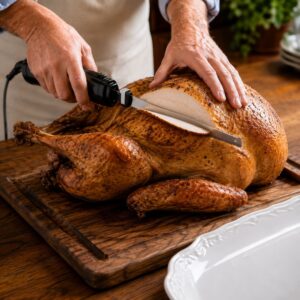
We’ve changed plenty about how we cook Thanksgiving over the years — how the turkey gets roasted, how it gets carved, what sides make the table. But the neck and giblets always go into the gravy, the same way both of our mothers did it.

This page has two versions: the full method, which builds a real stock from those giblets before the gravy ever starts, and a faster version for when there’s no hour to spare.

Jump On the Gravy Train

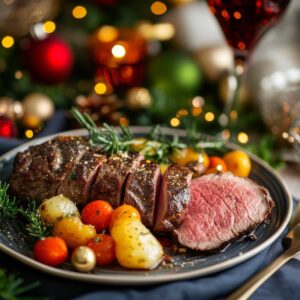
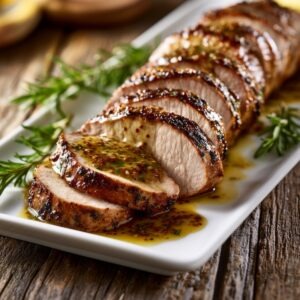
What better way to showcase your Thanksgiving turkey than with a rich, flavorful gravy?

I love gravy, but it’s not something I make often at home. Usually, I opt for a quick pan sauce or a reduction instead of making a big batch of gravy—except at Thanksgiving. Then, I make plenty—enough for the meal and leftovers for the next day. And the next.

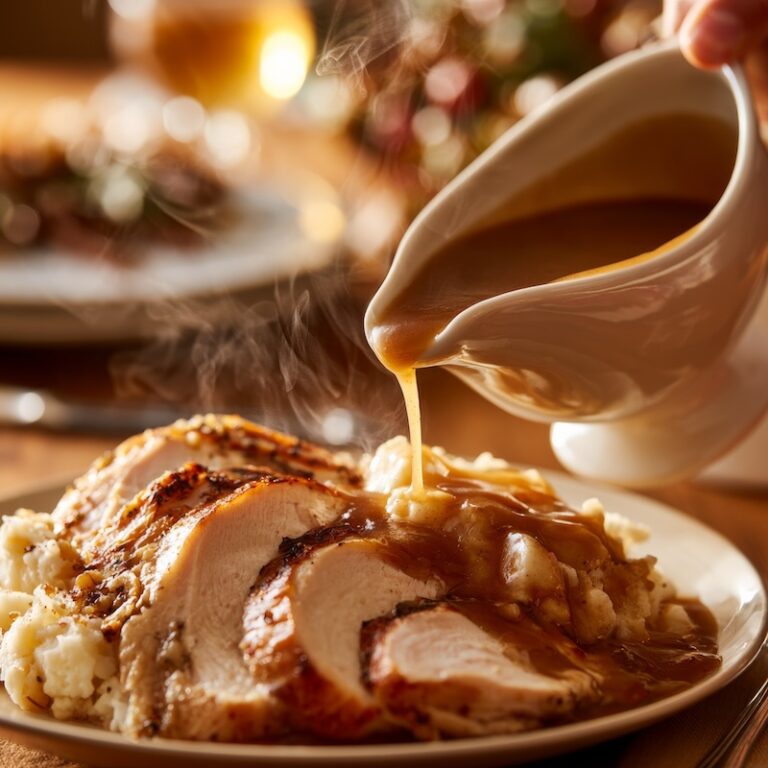
For me, the highlight of Thanksgiving is perfect mashed potatoes topped with thick, rich turkey gravy. If there are seconds (and there always are), I’m heading straight back to the potatoes.

While the turkey makes great leftovers, mashed potatoes have a short shelf life. So, I jump on the mashed potato gravy train. “All aboard!”

And if you want to make your own turkey stock to create the most delicious gravy for Thanksgiving or any time you roast a big turkey, be sure to check out my turkey stock recipe.


Start Here

  • Two ways to make this: the full method builds a quick stock from the neck and giblets first — about 2 hours total, and it's the one both our mothers made. The fast method skips that step and gets you gravy in under 30 minutes.
  • Making the full version? Start the giblet stock while the turkey roasts — it simmers for an hour, mostly hands-off.
  • Either way, save the pan drippings: skim most of the fat but keep 2–3 tablespoons — that's where a lot of the flavor lives.
  • Have your flour and stock ready before you start the roux — it comes together fast once the pan is hot.
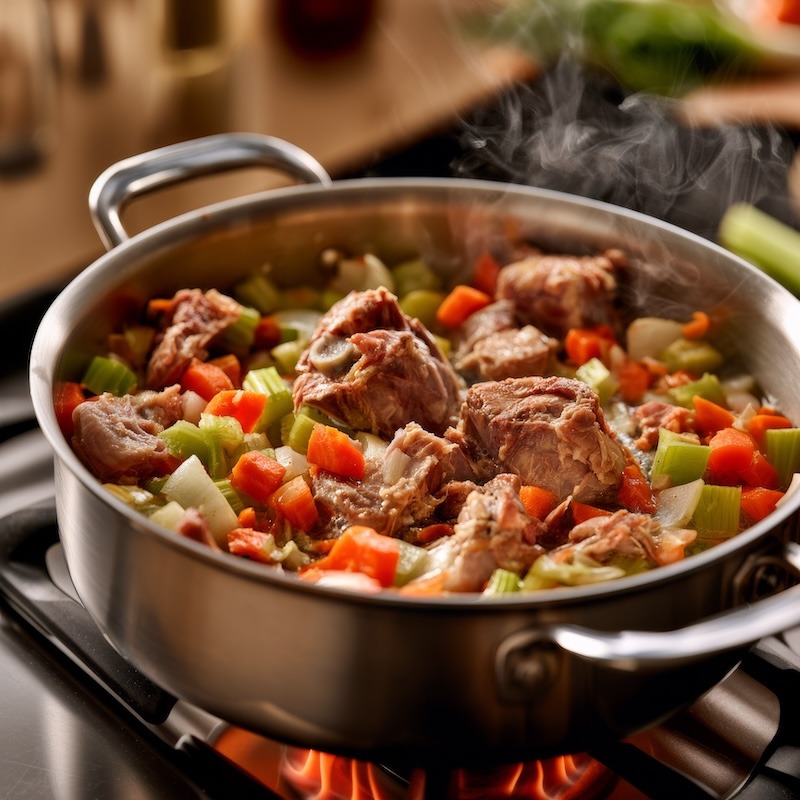
Turkey neck and giblets browning in a saucepan alongside chopped carrot, celery, and onion

Why This Works

  • Building a stock from the neck and giblets first means the gravy has real depth before the pan drippings ever get involved — most quick gravies skip this and lean entirely on drippings for flavor.
  • Deglazing with white wine picks up everything browned and stuck to the pan — concentrated flavor you'd otherwise throw away with the pan.
  • Cooking the flour in fat before adding liquid (a roux) is what thickens the gravy smoothly instead of leaving it lumpy or starchy-tasting.
  • Straining at the end is what makes homemade gravy look and pour like something from a restaurant instead of something clearly made at home.
A gravy boat pouring rich brown gravy over sliced turkey and mashed potatoes
Print Recipe
No ratings yet

Turkey Gravy Recipe

Classic turkey gravy made with neck and giblets
Prep Time30 minutes
Cook Time1 hour 30 minutes
Total Time2 hours
Course: Sauces
Cuisine: American
Keyword: Thanksgiving, turkey gravy

Ingredients

  • 1 tablespoon butter
  • 1 tablespoon olive oil
  • 1 carrot
  • 1 rib celery
  • ½ yellow onion
  • 2 cloves garlic
  • neck and giblets except the liver from the turkey
  • ¾ cup dry white wine
  • 8 cups chicken stock or turkey stock
  • 1 teaspoon black peppercorns whole
  • 4 sprigs fresh parsley
  • 4 sprigs fresh thyme
  • 2 teaspoons poultry seasoning
  • 2 bay leaves
  • ½ cup dry white wine
  • turkey pan drippings all but 2-3 tablespoons of fat skimmed off
  • ½ cup all purpose flour
  • salt and pepper to taste

Instructions

Prep the Vegetables

  • Peel and chop the carrot, celery, onion, and garlic.

Measure Your Stock

  • Measure out the 8 cups of chicken or turkey stock. Having it ready before you start keeps things moving.

Brown the Neck and Giblets

  • Heat the butter and oil in a saucepan over medium heat. Add the neck and giblets and cook until they're cooked through and have taken on some color.
  • This step is where much of the flavor in the final gravy actually starts — don't rush it.

Caramelize the Vegetables

  • Add the chopped vegetables and garlic, and sauté until caramelized, about 15 minutes, stirring occasionally to prevent sticking. Turn the heat down if things are browning too fast.

Deglaze

  • Turn the heat to medium-high and add ¼ cup of the white wine to deglaze, scraping up the browned bits from the bottom of the pan. Reduce until nearly evaporated, about 5 minutes.

Build the Quick Stock

  • Add the 8 cups of stock, peppercorns, parsley, thyme, poultry seasoning, and bay leaves. Reduce heat to low and simmer, uncovered, for 1 hour.
  • Season lightly with salt and pepper. Strain this "quick stock" and set it aside.

Deglaze the Roasting Pan

  • Remove the turkey from the roasting pan. Pour off the pan drippings and reserve. Place the roasting pan over high heat — straddling two burners if needed — and deglaze with the remaining ½ cup white wine.

Skim and Return the Drippings

  • Skim all but 2–3 tablespoons of fat from the reserved pan drippings, then return the drippings to the pan.

Make the Roux

  • Sprinkle the flour into the pan and cook over medium-high heat, stirring and scraping constantly, for 2–3 minutes.
  • Don't stop stirring here — this is where lumps happen if the flour sits still too long.

Thicken the Gravy

  • Pour in the quick stock and bring to a boil over medium heat to thicken.

Season and Strain

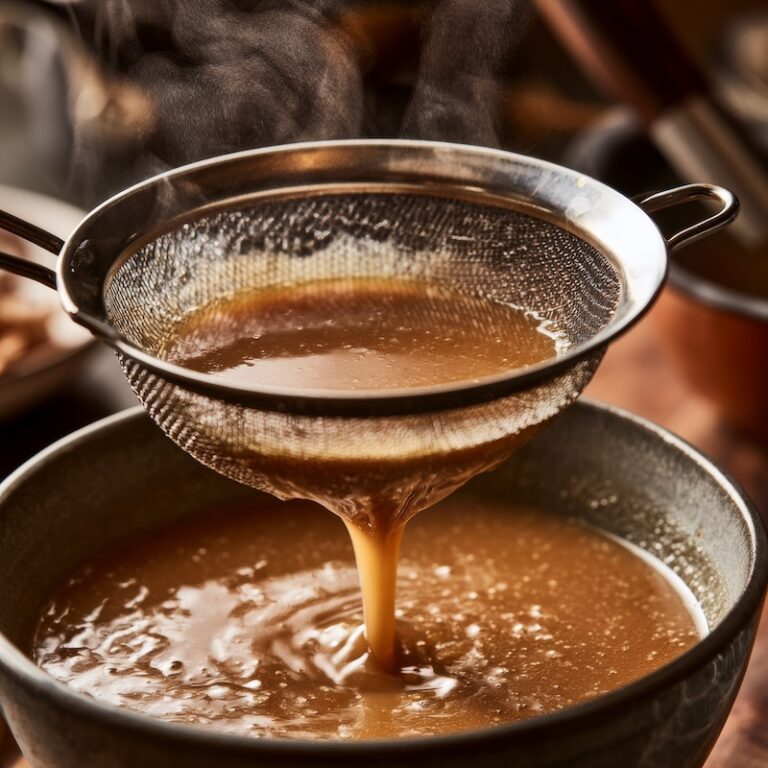
  • Taste and adjust the seasoning, then strain through a fine mesh strainer before serving.
What Most Cooks Get Wrong

  • Skimming out all the fat: leave 2–3 tablespoons in the pan on purpose — it's what carries flavor into the roux.
  • Adding cold liquid to a hot roux: warm it first, or expect lumps.
  • Rushing the roux: it needs a couple of minutes of real cooking to lose its raw flour taste, not just a quick stir.
  • Skipping the strain: pan drippings and giblets leave behind bits nobody wants in the gravy boat.
Finished gravy being strained through a fine mesh strainer into a bowl

Quick Fixes and Tips

  • Gravy too thin? Simmer it longer, or mix a spoonful of flour with cold water and whisk it in.
  • Gravy too thick? Thin it with a little extra warm stock, a splash at a time.
  • Too salty? Pan drippings can be salty on their own — taste before you add more.
  • Making it ahead? The full method's stock can be made a day or two before Thanksgiving and refrigerated — then it's just the pan drippings and roux left to do on the day.

Storage and Make-Ahead

  • Both versions keep refrigerated up to 4 days.
  • The full method's quick stock can be made up to 2 days ahead — leaves just the pan-drippings step for Thanksgiving Day itself.
  • Reheat gently over low heat, whisking often; add a splash of stock if it's thickened too much in the fridge.
  • Freezes well for up to 2 months — gravy is one of the few Thanksgiving components that freezes without much quality loss.

Turkey Gravy in a Hurry

Need a fast but delicious turkey gravy recipe…

Who says you have to roast a turkey to have turkey gravy? Maybe you want some turkey gravy for leftovers or open-faced turkey sandwiches.

We don’t roast a big turkey that often except for Thanksgiving, but I have many friends who enjoy roasting the big bird several times a year. It is an inexpensive way to put protein into your diet and can be used for soups, fajitas, sandwiches, and many other recipes.

Here’s a quick and easy recipe that should do the job.

A gravy boat pouring rich brown gravy over sliced turkey and mashed potatoes
Print Recipe
No ratings yet

Turkey Gravy - Fast Method

A quick and easy version of turkey gravy
Prep Time10 minutes
Cook Time15 minutes
Total Time25 minutes
Course: Sauces
Cuisine: American
Keyword: turkey gravy
Servings: 4 cups

Equipment

  • saucepan

Ingredients

  • ½ cup melted butter
  • ½ cup flour
  • 4 cups chicken or turkey stock
  • 2 sprigs fresh thyme sprig
  • Pan drippings from roast turkey
  • salt & ground black pepper to taste

Instructions

Gather Everything First

  • Assemble all your ingredients before you start — this comes together quickly once the pan is hot.

Make the Roux

  • Make a roux with the melted butter and flour, and set it aside.
  • This can be made ahead and held at room temperature for an hour or two if that helps your timing.

Bring the Stock to a Boil

  • In a saucepan, bring the chicken or turkey stock, thyme sprig, and pan drippings to a boil, then reduce to a simmer.

Whisk in the Roux

  • Whisk the reserved roux into the simmering stock, working out any lumps as you go.

Cook to Thicken

  • Cook over low heat for about 10 minutes, until the gravy reaches the desired thickness.

Season and Strain

  • Season with salt and pepper to taste. Strain to remove the thyme sprig and any stray bits from the pan drippings, then serve.

Notes

Most sauce recipes say to strain at this point, and it is better for presentation, but I honestly can't tell you I do it all the time. Just be sure to get the sprig of thyme out of the gravy boat.

Frequently Asked Questions

What is the secret to the best turkey gravy? Building real flavor before the roux ever goes in — either from a quick stock made with the neck and giblets, or at minimum from well-browned pan drippings.

What are common mistakes when making turkey gravy? Skimming out all the fat, adding cold liquid to a hot roux, rushing the roux itself, and skipping the strain at the end.

What can I add to turkey gravy to make it taste better? A splash of white wine to deglaze the pan, fresh thyme, and a proper simmer — bottled gravy mixes rarely get any of these right.

How do I make gravy from scratch? Start with a fat — butter, pan drippings, or both — cook flour into it to make a roux, then whisk in warm stock and simmer until thickened.

Can I make turkey gravy without giblets? Yes — the fast method on this page skips them entirely and relies on pan drippings and stock instead.

Can I make turkey gravy ahead of time? Yes, especially the full method’s stock — make it up to 2 days ahead and refrigerate, then finish with the pan drippings on the day.

Why is my gravy lumpy? The roux and the liquid were probably too different in temperature — whisk in warm liquid gradually, not all at once.

Can I use cornstarch instead of flour? Yes, though the texture will be glossier and lighter than a traditional roux-thickened gravy — use about half as much cornstarch as flour, and mix it with cold water first.

More on This Topic

If your family has its own must-never-change step — the neck and giblets, or something else entirely — I'd like to hear what it is.

Leave a Reply

Your email address will not be published. Required fields are marked *

Recipe Rating


This site uses Akismet to reduce spam. Learn how your comment data is processed.