
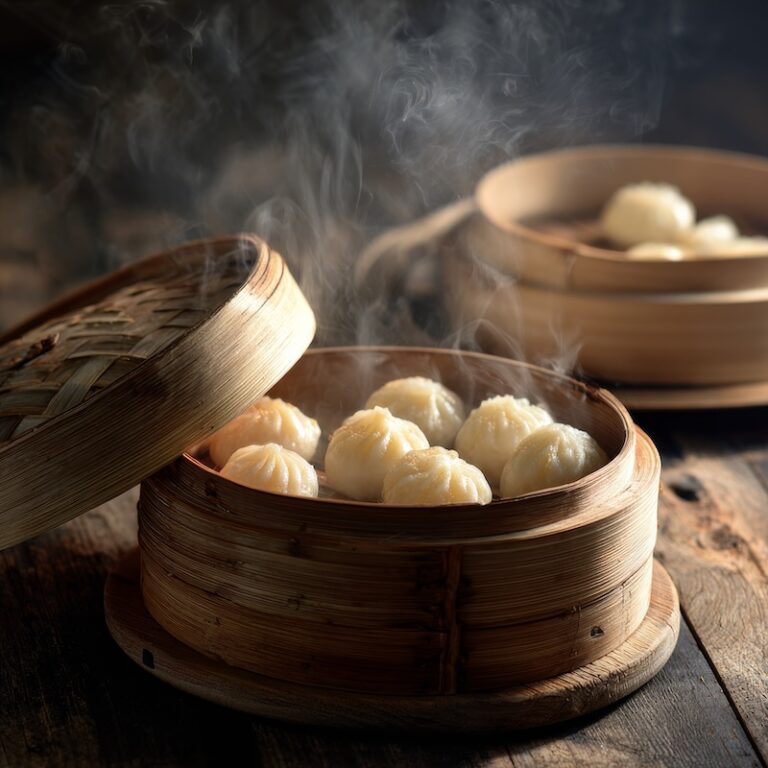

Steaming is one of the most underused techniques in the home kitchen — probably because it seems too simple to produce anything interesting. But it's the reason Chinese restaurants get their fish so silky, why dim sum dumplings have that particular tender bite, and why steamed vegetables actually taste like vegetables rather than waterlogged versions of themselves.
How to Steam Food: The Technique, the Science, and What Goes Wrong
Steaming has a reputation problem. Most American home cooks treat it as the sad, virtuous alternative to real cooking — something you do when you’re on a diet or out of ideas. That reputation is completely undeserved, and it’s costing you some of the best food you could be making.
Steaming is the dominant cooking technique across most of Asia, it’s been used since the Paleolithic period, and when it goes wrong — which it does, reliably, in ten specific ways — it’s almost always for reasons that are completely fixable once you understand what steam actually does.
Start Here: What Steaming Is Good For
- Best for: Delicate and moisture-sensitive foods — vegetables, fish and shellfish, dumplings and bao buns, eggs, thin cuts of white meat poultry, grains like rice and quinoa, and steamed desserts like puddings and custards.
- The key characteristic: Steaming is a gentle technique that presents the food as it actually is — its natural flavor, color, and texture, unmasked by browning or added fat. This means the quality of the ingredient matters more than in almost any other cooking method. Fresh intensified equals something worth eating. Not-so-fresh intensified equals something worth throwing out.
- What steaming won't do: Brown food. Develop a crust. Create the Maillard reaction. If you want those things — roasting, sautéing, grilling, and pan roasting all do them well. Steaming is not a substitute for those techniques; it's a different tool entirely.
- What you need: A pot with a tight-fitting lid. Something to elevate the food above the water — a steamer basket, a bamboo steamer, a roasting rack, or a metal colander set over simmering water. That's it. No specialized equipment required.
Steaming History
Steaming is one of the oldest cooking methods on record. Evidence suggests that the Aurignacian people of southern France were among the first modern humans in Europe to cook food by wrapping it in wet leaves, a steaming method still used today for tamales, banana-leaf fish, and countless other traditional dishes around the world.
While steaming never became dominant in Western kitchens, it has been central to cooking across China, India, and much of North Africa and Southeast Asia for thousands of years. The likely reason is practical: steaming requires remarkably little fuel and very little water.
In regions where both were scarce, a technique that could cook a large amount of food with minimal resources was not a preference; it was a necessity. The bamboo steamer, stackable so multiple dishes can cook simultaneously over a single heat source, is one of the most efficient cooking vessels ever designed.
The traditional English steamed pudding, dumplings, bao buns, and Moroccan couscous steamed over a tagine run quietly through the cooking traditions of most of the world. Americans just somehow missed the memo.
Why Steaming Works: The Science in Plain Language
- Steam vs. boiling water: Steam and boiling water are both at 212°F, but they behave very differently. Boiling water is turbulent — it physically agitates the food, leaches water-soluble nutrients into the liquid, and can batter delicate textures apart. Steam is still. It surrounds the food gently and transfers heat through contact and convection without any of the physical disruption.
- Why nutrients stay in the food: Water-soluble vitamins — particularly Vitamin C and the B vitamins — leach out of food when it's submerged in liquid. Steaming preserves up to 50% more of these nutrients than boiling because the food never touches the water. The steam rises, cooks, and the condensation runs back into the pot rather than carrying nutrients with it.
- The convection effect inside a lidded pot: Think of the steam inside a covered pot as moving in a constant loop. The hottest vapor rises from the boiling liquid to the lid, cools slightly on contact with the metal, and sinks back down — only to be reheated and rise again. This circulation means the food is cooked from all sides simultaneously, not just from below. The tighter the lid, the more efficient this loop.
- Why so little water is needed: Steam takes up 1,600 times the volume of the water it came from. A small amount of liquid — sometimes just a few ounces — produces enough vapor to fill a covered pot and cook the food efficiently. You're not heating a large volume of liquid, just enough to keep steam flowing.
- Why steaming doesn't brown food: Browning through the Maillard reaction requires surface temperatures above 300°F. Steaming operates at 212°F. No surface will ever reach browning temperature in a steam environment. This isn't a flaw — it's a feature. The trade-off is purity of flavor over complexity from browning.
Think Like a Cook: The One Idea That Changes Everything
- Steaming is fundamentally about getting out of the way. Every other high-heat technique — roasting, grilling, sautéing — involves adding something to the food: color, crust, fat, caramelized flavor. Steaming subtracts. You're presenting the ingredient as close to its natural state as cooked food can be. Once you understand that, everything else follows: why fresh ingredients matter more in steaming than in any other technique, why seasoning happens at the end rather than the beginning, why adding aromatics to the steaming liquid is a way of adding without intruding. You're not building flavor on top of the food — you're coaxing the food's own flavor to the surface.
- This same logic tells you when steaming is the wrong tool. If you want depth, complexity, or a browned crust — reach for dry heat. If you want the ingredient to speak for itself — steam it.
Ways to Steam: Equipment Options From Basic to Advanced
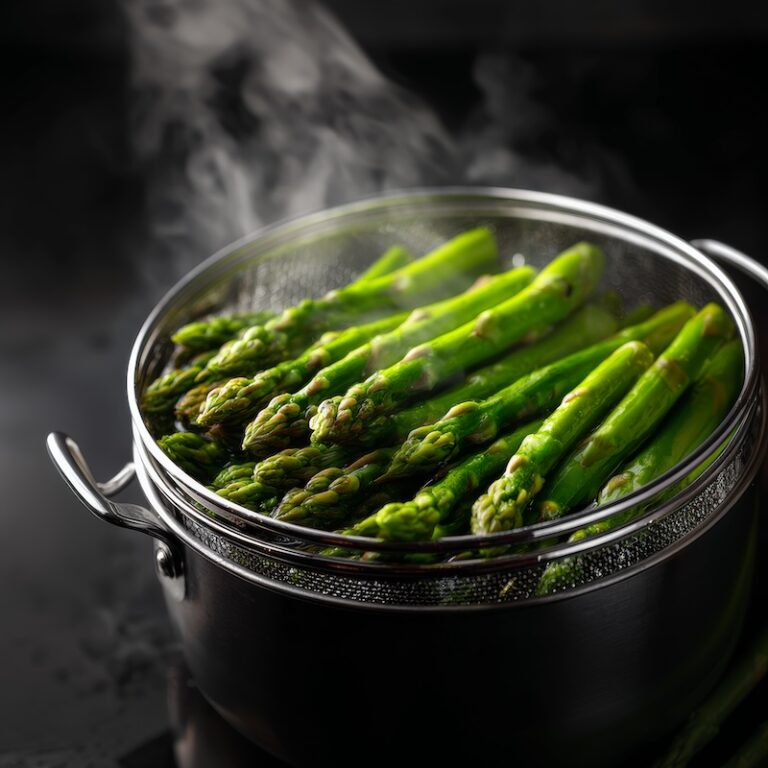
- Steamer basket over a pot: The most common setup. A collapsible metal basket sits in the pot above simmering water. Adjusts to fit most pot sizes. Works for almost any vegetable, fish fillet, or dumpling. The everyday workhorse.
- Bamboo steamer: Stackable bamboo baskets designed to sit over a wok of simmering water. Two or three baskets can cook different foods simultaneously since flavor stays in each food rather than leaching into the liquid. Line with parchment or a leaf before adding dumplings or buns to prevent sticking.
- Improvised steamer: A roasting rack in the bottom of a large pot works for bigger pieces of meat or fish. A metal colander set over simmering water works for cut vegetables. A heatproof plate set on crumpled aluminum foil rings works for almost anything. As long as the food is above the water and the pot has a lid, you are steaming.
- Microwave steaming: Add a splash of water or broth to seasoned food in a microwave-safe dish, cover tightly with plastic wrap leaving one corner vented, and cook on high for 3–5 minutes for most vegetables. Fast, convenient, one dish to wash.
- Electric steamer: A dedicated countertop appliance with tiered baskets and a timer. Good for batch cooking or if you steam frequently enough to justify the counter space.
- Foil packet: Wrap food with a splash of liquid in a sealed foil packet and bake or grill. The food steams in its own trapped vapor. Particularly good for fish and shellfish where the liquid becomes a natural sauce.
- Pressure cooker or Instant Pot: Steam under pressure at temperatures above 212°F — significantly faster than conventional steaming. Useful for denser foods or larger cuts where conventional steaming would take too long.
Step-by-Step: How to Steam Properly
- Step 1 — Start with the best ingredients you can find: Steaming intensifies and brightens flavor — which means it amplifies whatever is already there, good or bad. Broccoli past its prime steamed is just intensified past-its-prime broccoli. Fresh produce and quality proteins are not optional in steaming the way they might be forgiven in a long braise.
- Step 2 — Cut everything to uniform size: Steam is gentle and does not agitate the food. If your cuts are uneven, some pieces will be perfectly done while others are either underdone or mushy. Just make sure nothing stands out as significantly larger or smaller than the rest. This is also where knife skills earn their place.
- Step 3 — Bring the water to a boil before adding the food: This is the step most home cooks skip when they're in a hurry. Starting food in a cold pan means it begins cooking as the water heats — before steam is actually flowing. The result is mushy surfaces and uneven cooking. Bring the water to a steady boil first. Then add the food.
- Step 4 — Don't crowd the steamer: Steam is far less dense than water. It cooks gently and can't force its way through a pile of food. Place food in a single shallow layer with space around each piece. If you have more food than fits, use a tiered bamboo steamer or cook in batches.
- Step 5 — Use a tight-fitting lid: Steam travels in a straight line away from the heat source until it hits something and ricochets back. A loose lid lets steam escape constantly — reducing the cooking temperature and slowing everything down. A tight lid traps steam and creates the convection loop that cooks food from all sides.
- Step 6 — Don't peek: Every time you lift the lid you release steam, drop the temperature, and extend the cooking time. Check the food once — a couple of minutes before the recipe suggests it should be done — then put the lid back immediately. If you genuinely can't help yourself, buy a pot with a glass lid.
- Step 7 — Cook to texture, not time: Recipe times are guidelines. Check vegetables by piercing with a fork or knife tip — tender with slight resistance is the target for most. Fish should flake when pressed gently. Dumplings should be puffed and firm.
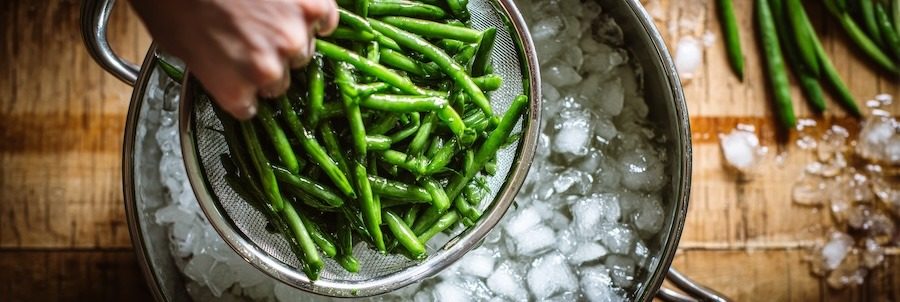
- Step 8 — Account for carryover: Small pieces of food have little thermal mass — carryover cooking happens fast. If you're serving hot, steam is the last thing you do before plating. If you're serving cold, shock the food immediately in ice water. If you need to steam ahead, steam to just underdone, shock in ice water, and reheat to order.
Visual Cues: What to Look For
- Steady visible steam escaping around the lid → water is at a proper boil → food can go in. No visible steam → water not hot enough yet → wait.
- Vegetables turn from dull to vivid, bright color → heat has penetrated and cell structure has relaxed → start checking for doneness. Color fading or turning dull green/grey → overcooked → remove immediately.
- Fish turns opaque from translucent → proteins are setting → check for flakiness. Flakes easily when pressed with a fork → done. Still resists → needs another minute.
- Dumplings look puffed and firm rather than soft and doughy → dough has cooked through → test one by pressing gently; it should spring back slightly.
- Condensation dripping from lid onto food → wrap a clean kitchen towel around the lid → in bamboo the porous lid absorbs moisture naturally.
- Water level dropping significantly → add more hot water → keep a kettle nearby; adding cold water drops the temperature and extends cooking time.
How to Add Flavor When Steaming
- Aromatics in the water: Add slices of ginger, garlic, lemongrass, or shallots to the steaming liquid. As the steam rises it infuses subtle flavor into the food. Particularly effective with fish, seafood, and vegetables.
- Herbs in the water: Add sprigs of thyme, rosemary, dill, or bay leaves to the steaming liquid. The fragrant steam adds a delicate herbal note. Works well with poultry, fish, or potatoes.
- Wine or stock instead of water: Replace some or all of the steaming water with white wine, chicken stock, seafood stock, or vegetable broth. Adds depth and complexity — especially noticeable with seafood or chicken.
- Citrus peels: Toss lemon, lime, or orange peel into the steaming liquid for a bright, zesty aroma. Works beautifully with fish, shrimp, and asparagus.
- Season the food directly: Salt, pepper, spice blends, or fresh herbs applied directly to the food before steaming penetrate slightly as it cooks. More assertive than flavor from the liquid — both approaches work, they just produce different results.
- Marinate before steaming: Marinate fish, tofu, or chicken in soy sauce, miso, citrus juice, or spices for 20–30 minutes before steaming. Adds bold flavor throughout rather than just at the surface.
- Layer over aromatics: Line the steamer basket with herb sprigs, lettuce, or cabbage leaves, then place the food on top. Gently perfumes the food without overwhelming it.
- Finish with sauce or fat: After steaming, drizzle with olive oil, soy sauce, sesame oil, a vinaigrette, or compound butter. This is the step that takes steamed food from virtuous to memorable — the finish provides the richness and complexity the technique itself doesn't.
What Most Cooks Get Wrong: The Ten Steaming Mistakes
- Mistake 1 — Using substandard ingredients: Steaming intensifies and brightens whatever flavor is already in the food. A vegetable past its prime goes into the steamer already compromised and comes out with that compromise amplified. The whole point of steaming is to present the food as it naturally is — which only works if the food is worth presenting. Buy fresh, steam fresh.
- Mistake 2 — Not cutting to uniform size: Steam cooks gently and doesn't agitate food. Uneven pieces cook unevenly — end of story. Consistent size leads to consistent results every time.
- Mistake 3 — Not waiting for the water to boil: If you place food in the steamer before the water boils, the food starts cooking in warm humid air rather than active steam. The result is soft, mushy surfaces with uneven interior cooking. There is no time savings in starting cold. Wait for the boil.
- Mistake 4 — Overcrowding the pan: Steam is 1,600 times the volume of water but far less forceful. It cooks the surfaces it can reach and leaves the rest. Pile food into a steamer basket and the pieces in the center will be undercooked while the outside pieces are done. Single layer, space between pieces, always.
- Mistake 5 — Using a loose lid: Without a lid to reflect steam back, most of it escapes. With a tight lid, steam bounces off the metal, cools slightly, sinks, gets reheated, and rises again — cooking the food from all sides. Loose lid means slower, uneven cooking.
- Mistake 6 — Overcooking: The difference between crisp-tender steamed vegetables and mush can be sixty seconds. Check a couple of minutes early. Lift the lid once, quickly, and replace it immediately. Trust the technique.
- Mistake 7 — Peeking constantly: Every time you lift the lid you lose steam, drop the temperature, and have to wait for it to rebuild. Check once, early, then leave it alone.
- Mistake 8 — Ignoring carryover cooking: Small pieces of food have little thermal mass. Carryover cooking happens very fast. If you're serving cold or waiting for guests, shock in ice water to stop the cooking at exactly the right moment.
- Mistake 9 — Not enough time on a busy weeknight: This is when the microwave saves you. Bite-sized pieces of fish, tender vegetables, seasoned with salt, pepper, and a drizzle of olive oil, two tablespoons of broth, covered tightly with plastic wrap with one corner turned back. Six minutes on high, stirring every two minutes. Fresh lemon juice and herbs to finish. One dish, no steamer basket, dinner in under ten minutes.
- Mistake 10 — Not rinsing grains before steaming: Rice and other grains become sticky and clumped when surface starches gelatinize during cooking. Rinse in several changes of cold water until the water runs clear. The result is light, fluffy, separate grains instead of a starchy mass.
Quick Diagnosis: What Went Wrong and How to Fix It
- Vegetables mushy and grey → overcooked → check earlier next time; shock in ice water immediately when done.
- Food cooked unevenly → uneven cut sizes or overcrowded steamer → cut to uniform size; give food space.
- Surface mushy, interior underdone → food went into a cold steamer → always bring water to a full boil before adding food.
- Food bland and flat → ingredients not fresh, or no seasoning → steaming can't rescue poor-quality ingredients; season after cooking or add aromatics to the steaming liquid.
- Dumplings or bao sticking to the steamer → no liner used → line bamboo steamers with parchment or a cabbage leaf; lightly oil metal steamer baskets.
- Rice sticky and clumped → surface starch not rinsed off → rinse grains in several changes of cold water until water runs clear before cooking.
- Ran out of water mid-cook → not enough liquid to start → keep a kettle of hot water nearby; add hot water only, never cold.
- Condensation dripping onto food from metal lid → wrap a clean kitchen towel around the lid → or switch to a bamboo steamer whose porous lid naturally absorbs moisture.
Quick Fixes and Tips Worth Knowing
- Add flavor to the steaming liquid: Water produces neutral steam. Stock, white wine, or a combination produces subtly flavored steam that permeates the food as it cooks. Add sliced ginger, garlic, lemongrass, citrus peels, or herb sprigs for a more aromatic result — particularly effective with fish, shellfish, and dumplings.
- Season the food directly before steaming: Salt, pepper, spice blends, and fresh herbs applied directly to the food penetrate slightly as it cooks. Direct seasoning stays closer to the surface and is more assertive than flavor from the liquid. Both approaches work; they produce different results.
- Finish with sauce or fat: Because steaming produces no Maillard flavor and no fond, the finish matters more than in other techniques. A drizzle of good olive oil, soy sauce and sesame oil, a vinaigrette, or a compound butter adds the richness and complexity the technique itself doesn't provide. This is where steamed food goes from healthy to memorable.
- The bamboo steamer tip: Always line bamboo steamers with parchment paper or a leaf — cabbage, lettuce, or banana — before adding dumplings or buns. The food won't stick, and cleanup takes seconds instead of minutes.
- Steam and shock for meal prep: Steam vegetables to just underdone, shock in ice water, drain, and refrigerate. They hold their color and texture for days and reheat in seconds. This is how restaurant kitchens handle vegetables for service.
Control the Variables: How to Adapt This Technique
- Heat level: Once the water is boiling, maintain a steady simmer. High heat wastes water and can produce slightly more aggressive steam that batters delicate foods. Medium heat once boiling is the reliable default.
- Amount of liquid: Only 1 to 2 inches in the pot — enough to produce steady steam for the duration of cooking. More liquid is not better. Keep hot water nearby to replenish if needed.
- Steaming liquid composition: Water is neutral. Stock, wine, and aromatics add flavor to the steam and therefore to the food. The more aromatic the liquid, the more flavor transfer — particularly effective with fish and shellfish.
- Cut size and thickness: The single biggest variable in cooking time. Uniform size is more important than any specific size — consistency produces predictability.
- Lid tightness: Tighter lid = more steam trapped = faster, more even cooking. A bamboo steamer lid is intentionally porous — it absorbs condensation rather than dripping it back onto food.
- Altitude: Water boils at lower temperatures at higher altitudes — about 202°F at 5,000 feet, 194°F at 10,000 feet. Steaming takes longer at altitude. Add time and check for doneness more frequently.
When to Use Steaming — and When Not To
- Use it for: Fresh vegetables where you want to preserve color, texture, and nutrients. Delicate fish and shellfish. Dumplings, bao buns, and stuffed pasta. Thin cuts of chicken breast. Rice and whole grains. Custards and steamed puddings.
- Use it when: The ingredient is worth presenting on its own terms. When you want a clean, light result without added fat. When you're cooking ahead and want to shock-and-reheat for service.
- Don't use it when you want browning: Steaming cannot produce the Maillard reaction. If the result you're after involves a crust, caramelization, or any kind of browned surface — roast, sauté, or grill instead.
- Don't use it for tough braising cuts: Collagen-rich cuts need sustained heat in liquid to convert to gelatin. Steaming provides the heat but not the submersion — these cuts will be tough and dry. They need braising.
- Don't use it for poor-quality ingredients: There's nowhere to hide. If the ingredient isn't fresh and worth eating, steaming will make that fact more obvious, not less.
- Don't use it and walk away: Steaming is fast. A minute or two is the difference between perfectly cooked and overcooked for most vegetables and fish. It rewards attention, not the hands-off patience of a braise or a roast.
Apply It: Steaming Across Different Foods
- Broccoli, green beans, asparagus: 4–6 minutes over boiling water. The moment the color turns vivid and bright — start checking. A fork should meet slight resistance, not slide through. Shock in ice water if not serving immediately.
- Fish fillets: 6–10 minutes depending on thickness. The flesh should turn opaque and flake easily when pressed. Add ginger, scallion, and a splash of soy to the steaming liquid for a classic Chinese preparation that makes the technique feel like a destination rather than a side dish.
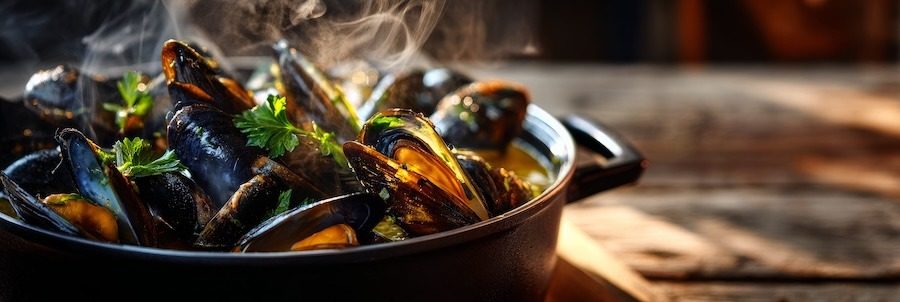
- Shellfish — shrimp, clams, mussels: 3–5 minutes for shrimp; clams and mussels until the shells open. Steam over white wine, garlic, and herbs — the liquid they release becomes an instant sauce. Discard any that don't open.
- Dumplings and bao buns: 8–12 minutes in a lined bamboo steamer. They should look puffed and feel firm. Don't stack them — they need space and will stick together if touching.
- Chicken breast (thin cuts): 8–12 minutes. Steam keeps white meat moist in a way that direct heat struggles with. Season directly and finish with a sauce — steamed chicken breast without a finish is austere. With a good sauce it's a different dish entirely.
- Rice and grains: Rinse first until water runs clear. 1 cup grain to 2 cups liquid. Bring to a boil, stir, cover, reduce to low, and leave until liquid is fully absorbed — 20 minutes for white rice, up to 50 for brown rice. Do not lift the lid during cooking.
- Potatoes: Cut into even 1-inch cubes. 10–15 minutes. Steamed potatoes for mash or potato salad have a cleaner, less waterlogged texture than boiled ones.
Steaming Cheat Sheet
- Start with: Fresh, high-quality ingredients. Steaming amplifies what's already there.
- Cut to: Uniform size. Consistent size = consistent results.
- Water level: 1–2 inches in the pot. Keep hot water nearby to replenish.
- Always: Bring water to a full boil before adding food.
- Lid: Tight-fitting. Keep it on. Peek once, quickly, then leave it closed.
- Space: Single layer, room around each piece. Steam cannot push through a pile.
- Timing (approximate): Leafy greens 1–2 min · Asparagus, green beans 4–6 min · Broccoli, cauliflower 5–7 min · Fish fillets 6–10 min · Shrimp 3–5 min · Dumplings/bao 8–12 min · Chicken breast 8–12 min · Potatoes (cubed) 10–15 min · Rice 20–25 min
- Serving hot: Steam last, serve immediately.
- Serving cold or prepping ahead: Shock in ice water the moment it's done. Reheat to order.
- Grains: Rinse until water runs clear before steaming. Prevents sticky clumping.
- Flavor: Add aromatics to the steaming liquid, season the food directly, or finish with sauce or fat. Steamed food without a finish can be austere — a good sauce changes everything.
Popular Steamed Dishes
| Dish | Description | Wine Pairing |
|---|---|---|
| Steamed Whole Fish (Chinese style) | Whole fish steamed with ginger, scallions, soy, and sesame oil. Moist and delicate. | Riesling (off-dry) or Sauvignon Blanc |
| Steamed Dumplings (Dim Sum) | Delicate wrappers filled with pork, shrimp, or vegetables. Light, savory, and satisfying. | Sparkling wine or Grüner Veltliner |
| Steamed Mussels | Mussels steamed with garlic, herbs, and white wine. Briny, tender, and aromatic. | Muscadet or Albariño |
| Steamed Bao Buns | Soft, fluffy buns often filled with pork, chicken, or vegetables. | Off-dry Gewürztraminer or Rosé |
| Steamed Vegetables (mixed) | Vibrant, crisp-tender vegetables—classic side or main for light eating. | Sauvignon Blanc or Vermentino |
| Steamed Clams with Garlic & Wine | Sweet clams steamed with garlic, parsley, and white wine. | Pinot Grigio or Sancerre |
| Steamed Lobster | Lobster steamed to tender perfection, served with butter or lemon. | Chardonnay (lightly oaked) |
| Steamed Chicken with Ginger & Scallion | Chicken steamed with aromatics for juicy, clean flavors. Often served with dipping sauce. | Chenin Blanc or light Pinot Noir |
| Steamed Tofu with Soy & Garlic | Silky tofu steamed with soy, garlic, and sesame oil. Light, umami-rich dish. | Dry Riesling or Sauvignon Blanc |
| Steamed Couscous (Moroccan) | Fluffy couscous steamed over broth with spices. Often part of a larger spiced dish. | Grenache Blanc or Viognier |
Explore More on This Topic
- Flavored Steaming Liquid Recipe — chicken stock, white wine, aromatics. Adds a subtle layer of flavor to everything you steam.
- Boiling — when to submerge versus when to steam, and why the difference matters.
- Poaching — the other gentle moist-heat technique, and when to reach for it instead of steaming.
- Simmering — the technique behind soups, stews, and sauces. A different use of moist heat entirely.
- Blanching — steam's close relative. How to set color and stop cooking in one step.
- How to Season — because steamed food needs thoughtful seasoning more than almost anything else you cook.
- Sauce Techniques — the finishes that transform steamed food from virtuous to memorable.
Steaming Technique FAQ
Can I steam frozen vegetables or fish? Vegetables — yes, though they’ll take longer and the texture won’t be as good as fresh. Add a few extra minutes and check early. For fish, thaw first if you can. Frozen fish releases water as it cooks, which can dilute the flavor and make the texture uneven. If you’re steaming from frozen, extend the time by about 50% and check texture rather than time.
What’s the difference between steaming and poaching? Both are moist-heat techniques at similar temperatures, but poaching submerges the food in liquid while steaming suspends it above the liquid. Poaching produces a slightly different texture — particularly in fish and eggs — because the food is in direct contact with the liquid throughout. Steaming preserves more nutrients because nothing leaches into the cooking water. Both are gentle; the choice often comes down to whether you want the cooking liquid to become a sauce.
Can I steam meat? Yes — and it’s more common in Asian cooking than most Western home cooks realize. Thin cuts of chicken breast, pork tenderloin sliced thin, and beef in Asian cuisine all steam well. The result is very different from roasted or sautéed meat — clean, moist, with no browning. It works best when paired with a bold sauce that provides the flavor complexity the steaming itself doesn’t produce. Avoid tough braising cuts — they need submersion in liquid, not steam.
More FAQ
Do I need to add salt to the steaming liquid? Not necessarily — salt doesn’t evaporate, so it stays in the liquid rather than transferring meaningfully to the food through steam. Season the food directly before steaming, or season after cooking. If you’re using stock or an aromatic liquid, the flavor transfer through the steam is subtle but real — particularly with delicate fish.
Why does my bamboo steamer smell musty? Bamboo absorbs moisture and can develop mildew if not dried properly after use. After washing, leave it disassembled in a well-ventilated spot until completely dry before storing. A new bamboo steamer may have a slight raw bamboo smell — steam it empty once or twice before using it for food to neutralize it.
Can I reuse the steaming liquid? Yes, and it’s worth doing. The liquid picks up flavor from whatever you’ve been steaming — aromatics, fish, vegetables. Strain it and use it as a light broth, a base for a sauce, or a poaching liquid. If you’ve been steaming shellfish over white wine and aromatics the resulting liquid is essentially a quick court bouillon — too good to pour down the drain.
How do I stop condensation from dripping onto my food? Wrap a clean kitchen towel around the lid before placing it on the pot — the towel absorbs condensation before it can drip back down. This is especially useful when steaming dumplings or buns where water droplets on the surface affect texture. Bamboo steamers handle this naturally because the porous lid absorbs moisture rather than pooling it.
Is steaming actually healthier than other cooking methods? For nutrient retention — yes, meaningfully so. Steaming preserves up to 50% more water-soluble vitamins than boiling because the food never touches the water. It also requires no added fat. Whether that makes it “healthier” overall depends on what you’re comparing it to and what you serve it with — steamed broccoli finished with a generous pour of good olive oil is arguably better for you than dry-roasted broccoli, and also tastes better.
17 Responses
I love your site!!! Clear and straight-forward instructions, advice and suggestions!
I am interested in steaming Salmon. If frozen, would it have to be thawed before steaming?
P.S. Thought I might add some lemon or lime slices plus dill to the steaming liquid. What do you think?
Thanks Jamise. I personally would thaw frozen salmon before steaming and adding some lemon or lime slices to the steaming liquid is a great idea.
As an Indian living abroad, I find it ridiculous that the brilliance of pressure steam cookers are not exploited more.
It’s not only a healthy and delicate way of cooking, it’s also perfect for the ‘reluctant gourmets’ because it speeds everything up 10 times!
Tavish, I don’t know what happened to my pressure cooker but I made many soups and sauces in it when I lived in New York. I think some people get a little nervous with pressure cookers but they are made so well today, I can’t imagine someone having a problem with one.
Can you steam a whole chicken, and if you can, how would the cooking time be calculated? thanks, barry
Barry, I would season the whole chicken, then sear it in the pressure cooker for extra flavor. Add broth, onions, garlic, and herbs, then cook on high pressure for about 25-30 minutes. Let the pressure release naturally, check for doneness, and broil for crispy skin optionally. Rest before carving.
Yes, you can. Can’t remember how long it takes as I have not done it in 20 years! My Grandma used to do this… for a small chicken. I would imaging about an hour. You won’t need a thermometer as you will know its cooked when it collapses/falls apart. Stick some herbs or lemon in the center of the chicken. Grandma cooked mainly with steam…I remember 4 and 5 steamers on the pot!
your site is wonderful, thanks. I wonder what temperature the foodstuff and the soup can hit when steaming soup inside a closed container.
Hi P Chan, thanks for your message but unfortunately, I do not have an answer for you. I am not an “expert” so I would be reluctant to give you advice as to what is safe and what isn’t. Sorry I could not be of more help.
Hi
Can you steam beef? Like diced beef I’ve done it with fondue But I’m new to steaming and not sure. Thanks
Yes J, you can steam beef. A popular way to cook beef in Asian cuisine. And it’s very healthy because you are not cooking in any fat.
What is the advantage/disadvantage/consequences of covering for streaming unit with a lid?
Covering a steamer basket with a lid has benefits and drawbacks, depending on what you’re steaming and how you want it to cook.
Advantages:
Faster Cooking – Traps heat and steam, cooking food more quickly and evenly.
Retains Moisture & Nutrients – Helps preserve the natural moisture and nutrients in food.
More Intense Steam Circulation – Ensures food is fully exposed to steam for even cooking.
Disadvantages:
Potential Overcooking – Trapped steam can make delicate foods (like veggies) too soft if left too long.
Condensation Dripping – Water droplets from the lid can fall onto the food, making it soggy.
Limited Evaporation – Some foods (like dumplings) benefit from controlled moisture release for texture.
How long would you recommend steaming cookie dough (flour, eggs, banana, and a little sugar)? Thanks very much!
Steaming cookie dough with flour, eggs, banana, and sugar would create a soft, cake-like texture rather than a traditional cookie. I’d recommend steaming for 10-15 minutes over medium heat, depending on the size of the dough portions.
Yes, you can steam a room temperature 3lb chicken in 26 to 30 mins (water is already boiling.)
I loved this post! The tips on using different steaming methods really opened my eyes to how versatile steaming can be. I can’t wait to try the bamboo steamer technique for my next meal. Thanks for the great information!