
Fast Answer
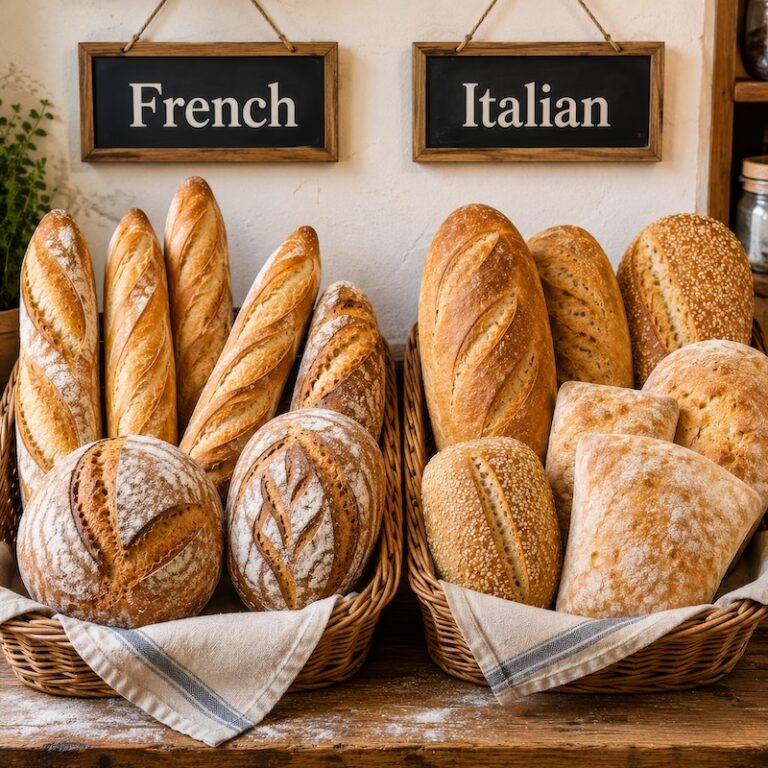
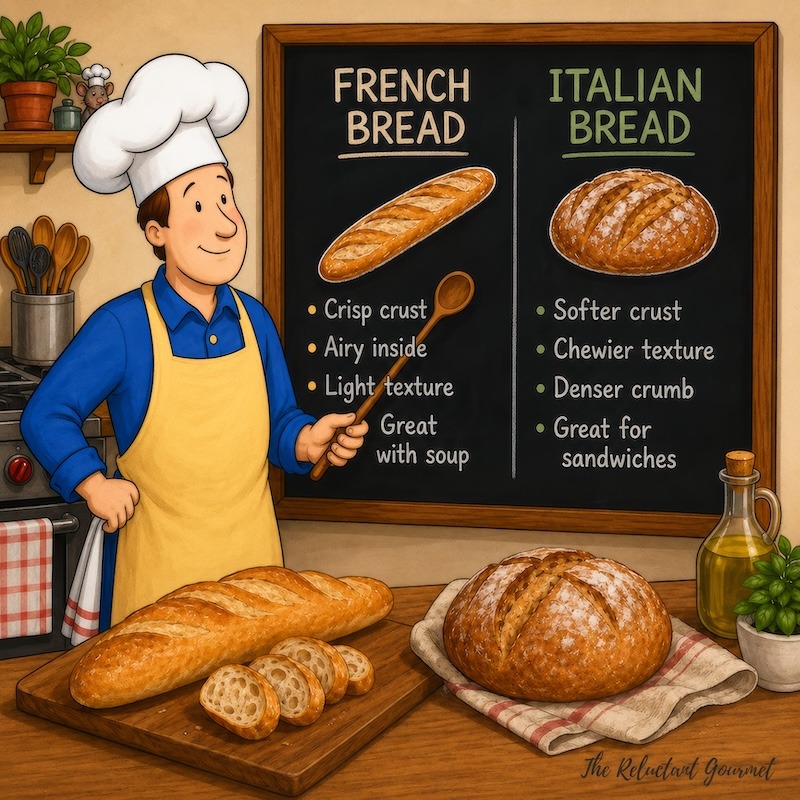
French bread is a lean dough of just flour, water, yeast, and salt, baked with steam for a thin, crackly crust and airy crumb. Italian bread usually adds olive oil or milk, giving it a softer crust, denser chew, and richer flavor — which is also why it holds up better in a sandwich.
The Smell I Still Remember From Saturday Mornings at the Bakery
I never learned to make bread from those weekend mornings — I was there for the trays, not the technique — but I got a permanent education in what fresh bread is supposed to smell like, and it’s stuck with me longer than almost anything else from that job.
What I didn’t understand until much later is why two loaves that look nearly identical in a bakery case — one French, one Italian — can smell and taste so different. It comes down to a handful of real, specific things: how much water is in the dough, whether fat is added, and how the loaf is baked. Here’s what actually separates them, corrected and filled in from what was here before.
Start Here
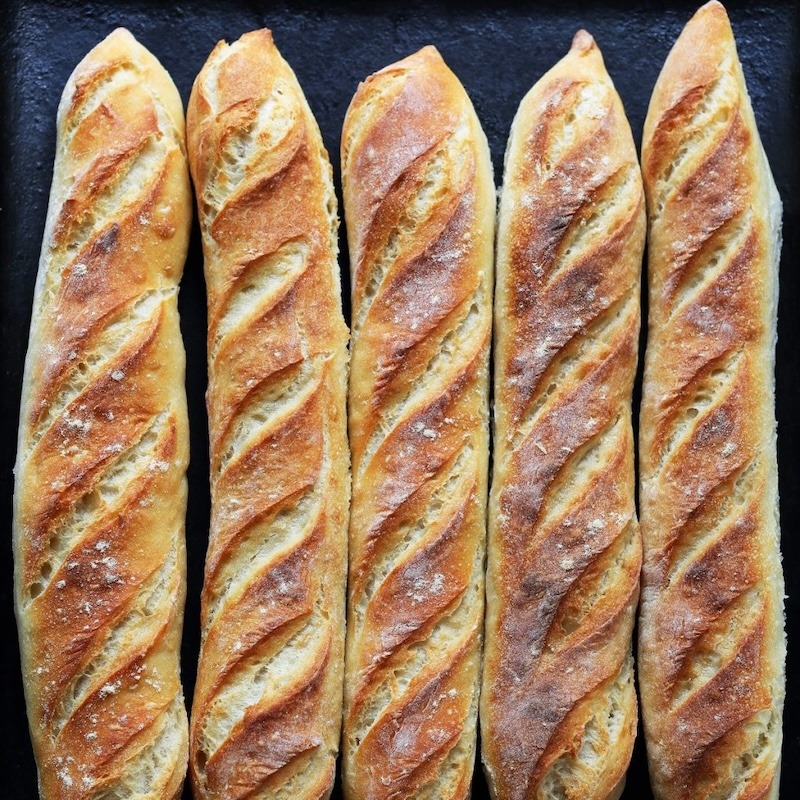
- French bread: A lean dough — flour, water, yeast, salt, nothing else — baked with steam for a thin, crisp crust and an open, airy crumb. The baguette is the familiar shape, but it's one of many.
- Italian bread: Similar starting point, but usually enriched with olive oil or milk, giving it a softer crust and a denser, chewier bite.
- The honest catch: A lot of what's sold as "French" or "Italian" bread at American supermarkets is closer to the same product with two different labels and shapes. One reader summed it up perfectly after a bakery worker told her, with a straight face, that the only difference was "one is baked by a Frenchman, and one is baked by an Italian man."
Side-by-Side Comparison
| Feature | French Bread | Italian Bread |
|---|---|---|
| Crust | Thin, crisp, crackly | Softer, chewier |
| Interior | Light, airy, open holes | Denser, tighter crumb |
| Typical hydration | Roughly 60–75% water | Roughly 75–80% water |
| Fat content | None, by tradition | Often olive oil, sometimes milk |
| Flavor | Mild, wheaty | Richer, slightly savory |
| Best uses | Baguette sandwiches, crostini, soup | Garlic bread, subs, dipping in oil |
Flavor and Function
- French bread: Flavor comes almost entirely from fermentation and flour quality, not added ingredients — which is why long, slow proofing matters so much for a good baguette.
- Italian bread: The added olive oil or milk both softens the texture and adds real flavor of its own, which is part of why it tastes noticeably richer even before you add anything to it.
Think Like a Cook
- The single biggest driver of the texture difference is water. Wetter dough (Italian bread, roughly 75–80% hydration) produces bigger, more irregular holes and a softer crust. Drier dough (French bread, roughly 60–75%) holds its shape better and crisps up harder in the oven. If you understand that one number, you understand most of why these breads behave so differently.
When to Use French Bread
- Baguette sandwiches and cheese boards
- Crostini and bruschetta
- French onion soup, floated on top
- Toast with butter and jam
- Bread pudding — a slightly stale baguette actually works better here than a fresh loaf, since the firmer crumb absorbs custard without turning mushy
When to Use Italian Bread
- Garlic bread
- Panini and deli sandwiches
- Meatball subs
- Serving alongside pasta, for mopping up sauce
- Dipping into olive oil
Can You Substitute One for the Other?
- In most everyday cooking, yes — but expect a real texture difference. Italian bread in a recipe built for French bread will taste richer and softer than intended; French bread standing in for Italian will be crisper and less absorbent.
- For bread pudding specifically, French bread is often the better choice regardless of what the recipe calls for, since its drier crumb holds up to custard better than a softer, oil-enriched loaf.
Best Uses for French Bread vs Italian Bread
French Bread
|
Italian Bread
|
What Most People Get Wrong
- Not all French bread is a baguette.
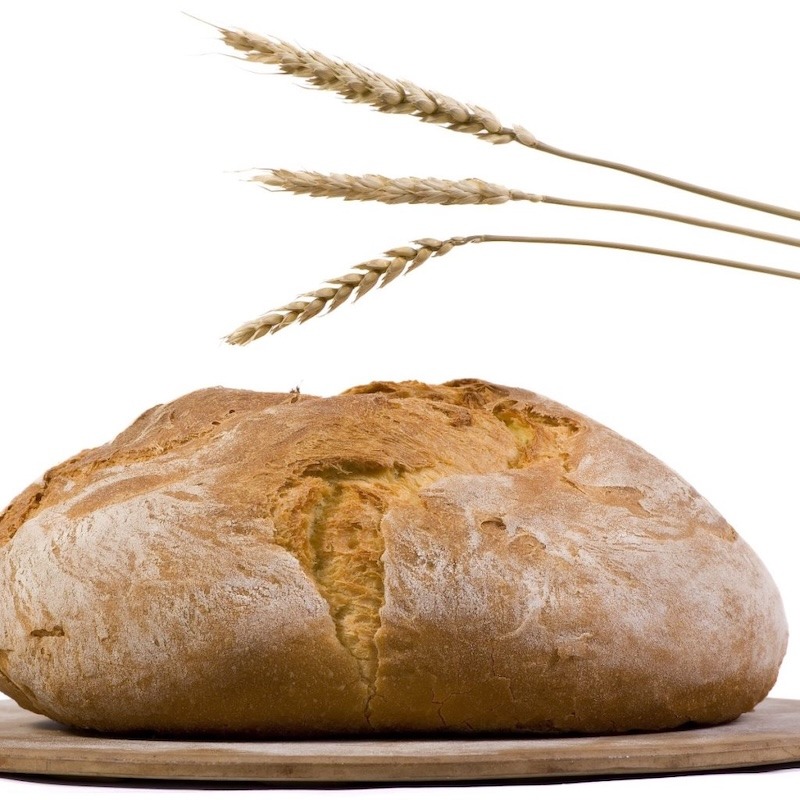
- Italian bread is not always soft. Regional styles vary widely.
- The crust difference often comes from steam during baking.
- French bread usually contains fewer enriching ingredients.
- Shape alone does not determine whether bread is French or Italian.
What Most Cooks Get Wrong
- Assuming shape tells you which bread you're holding. A long, thin loaf isn't automatically French — some Italian breads are shaped the same way.
- Assuming Italian bread is always soft. Regional versions can be hard-crusted with almost nothing but flour, water, salt, and yeast — some bakeries have built their whole reputation on exactly that.
- Crediting the crust difference to the recipe instead of the bake. Steam early in baking, not a secret ingredient, is what gives French bread its crackly shell.
- Assuming "French bread" and "Italian bread" sold at a typical American supermarket are authentic to either country's tradition. Much of it is the same base dough, shaped differently and given a different label — closer to American bakery convention than to what's actually baked in Paris or Rome.
Storage
- Both breads stale fast — usually within a day — because neither is loaded with the preservatives or fats that slow staling in packaged sandwich bread.
- Room temperature, uncovered or loosely wrapped in paper is best for a day or less. Plastic bags soften the crust, which defeats the point of either bread.
- Freeze whole or sliced for longer storage, and re-crisp in the oven rather than the toaster for anything more than a slice.
- Stale isn't wasted: day-old French bread is exactly what you want for croutons, breadcrumbs, or bread pudding.
Worth the Upgrade?
- Worth it: Finding an actual bakery — not a supermarket bakery counter — that makes either bread with the traditional four ingredients and nothing else. The difference in flavor and crust between that and a grocery store loaf with a dozen additives is real and immediate.
- Not worth it: Paying a premium for a "artisan" or "gourmet" label at a regular grocery store. Check the ingredient list first — if it reads like a chemistry set, the fancy label isn't buying you much.
French Bread Types
| Bread | What Makes It Different | Best Uses |
|---|---|---|
| Baguette | Long, crisp loaf with an airy interior | Sandwiches, cheese boards, table bread |
| Ficelle | Thin baguette with extra crust | Appetizers and snacks |
| Pain de Campagne | Rustic country loaf with hearty texture | Soups, stews, and spreads |
| Pain d’épi | Decorative wheat-stalk shaped loaf | Sharing at the table |
| Brioche | Rich, buttery bread made with eggs | French toast and desserts |
| Pain Complet | French whole wheat bread with earthy flavor | Toast and hearty sandwiches |
Most Americans use “French bread” to mean baguette, but French bakeries produce dozens of distinct breads with different crusts, textures, and uses.
Frequently Asked Questions
What’s the main difference between French and Italian bread? French bread is a lean dough of just flour, water, yeast, and salt, giving it a crisp crust and airy crumb. Italian bread usually adds olive oil or milk, making it softer, denser, and richer-tasting.
Why is French bread crustier than Italian bread? Mostly the bake, not the recipe. French bread is typically baked with steam, which delays crust formation and lets the loaf expand before it hardens, producing a thin, crackly shell. Added fat in Italian bread also softens its crust.
Can I substitute Italian bread for French bread in a recipe? Yes, in most everyday cooking, but expect a softer, richer result. For dishes like bread pudding, a firmer French baguette often works better than a softer, oil-enriched loaf, regardless of what the recipe originally calls for.
Why can I eat bread in France but sometimes have trouble with bread in America? It’s often about additives, not the wheat itself. Potassium bromate, a dough conditioner classified as a probable carcinogen by international health agencies, is banned across the EU, UK, and Canada but still permitted in small amounts in the US. Traditional French bread — specifically bread labeled “pain de tradition française” under a 1993 French law — is legally required to contain only flour, water, salt, and yeast, with no additives at all.
Is French bread healthier than Italian bread? Neither is inherently healthier than the other nutritionally — the real difference is usually about additives and ingredient lists, not the bread style itself. Traditional versions of both are simple: flour, water, salt, yeast, sometimes olive oil. Mass-produced supermarket versions of either can include dough conditioners and preservatives that traditional bakeries don’t use.
Are baguettes French or Italian? French. The baguette is a specific French bread shape and tradition; Italian breads with a similar long, narrow shape (like a ciabatta stick) are a different dough and different tradition, even when they look alike on a shelf.
Is the “French bread” and “Italian bread” sold at most American grocery stores actually authentic to those countries? Often, no. A lot of what’s labeled that way in US supermarkets is the same base dough shaped and packaged differently, closer to American bakery convention than to bread actually made in France or Italy.



54 Responses
What a great article. Thank you for explaining this.
Thanks Cathy.
thanks for the telling the difference between french and Italian bread . great job
French bakers seemed to attribute minor regional differences to the water. This was my experience when I asked them. Have you found any important differences because of the origin of water?
You’re onto something real — water hardness and mineral content actually do affect gluten strength and yeast fermentation, not just old bakers’ folklore. I’ve never tested it side by side myself, but it’s a legitimate piece of why the same recipe can taste different a few hundred miles apart.
Thanks for this; it was an interesting read! I think you’ve hit on some distinct differences that still remain despite centuries of cultural and culinary exchange between these two countries – funny how they’ve stuck around!
Perhaps you could do a special on rye bread sometime?
Most of the rye bread in America is of the Scandinavian variety, which differs greatly from Eastern European rye bread. The “black” or rye bread I remember from my childhood had a distinct sour, malty flavor, but the ones I’ve seen in U.S. grocery shops usually taste almost sweet and a little flat. I’d be curious to know the different bread-making methods (I bet the Eastern European version involves sourdough).
It’s always a pleasure reading your articles, and you’ve got a great site!
Try a Russian deli; I don’t know where they all might be but in San Francisco, there used to be one on Church off 28th. My late mother-in-law used to get the kind of black bread you are talking about…
S. Rosen is a Chicago baking company that sells to delis and grocery store deli departments. They make several styles of European rye breads, as well as the poppyseed buns for Chicago style hot dogs. You can also buy on their website. Their rye breads have a chewy crust and substantial textures. Hope this helps!
Thanks so much. Yes as a child my Parents would buy that great heavy dark thick crusted bread with the sour dough taste. Will look for it thanks for the information.
Thanks a bunch for this article. I always wonder what the differences were, now I know.
I’d be curious to know more about the baguette version of Italian bread that I grew up with. I love the hard crunchy crust and air light dough and sesame seeds. Also, lard bread and semolina. All my favorites to soak up that Sunday sauce!
Hey Tom I totally know what you mean about the Italian bread with the crunchy crust and moist airy interior. I can’t imagine a pasta dinner without a fresh loaf to enjoy with butter or to absorb the remaining yummy goodness of my grandmas sauce still left in my bowl! One thing though, the term baguette specifically refers to French bread no? Either way take care.
In my hometown, Rockford, Illinois, there is a bakery called piemonte bakery. They bake just a couple of kinds of bread. Their Italian bread has a very hard, thin, dry crust, and a nice soft center, but it’s only good for one day, because there’s nothing in it except flour, water, salt and yeast. It comes in an open paper sleeve, but the grocers who carry it, have to have it in a plastic bag, which completely ruins the crust. On any day of the week, you can drive right up to the bakery doors, which are big garage type doors, hand them your money, (was $1 for years) and take a fresh loaf off the commercial racks. VERY low tech, and VERY special.
Sounds absolutely amazing Cindy.
Columbus Baking Co. in Syracuse NY is the best Italian bread I’ve ever eaten. They also make bread with four ingredients: flour, salt, yeast and water. Also low tech, but the best! They’ve been in business since 1895. If you’re in the area, it is very worth the trip.
hi what is the length of an Italian bread?
Circling back on this — the classic long Italian loaf (called filone) typically runs about 12 to 14 inches, though home bakers and bakeries both vary it quite a bit. No strict standard, but that’s the range you’ll usually see.
Hello, your article is very cute, panettone isn’t bread, though. It’s a dessert we Italians eat at Christmas holidays. Piadina isn’t really bread…although it’s like a panino, you don’t put a piadina on the table and eat it with, say, a main course. It’s like pizza. Italian bread we eat at lunch or dinner doesn’t have neither milk, nor sugar, our bread with milk is sweet and we eat it in the morning at breakfast with butter and sugar or jam, some kids eat it in the afternoon as a snack.If we make a comparison, is with French brioche.
Have you ever had ferrarese bread? Its name is coppia ferrarese (ciopeta in local language), it’s my favorite Italian bread, is to die for.
Ciao
Hi Giulia, thank you so much for your thoughtful reply! I really appreciate the cultural context you shared, especially how foods like panettone and piadina are actually enjoyed in Italian homes. You’re absolutely right that panettone is traditionally a dessert and that piadina functions more like a sandwich wrap or snack than a table bread.
In my article, I aimed to explore a wide range of baked goods that fall under the broader umbrella of “bread” in a technical or international sense, even if their role at the table is very different. But I completely agree that from an Italian cultural perspective, not all of them would be considered “pane” in the way ciabatta or pane toscano would.
Your note about milk and sugar in Italian breads is especially helpful, and your comparison to French brioche is spot on. I may add a note in the article to reflect this distinction more clearly. Grazie again for sharing your insight!
Do you think it makes a difference in a bread pudding though? Would the baguette absorb more of the custard because it is a dryer bread? But should the crusts be trimmed off first I wonder?
Hi Diane,
Absolutely — the type of bread you use does make a difference in bread pudding. A baguette can work beautifully because it’s usually drier and has a firmer crumb, which means it absorbs more custard without falling apart too quickly. That helps create a pudding with a creamy interior and structure, rather than one that turns mushy.
As for the crusts, it depends on the texture you’re after:
Leaving the crusts on adds contrast — a bit of chew and subtle crispness, especially around the edges.
Trimming the crusts results in a softer, more uniform pudding with a smoother texture throughout.
If you’re using a baguette that’s especially crusty or stale, you might want to trim the crusts or at least cut them into smaller pieces so they soften better. For a more rustic or hearty pudding, leaving the crusts on adds nice character.
Bottom line: Yes, a baguette can be an excellent choice — just adjust the crusts to suit your desired texture.
What a great read, thanks so much!
I was in my local supermarket this morning just after the breads were put out, and the “French” and “Italian” breads were next to each other. Since they looked and felt basically the same, I asked the bakery worker to explain the difference — with a smile on her face, she said, “One is baked by a Frenchman, and one is baked by an Italian man!” She chuckled as I realized she meant there was no difference (at least not in this store).
Too funny Bruce.
When I was in Paris for work, the locals we were teaching informed us that the bread served in the baskets was to be eaten WITH the meals, same as the Italians, soaking up broth and sauces or using it as the vessel for meat and vegetables. This was also backed up by the visitors from Lyon and Marseilles.
There’s one major difference between a true baguette and whatever passes for it elsewhere in the world and that’s the crust. A real baguette has a crispity crunchity chewy crust. It’s as integral to the bread as any of it’s other characteristics. Without it, all you have is skinny bread.
This is achieved through steam baking. Commercial ovens have a way of letting this in but you can do it at home by placing a pan of water in the oven or by spritzing the bread with a spray bottle as it bakes.
And the funny thing is, the best baguettes I’ve had outside of France, were in Japan of all places. They take things like food preparation out there very seriously and most of the baguettes there I’ve had were top notch.
I bought a French ‘baguette’ bread at the local grocery for the first time to experiance what I thought was a true french bread. After reading this article I decided to look at the ingredients:
Enriched unbleached wheat flour (wheat flour, niacin. iron as ferrous sulfate, thiamine mononitrate, enzyme, riboflavin, folic acid) water, yeast, contains less than 2% of the following: salt, malt powder (corn syrup solids, barley malt extract), sugar, wheat gluten, soybean oil, datem, ascorbic acid, potassium iodate, monocalcium phosphate, calcium sulfate, ammonium chloride, L-cysteine hydrochloride.
I guess it must have been baked by a frenchman (as defined in one of the comments above). I am afraid to check the ingredients in the store’s Italian ‘stick’ bread.
There are no local bakeries in town but I have not checked other local grocery bakeries.
At least they loaded this ‘french’ bread with healthful vitamins.
I used to buy loves of French bread at a chain market because I could not get my bread machine product(s) to have that wonderful aroma and flavor. However, recently their bread has just become a fancy shaped loaf of white bread that does not have that unique and powerful aroma or taste of what I like in a French bread. Can you advise as to what is the missing ingredient(s) or technique that makes a French bread with a lot of “nose”? LOL
Time
Great observation! That wonderful aroma and flavor in traditional French bread usually come from a few key factors:
Long Fermentation: Authentic French bread often undergoes a slow, sometimes overnight fermentation. This allows the yeast to develop complex flavors and that classic “bready” aroma.
Simple Ingredients: Traditional recipes use just flour, water, salt, and yeast—no added fats or sugars. The purity of ingredients helps highlight the natural flavors.
High-Quality Flour: French bakers often use strong, high-protein flour which impacts both texture and flavor.
Baking Technique: Baking on a hot stone or in a steam-injected oven creates that crisp crust and caramelization that boosts aroma.
Mass-produced or chain bakery bread often skips long fermentation or uses additives to speed production, which can dull the flavor.
If you want to recreate that nose at home, try using a slow rise (retarding dough in the fridge), high-quality flour, and baking with steam if possible. Additionally, a sourdough starter or a preferment, such as poolish, can add even more depth.
Hope this helps bring back that amazing French bread aroma you’re craving!
I am curious. I need to follow a FODMAP diet. I can eat sour dough bread without a problem. I can also eat French and Italian bread bought at our local bakery…..and have no problem. Does the fermentation process reduce the fructans?
Yes, you’re absolutely on the right track! The fermentation process in sourdough bread can significantly reduce fructans, which are a type of FODMAP found in wheat and rye. During the long, slow fermentation, beneficial bacteria break down many of these fermentable carbohydrates, making the bread easier to digest for people sensitive to FODMAPs.
Similarly, many traditional French and Italian breads made with longer fermentation times also have reduced fructan levels compared to quick-rise breads. That’s likely why you can enjoy those breads without problems.
However, the exact amount of fructans left can vary depending on the fermentation length, type of flour, and recipe. If you’re baking at home, using a sourdough starter and allowing for extended fermentation can help make bread more FODMAP-friendly.
Always a good idea to check with your healthcare provider or dietitian for personalized advice, but your experience fits well with what we know about fermentation and FODMAPs!
Ummmm, Saccharine means sweet. It just so happens that the artificial sweetener is also named Saccharine. She used it correctly. You are vindicated, Bob is absolutely incorrect. Limited vocabulary often causes misunderstanding.
” Limited vocabulary often causes misunderstanding.”… Wow…
French Bread is not always a long and thin loaf. Check the images on this world-famous site. Absolutely the best tasting French Bread on the planet. After a night of clubbing (60 years ago and still happening) people would park at the bakery and wait for the red light out front that indicated the baking was done. A couple of loaves for the car and with a lot of butter was the celebration to end the evening.
http://lejeunesbakery.com Click on Photos.
Bread in Paris and other French cities was great. LeJeunes is spectacular!
Michelle is correct. At lunch and dinner, bread is on the table during all courses of a French meal except dessert. It is not served with butter and is never offered as a starter. Its main purpose is to mop up the sauces. At breakfast, baguettes are served with butter and jams. On special occasions (or at hotels), croissants and pains au chocolat (chocolat croissants) are also offered.
I have never seen French toast on a menu. It is made at home as a way to use up dry bread.
Well I was in Publix today and the girl in the bakery is trying to tell me French and Italian bread is the same which is a joke
Have you ever been to France or Italy? Because this is mystifying.
Fair jab — the American ‘French vs. Italian’ framing is pretty loose compared to what you’d actually find in either country. I’ve updated the post to be more upfront about that.
The term saccharine is defined as sweet. It’s been a word far longer than the artificial sweetener your referring to. That’s why they named it as such?
There is no such thing as French or Italian bread per se, it’s is one hundred percent American/ American ethnic marketing. There are French and Italian originations of certain types of breads of which there are hundreds if not thousands of different recipes and processes. Every region and even municipal communities in both countries have their own unique breads.
Great article. I am a pretty good and inventive cook, but I have been struggling to make good bread; this article helps to show what should be in true French or Italian bread in the first place, which at least shows me where to (re)start. Thank you.
Love the info in this article. Thanks
Eye-opening article. Thanks!
Hi There!
With this pandemic, I’ve been staying in the kitchen. I’ve cooked different meals, baked cakes and pies and decided I wanted to make a French bread. But, what I remember is my dad used to bring home an Italian bread that was crusty, was “braided” on top with sesame seeds and was fought after (we did!). Now that my dad has passed away now many years, I thought of him!
I’ll make him proud and bake an Italian bread like he used to bring home! So, my dear gourmet, what can you share with me to make my dad proud??
That’s Scali bread — a Sicilian braided loaf, and Boston-area bakeries in particular are known for it. The keys are semolina flour mixed with bread flour for that chewy crumb and golden color, and an egg white wash brushed on before rolling the braid in sesame seeds so they actually stick. Your dad would be proud.
“By law in France, bread cannot have added oil or fat…France is famous for its brioche, a sweet bread that is made with unsalted butter”
Close, but not quite — that 1993 law only restricts bread sold under the specific ‘pain de tradition française’ label. Regular French bread, brioche included, can have whatever the baker wants in it.
great report on bread but not enough on Italian bread. I found a bakery in Monterey California which makes a bread-like I had at home. It’s a man’s bread, thick, hard, even some sharp edges, inside it’s tasty, chewy and delicious. I now cut out all desserts and snacks and, instead eat a chunk of this “Italian long and heavy roll. The bakery’s bakers won’t even talk to walk in customers.
Wow. I LOVE each and every one of these, but I’ve wondered about this most of my life. Thank you so much for explaining.
You are very welcome Lisa.
Interesting comparision. The equivalent of the French baguette is in general the Ciabatta stick. About same length, usually flatter and a bit larger and with an identation along the bread rather than multiple perpendicular or diagonal ones. There is a reason for this.
Your observation as to the moist characteristics can found their origin in the quantity of water included when making the dough.
A traditional baguette raw doe contains about 45-46% water volume flour to water before rising, while a Ciabatta dough has about 53 to 55%. Making the dough more difficult to manipulate. And with the result of a crust which is softer, appreciated for people with very soft skin on their palate. Naturally, this doe may be shaped in many ways, including small triangles and diamonds. The fragility of the dough is the reason we perform the incision all along the bread.
I didn’t know that Italian bread had olive oil on it. I need to get new bread for my sister. I’ll have to consider getting some in bulk.
Both countries make a huge variety of bread, but when people ask the difference between “French” and “Italian” bread, they usually mean the difference between a baguette and the shorter elongated bread that is sold as “Italian” in most places. In the case of those two loaves, the difference is 1. Olive oil. Italian bread has it and French does not. and 2. Shape. French is longer and thinner. Italian is shorter and fatter. Most baguettes are crustier than the standard Italian loaf but that’s mainly because the Italian loaf sold all over is designed for sandwiches, while the baguette is more of a standalone food, eaten with other things, but not necessarily inside the bread.
Some Italian breads use sugar to feed the yeast. French does not.
Thanks for the excellent article. I am looking to revive the dense, chewy, yeasty bread that my Italian grandma taught my mom to make, and this gives me some useful pointers. It was very much like what Tony Caetano described above. Sometimes we too would skip dessert and toast a slice of it, with lots of butter and some strawberry jam.