Fast Answer
Cooking onions isn't one technique — it's four: sweating, sautéing, caramelizing, and roasting. Each produces a fundamentally different result. The variety of onion you choose and the heat you apply determine whether you get a sweet, silky base or a sharp, crisp bite. This guide covers both.
Knowing About Onions Is Helpful When Cooking Them
Onions are the most-used aromatic in the Western kitchen — and the most misunderstood. Most recipes tell you to “sauté until soft” without explaining what soft actually means, why it matters, or what you’ve lost if you rush it.
This guide covers the varieties worth knowing, the chemistry behind the cooking, and the four techniques that give you control over what ends up in the pan.
Can you imagine cooking without onions? I can’t!
Start Here: What to Know Before You Cook an Onion
- Variety determines flavor ceiling. Yellow onions caramelize best. White onions stay sharper. Sweet onions (Vidalia, Walla Walla) go soft fast. Choosing the right one for the job matters more than most recipes let on.
- Heat level is everything. The difference between sweated, sautéed, and caramelized onions isn't just time — it's temperature. Low heat builds sweetness. High heat builds color and bite.
- Onions need fat to cook properly. Water-based cooking steams them; fat-based cooking draws out flavor compounds. Butter, olive oil, and rendered animal fat each produce a different result.
- Sharp knife, less crying. A dull knife crushes cells instead of slicing them cleanly, releasing more of the compounds that irritate your eyes. More on that below.
- This is a hub post. Caramelizing, grilling, and stuffing onions each have their own dedicated posts linked throughout. This is where you build the foundation.
Why Onions Work the Way They Do
- They're mostly water and sugar. Raw onions are pungent because of sulfur compounds released when cells are cut. Heat drives off those compounds and converts starches into sugars — which is why a cooked onion tastes nothing like a raw one.
- Low heat = sweetness. Slow cooking over low heat allows the onion's natural sugars to develop without burning. This is the mechanism behind caramelization — not a shortcut, a chemical process that takes real time.
- High heat = color and edge. Medium-high heat triggers the Maillard reaction — browning that adds savory depth. This is sautéing, not caramelizing. The two are not the same thing and recipes often confuse them.
- Fat is the medium. Onions cooked in butter behave differently than onions cooked in olive oil or rendered guanciale fat. Fat carries flavor compounds, controls heat distribution, and changes the final texture.
- They build the base for almost everything. Soffritto, mirepoix, the Holy Trinity — every major cuisine starts a cooked dish with some version of onion cooked in fat. Understanding why makes you a better cook across the board.
Onion Varieties
| Onion Type | Description | Taste | Best Used In Cooking |
|---|---|---|---|
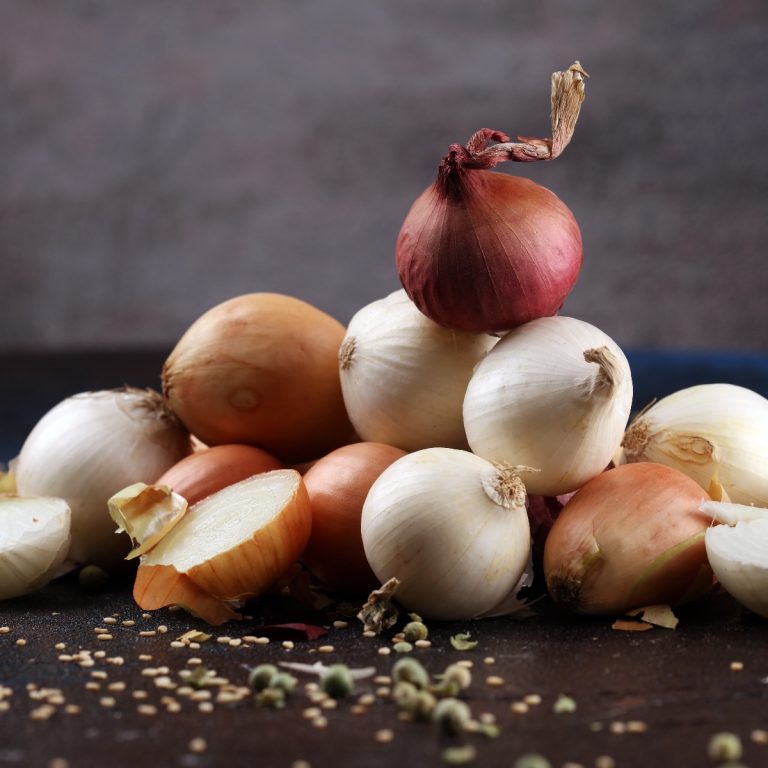
| Yellow Onion | Classic all-purpose onion with golden skin and white flesh | Balanced sweet and pungent | Soups, stews, braises, caramelized, roasted, sautéed |
| White Onion | White skin and flesh, higher water content | Sharp, crisp, slightly less sweet | Salsas, Mexican dishes, stir-fries, salads |
| Red Onion | Deep purple-red skin with white flesh tinged with red | Mild, sweet when raw or grilled | Raw in salads, sandwiches, pickled, grilled, salsas |
| Shallots | Small, brownish skin, segmented bulbs | Mild, sweet, complex, subtle garlic undertones | Vinaigrettes, sauces, dressings, delicate sautés |
| Green Onions | Long, slender stalks with small white bulbs | Mild, fresh, slightly peppery | Garnish, stir-fries, salads, soups, omelets |
| Pearl Onions | Tiny round onions, white, red, or yellow varieties | Sweet, mild | Braises, stews, roasted whole, pickled, glazed |
| Leeks | Long cylindrical stalk with white base and green tops | Mild, sweet, buttery when cooked | Soups (esp. potato leek), gratins, quiches, braises |
| Cipollini Onions | Small flat round onions, usually yellow or white skin | Very sweet, rich | Roasted, caramelized, braises, sauces |
| Ramps (Wild Leeks) | Small, thin wild onions with broad green leaves and purple-tinged stems | Strong, garlicky-onion flavor | Pestos, pickles, sautés, grilled, in pastas |
| Spring Onions | Young onions with larger bulbs than green onions | Mild, sweet, juicy | Roasted, grilled, in salads, salsas, stir-fries |
| Sweet Onions (e.g. Vidalia, Walla Walla) | Large, pale yellow skin, very high sugar content | Very sweet, mild, low pungency | Raw in salads, sandwiches, onion rings, caramelized |
| Torpedo Onions | Long, slender, torpedo-shaped red onions | Sweet, mild | Grilled, roasted, salads |
Cooking with Onions
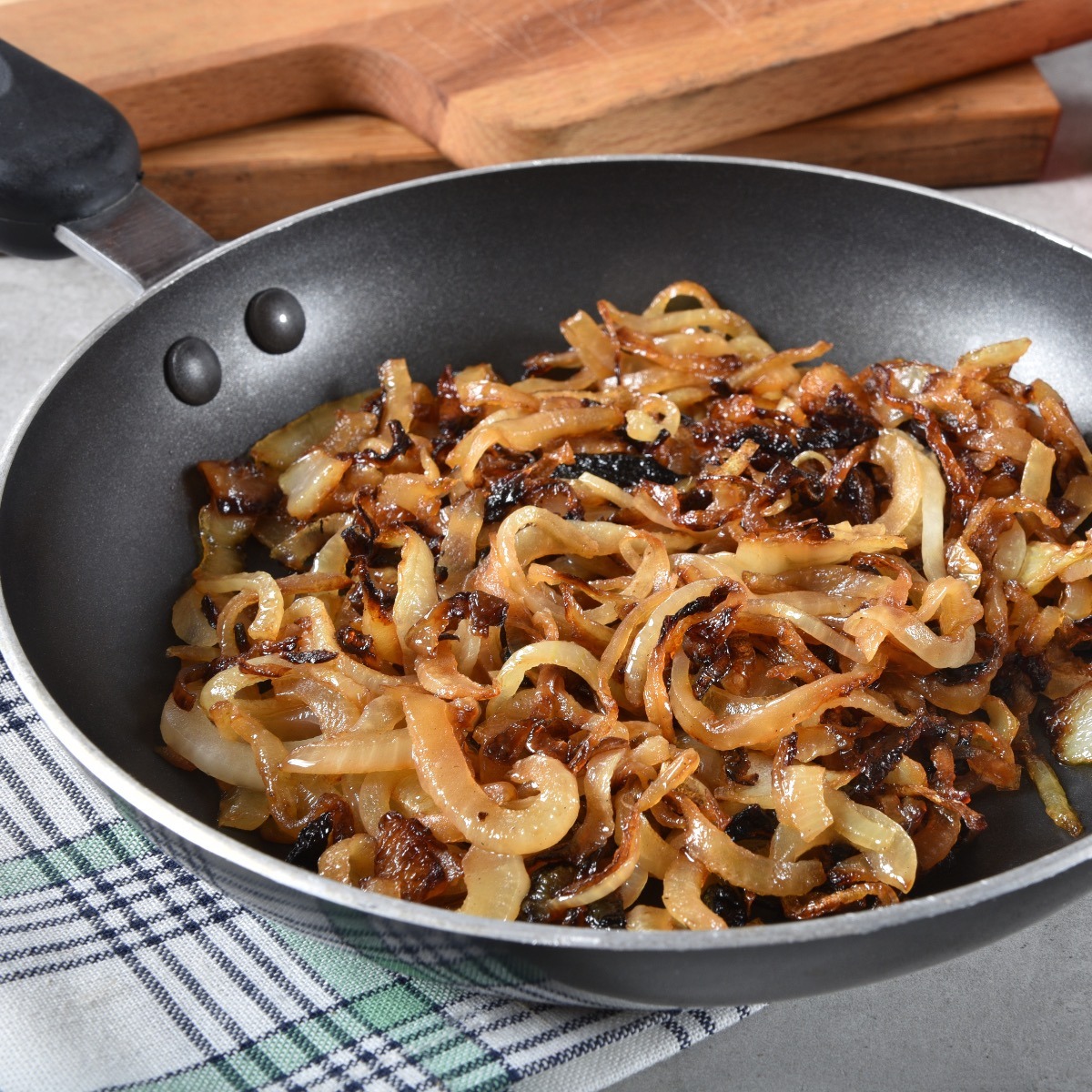
One of the most popular ways to use onions is to slice them and sauté them in a pan until they are soft and caramelized. Caramelized onions have a rich, sweet flavor that adds depth to soups, stews, sandwiches, and other dishes.
My daughter wrote a great post about caramelized onions here. To caramelize onions, start by slicing them thinly and heating a bit of oil or butter in a pan. Add the onions to the pan and cook them over medium heat, occasionally stirring, until they are soft and golden brown. This process can take anywhere from 20-30 minutes, depending on the size and type of onions you use.
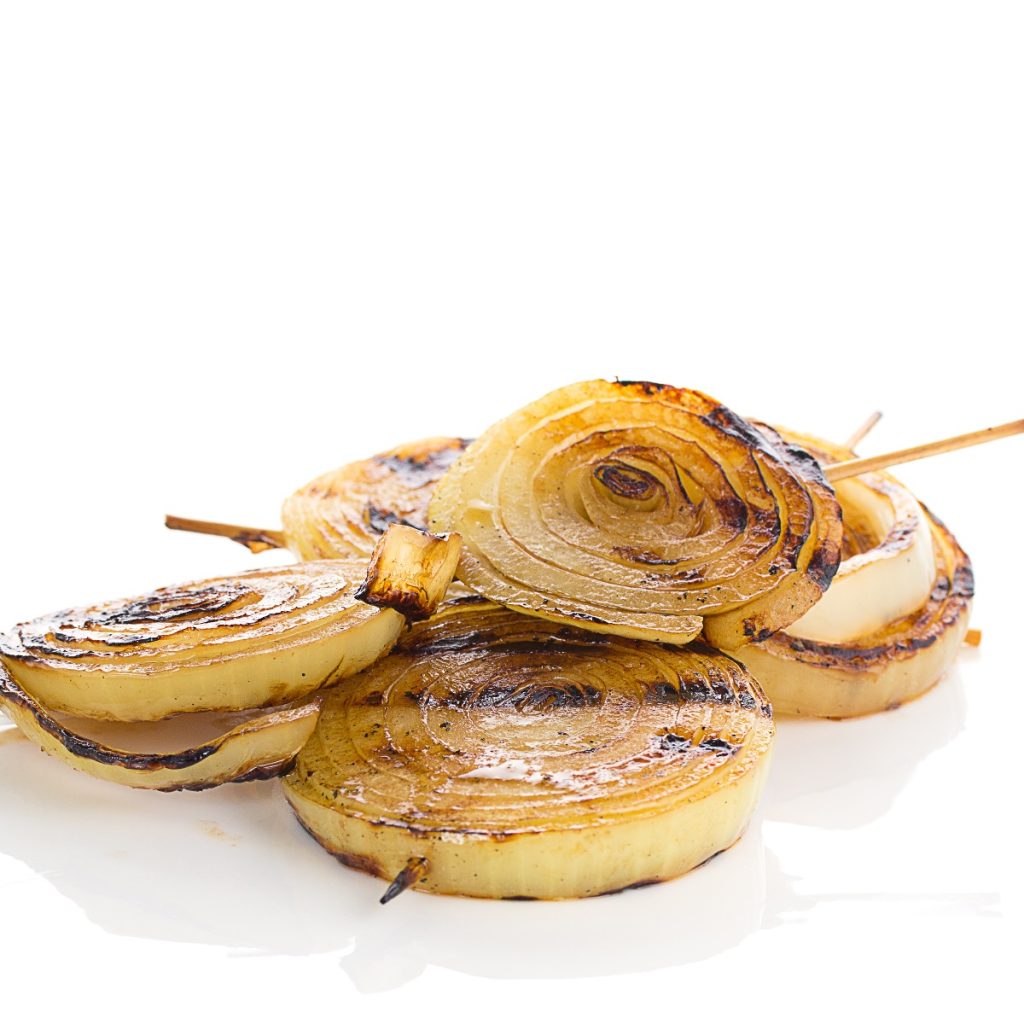
Onions can also be roasted in the oven or grilled to bring out their sweet, mellow flavor. To roast onions, slice them into wedges and toss them with oil, salt, and pepper. Place them on a baking sheet and roast them in a 375-degree oven for 20-30 minutes or until they are tender and caramelized. To grill onions, slice them into wedges.
What Most Cooks Get Wrong About Onions
- Confusing sautéed with caramelized. Recipe writers use these terms interchangeably. They are not the same. Sautéed onions take 5–8 minutes over medium heat and stay slightly firm with some bite. Caramelized onions take 30–45 minutes over low heat and turn deeply golden, sweet, and soft. You cannot rush caramelization.
- Starting with too high heat. Medium heat softens onions evenly. High heat browns the outside before the inside has a chance to soften — you end up with bitter edges and raw-tasting centers.
- Not salting early. A pinch of salt added when the onions first hit the pan draws out moisture and accelerates softening. Skipping it means longer cook times and less even results.
- Using the wrong variety. White onions in a long braise turn sharp and harsh. Sweet onions in a sauce go mushy before they build any real flavor. Yellow onions are the all-purpose workhorse for a reason.
- Overcrowding the pan. Too many onions in too small a pan creates steam instead of sauté. The onions stew in their own liquid and never develop the color or flavor you're after. Cook in batches if you need to.
- Adding garlic at the same time as onions. Garlic burns in the time it takes onions to soften. Add onions first, get them where you want them, then add garlic and watch it carefully.
Quick Fixes & Pro Tips
- Onions browning too fast? Add a splash of water to the pan. It drops the temperature instantly and buys you time without steaming them into mush.
- Want deeper caramelization faster? A pinch of baking soda raises the pH and speeds browning. Use sparingly — too much and the onions turn slimy.
- Bitter finished onions? Usually means the heat was too high at some point. Next time, lower the flame and give them more time. You cannot fix burnt onions — start over.
- Raw onion too sharp for a salad? Soak sliced onions in cold water for 10–15 minutes. It pulls out the harsh sulfur compounds and leaves a milder, crisper bite.
- Sweating vs. sautéing in practice: If you can hear a loud sizzle, the heat is too high for sweating. Sweated onions should cook quietly — a gentle hiss, not a roar.
- Leftover half onion? Wrap the cut side tightly in plastic and refrigerate. Use within 5 days. Cut onions oxidize and turn bitter faster than whole ones.
What to Make Once You Know Your Onions
- Caramelized onions — The long game. Deeply sweet, spreadable, and transformative on burgers, pizzas, flatbreads, and pasta. Full technique post here.
- Grilled onions — Thick rounds brushed with oil over medium heat. Perfect with steaks, burgers, or as a simple side. Dedicated post coming.
- Baked stuffed onions — Spanish onions halved and filled with breadcrumbs, Parmesan, and parsley. An underrated side dish. Dedicated post coming.
- French onion soup — The ultimate test of caramelized onion patience. The soup is only as good as the time you gave the onions.
- Quick-pickled red onions — Sliced thin, soaked in vinegar, sugar, and salt for 30 minutes. One of the most useful condiments you can keep in the fridge.
- Soffritto or mirepoix base — The foundation of countless braises, soups, and sauces. Yellow onion, celery, carrot — cooked low and slow until nearly dissolved.
Buying and Storing Onions
- What to look for. Dry, papery skin. Firm and heavy for their size. No soft spots, sprouting, or visible mold. A light neck (the top) means it dried properly after harvest.
- Where to store them. Cool, dry, and well-ventilated — a pantry or root cellar, not the refrigerator. Humidity accelerates rot. A mesh bag or open basket works better than a sealed container.
- Keep them away from potatoes. Potatoes give off moisture and ethylene gas that causes onions to spoil faster. Store them on opposite ends of the pantry.
- Cut onions. Wrap the cut side tightly in plastic wrap and refrigerate. Use within 5 days. They oxidize quickly and the flavor turns once exposed to air.
- Buy for the dish. Yellow for cooking. White for raw applications and Mexican dishes. Red for pickling, grilling, or raw in salads. Sweet onions for anything where mild is the goal.
The Four Techniques
This is the core of the post — the section that earns the “cook’s guide” framing.
Sweating
Sweating is the lowest and slowest of the four. The goal is to soften the onion and drive off moisture without developing any color. Medium-low heat, a lid on or off depending on how much steam you want to retain, and patience. A properly sweated onion turns translucent — you can almost see through it — and tastes mild and slightly sweet. No browning. No bite. This is the technique behind most sauce bases and braises where you want the onion to disappear into the background.
The tell: if the pan is loud, the heat is too high. Sweated onions cook quietly.
Sautéing
Sautéing onions means medium heat, no lid, and occasional stirring. You’re aiming for soft with some golden color at the edges — 6 to 8 minutes for most onions. The outside of the cells is browning via the Maillard reaction while the inside softens. The result has more flavor and more presence than a sweated onion — you’ll taste it in the dish rather than just feel its effect.
This is the technique most recipes mean when they say “cook until softened.” It produces a good, useful result in less time than caramelizing, which is why it’s the everyday workhorse.
Caramelizing
Caramelizing is not sautéing with more time. It’s a different process at a different temperature that produces a fundamentally different result. Low heat — lower than you think — for 30 to 45 minutes, stirring occasionally, until the onions collapse into a soft, deeply golden, sweet mass. The sugar in the onion converts and concentrates. The volume reduces by roughly 75%. What starts as a pan piled with onion slices ends as a few tablespoons of something that tastes almost like jam.
The most common mistake: medium heat instead of low. The outside browns before the inside softens and you end up with bitter edges. Low and slow is not a suggestion.
My daughter wrote a dedicated post on caramelizing onions that goes deep on the technique — worth reading if this is a method you use often.
Roasting
Roasting onions in the oven at 400°F produces a different kind of sweetness than stovetop caramelizing — more concentrated, with a slightly charred edge that adds complexity. Cut into wedges, tossed with oil, salt, and pepper, and roasted on a sheet pan for 25 to 35 minutes. The high dry heat drives off moisture fast and creates exterior browning that the stovetop methods don’t quite replicate.
Roasted onions work well as a side, in grain bowls, or as a base for soups where you want a deeper, more rustic flavor than sweated onions provide.
Onion Breath
Why Your Breath Suffers and What Actually Helps
When you eat raw onion, sulfur compounds absorb into your bloodstream and get exhaled through your lungs. That’s not a mouth problem — it’s a systemic one, which is why mints only mask it temporarily. The compounds keep coming until your body processes them out.
A few things that genuinely help speed that along:
- Raw apple or parsley — both contain enzymes and compounds that neutralize sulfur. Eat them after the onion, not with it.
- Green tea — antioxidants in green tea have shown real antibacterial effect in the mouth, which addresses the secondary source of the odor.
- Milk — fat in whole milk binds to sulfur compounds in the mouth and reduces the smell more effectively than water-based drinks.
- Time — honestly the most reliable solution. The compounds metabolize out within a few hours for most people.
What doesn’t work as well as people think: gum and mints. They cover the smell for 20 minutes and then it’s back. You’re not solving the problem, you’re rescheduling it.
Why Do Onions Make You Cry
When a knife cuts through an onion’s cells, it releases a compound called syn-propanethial-S-oxide as a gas. That gas hits your eyes, reacts with moisture, and forms a mild sulfuric acid that your tear ducts immediately try to flush out. It’s not dramatic chemistry — it’s your eyes doing exactly what they’re supposed to do.
The practical fixes, ranked by how well they actually work:
- Sharp knife — fewer crushed cells means less gas released. This is the highest-leverage fix.
- Chill the onion first — cold slows the release of the gas. 15–20 minutes in the fridge before cutting makes a real difference.
- Cut near a vent fan — moving air carries the gas away from your face before it reaches your eyes.
••Goggles — looks ridiculous, works perfectly.
Explore More on This Topic
- The long game: If the caramelizing section got your attention, this post goes deep — what's actually happening in the pan and why patience is the only real technique.
- The underrated cousin: Shallots aren't just small onions — when they outperform onions and why French cooks reach for them first in sauces and vinaigrettes.
- A storage mistake worth avoiding: Why onions and potatoes shouldn't share a shelf — and what happens when they do.
- The next aromatic: Garlic goes into the pan after onions for a reason — how garlic behaves differently than onions under heat and the line between fragrant and burnt.
- The seasonal wild card: Ramps — the wild onion worth knowing — garlicky, fleeting, and worth seeking out in spring.
Frequently Asked Questions
Q: What’s the difference between sweating and sautéing onions? Temperature and intent. Sweating uses low heat to soften the onion without any browning — the goal is a mild, translucent base that disappears into a dish. Sautéing uses medium heat and allows some golden color to develop, adding more visible flavor and presence. Most recipes use the terms interchangeably and they shouldn’t.
Q: Why do caramelized onions take so long? Because real caramelization is a slow chemical conversion of the onion’s natural sugars — not just browning the surface. It requires sustained low heat for 30 to 45 minutes. Any attempt to speed it up with higher heat produces bitter edges and unevenly cooked centers, not caramelized onions.
Q: Which onion is best for cooking? Yellow onions for almost everything — soups, braises, sauces, sautés. They have the best balance of sugar and sulfur compounds for cooked applications. White onions for raw or lightly cooked Mexican-style dishes. Red onions for pickling, grilling, or raw in salads. Sweet onions when you want very low pungency and fast softening.
Q: Can I substitute one onion variety for another? Yes, with adjustments. Yellow and white onions are the most interchangeable in cooked applications. Red onions work in most cooked dishes but can turn an odd color in long braises. Sweet onions (Vidalia, Walla Walla) break down faster and contribute less structural flavor — use them where mildness is the goal, not where you need a flavor foundation.
Q: Should I add salt when cooking onions? Yes — add a pinch when the onions first hit the pan. Salt draws out moisture through osmosis, which accelerates softening and helps the onions cook more evenly. It also seasons them from the inside as they cook rather than on the surface at the end.
Q: Why do my caramelized onions taste bitter? Heat was too high at some point. High heat browns the outside of the onion cells before the inside has softened and the sugars have converted. The result is bitter rather than sweet. There’s no fixing it — lower the heat next time and be patient.
Q: How do I store half an onion? Wrap the cut side tightly in plastic wrap and refrigerate. Use within 5 days. Cut onions oxidize quickly and develop an off flavor once exposed to air. Some cooks store cut onions in a sealed container submerged in cold water, which works but dilutes the flavor slightly.
Q: What’s the best fat to cook onions in? Depends on the dish. Butter gives a rich, slightly sweet result and works well for caramelizing. Olive oil adds its own flavor and works well for Mediterranean-style dishes. Rendered animal fat — guanciale, bacon, duck fat — builds a more complex, savory base. Neutral oils (vegetable, grapeseed) are workhorses when you don’t want the fat to add flavor.