Fast Answer
Paprika is a spice made from dried, ground Capsicum annuum peppers — the same pepper family as bell peppers, not chili peppers. It ranges from mild and sweet to smoky to genuinely hot, depending on which peppers and processing method were used.
The Jar That Looks Like Paprika But Isn't
Cayenne and paprika sit an inch apart in most spice racks, and they look close enough that a distracted cook can swap them without noticing until the food’s already in the smoker. They come from related peppers, but they’re built for different jobs — paprika for color and a slow, rounded warmth, cayenne for heat and not much else.
This post covers what actually separates paprika’s types (sweet, smoked, hot, Hungarian, Spanish), how to pick a good one at the store, when it burns, and what to reach for if you’re out.
Start Here
- What it is: Paprika is dried, ground peppers from the Capsicum annuum family — the same species as bell peppers, not a chili pepper on its own.
- What it does: Color, mild-to-moderate warmth, and a rounded, slightly sweet pepper flavor. It's rarely the heat source in a dish — that's cayenne's job.
- When you need it: Rubs, braises, stews, garnishes, and anywhere you want red color without real heat.
Flavor and Function
- Flavor profile: Ranges from mild and faintly sweet (standard grocery paprika, Hungarian sweet) to smoky and woodsy (Spanish pimentón) to noticeably hot (Hungarian erős, hot Spanish pimentón). Heat builds slowly with cooking time rather than hitting all at once.
- Role in cooking: Paprika's sugars caramelize with heat, which is why it deepens the color and flavor of a braise the longer it cooks — but those same sugars scorch fast in a dry pan or hot oil.
Think Like a Cook
- Paprika isn't one ingredient — it's a spectrum from bell-pepper-mild to genuinely hot, and the jar rarely tells you where on that spectrum you landed. The real question isn't "how much paprika," it's "which paprika, and am I using it for color or for heat."
How to Choose It
- Color: Look for vivid, saturated red. Dull, brownish-orange powder has usually lost most of its flavor.
- Smell: It should smell like something — sweet, smoky, or peppery. If the jar smells like dust, it's past useful.
- Label: "Paprika" alone with no other descriptor is usually the mildest, most neutral option — fine for color, unremarkable for flavor.
Types and Variations
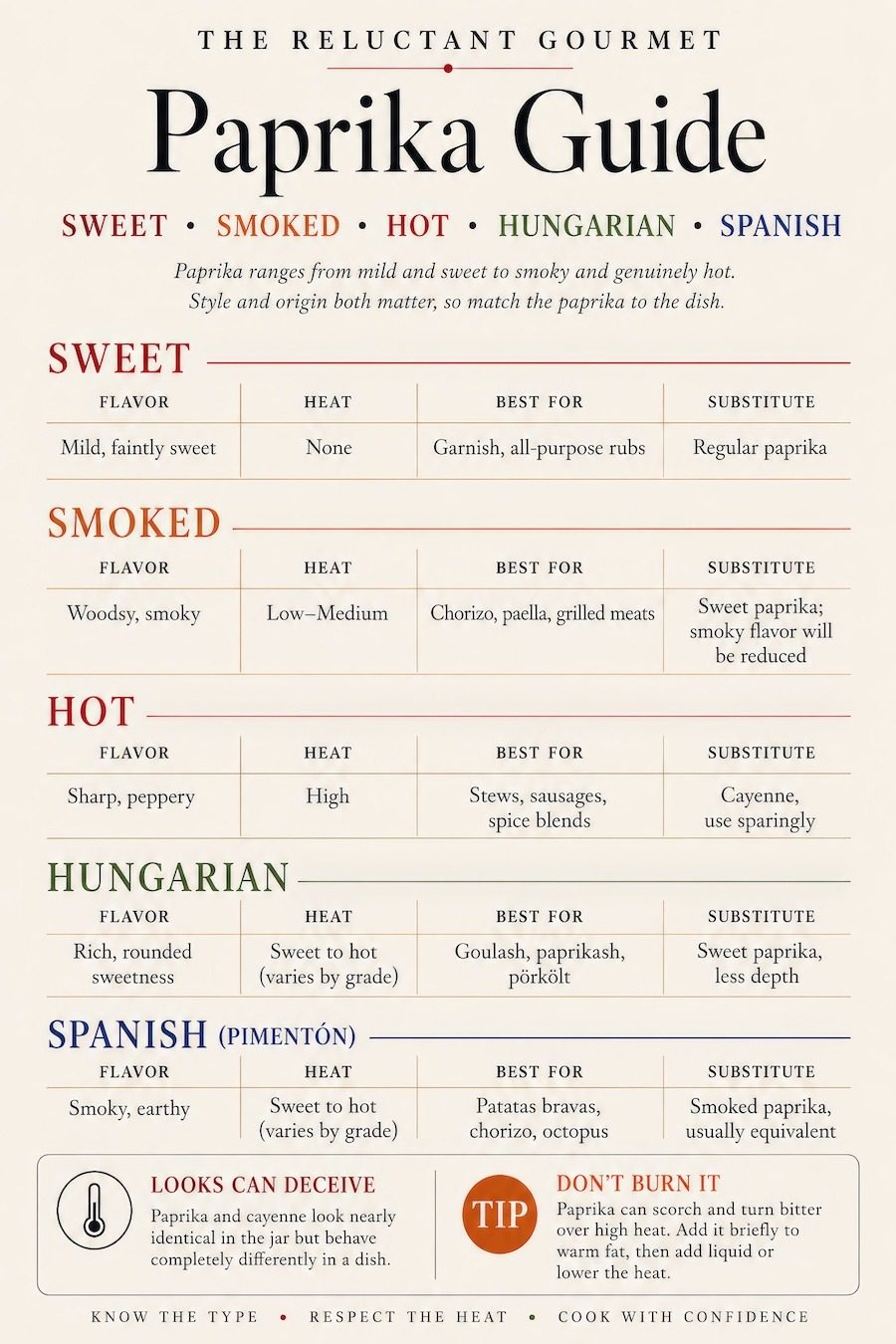
- Sweet paprika: Mild, gently sweet, no real heat. The all-purpose grocery-store default.
- Smoked paprika (pimentón): Peppers dried over oak fires. Distinct smokiness, comes in sweet, medium (agridulce), and hot (picante) versions.
- Hot paprika: Made from hotter pepper varieties. Real, noticeable heat — closer to a mild chili powder than to sweet paprika.
- Hungarian paprika: Graded by sweetness and heat — édesnemes (noble sweet) is the most common export grade; erős is the hottest.
- Spanish paprika: Almost always smoked; dulce (sweet), agridulce (medium), picante (hot).
What Most Cooks Get Wrong
- Mistaking it for cayenne: Both are red pepper powders, but cayenne is meaningfully hotter and has no smoky or sweet varieties — swap them and a mild rub becomes a hot one.
- Adding it too early over high heat: Paprika's natural sugars scorch and turn bitter in hot oil within seconds. Add it toward the end, or keep the heat moderate if it needs to cook longer.
- Assuming all paprika is mild: Hot Hungarian and hot Spanish paprika carry real heat — reading only "paprika" on the label tells you nothing about where it falls.
What Went Wrong (And Why)
- Rub turned out way hotter than expected → grabbed cayenne instead of paprika → check the jar twice, they sit close together and look similar
- Paprika tastes bitter and burnt → added early over high heat → add later in the cook, or lower the heat
- Dish lacks the color paprika should add → paprika is old and faded → replace it; dull brown powder won't bloom into red
- Rub tastes flat despite using paprika → used plain grocery paprika where the recipe wanted smoked → swap in pimentón for a rub that needs actual depth
Substitutions That Work
- No paprika, need color/mild flavor: A small pinch of chili powder — less smoky, slightly more assertive, but close.
- No smoked paprika: Sweet paprika plus a few drops of liquid smoke, or a pinch of chipotle powder for both smoke and heat.
- No hot paprika: Cayenne in a much smaller amount — start with a quarter of what the recipe calls for, since cayenne is significantly hotter.
How to Use It
- Timing: For rubs and dry seasoning, any time. For sautéed dishes, add paprika in the last few minutes to avoid scorching.
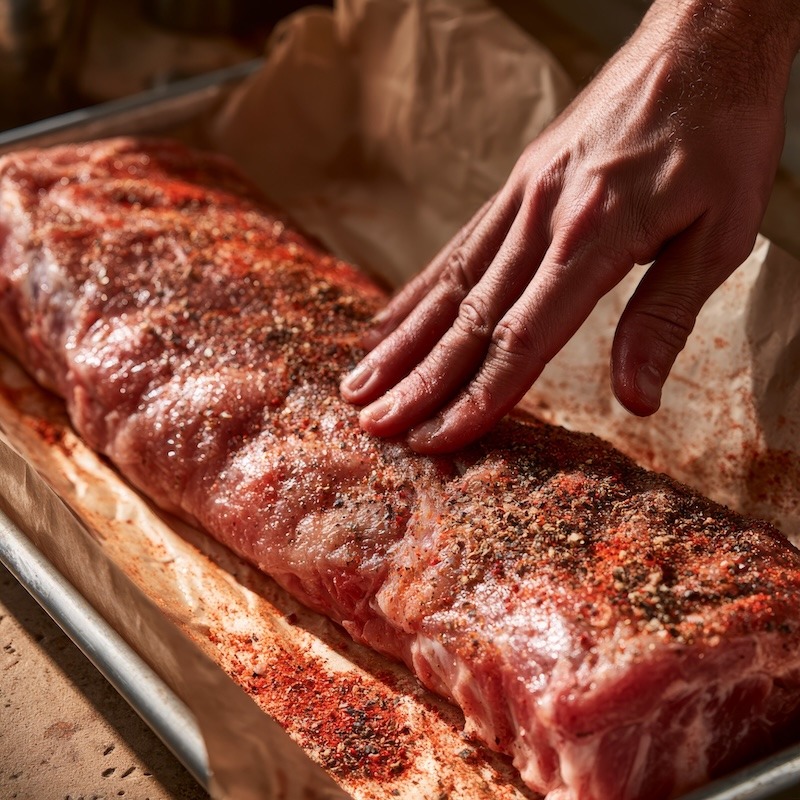
- Quantity: A rib rub typically runs 1–2 tablespoons paprika per pound of meat as the base note, cut with salt, sugar, and other spices.
- Pairings: Cumin, garlic, oregano, black pepper, brown sugar.
Flavor Pairing Ideas
- Proteins: Pork, chicken, shrimp — anything that takes well to a dry rub or braise.
- Vegetables: Potatoes, roasted peppers, cauliflower.
- Fats: Olive oil, butter — both carry paprika's color and flavor well when bloomed briefly.
- Other spices: Cumin, garlic, smoked salt, oregano.
Storage and Shelf Life
- Store in an airtight container away from heat and light — an open shelf next to the stove fades it fast.
- Realistically good for about a year before it noticeably loses color and punch; it won't go "bad," just flat.
- If it smells like nothing, it's done — replace it rather than using double the amount to compensate.
How Paprika Became Hungary’s Spice
Paprika didn’t start out as food. The Ottomans brought it to Hungary in the 16th century, and for a couple of hundred years it sat around as an ornamental plant—something people grew to look at, not to eat.
It didn’t find its way into the kitchen in earnest until the late 1700s, and even then it took another century to become what it is now: not just an ingredient, but a point of pride. By the 1800s, as Hungary was working to define its own culinary identity separate from the rest of the Austro-Hungarian Empire, paprika became shorthand for what made Hungarian cooking Hungarian — showing up in goulash, pörkölt, sausages, soups, and as the red dusting on top of half the dishes on a Hungarian table.
The best of it still comes from two towns — Szeged and Kalocsa — where the local climate and soil produce peppers that process into a noticeably richer, more consistent paprika than what’s grown elsewhere. If you’ve ever wondered why a jar labeled “Hungarian paprika” costs more than the generic stuff, this is usually why.
Frequently Asked Questions
Is paprika just dried red bell peppers?
Not exactly — it’s made from Capsicum annuum peppers, a family that includes bell peppers but also milder chili varieties, depending on the type of paprika.
Is paprika spicy?
Usually not — most paprika is mild, but hot Hungarian and hot Spanish varieties carry real heat, so check the label.
What’s the difference between paprika and cayenne?
Cayenne is consistently hot with no sweet or smoked versions; paprika ranges from mild to hot and includes smoked and sweet varieties, so the two aren’t interchangeable in most recipes.
What’s the difference between smoked and regular paprika?
Smoked paprika (pimentón) is dried over wood fires for a distinct smokiness; regular paprika is air- or heat-dried without that smoke flavor.
Can I substitute smoked paprika for regular paprika?
Yes, but expect a noticeably smokier result — start with slightly less than the recipe calls for and adjust.
Why does my paprika taste bitter?
It was likely added too early over high heat — paprika’s natural sugars scorch quickly, so add it later in the cooking process when possible.
How long does paprika last?
About a year for peak flavor and color; after that it fades and loses potency rather than spoiling outright.
Is Hungarian or Spanish paprika better?
Neither is objectively better — Hungarian paprika tends toward sweet and rounded, Spanish paprika is almost always smoked, so the choice depends on what the dish needs.
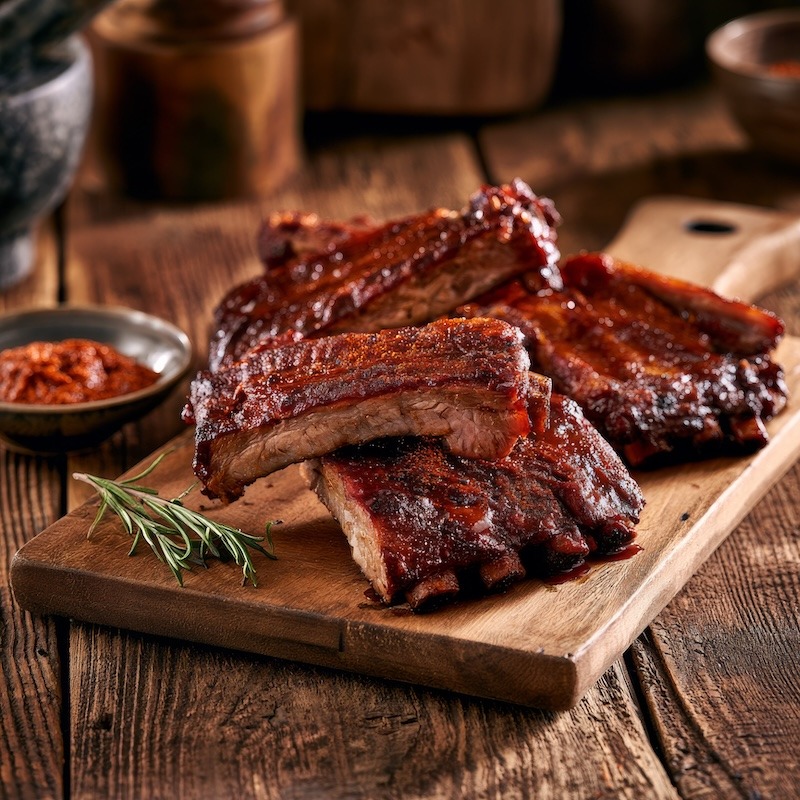
- If your rack of ribs needs the rub this post keeps referencing, here's a dry rub built for ribs.
- Paprika is the backbone of Hungarian goulash — see how it's used in this goulash recipe.
- For the classic Spanish application of smoked paprika, check out this paella recipe.
- Want to know what makes chili powder different from a single spice like paprika? Read this chili powder breakdown.
- Deviled eggs are the classic home for a paprika garnish — see this deviled eggs recipe.
- If cumin is another spice you keep reaching for blind, this cumin guide covers the same ground.
Buying Paprika
Know the Types: Sweet paprika adds mild color and gentle pepper flavor, smoked paprika brings rich, smoky depth, and hot paprika delivers a noticeable kick. Choose based on your recipe.
Check Freshness: Look for vibrant red color and a fragrant aroma. Dull, brownish powder usually means it’s old and lacks flavor.
Where to Shop: Gourmet spice shops, specialty markets, and international stores often carry fresher, higher-quality paprika.
Amazon Convenience: Amazon offers a wide selection of sweet, smoked, and hot paprika in various sizes. Compare brands, reviews, and origin for easy home delivery.
Storage Tip: Keep paprika in an airtight container away from heat and light to preserve its color and flavor.
🛒 Check Prices for Paprika on AmazonAvailable on Amazon