
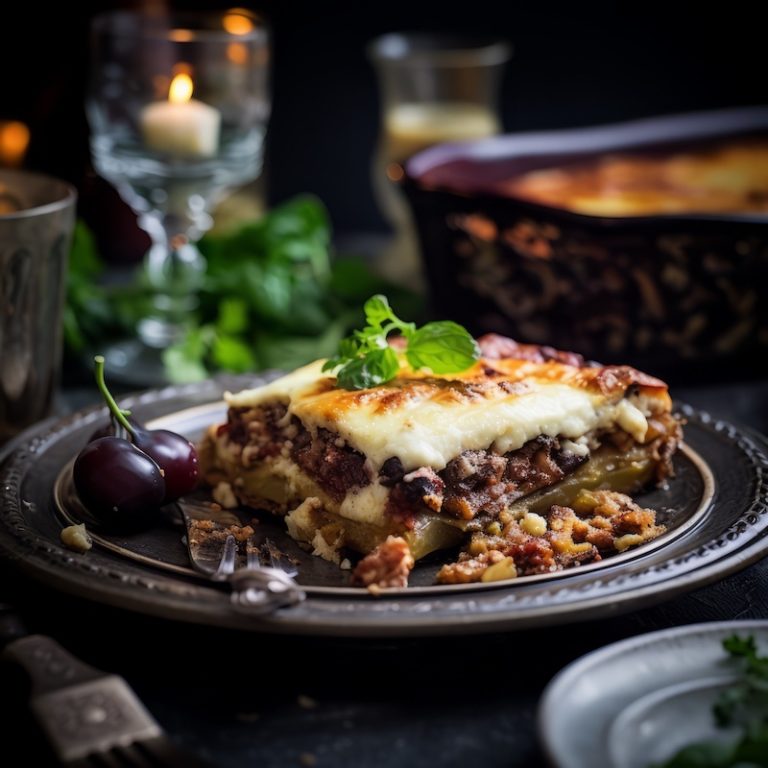


Moussaka – my kids love saying it – “MOO saka”
Moussaka is a rich, comforting dish that combines layers of savory flavors. This Mediterranean classic, especially popular in Greece, features tender eggplant, spiced ground meat, and a creamy béchamel sauce, all baked to golden perfection.
Each bite offers a balance of textures—from the softness of the eggplant to the hearty, flavorful meat and smooth, velvety sauce. The dish is often compared to lasagna, with its layered structure and indulgent taste. Still, it carries its own unique charm with the use of eggplant instead of pasta sheets and distinct aromatic spices like cinnamon and nutmeg.
While Moussaka might sound like a complex recipe, it’s a rewarding dish to prepare. The layering of ingredients allows for deep flavors to meld together as the casserole bakes.
Whether served for a family dinner or a special occasion, Moussaka always impresses with its heartiness and Mediterranean flair. This recipe combines the best of Greek cuisine with simple ingredients to create something truly memorable. So roll up your sleeves, gather your ingredients, and get ready to make this classic dish that will transport you to the sun-drenched shores of the Mediterranean.
Moussaka Recipe
Ingredients
For the Sauce
- 3 tablespoons olive oil
- 2 cups onions about 2 medium, chopped
- 2 cloves garlic minced or pressed
- 4 large tomatoes chopped
- 1 large green pepper chopped
- 1½ teaspoons fresh dill ½ teaspoon dried
- ¼ teaspoon cinnamon
- 3 tablespoons fresh parsley chopped
- salt and black pepper to taste
Main Ingredients
- 1 large eggplant sliced in ½ inch thick circles
- 1 large zucchini sliced in ½ inch thick circles
- olive oil for sautéing
- custard
- ⅓ cup butter
- ⅓ cup unbleached white flour
- 2 cups milk heated
- 2 egg yolks beaten
- pinch nutmeg preferably freshly
- salt & pepper to taste
Toppings
- 1 cup feta cheese 5 ounces
- ¾ cup bread crumbs
- Parmesan cheese freshly grated
- fresh parsley chopped
Instructions
- Start by making the tomato sauce. Saute the onions for a few minutes, add the garlic, and continue sautéing until the onions are translucent.
- Add the remaining sauce ingredients and simmer uncovered for approximately 30 minutes.
- Prepare the eggplant by placing the slices onto an oiled baking sheet. Season with some salt, then cover with aluminum foil and bake at 375°F until tender. This will take about 30 minutes.
- While the eggplant is baking, sauté the zucchini slices in oil until tender.
Custard
- To prepare the custard on top of this dish, heat the milk in one saucepan and melt the butter over medium heat in another. Add the flour to the butter to make a roux, and cook for 3 minutes, continuously whisking the mixture so it does not burn on the bottom of the pan.
- Slowly add the hot milk while whisking until it becomes a thick but smooth sauce.
- Remove the sauce from the heat and let it cool for approximately 10 minutes.
- Whisk in the egg yolks and nutmeg.
- Season to taste with salt & pepper.
To Assemble the Moussaka
- You'll need a deep baking dish, approximately 9" x 13" x 2", that has been oiled. Spread about half the homemade tomato sauce on the bottom of the pan and then layer the eggplant slices, half the feta cheese, half the breadcrumbs, and the remainder of the tomato sauce.
- On top of this, add the zucchini slices and the remaining feta cheese and breadcrumbs. The custard goes on top of everything but then is topped with Parmesan cheese and freshly chopped parsley.
- Throw the pan into the preheated oven and bake uncovered at 375°F for 45 minutes to 1 hour or until bubbly and golden.
- Be sure to let the casserole sit at room temperature for 15 minutes before serving.
Tips for Preparing Moussaka
Salt the eggplant slices – Sprinkle eggplant with salt and let them sit for 20–30 minutes. This draws out excess moisture and bitterness. Pat dry before cooking.
Pre-cook the eggplant – Roast or lightly fry slices before layering. This keeps them from turning soggy and adds depth of flavor.
Use good olive oil – Since this is a Greek dish, high-quality olive oil enhances flavor in both the meat sauce and vegetables.
Choose ground lamb or beef wisely – Lamb gives a more traditional, richer flavor, while beef offers a leaner option. You can also blend the two.
Build flavor in the meat sauce – Cook onions, garlic, cinnamon, nutmeg, and tomato paste slowly. These spices give moussaka its signature warmth.
Make the béchamel smooth – Whisk constantly while adding warm milk to the roux. Then stir in egg yolks for richness and cheese for flavor.
Layer neatly – Start with potatoes or eggplant at the base, followed by meat sauce, then more vegetables. Finish with béchamel for the golden crust.
Don’t rush baking – Bake until the béchamel is deeply golden and slightly puffed. This ensures the flavors meld together.
Let it rest before serving – Allow moussaka to sit for 20–30 minutes after baking. This helps layers set and makes slicing easier.
Make ahead friendly – You can assemble moussaka a day in advance, refrigerate, then bake before serving. It also reheats beautifully.
Side Dishes That Pair Well With Moussaka
| Side dish | Description | Why it pairs |
|---|---|---|
| Greek salad (Horiatiki) | Tomatoes, cucumber, red onion, olives, feta and oregano, dressed with olive oil and lemon. | Bright acidity and crunchy vegetables cut through the rich béchamel and eggplant in moussaka. |
| Tzatziki | Creamy yogurt-cucumber-garlic dip, chilled and herb-scented. | Cool, tangy yogurt refreshes the palate and balances the dish’s richness. |
| Lemon roasted potatoes | Crisp, golden potatoes roasted with lemon, oregano and olive oil. | Comforting starch with bright citrus notes complements the savory, spiced meat layers. |
| Steamed or sautéed greens (horta) | Simple bitter greens—spinach, chard or dandelion—gently cooked with lemon and olive oil. | Earthy bitterness provides contrast and lightens the overall meal. |
| Spanakopita triangles | Flaky phyllo filled with spinach, herbs and feta. | A familiar Greek classic that echoes the flavors of moussaka while adding crisp texture. |
| Melitzanosalata (eggplant dip) | Smoky mashed eggplant with garlic, lemon and olive oil. | Reinforces eggplant notes and offers a silky, spreadable contrast to baked layers. |
| Warm pita or crusty bread | Soft, warm bread for mopping up juices and creams. | Neutral starch that helps carry rich sauces and makes the meal more shareable. |
| Roasted seasonal vegetables | Zucchini, peppers, carrots or artichokes roasted with herbs. | Adds color, texture and a lighter vegetal counterpoint to the casserole. |
| Orzo or lemon-herb pilaf | Small pasta or rice cooked with stock, herbs and a touch of lemon. | Light, zesty grain side that soaks up sauce without overpowering the main dish. |
| Pickled vegetables or pepperoncini | Quick-pickled cucumbers, red onion or peppers—tangy and crisp. | Vinegary bite refreshes the palate and contrasts the creamy, hearty moussaka. |
What is Moussaka?
Moussaka is a traditional Mediterranean casserole, most often linked to Greek cuisine, though variations exist across the region. The dish features layers of eggplant, spiced ground meat (usually lamb or beef), and a creamy béchamel sauce.
Typically, cooks slice, fry, or roast the eggplant, using it as the base and top layers. The meat is cooked with aromatic spices like cinnamon, allspice, and nutmeg, which give it a distinctive savory-sweet flavor.
Once assembled, the layers receive a rich béchamel sauce made from butter, flour, milk, and sometimes cheese. This creates a smooth, velvety finish when baked. The dish bakes until golden and bubbly, allowing the flavors to meld together.
Moussaka makes a hearty, comforting main course, known for its indulgent texture and complex flavors. Though it might seem complicated, it remains a beloved dish for family meals and special occasions. Variations in vegetables, meats, and seasonings reflect local traditions.

Moussaka History
Moussaka has a rich history shaped by the cultures of the Mediterranean and the Middle East. Its origins trace back to the Arab world in the 13th century, where a dish called “musakhkhan” was made with meat, vegetables, and spices. This version was similar to today’s Moussaka but lacked the iconic eggplant layers.
The modern Greek version began to take shape during Ottoman rule in the 19th and 20th centuries. The Ottomans introduced eggplant to the region, quickly becoming a staple in many Mediterranean dishes, including Moussaka. The dish also began to adopt the layered structure we know today, with eggplant, ground meat, and a creamy sauce.
The Greek version of Moussaka gained fame in the early 20th century, thanks to chef Nikolaos Tselementes. He popularized béchamel sauce as a topping, a defining feature of modern Moussaka. Over time, the dish spread throughout the Mediterranean, with each region adding its own twist. Today, Moussaka remains a beloved dish, enjoyed in many countries, each with its own variation.


3 Responses
Looks amazing! I’ve never cooked moussaka but certainly seems like the sort of thing that would go down a treat on a cold evening. Will definitely be trying the cookbook challenge too!
Hi Laura, great to have you join the challenge. – RG
I agree with Laura–what a great colder weather dish! Yum:)
to be correct put the accent on the third syllable