Why Steam Clams at Home?
- Fresh & Flavorful: Enjoy clams at their peak, straight from the pot.
- Simple & Quick: Steaming takes just minutes — minimal prep, maximum taste.
- Customizable: Control seasoning, broth, and flavor additions exactly how you like.
- Impress Guests: Perfect for casual dinners or special occasions with restaurant-style flair.
- Fun & Interactive: Make it a hands-on experience with family or friends at the table.
Steamed Clams Recipe: How to Steam Littlenecks Like a NJ Pro
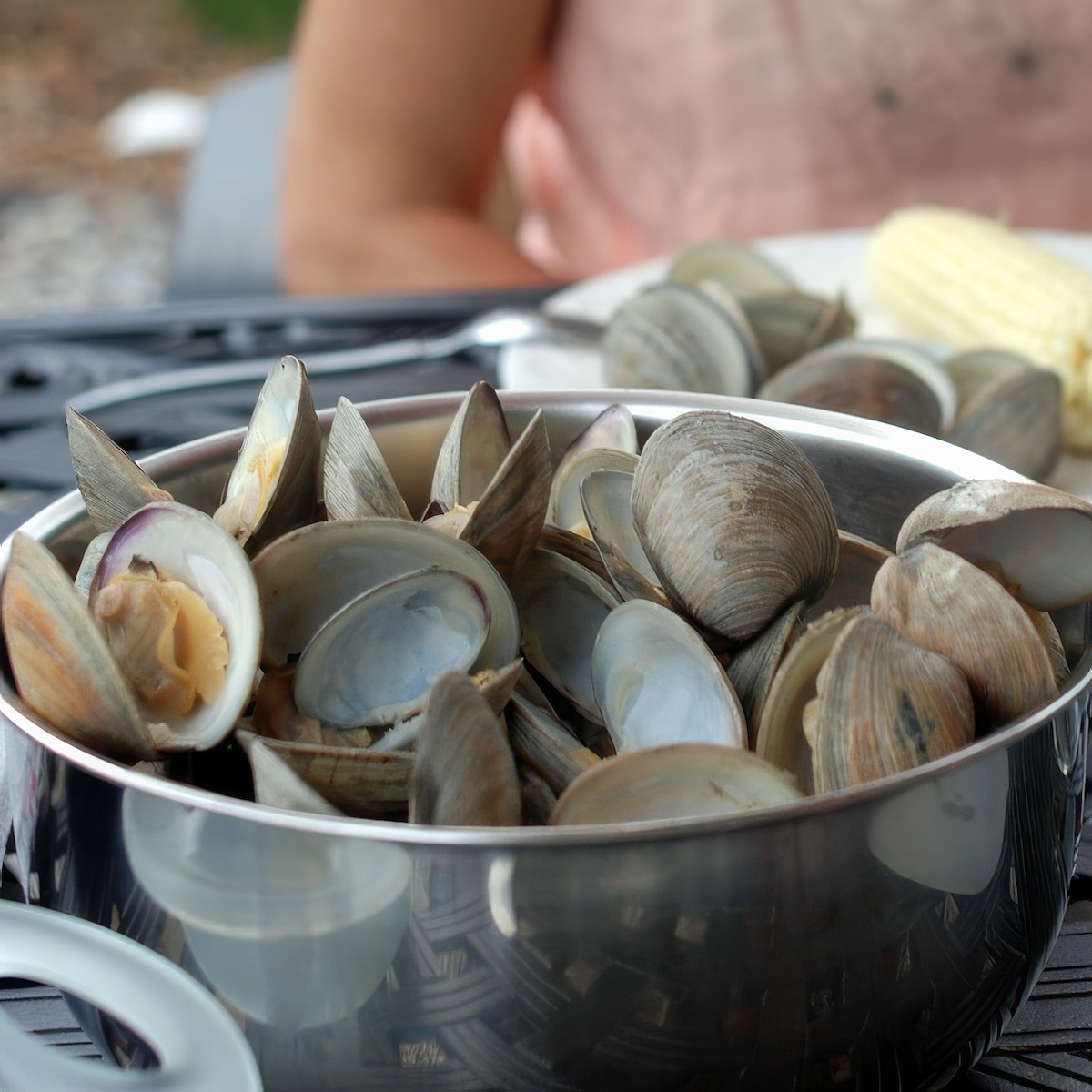
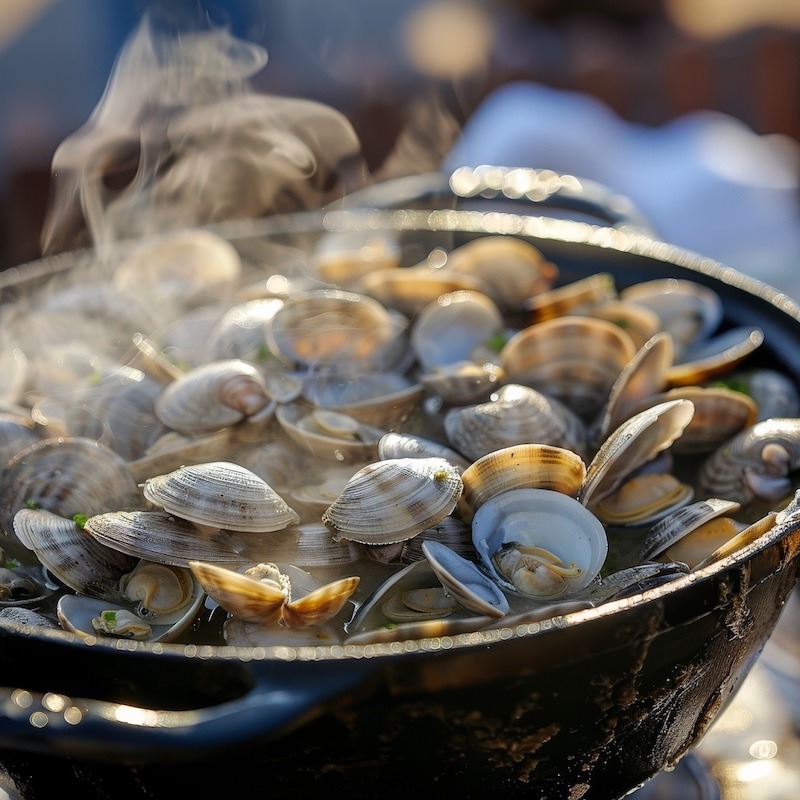
There’s something magical about steaming clams at home — the hiss of the pot, the salty aroma that fills the kitchen, the shells opening one by one to reveal tender, briny treasures. It’s a simple ritual with outsized rewards, a taste of the New Jersey shore no matter where you live.
This isn’t just a recipe; it’s a blueprint for a perfect, restaurant-style experience you can create in your own kitchen. With just a few ingredients and a little technique, you’ll master juicy littlenecks, infused with garlic, lemon, and butter — and impress anyone lucky enough to share the table.
Whether you’re a first-timer intimidated by seafood or a seasoned clam enthusiast, this guide will take you step by step, teaching you the tips and tricks that make steaming clams effortless and delicious. Let’s dive in and bring the seaside right to your plate.
Steamed Clams – Jersey Steamers
Equipment
- 1 large pot with lid
- colander or strainer
- 1 scrubbing brush optional
Ingredients
Instructions
Clean the Clams
- Start by rinsing the clams under cold running water to remove surface dirt or sand. A scrubbing brush can help clean the shells thoroughly.
- To purge the clams of any remaining sand, place them in a bowl of cold, salted water for 20-30 minutes.
- After soaking, give them a final rinse.
Prepare the Cooking Liquid
- Add 1 cup of water or white wine in a large pot. Minced garlic can enhance the flavor. Fresh herbs like parsley or thyme can also be included for an aromatic touch.
Steam the Clams
- Bring the liquid to a boil over high heat. Once it reaches a rolling boil, carefully add the cleaned clams to the pot. Cover the pot with a tight-fitting lid to ensure the clams steam properly.
Cook the Clams
- Allow the clams to steam for about 5-7 minutes, occasionally shaking the pot gently to ensure even cooking. The clams are done when they open wide. Be sure to discard any clams that do not open, as they might not be safe to eat.
Serve
- Transfer the steamed clams to a serving bowl using tongs or a slotted spoon. Serve them hot with lemon wedges and melted butter for dipping. A garnish of fresh herbs can add a nice visual and flavor touch.
Notes

Steaming Clams FAQ
Q: How long do you steam clams?
A: Steam littleneck or cherrystone clams for about 5–7 minutes until their shells open. Larger clams may take 8–10 minutes. Discard any clams that don’t open.
Q: Do clams need to be soaked before steaming?
A: Yes. Soak clams in cold salted water for 20–30 minutes to purge sand and grit. Rinse under cold water before steaming.
Q: How do I know if clams are fresh?
A: Fresh clams should smell like the sea — not fishy — and have closed shells or close when tapped. Avoid clams with cracked or open shells that don’t respond.
Q: Can I steam frozen clams?
A: Yes, but thaw them first. Place frozen clams in cold water for about 30 minutes before steaming. Steaming frozen clams directly can result in uneven cooking.
Q: What’s the best liquid for steaming clams?
A: Water, white wine, or a combination works well. You can also add aromatics like garlic, shallots, herbs, and butter for extra flavor.
Q: Should I cover the pot when steaming clams?
A: Absolutely. Covering traps the steam, which cooks the clams evenly and quickly.
Q: Can I overcook clams?
A: Yes. Overcooked clams become rubbery and tough. Remove them as soon as the shells open and serve immediately.
Q: How many clams should I cook per person?
A: About 1–2 pounds per person for littleneck or cherrystone clams is typical for a main dish.
Q: What should I do with unopened clams after cooking?
A: Discard any clams that remain closed after steaming — they are likely unsafe to eat.
Q1: Can I steam clams in the microwave?
A: It’s possible, but stovetop steaming is preferred for even cooking and flavor. If using a microwave, place clams in a microwave-safe dish with a small amount of water, cover loosely, and cook on high for 3–5 minutes, checking frequently.
Q1: Can I add butter and seasonings to the steaming liquid?
A: Yes! Adding butter, garlic, herbs, lemon, or white wine infuses the clams with rich flavor. Add these at the start so the steam carries the flavor.
Q1: How should I store leftover steamed clams?
A: Remove clams from shells if desired, store in an airtight container, and refrigerate up to 2 days. Reheat gently with a little liquid to avoid a rubbery texture.
Jersey Steamers At the Beach
Preparing steamers requires only a big pot with a cover and a steamer basket to keep the steamers off the bottom. However, if you don’t have one, don’t fret—you can still steam the clams without one.
There are lots of great Internet recipes for making fancier steamers. Most of these recipes flavor the broth with onions, garlic, parsley, wine, or all of the above, and then use the broth to serve the clams or to dunk in.
The way we serve them cannot be any more basic, although I would like to try adding other ingredients someday.
Note: I have read on other sites (but have not found it on the FDA site) that the FDA recommends you soak your clams in seawater with one cup of cornmeal added for several hours. If you don’t have seawater, substitute 1/3 cup of coarse kosher salt added to one gallon of water.
I have never taken this step, but it is probably a good idea if you are concerned about safety.
Note About These Clams
I always get emails from people saying these are not steamers but cherrystone or little neck clams. Technical, you are correct.
In New Jersey, the term “steamers” is often used to refer to little neck clams when prepared by steaming, even though traditionally, “steamers” usually refer to soft-shell clams. Here are some reasons why this terminology might be used:
- Preparation Method: Littleneck, hard-shell clams (usually Mercenary mercenary) are often steamed in New Jersey. The name “steamers” likely comes from the cooking method rather than the specific type of clam.
- Regional Terminology: Regional differences in seafood terminology can lead to variations in the names of different clams. In New Jersey, the term “steamers” might have evolved to include little neck clams due to local culinary traditions and preferences.
- Menu and Marketing: Restaurants and seafood markets might use the term “steamers” to appeal to customers familiar with steamed clams as a dish, regardless of whether they are soft-shell or hard-shell clams.
- Simplification: Using a single term like “steamers” simplifies the ordering and marketing process. Customers looking for steamed clams can be reassured that the term ‘steamers’ encompasses all types of steamed clams, making the ordering process more straightforward and comfortable.
- Cultural Adaptation: Cultural adaptations occur over time as people move and communities grow. For example, the local New Jersey community could use “steamers” to refer to steamed little neck clams, which could result from such adaptations.
While “steamers” traditionally refer to soft-shell clams, in New Jersey, the term is also used for little neck clams when prepared by steaming, reflecting local culinary practices and regional language variations.


5 Responses
please send me all seafood recipes
Those look like cherrystone clams. A LOT tougher then steamer clams(aka pisser clams/butter clams) and they are hard shelled and different in appearance… as mentioned here. Only soft shell clams would be referred to as steamer clams… and you really have to try some of them with butter… delicious.
Hi Ryan, technical you are correct. These clams are hard shell clams called quahogs and depending on their size are called by different names. The smallest is a little neck, then the cherrystone, then the top neck and finally the quahog. But in South Jersey where I have been vacationing for most of my life, we call the cherrystones and little necks steamers. You go to a restaurant and you’ll find on the menu a “bucket of steamers” and this is what you’ll get. I have no doubt the soft shell steamer clam with butter is delicious, but these are what I was raised on and we still call them steamers.
Many places erroneously will name things for tourists who honestly wouldn’t come into contact with the the culture from which the recipe comes from. These unfortunately are not called steamers and Ryan will be correct the majority of places and times and this is the first time I’ve heard of this confusion. Respectfully you’re wrong and it may cause confusion and embarrassment for others should you not change it. I understand your personal story but on net, you’re leading people astray.
Hi Michael, I clarified that it is only in New Jersey that they call little neck clams “steamers” and offered several reasons why this may be true. I am not trying to confuse anyone, but where I grew up, that’s what we call them. The name of the post is New Jersey Steamed Clams, and I will write another post about steamed clams from other parts of the country.