
Frozen Fish vs. Fresh Fish: What You Need to Know Before Buying
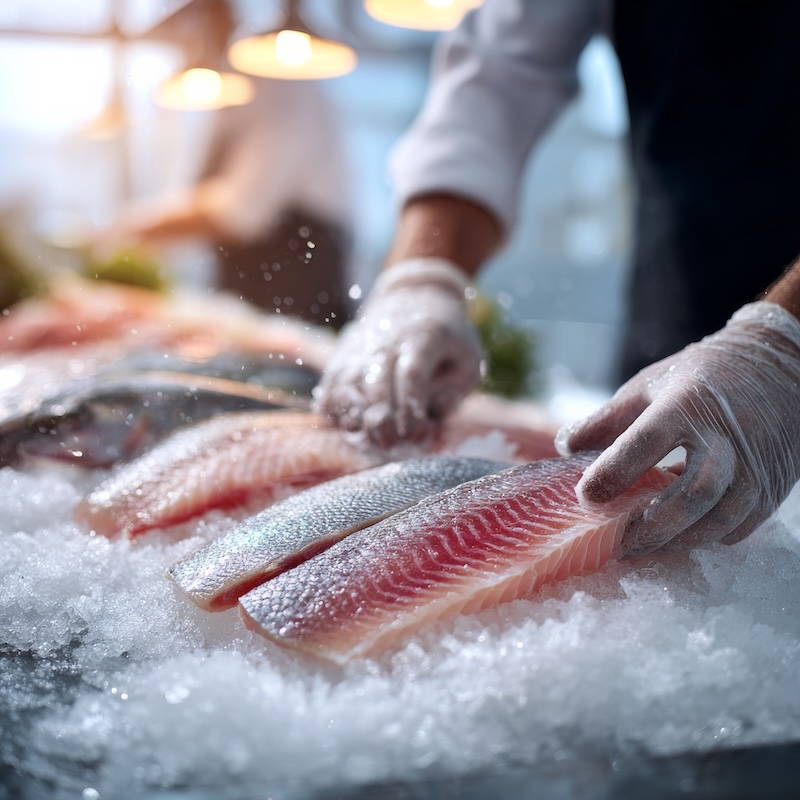
The seafood case tells a story. Ice glistens. Fillets shine. Labels whisper words like fresh, wild, and previously frozen. But what do they really mean?
Most shoppers assume that fresh fish has never been in a freezer. That belief feels natural. It also happens to be wrong more often than you think.
Modern seafood travels fast. Boats freeze fish within hours of the catch. Distributors thaw it with precision. Stores display it on ice at just above freezing. The result looks fresh. It smells clean. And legally, it is fresh.
This is where confusion begins.
Previously frozen fish isn’t a downgrade. In many cases, it’s the best fish you can buy. Freezing at sea locks in quality. It protects texture. It improves safety. Meanwhile, fish that never froze may have spent days in transit, losing ground with every mile.
So how do you tell the difference? When does freezing happen? Who thaws it? Why do some states require labels while others stay silent? And when should you actually seek out never-frozen fish?
This post pulls back the curtain on the seafood counter. You’ll learn how fish move from the ocean to the ice bed. You’ll understand the labels. You’ll shop with confidence, not assumptions.
Fresh isn’t a feeling. It’s a process. Let’s decode it.
Fresh or Frozen? Take My Quiz
Can you tell how fresh supermarket seafood really is?
Is All Supermarket Fish Frozen?
No. But most of it has been.
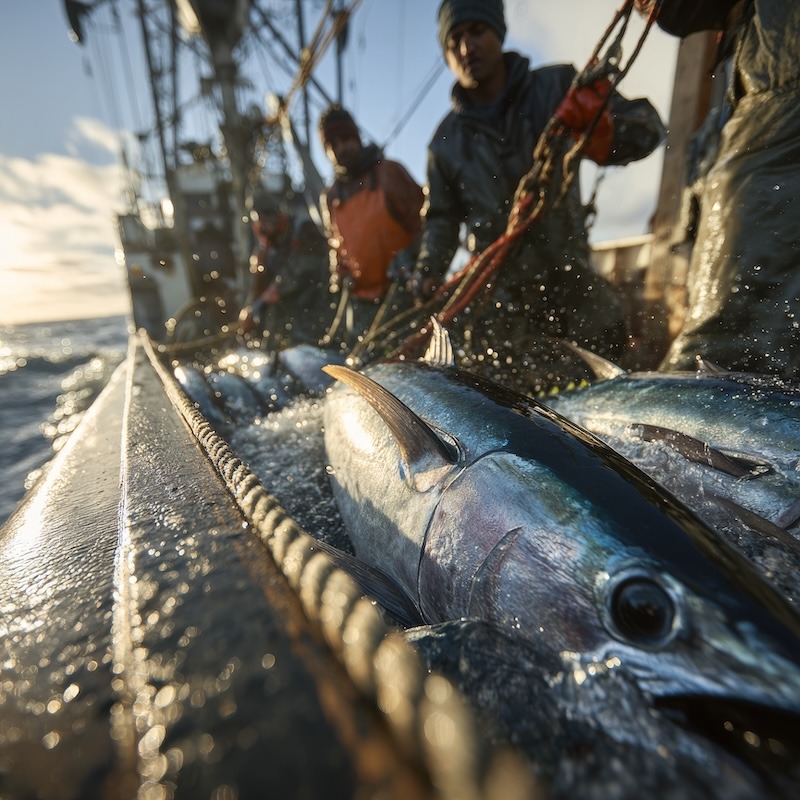
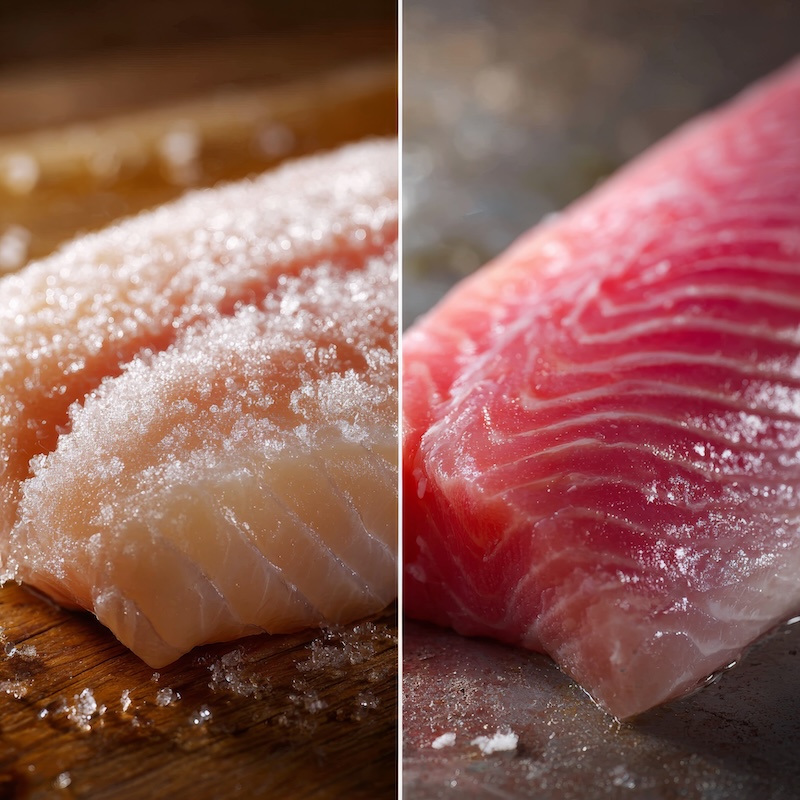
This answer surprises many shoppers. The seafood case looks fresh. Ice sparkles. Fillets glow. The reality works differently. Most wild-caught fish freeze at sea within hours of harvest. Boats do this on purpose. Freezing protects quality. It improves safety. It stops time in a way ice never can.
When that fish reaches land, it stays frozen through transport and storage. Later, a distributor thaws it under tight temperature control. The store places it on ice. At that moment, the fish becomes “fresh” by retail definition. It is unfrozen. It is safe. It is legal to sell as fresh.
So, how much fish is truly never frozen? Not much. A small slice of the case qualifies. Farmed trout often arrives fresh. Catfish usually does.
Tilapia often does too. Farmed salmon may never be frozen when sourced regionally. Local seasonal fish sometimes skips the freezer entirely.
Everything else likely spent time below zero. Tuna. Cod. Halibut. Wild salmon. Even when they look pristine.
This matters because frozen is not bad. In many cases, it is better. The real skill is knowing what you are buying. Fresh means unfrozen today. It does not mean unfrozen forever.
Frozen or Not Frozen?
| Fish | Likely Frozen? | Notes |
|---|---|---|
| Tuna (fresh steaks / loins) | Very likely | Almost all tuna is frozen at sea to prevent parasites. Truly fresh is rare and usually local sushi-grade. |
| Salmon (wild) | Very likely | Wild salmon is almost always frozen on the boat. “Fresh” in-store usually means thawed. |
| Salmon (farmed Atlantic) | Sometimes | Farmed salmon may arrive never frozen, especially from local sources. |
| Cod | Very likely | Most cod is frozen at sea. Thawed fillets may still be sold as “fresh.” |
| Halibut | Very likely | Typically frozen at sea. Fresh local halibut is uncommon. |
| Trout (farm-raised) | Sometimes | Can be truly fresh, especially when locally sourced. Wild trout is usually frozen. |
| Tilapia | Usually not frozen | Farmed tilapia often arrives fresh via refrigerated transport. |
| Catfish | Usually not frozen | Farmed catfish commonly arrives fresh. |
| Snapper | Likely | Often frozen at sea unless locally sourced. |
| Mahi Mahi / Swordfish | Likely | Usually frozen at sea. Truly fresh versions are rare. |
| Shrimp / Lobster | Almost always frozen | Even “fresh” shrimp or lobster is usually thawed from frozen. |
Frozen Fish FAQ
What does “fresh” mean at most supermarkets around the country?
At most supermarkets, “fresh” means the fish is not frozen at the time of sale. It does not mean the fish was never frozen. If the fish sits on ice in the display case, stores can legally call it fresh. The term describes its current state, not its whole history.
Can fish be sold as fresh if they were previously frozen?
Yes. In most states, fish that were frozen earlier can be thawed and sold as fresh. As long as the fish is handled correctly and kept at safe temperatures, it meets legal standards. This is common practice across the U.S. seafood supply chain.
Does supermarket fish have to be tagged “Previously Frozen” in all states?
No. There is no nationwide requirement for this label. Only a few states require disclosure when fish was previously frozen. Most states rely on general truth-in-labeling rules rather than freeze-history tags.
What species of fish are typically frozen before reaching the supermarket?
Most wild-caught ocean fish. Tuna. Cod. Halibut. Wild salmon. Mahi-mahi. Swordfish. These species are often frozen at sea within hours of harvest.
Why is freezing not a bad thing?
Freezing protects quality. It slows spoilage. It improves safety. In many cases, frozen-at-sea fish is fresher than fish that traveled days on ice. Freezing is a tool, not a flaw.
What do FDA regulations focus on for seafood safety and labeling, and do they include freeze history?
FDA regulations focus on food safety and truthful identification, not whether a fish was frozen in the past. The agency’s primary concern is preventing illness and deception, not tracking temperature history.
For safety, the FDA requires proper handling through HACCP plans. These plans control hazards like bacteria, parasites, and temperature abuse from harvest to sale. Freezing often plays a role here, especially for parasite control in fish meant for raw consumption.
For labeling, the FDA requires:
- The common name of the fish
- Net weight
- Country of origin
- Allergen disclosure
- Labels that are not false or misleading
Freeze history is not a required federal disclosure at the retail seafood counter. The FDA does not require a “previously frozen” label for fish sold thawed on ice, as long as the product is safe and not otherwise misleading.
In short, the FDA regulates what the fish is and whether it’s safe, not whether it ever went below zero. Any rules about disclosing freeze history come from state or local laws, not federal ones.
States Requiring "Previously Frozen" Tags
| State | Label Required | Scope / Species | Notes / Source |
|---|---|---|---|
| Alaska | Yes | All seafood that has been previously frozen | Seafood products previously frozen and thawed must be labeled “PREVIOUSLY FROZEN” |
| Maryland | Yes | “Fresh” foods previously frozen | Disclosure required if fresh food was previously frozen |
| Massachusetts | Partial | Halibut | Specific law governing labeling of halibut (may include freezing status) |
| Rhode Island | Yes | Uncooked fish & shellfish | Requires disclosure if uncooked fish/shellfish have been frozen |
| New York | Yes | Frozen food previously offered unfrozen | Requires disclosure if previously thawed was sold as unfrozen |
From Ocean to Supermarket - A Fish Tail
Here’s the typical journey of fish from the ocean to your supermarket display, with the freezing and thawing points clearly mapped out:
At Sea (immediately after catch)
- Most wild-caught fish is frozen on the boat within hours to preserve quality and prevent parasites (especially for species eaten raw like tuna or salmon).
- Some fish is flash-frozen or IQF (individually quick-frozen), which locks in texture and flavor.
Docks / Landing
- The frozen fish is unloaded at the dock still frozen.
- In some cases, smaller fisheries may land fresh fish on ice if the goal is local distribution, and it can reach a buyer quickly.
Wholesaler / Distributor
- Fish may be kept frozen in warehouses or refrigerated trucks.
- If a supermarket wants “fresh” display fish, the wholesaler often thaws it before delivery (partially or fully) so it arrives in a ready-to-display state.
- Thawing may occur via:
- Refrigerated thawing over 24–48 hours
- Ice slurry bath for rapid thaw
Supermarket / Retail
- Fish is placed on ice beds in the seafood case.
- At this point, the fish is considered “fresh”, even though it may have been frozen at sea or in the warehouse.
- Retail staff may rotate and display the fish, but typically do not refreeze unless it’s a frozen fish section.

Freezing Temperatures?
Here’s the breakdown of the temperatures involved at each stage from catch to display, which is critical for both food safety and quality:
Frozen at Sea
- Most commercial fisheries flash-freeze or IQF (individually quick freeze) the fish.
- Typical temperatures: -20°F to -40°F (-29°C to -40°C) for rapid freezing.
- Purpose:
- Stops bacterial growth
- Kills parasites (for raw-eaten species like tuna, salmon, halibut)
- Locks in texture and flavor
Storage / Transport (still frozen)
- Fish remains in freezers or refrigerated containers during transport.
- Typical storage temperature: -0°F to -10°F (-18°C to -23°C)
- Ensures the fish stays frozen until thawing is intended
Thawing (at wholesaler or distributor)
- Thawing is done safely to prevent bacterial growth:
- Refrigerated thawing: 32–39°F (0–4°C) over 12–48 hours
- Ice slurry bath: can also be used for quicker thawing, same target temperature range
- Goal: fish stays in the safe temperature zone below 40°F (4°C) while thawing
Display at the Supermarket
- Fish is placed on crushed ice beds in the seafood case.
- Target temperature: 32–38°F (0–3°C)
- Ice helps:
- Keep fish firm and cold
- Maintain a “fresh” appearance
- Prevent bacterial growth
Smart Tips for Buying Fish
Ask direct questions.
Ask if the fish was ever frozen. Ask when it arrived. A good fishmonger answers clearly.
Trust your senses.
Fresh fish smells clean and mild. Not fishy. Flesh should look moist and firm, not dull or sticky.
Look at the ice.
Fish should rest on plenty of clean, melting ice. Sparse ice or cloudy liquid signals poor handling.
Know the species.
Expect tuna, cod, halibut, and wild salmon to have been frozen. Look for farmed trout, tilapia, or catfish if you want never-frozen options.
Don’t fear frozen fish.
Frozen-at-sea fish often beats “fresh” fish that traveled for days. Quality freezing protects flavor and texture.
Check labels carefully.
Read species names and country of origin. Avoid vague signs like “whitefish” without details.
Buy whole when possible.
Whole fish stays fresher longer and reveals quality clues like clear eyes and bright skin.
Time your purchase.
Buy fish the same day you plan to cook it. Seafood does not reward procrastination.
Transport it cold.
Bring an insulated bag or go straight home. Keep the cold chain intact.
Have a plan.
Know how you’ll cook it before you buy. Fish waits for no one.