Food Plating for Home Cooks: Simple Techniques to Make Meals Look Restaurant-Quality
Plating is the art of arranging food on a plate so it looks as good as it tastes. It transforms a simple meal into a dining experience. For many home cooks, plating feels intimidating.
You can make a delicious dish, but presenting it beautifully is a different skill. The good news is that plating is a learnable skill. With a few simple techniques, anyone can elevate their meals.
In this post, you will learn the basics of plating. You will learn how to select the perfect plate for your dish. You will understand how to arrange proteins, sides, and vegetables for maximum visual appeal.
You will explore ways to add height, color, and contrast to your plate. You will see how sauces and garnishes can enhance both flavor and appearance. You will also learn how to mix textures and create balance so each element complements the others.
By following these steps, you will gain confidence in presenting your meals. You will turn home-cooked dishes into visually stunning creations.
Even simple dinners will look thoughtful and professional. By the end, plating will no longer feel like a challenge. Instead, it will become a creative and enjoyable part of cooking.
The 3-Component Plating Formula
Protein = Focal Point
- Place your main protein (meat, fish, tofu, or main dish) first.
- Position it slightly off-center to create visual interest.
- This is the star of your plate.
Starch or Carb = Anchor
- Add a starch (rice, potatoes, pasta, or bread) near the protein.
- Keep portions balanced.
- Think of it as the supporting base for your plate.
Vegetables / Colorful Elements = Contrast
- Add one or two vegetables or garnishes for color and texture.
- Arrange them so they complement, not crowd, the plate.
- Herbs, microgreens, or edible flowers can add a pop of freshness.
Examples of Food Plating
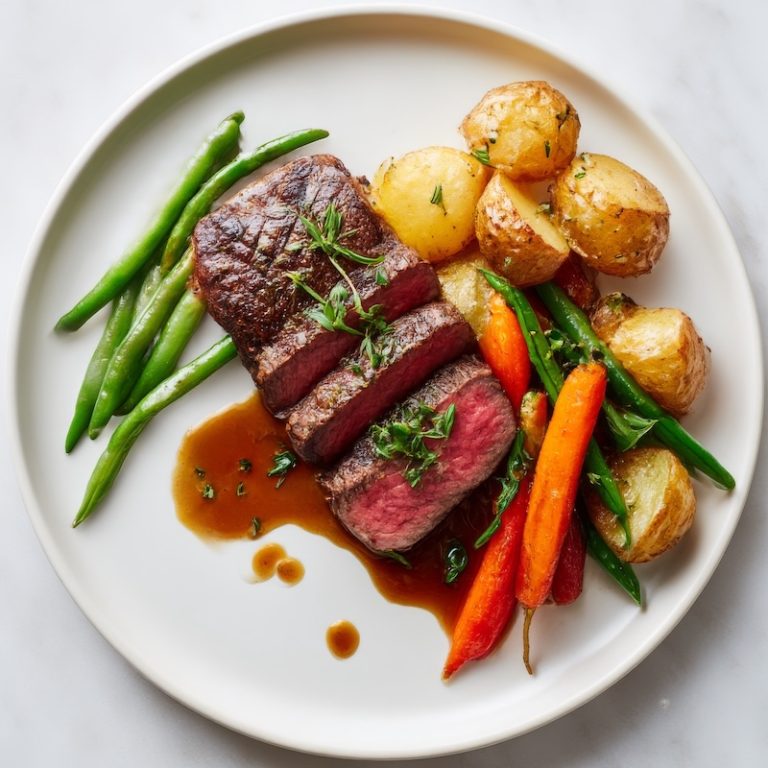
A medium-rare grilled steak is placed slightly off-center as the focal point. Nearby, a portion of roasted potatoes anchors the plate. Colorful vegetables, such as sautéed green beans and roasted carrots, are arranged for balance and contrast.
A slight drizzle of steak jus or sauce around the plate and a sprinkle of fresh herbs on the steak. Leave negative space around the edges.
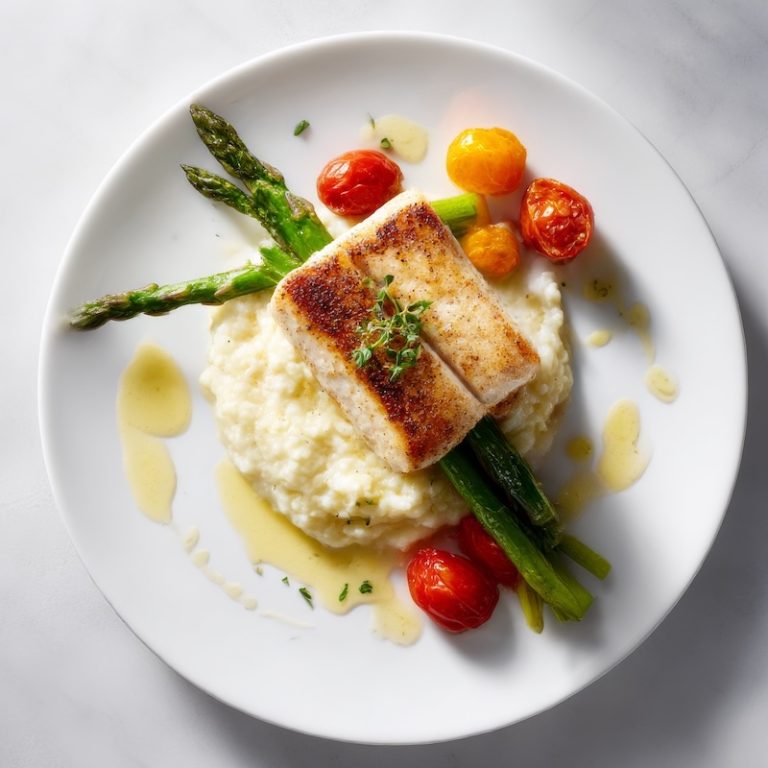
A seared fish filet is placed slightly off-center as the focal point. Nearby, a portion of creamy mashed potatoes anchors the plate. Colorful vegetables, such as asparagus spears and roasted cherry tomatoes, are arranged for balance and contrast.
Lightly drizzle lemon-butter sauce around the plate and sprinkle a small amount of fresh herbs on the fish. Leave negative space around the edges.
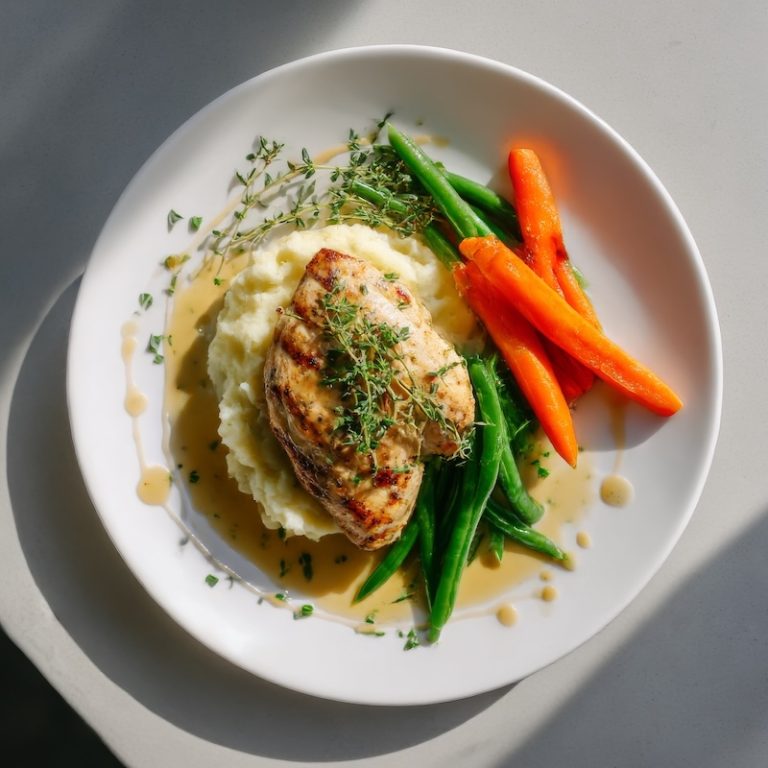
The plate consists of three elements: a main protein, slightly off-center (e.g., grilled chicken breast), a starch portion (e.g., mashed potatoes) placed near the protein, and colorful vegetables (e.g., roasted carrots and green beans) arranged to balance the plate.
The food is neatly arranged with some negative space around the edges. Add a slight artistic drizzle of sauce around the plate and a sprinkle of fresh herbs on top of the protein for garnish. The plate is white or neutral, and the background is minimal and bright.
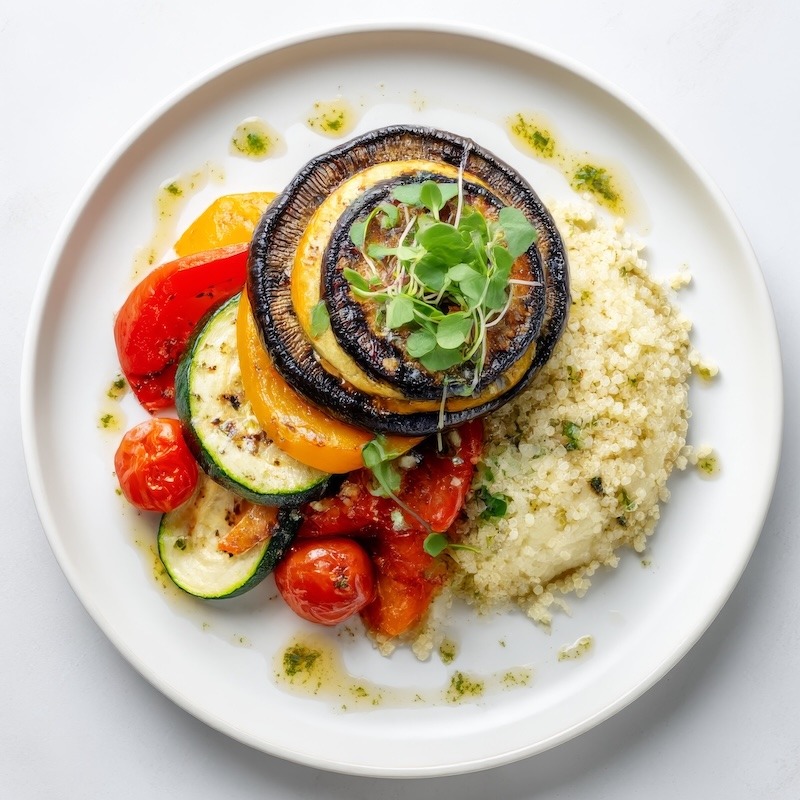
A colorful roasted vegetable stack & grilled portobello mushroom sits slightly off-center as the focal point. Nearby, a portion of couscous anchors the plate.
Bright vegetables like roasted bell peppers, zucchini, and cherry tomatoes are arranged for balance and contrast. Drizzle a herb vinaigrette or sauce around the plate and sprinkle fresh microgreens on top. Leave negative space around the edges.
Defined Plating Styles for Home Cooks
| Name | Description | Typical Layout | Use |
|---|---|---|---|
| Classic / Traditional | Food is arranged in separate sections on the plate. | Protein at the center or off-center, starch on one side, vegetables on the other. | Comfort foods or formal plating where clarity and balance are key. |
| Vertical / Stacked | Ingredients are layered or stacked to add height. | Protein at the base, vegetables or garnish stacked on top. | Modern, elegant presentation; adds drama and dimension. |
| Circular / Clock Method | Plate is treated like a clock face. | Protein at 6 o’clock, starch at 10, vegetables at 2. Sauce around edges or under elements. | Structured and visually balanced plating. |
| Freeform / Artistic | Ingredients are arranged creatively, almost like a painting. | Irregular placement, dots or brush strokes of sauce, microgreens or edible flowers as accents. | Fine dining, modern cuisine; emphasizes artistry and creativity. |
| Minimalist / Negative Space | Focuses on simplicity and empty space. | Small portions with deliberate spacing, often with a single garnish. | Highlights quality ingredients; clean, elegant, contemporary look. |
| Symmetrical / Mirror Plating | Elements are mirrored or repeated to create symmetry. | Protein, starch, and vegetables mirrored across a centerline. | Modern, sophisticated presentation; visually satisfying. |
Clock Plating Style
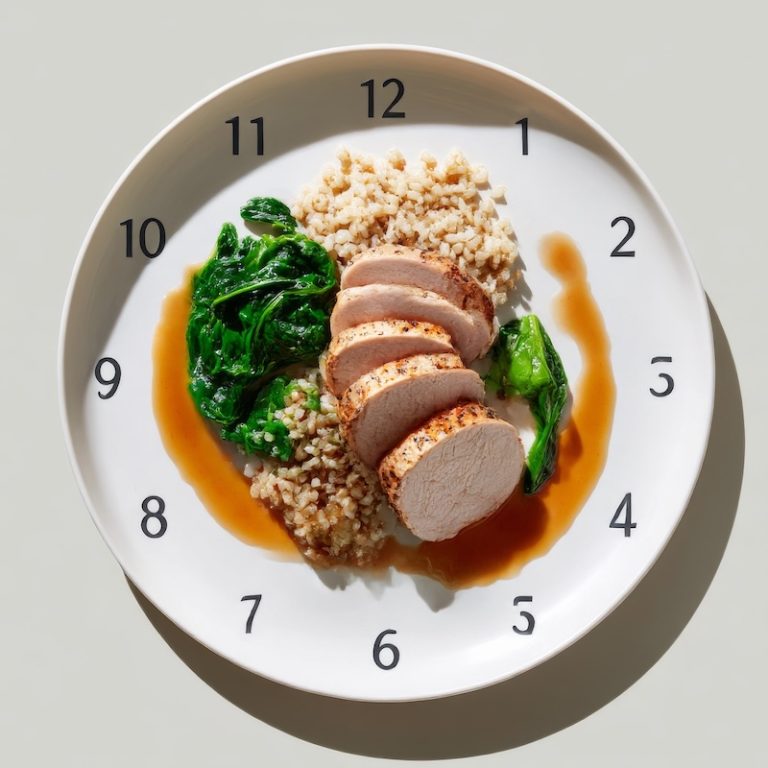
A perfectly cooked pork loin is placed at 6 o’clock as the focal point. A portion of brown rice sits at 1 o’clock, and sautéed spinach is arranged at 10 o’clock.
A drizzle of sauce surrounds the edges of the plate. Food is neatly arranged with some negative space, clearly showing the clock-style layout. Include vibrant colors and textures to make the dish visually appealing.
Stacked Plating Style
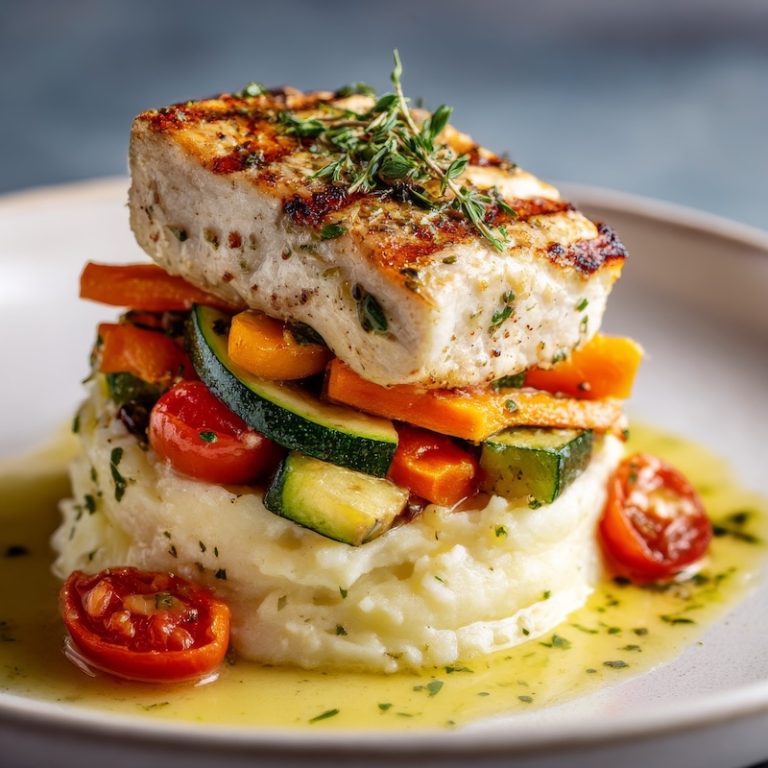
A perfectly grilled swordfish filet sits on top of a bed of creamy mashed potatoes as the base. Layered around or slightly under the fish are colorful roasted vegetables, such as baby carrots, zucchini, and cherry tomatoes.
A light drizzle of lemon-butter sauce flows around the base, with a small sprinkle of fresh herbs on top of the swordfish. The plate is white or neutral-colored, with some negative space around the edges.
Soft, natural lighting highlights the textures, colors, and height of the stacked arrangement, making the layers and vertical dimension clear and visually appealing.
Negative Space Plating Style
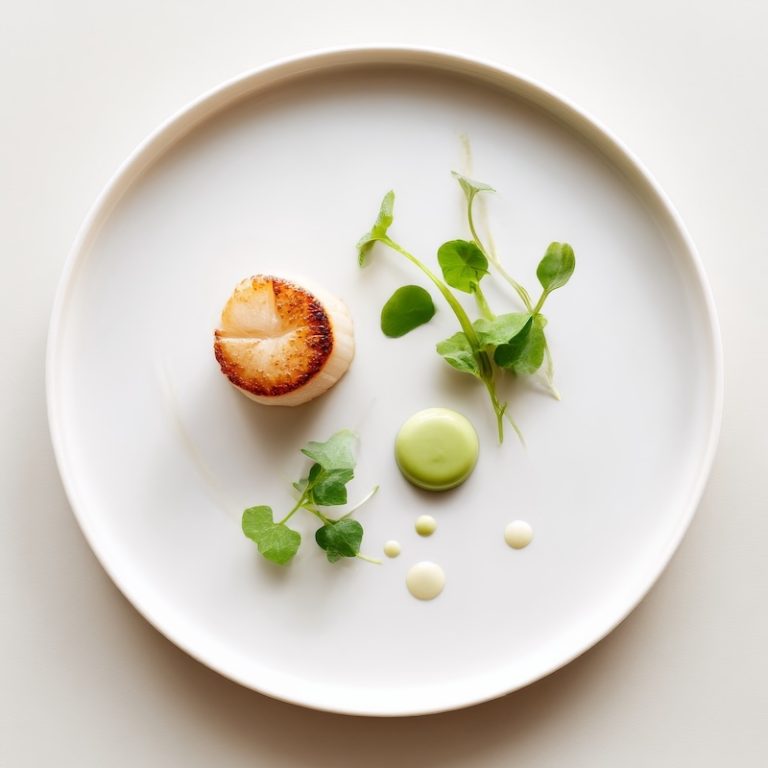
A small, perfectly seared scallop sits slightly off-center as the focal point. A tiny quenelle of smooth pea purée is placed a short distance away, adding a subtle pop of green. A few microgreens are arranged with precision beside the scallop as a refined garnish.
A few small dots of sauce on the plate help balance the composition. Clean lines, precise placement, and empty areas on the plate are emphasized. Soft natural lighting and a bright, neutral background give the dish a modern, high-end feel.
Symmetrical Space Plating Style
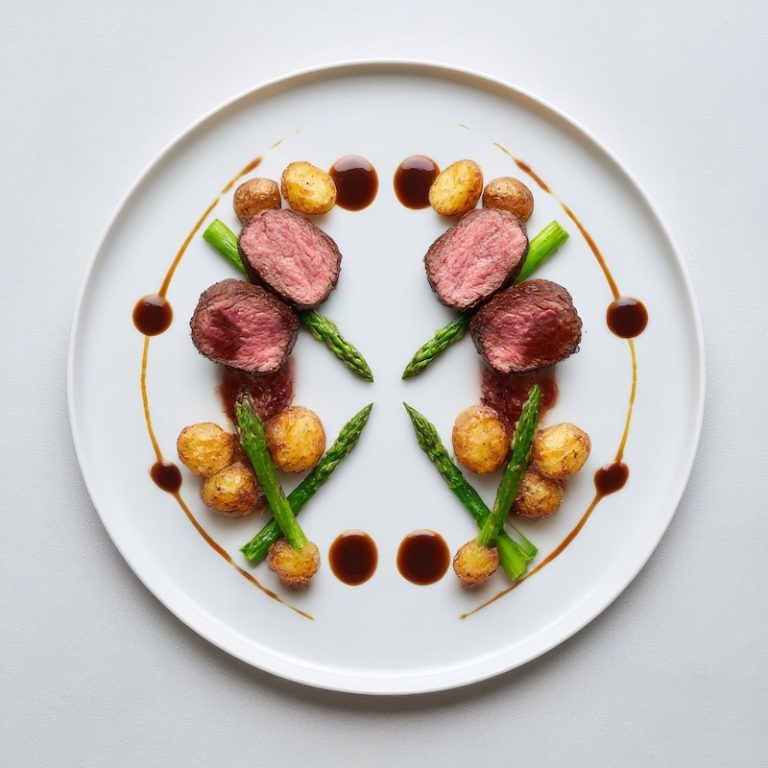
Two identical portions of sliced beef tenderloin are arranged on opposite sides of the plate, mirroring each other. Between them, two equal portions of roasted fingerling potatoes and baby asparagus are placed symmetrically.
A pair of identical sauce swooshes or droplets creates clean mirrored lines that balance the composition. The design is precise, even, and visually satisfying, with intentional structure and geometry.
Classic versus Stacking Plating Style
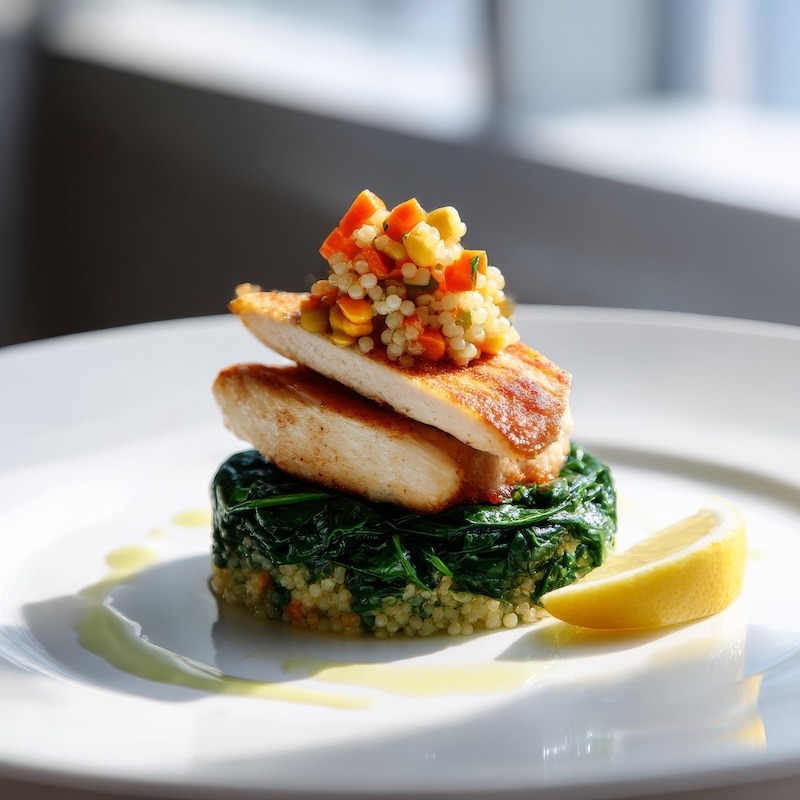
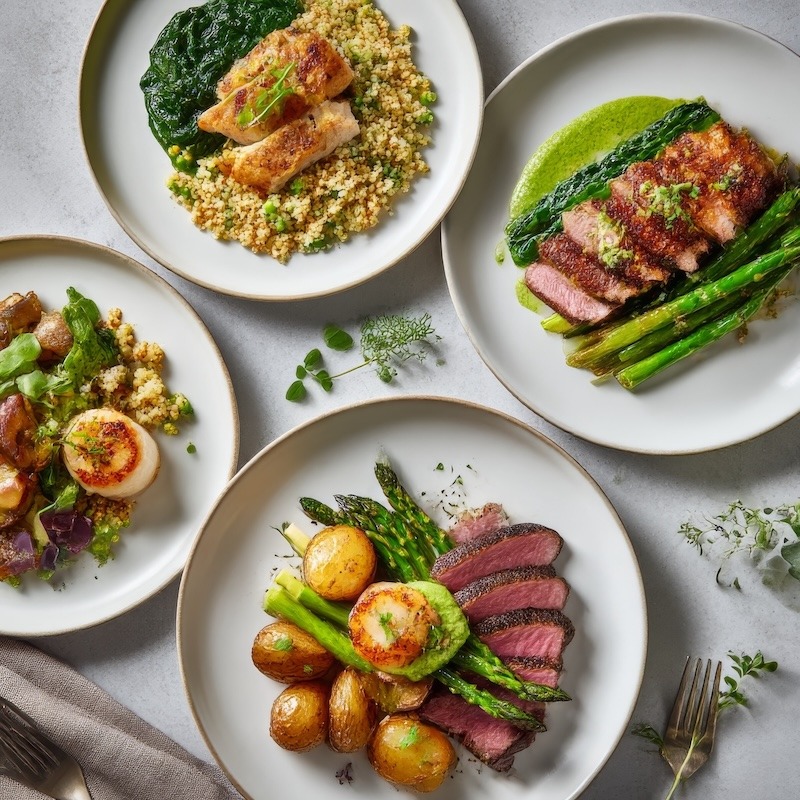
I took a photo of my Pan-Roasted Chicken with Sauteed Spinach, a classic style of plating, and used AI to see what it would look like in a stacked style. Both look tasty.
Which do you prefer?