
The quick rule: 1 pound of fresh tomatoes equals about 3 to 4 medium tomatoes, 2½ cups chopped, or one 14.5-ounce can for recipe substitution. If that’s what you needed, you have it. If you need fresh-to-canned swaps, tomato paste ratios or variety-specific yields, the charts and calculators below cover them.
Master Tomato Conversion Chart
Use these practical estimates for the tomato conversions cooks need most often.
| If you have | Equivalent amount | Best used for | Important note |
|---|---|---|---|
| 1 pound fresh tomatoes | About 2½ cups chopped or sliced | Fresh tomato recipes | Tomato size does not change this weight-based yield. |
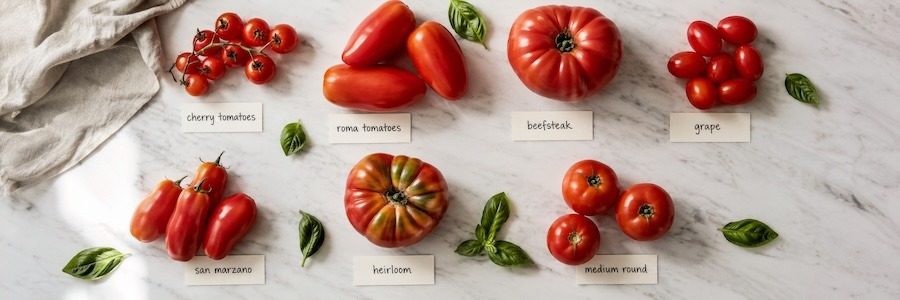
| 1 pound fresh tomatoes | About 5 small, 3–4 medium or 7–8 Roma tomatoes | Converting weight to count | Use weight when accuracy matters. |
| 1 pound fresh tomatoes | About one 14.5-ounce can | Practical recipe replacement | This is not a home-canning production yield. |
| One 14.5-ounce can | About 1¾ cups including juice | Soups, sauces and braises | Net weight includes tomatoes and packing liquid. |
| One 14.5-ounce can, drained | About 1¼–1½ cups tomatoes | Recipes needing less liquid | Drained volume varies by brand and cut. |
| One 28-ounce can | About 3–3½ cups including juice; replaces about 2 pounds fresh | Larger recipes | Fresh replacement is a practical estimate. |
| One 6-ounce can tomato paste | About 10 tablespoons or ⅔ cup | Thickening and concentrated flavor | Six ounces is net weight, not six fluid ounces. |
| One 8-ounce can tomato sauce | Slightly less than 1 cup | Sauces, soups and casseroles | This means canned tomato sauce, not pasta sauce. |
| One 15-ounce can tomato sauce | About 1¾ cups | Larger sauce recipes | Thickness and seasoning vary by brand. |
| One 15-ounce can tomato purée | About 1⅔–1¾ cups | Thick, smooth tomato bases | Purée is generally thicker and less seasoned than sauce. |
| ½ cup tomato paste + ½ cup water | About 1 cup tomato sauce or purée substitute | Replacing sauce or purée | Season sauce to taste; add more water only if needed. |
| 1 cup tomato sauce or purée | About ½ cup tomato paste after reducing | Replacing tomato paste | Simmer by half, or remove ½ cup of another liquid. |
Remember: Net weight, volume including juice, drained tomato volume and practical fresh replacement are different measurements.
Fresh Tomato Conversion Calculator
Convert fresh tomatoes by count, weight or chopped cups.
Tomatoes vary naturally. Use weight when accuracy matters, especially with beefsteak and heirloom tomatoes.
Fresh & Canned Tomato Calculator
Convert fresh tomatoes to cans—or canned tomatoes back to fresh.
Why Tomato Can Sizes Don’t Equal Cup Measurements
The number printed on a tomato can is its net weight, not its volume in cups. A 14.5-ounce can weighs 14.5 ounces with the tomatoes and packing liquid together. It does not contain 14.5 fluid ounces or a fixed number of cups.
That is why one can may have several correct measurements. A typical 14.5-ounce can contains about 1¾ cups including the juice but only about 1¼ to 1½ cups of drained tomatoes. The exact amount varies with the tomato cut, packing liquid and brand.
Labeled Net Weight
This is the total weight of the tomatoes and liquid inside the can. It is the number printed on the label, such as 14.5 ounces or 28 ounces.
Volume Including Juice
This measures everything poured from the can. Use it when the recipe calls for undrained tomatoes or benefits from the packing liquid.
Drained Tomato Volume
This measures only the tomato pieces after draining. Use it when extra liquid could make a salad, casserole or filling too wet.
Fresh-Tomato Replacement
This is a practical recipe substitution rather than an equal weight or processing yield. One 14.5-ounce can generally replaces about 1 pound of fresh tomatoes in a cooked recipe.
Can You Substitute Fresh Tomatoes for Canned?
Yes, especially in cooked recipes. As a practical starting point, 1 pound of fresh tomatoes can replace one 14.5-ounce can of whole or diced tomatoes. Fresh tomatoes contain plenty of water, so they usually need a little preparation and cooking before they resemble canned tomatoes.
The substitution works best in soups, sauces, stews, braises and casseroles. It is less reliable in recipes where the exact amount of tomato liquid or the firm texture of fresh tomatoes matters.
Using Fresh Instead of Canned
Use about 1 pound fresh tomatoes for one 14.5-ounce can or 2 pounds fresh for one 28-ounce can.
- Core and chop the tomatoes.
- Peel them when the finished texture matters.
- Cook them until they soften and release their juices.
- Simmer longer if the recipe becomes too watery.
Using Canned Instead of Fresh
Use one 14.5-ounce can for approximately 1 pound fresh tomatoes.
- Use the juice in soups, sauces, stews and braises.
- Drain some or all of the liquid for casseroles and fillings.
- Choose whole or diced tomatoes with minimal seasoning.
- Expect a softer texture than you would get from fresh tomatoes.
When the Substitution Works Best
Tomato Sauce vs. Purée vs. Paste
Tomato sauce, tomato purée and tomato paste all begin with cooked tomatoes, but they do not have the same concentration or consistency. Choosing the right one affects the thickness, tomato flavor and seasoning of your dish.
Tomato Sauce
Thinner and ready to blend into a recipe.
- Usually the thinnest of the three products
- May contain salt, herbs, spices or other flavorings
- Works well in soups, casseroles, braises and quick sauces
Typical measure: 1 cup weighs about 244 grams or 8.6 ounces.
Tomato Purée
Smooth, thick and usually less seasoned.
- Thicker than most canned tomato sauces
- Contains at least 8% but less than 24% tomato soluble solids
- Works well as a smooth base for soups, sauces and stews
Typical measure: 1 cup weighs about 252 grams or 8.9 ounces.
Tomato Paste
The thickest and most concentrated.
- Contains at least 24% tomato soluble solids
- Adds concentrated tomato flavor without much liquid
- Works well for thickening sauces and building depth
Typical measure: 1 cup weighs about 264 grams or 9.3 ounces.
The Quick Substitution Rule
Mix 1 part tomato paste with 1 part water to make approximately 2 parts tomato sauce or purée substitute. The result makes a thick, rich sauce. Season it to taste or add a little more water only when the recipe needs a thinner consistency.
Tomato Paste, Sauce & Purée Calculator
Convert tomato paste, canned tomato sauce and tomato purée.
Tomato Substitutions and Quick Fixes
Missing the tomato product a recipe calls for? These practical swaps and adjustments can help you correct the consistency and flavor.
| The problem | What to use | How to adjust |
|---|---|---|
| No fresh tomatoes | Whole or diced canned tomatoes | Use one 14.5-ounce can for approximately 1 pound fresh. Drain slightly when the recipe needs less liquid. |
| No canned tomatoes | Fresh tomatoes | Use approximately 1 pound fresh for one 14.5-ounce can. Peel when needed, then cook down the excess moisture. |
| Only tomato paste available | Tomato sauce or purée substitute | Mix 1 part tomato paste with 1 part water. Season to taste when replacing tomato sauce. |
| Tomato sauce is too thin | Tomato paste or additional cooking time | Simmer uncovered to reduce the liquid, or add tomato paste 1 tablespoon at a time. |
| Tomato sauce tastes too tart | A small amount of sugar, butter or another balancing ingredient | Add a little at a time. This balances the tart flavor but does not remove the acid or make the sauce safe for canning. |
| Tomato flavor is weak | Tomato paste | Cook the paste briefly in the pan before mixing it into the sauce. This adds concentrated tomato flavor. |
| The dish tastes flat | Salt or seasoning | Taste first, then add salt gradually. More tomato paste will not correct every seasoning problem. |
Cook’s insight: First decide whether the problem is excess liquid, weak tomato flavor, tartness or insufficient seasoning. Each one requires a different adjustment.
The goal isn’t perfect math—it’s understanding how tomatoes behave so you can adjust with confidence.
Frequently Asked Questions About Tomato Conversions
How many tomatoes are in a pound?
One pound equals about 5 small round tomatoes, 3–4 medium tomatoes, 7–8 Roma or plum tomatoes, or 25–30 cherry tomatoes. Tomato sizes vary, so use weight when accuracy matters.
How many cups are in a pound of tomatoes?
One pound of fresh tomatoes yields about 2½ cups chopped or sliced. The exact amount can vary slightly with the tomatoes and how finely you cut them.
How many fresh tomatoes equal a 14.5-ounce can?
Use about 1 pound of fresh tomatoes in place of one 14.5-ounce can. That equals approximately 5 small, 3–4 medium or 7–8 Roma tomatoes. This is a practical recipe substitution, not a home-canning yield.
How many fresh tomatoes equal a 28-ounce can?
Use about 2 pounds of fresh tomatoes in place of one 28-ounce can. That equals approximately 10 small, 7–8 medium or 14–16 Roma tomatoes.
How many cups are in a 14.5-ounce can of tomatoes?
A typical 14.5-ounce can contains about 1¾ cups of tomatoes and juice. After draining, it usually provides about 1¼–1½ cups of tomato pieces. The exact yield varies by brand and tomato cut.
How many cups are in a 28-ounce can of tomatoes?
A typical 28-ounce can contains about 3–3½ cups of tomatoes and juice. After draining, it usually provides about 2½–3 cups of tomato pieces.
Can I substitute fresh tomatoes for canned tomatoes?
Yes. Use approximately 1 pound of fresh tomatoes for one 14.5-ounce can or 2 pounds for one 28-ounce can. Core and chop the tomatoes, peel them when texture matters and cook them until they soften. Simmer longer if the recipe becomes too watery.
Can I substitute canned tomatoes for fresh tomatoes?
Yes, particularly in soups, sauces, stews and other cooked dishes. Use one 14.5-ounce can for approximately 1 pound of fresh tomatoes. Drain some of the liquid when extra moisture could make the recipe too wet.
How many tablespoons are in a 6-ounce can of tomato paste?
A six-ounce can of tomato paste contains about 10 tablespoons, or approximately ⅔ cup. Six ounces is the paste’s net weight, not its volume in fluid ounces.
How do I substitute tomato paste for tomato sauce?
Mix 1 part tomato paste with 1 part water. For example, combine ½ cup tomato paste with ½ cup water to make approximately 1 cup of tomato sauce substitute. Season to taste and add a little more water only if the recipe needs a thinner sauce.
What is the difference between tomato sauce, purée and paste?
Tomato sauce is generally the thinnest and may contain seasonings. Tomato purée is smooth, thicker and usually less seasoned. Tomato paste is the thickest and most concentrated. Marinara and other finished pasta sauces are not the same as canned tomato sauce.
Why do tomato conversions vary?
Tomato size, variety, water content and preparation all affect yield. Canned measurements also change depending on the brand, tomato cut and whether you include the packing liquid. Treat conversions as practical recipe estimates rather than exact measurements.
How can I make tomato sauce taste less tart?
Add a small amount of sugar, butter or another balancing ingredient and taste before adding more. These ingredients can soften the perception of tartness, but they do not remove the acid or make the sauce safe for canning.
What is the most accurate way to measure tomatoes?
Use weight whenever possible. Cup measurements change depending on tomato size and how the tomatoes are cut, but weight provides a more consistent starting point.
57 Responses
I am wondering, if I dehydrate 8 medium tomatoes, how much tomato powder should I expect?
I don’t have any tomatoes (canned or fresh for a recipe that calls for 2 28oz cans of tomatoes. How much tomato sauce can I substitute for the canned tomatoes?
Hi Terri, two 28-ounce cans contain about 6 to 7 cups of tomatoes and packing liquid. You can use approximately 6 to 7 cups of canned tomato sauce as a starting point, but the result will be smoother and may already contain salt or seasonings. If the recipe needs tomato pieces, sauce will change the finished texture.
Dehydrating tomatoes significantly reduces their weight and volume, as the water content is removed, leaving behind concentrated solids. The exact yield of tomato powder from 8 medium tomatoes can vary based on factors such as tomato variety, size, and dehydration efficiency. However, we can estimate based on available data:
Tomato Powder Yield: Dehydrating 1 dozen large Roma tomatoes yields approximately 20 grams of finely ground tomato powder.
Assuming medium tomatoes are slightly smaller than large Roma tomatoes, 8 medium tomatoes might yield approximately 10 to 15 grams of tomato powder. This is roughly equivalent to about 2 to 3 teaspoons of tomato powder.
Note that these are approximate values, and actual yields can vary based on the specific characteristics of the tomatoes and the dehydration process used.
One bushel gave me one pint.
I use one 6 oz Tomato Paste to 1 cup water for 14 oz of Tomato Sauce.
I grow my own tomatoes and roast them off when I have enough ripe ones. My question is what is the ratio of roasted tomatoes to fresh chopped tomatoes?
Hi Cassie, roasting doesn’t have one fixed conversion because yield changes with tomato variety, roasting temperature, and how much moisture you cook out. For example, a recipe using about 3 pounds of Roma tomatoes may finish with roughly 2 cups of well-roasted tomatoes. Treat that as a starting estimate rather than a universal ratio. Weighing the fresh tomatoes will give you the most consistent results from batch to batch.
1 (28 ounces) can tomatoes = 10 to 12 whole or about 2 pounds
Please explain how 10 to 12 fresh tomatoes is equal to 2 lbs. Most often one tomato is equal to one pound. By your metric, if I substitute fresh for canned 30 lbs of fresh tomatoes is equal to 15 (28 ounces) of canned tomatoes.
Hi Rose, tomato size is the reason counts can be confusing. The 10–12 figure refers to smaller Roma or plum tomatoes, not large slicing or beefsteak tomatoes. A more reliable recipe conversion is about 2 pounds of fresh tomatoes per 28-ounce can. Use weight rather than count when your tomatoes vary in size.
I was wondering how many tomatoes are used in one container of store bought tomato sauce. This is because I need to know how high the vegetable : junk ratio is… I want to know how much sauce I need to have an accurate supplement for real vegetables.
Hi Kanira, there is no reliable way to convert a container of commercial tomato sauce back into a specific number of fresh tomatoes. Brands use different tomato concentrations, processing methods, and added ingredients. If you are comparing products nutritionally, check the ingredient list, serving size, sodium, and added sugar on the label rather than relying on an estimated tomato count.
How many cups of tomatoe juice will an 11qt basket of tomatoes yield?
Hi Cheryl, an 11-quart basket is a container volume rather than a guaranteed weight, so the first step is to weigh your tomatoes. A loosely packed basket may hold around 18 pounds, but tomato size and packing make that estimate variable. Using typical tomato-juice yields, that amount might produce roughly 20 to 24 cups of juice. Your actual yield will depend on the tomatoes and how much pulp you remove.
I have an old recipe of my grandmothers I’m trying to convert? Lol
How much pasta sauce is equivalent to 5-6 roma tomatoes?
Hi Jessica, five or six average Roma tomatoes weigh roughly 11 to 13 ounces, although larger Roma tomatoes can weigh more. There is no fixed pasta-sauce conversion because the final yield depends on how long you cook the tomatoes and what other ingredients you add. Start with about ¾ pound of fresh Roma tomatoes and cook the sauce to the consistency your recipe needs.
How many tomatoes do I need to make a gallon of them.
Hi Virginia, I need to know how you measure the tomatoes before converting to a gallon. Do you mean a gallon of whole tomatoes, chopped tomatoes, tomato juice or cooked sauce? Those have very different weights and yields. If you mean one gallon, or 16 cups, of chopped fresh tomatoes, you would need about 6½ pounds or approximately 24 medium tomatoes.
Hello, I am growing super sweet tomatoes in the fall and will make salsa. Does 1 pint equal one pound? Approximate. thank you.
Hi Brian, a pint measures volume while a pound measures weight, so they are not automatically equal. For cherry tomatoes, one pint typically weighs about 10 to 12 ounces, or roughly two-thirds to three-quarters of a pound. Tomato size and how tightly the container is filled will change the result. For a salsa recipe, weighing the tomatoes is the most accurate approach.
I have a recipe using 1 gallon of tomatoes. Approximately how many medium tomatoes is that?
Hi Theresa, it depends on whether the recipe means whole, chopped or crushed tomatoes. If it calls for one gallon, or 16 cups, of chopped fresh tomatoes, that is approximately 6½ pounds or about 24 medium tomatoes. If it means whole tomatoes placed in a gallon container, the empty space between them makes the conversion less reliable.
How many pounds of tomatoes in 2/3 bushel?
Hi Carlene, a standard bushel of tomatoes is generally figured at about 53 pounds. Two-thirds of a bushel would therefore weigh approximately 35 pounds. Actual containers can vary, so weigh the tomatoes when the recipe calls for an exact amount.
Can I use tomato paste to make tomato juice to use in a recipe?
Hi Marilyn, yes, you can use tomato paste to make tomato juice for a recipe! To do this, mix:
1 part tomato paste with four parts water (e.g., ¼ cup tomato paste + 1 cup water).
Stir well until smooth. This will approximate the consistency and flavor of canned tomato juice. You can adjust the thickness by adding more or less water and season to taste if needed.
I would like to know how many pounds of tomatoes does an 11 quart basket hold?
Hi Anne, an 11-quart basket does not have one guaranteed weight because tomato size and packing affect how much it holds. Using a 53-pound bushel as a rough reference, 11 dry quarts would hold approximately 18 pounds. Treat that as an estimate and weigh the basket when the recipe depends on an exact amount.
I have a recipe for salsa that call for 30 tomatoes . I have an assortment of San marzano and plum. I’m tripling the recipe so want this to be consistent. How many pounds do you think 30 tomatoes would equal? Right now I’m figuring 2 plums =one Med size tomato and most San marzano = one
Hi Janie, an average Roma or plum tomato weighs about 2.2 ounces, although your San Marzano tomatoes may be larger or smaller. Thirty average tomatoes would weigh about 4 pounds. Because you are tripling a 30-tomato recipe, 90 average plum tomatoes would weigh approximately 12½ pounds. For the most consistent salsa, weigh the tomatoes after coring and follow the proportions in a tested canning recipe.
I have a recipe that calls for 5 quarts of tomatoes – approximately how many tomatoes (field)?
Hi Katherine, the answer depends on whether the recipe means whole, chopped or crushed tomatoes. If it calls for 5 quarts, or 20 cups, of chopped fresh tomatoes, you will need about 8 pounds. That equals approximately 30 medium tomatoes. Use weight when possible because field tomatoes can vary considerably in size.
An error = ha ha! It’s PLUM tomatoes. I suspect Charles E. Mispel ‘gotcha’. Anyway, there is no such thing as far as I know as plumb tomatoes.
Thanks for letting me know and now fixed.
“It is a damn poor mind that can think of only one way to spell a word.”
― Andrew Jackson
I’m making spaghetti sauce without meat and all my recipes call for 30 lbs. of tomatoes. I want to use canned crushed tomatoes. How many cans (15 oz.) would equal 30 lbs. tomatoes??
Hi Pamela, using our practical recipe conversion of about 1 pound of fresh tomatoes per 14.5- or 15-ounce can, 30 pounds of fresh tomatoes would equal approximately 30 cans. However, check whether the recipe’s 30 pounds refers to raw tomatoes before peeling, coring and cooking. That is not necessarily the same as 30 pounds of canned crushed tomatoes. If you’ll be canning this sauce for storage, use a tested recipe that specifically allows commercially canned tomatoes and follow its quantities exactly.
Thanks for the conversions, I’m sure it helped a lot of people. I used the chart to freeze fresh Tom’s out of my garden. Just for an approx when I follow recipes. I actually weighed out my Tom’s because of the different sizes and varieties. But the chart conversions were right on.
I’m trying to convert tomato juice into tomato sauce. Is there any way you could suggest a ratio. It’s for chili. I’ve had a couple cans of juice that I don’t drink. And would like to make chili with them.
Hi David, you can turn tomato juice into a chili sauce by simmering it uncovered until it reaches your desired consistency. There is no exact yield because tomato juices contain different amounts of solids. Start with 1 cup of juice and expect it to reduce to roughly ½ to ⅔ cup. You can also add 1 tablespoon of tomato paste at a time if you want to thicken it faster and strengthen the tomato flavor.
This may seem silly, but here goes! My recipe for canning a pasta sauce calls for 8c of tomato puree. It does not specify fresh or canned, although it does give directions for fresh.(stating to cook down til you have the consistancy you like. My question : Could I substitute canned puree at a 1:1 ratio, or would canned be too thick?
Hi Jackie, canned tomato purée and tomato paste are not the same product. Because this is a canning recipe, I would not make the substitution unless the tested recipe or its originating extension service specifically allows it. Tomato concentration and added ingredients can affect both consistency and safe processing. Follow the tested recipe exactly or contact its source for guidance.
Hello! What valuable information you provide. My questions are these…I am making salsa to be put into pint jars. My girlfriend does hers by buying a bushel of tomatoes. She is measuring the peppers, onions and jalapenos by the gallon bag of each. My tomatoes won’t all ripen at the same time, so I need to figure out how many tomatoes I will need. I can divide my gallon of veggies into cups, but don’t have any idea how to do this! I keep getting SO confused, lol can you help me?!?!
Hi Carolyn, start by weighing the tomatoes your friend normally uses rather than trying to match a bushel by tomato count. A standard bushel is about 53 pounds, but you can collect and weigh your tomatoes in smaller batches as they ripen. Because this salsa will be canned, don’t base the proportions on gallon bags alone. Use a tested canning recipe and keep its required ratio of tomatoes, peppers, onions and acid. You can divide or multiply the entire tested recipe, but don’t increase the low-acid vegetables on their own.
A gallon bag holds 16 cups of crushed tomatoes. When they’re whole the airspace cannot be directly accounted for. To do so you would have to take a representatve sample of the whole tomatoes, crush them, measure out a cup, weigh it (weight 1), weigh the gallon of whole tomatoes (weight 2). Divide weight 2 by weight 1, multiply the result by 16, and that’s how many cups of crushed or diced tomatoes you’ll get from the gallon bag of fresh ones. Two tablespoons of paste is equivalent to a cup of crushed, so a gallon of crushed tomatoes could be used to make a pint of paste.
Hi Aaron, you are right that the amount of empty space depends on how finely you crush the tomatoes. A gallon always equals 16 cups by volume, but the weight of those 16 cups changes with preparation. For consistent results, weigh a representative cup of your prepared tomatoes and use that weight to scale the batch. One correction: 2 tablespoons of tomato paste is not equivalent to 1 cup of crushed tomatoes.
It depends on how crushed one means by crushed. Mine are barely distinghishable from sauce, so it works. If they were really big chunks I’d go by weight, not volume.
A correction for later readers: 2 tablespoons of tomato paste does not replace 1 cup of crushed tomatoes. Our researched working conversion is ½ cup tomato paste plus ½ cup water for approximately 1 cup of tomato sauce or purée substitute. Crushed tomatoes have a different texture and should not be treated as identical to sauce or purée.
I have a recipe for salsa that calls for 6 quarts of tomatoes. I would like to use cans of diced tomatoes but have become brain dead in trying to do the math. Please help….
Hi Linda, 6 quarts equals 24 cups. A 14.5-ounce can typically contains about 1¾ cups of tomatoes and juice, so the volume conversion would be approximately 14 cans if you use the entire contents. However, because this is salsa intended for canning, do not make that substitution unless the tested recipe specifically permits commercially canned tomatoes. Changing the tomato product or the amount of liquid can affect both the recipe and safe processing.
I have a recipe that calls for a half bushel whole peeled tomatoes. How many cans of store bought whole tomatoes would that be?
Hi Angie, half of a standard 53-pound bushel is approximately 26½ pounds. Using the practical recipe conversion of one 28-ounce can for about 2 pounds fresh, you would need approximately 13 to 14 cans. This is a recipe-substitution estimate, not a home-canning production yield. If the recipe itself will be canned, follow a tested preservation recipe and do not change the tomato form unless the instructions allow it.
My recipe calls for a heaping three-quart basket of plum tomatoes. How many tomatoes or how many litres do I need?
Hi Betty, three U.S. quarts equal about 2.8 liters, so a heaping three-quart basket is reasonably close to 3 liters. The tomato count depends on their size and how tightly you pack the basket. Thirty to 36 small plum tomatoes is a workable estimate, but weighing the tomatoes will give you a much more reliable conversion.
Hi,
I know you posted this a good long while ago. I’m not sure what you’re asking. You say: “I need to figure out how many tomatoes I will need.” Compared to what?
Here’s my best guess:
1st assumption: your friend uses 1 gallon of each of the other vegetables per bushel of tomatoes.
1 bushel tomatoes = 53 pounds (per above)
So, for each pound of tomatoes you would use 5 Tablespoons (by volume) of the other vegetables.
Is this what you needed?
I read that one 28 Oz can of tomatoes equals approximately 2 lb fresh tomatoes. Would that be a can of drained tomatoes or would you include the puree in the can also?
Hi Dawn, the practical replacement of 2 pounds fresh for one 28-ounce can assumes you are using the entire can, including its packing liquid. Drain the tomatoes only when the recipe calls for drained tomatoes or when extra liquid would make the dish too wet. The 28 ounces is the can’s total net weight, while its drained tomato volume is a separate measurement.