
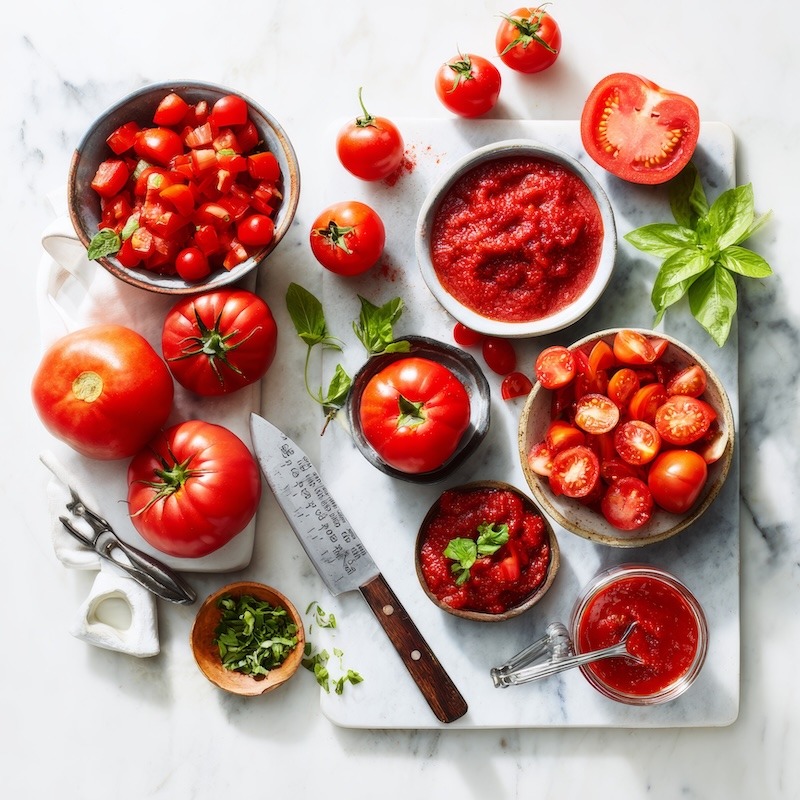

Ever start a recipe that calls for “2 cups of tomatoes”… and you’re staring at a pile of fresh ones wondering how many that actually is? This guide takes the guesswork out so you can cook with confidence, not calculator anxiety.
🍅 Quick Tomato Conversion Cheat Sheet
- 1 pound tomatoes ≈ 3 medium tomatoes
- 1 pound tomatoes ≈ 1½ cups chopped
- 1 (14.5 oz) can ≈ 5–6 small tomatoes
- 1 cup canned tomatoes ≈ 1½ cups fresh (cooked)
Tomato Substitutions and Fixes (Quick Guide)
Tomatoes show up in recipes in many forms—fresh, canned, paste, and sauce—and knowing how to convert between them makes cooking far easier.
This guide helps you swap what you have for what you need without guessing. Whether you’re replacing fresh tomatoes with canned, stretching a small amount of paste, or using up a surplus of ripe tomatoes, these conversions keep your dishes balanced and consistent.
Fresh Tomato Conversions
Use this table when a recipe calls for fresh tomatoes by weight, count, or volume.
| Fresh Tomatoes | Equivalent |
|---|---|
| 1 pound tomatoes | About 3 medium round tomatoes |
| 1 pound tomatoes | About 1½ cups chopped |
| 1 medium tomato | About ¾ to 1 cup chopped, depending on size |
| 2 pounds tomatoes | About 3 cups chopped |
Cook’s note: Size and variety matter. Roma tomatoes, beefsteaks, and garden tomatoes do not all yield the same amount.
Canned Tomato Equivalents
Use these estimates when swapping canned tomatoes for fresh in soups, sauces, and braises.
| Canned Product | Fresh Equivalent |
|---|---|
| 1 cup canned tomatoes | About 1½ cups fresh tomatoes, cooked down |
| 1 (14.5-ounce) can diced tomatoes | About 5 to 6 small tomatoes |
| 1 (28-ounce) can tomatoes | About 10 to 12 small tomatoes |
| 1 cup canned crushed tomatoes | About 1 cup cooked and crushed fresh tomatoes |
Cook’s note: Canned tomatoes are usually more concentrated and consistent than fresh, especially out of season.
Tomato Sauce, Purée, and Paste Conversions
These are the swaps most cooks look for when adapting pantry ingredients.
| Tomato Product | Equivalent |
|---|---|
| 1 tablespoon tomato paste | About 3 tablespoons tomato purée or sauce, reduced as needed |
| 1 cup tomato sauce | About ½ cup tomato paste + ½ cup water |
| 1 cup tomato purée | About 1 cup cooked, strained tomatoes |
| 1 cup crushed tomatoes | About 1 cup chopped tomatoes, lightly cooked |
Cook’s note: Tomato paste adds intensity, not just thickness, so substitutions may change both flavor and texture.
Detailed Tomato Conversions (Size, Weight & Yield Guide)
Use this reference to estimate tomato weights, yields, and equivalents when a recipe calls for fresh or canned tomatoes.
| Measurement | Equivalent |
|---|---|
| 1 small tomato | 3 to 4 ounces |
| 1 medium tomato | 5 to 6 ounces |
| 1 large tomato | About 7 ounces |
| 1 cherry tomato | ½ to 2 ounces |
| 3 medium round tomatoes | 1 pound |
| 8 plum tomatoes | 1 pound |
| 15 to 20 cherry tomatoes | 1 pound |
| 25 to 30 cherry tomatoes | About 2 cups chopped |
| 1 pound fresh tomatoes | 2½ to 3 cups chopped |
| 1 pound fresh tomatoes | About 1½ cups puréed |
| 2½ pounds fresh tomatoes | 4 to 5 cups chopped, drained |
| 2½ pounds fresh tomatoes | About 2½ cups seeded, chopped, cooked |
| 2 cups chopped tomatoes | About 1 pound |
| 1 (14½-ounce) can tomatoes | 5 to 6 whole tomatoes (about 1 pound) |
| 1 (16-ounce) can tomatoes | About 2 cups |
| 1 (28-ounce) can tomatoes | About 3 cups |
| 1 (28-ounce) can tomatoes | 10 to 12 whole tomatoes (about 2 pounds) |
| 1 (35-ounce) can tomatoes | About 4 cups |
| 1 bushel tomatoes | About 53 pounds |
| 1 bushel tomatoes | 15 to 20 quarts canned |
Cook’s note: Tomato size and water content vary by variety and season. Use these as guides, not exact measurements—especially when converting fresh to cooked.
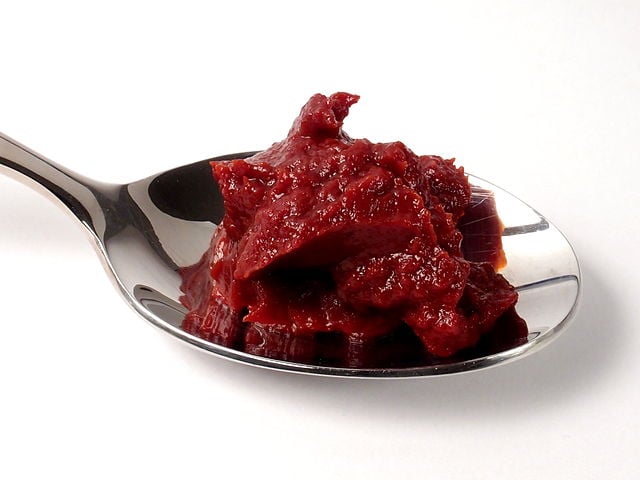
Fresh vs Canned vs Tomato Paste: Which Should You Use?
Not all tomatoes behave the same. Use this guide to choose the right type based on flavor, texture, and how your dish cooks.
| Tomato Type | Best Use | Flavor Profile | Texture | When to Reach for It |
|---|---|---|---|---|
| Fresh Tomatoes | Salads, quick sauces, light dishes | Bright, fresh, slightly acidic | Juicy, can vary by variety | When you want freshness and a lighter, cleaner taste |
| Canned Tomatoes | Soups, stews, long-simmered sauces | Balanced, deeper, slightly sweet | Soft, consistent | When you need reliable flavor and structure year-round |
| Tomato Paste | Boosting sauces, building depth | Intense, concentrated, umami-rich | Very thick | When your dish needs richness, body, or a flavor boost |
Cook’s insight: Think in layers. Fresh adds brightness, canned builds the base, and tomato paste deepens flavor. Use them together to create balance.
What to Do When You Don’t Have the Right Tomatoes
Missing an ingredient or need to improvise? Use these quick swaps to keep your recipe on track without sacrificing flavor.
| If you have… | Use this instead | How to Adjust |
|---|---|---|
| No fresh tomatoes | Canned tomatoes | Drain slightly if the recipe needs less liquid |
| No canned tomatoes | Fresh tomatoes | Peel and cook down to reduce excess moisture |
| Only tomato paste | Tomato sauce substitute | Mix 1 part paste with 1 part water |
| Sauce too thin | Add tomato paste | Stir in small amounts until thickened |
| Sauce too acidic | Add sugar or butter | Balance gradually to taste |
| Flavor is flat | Add tomato paste or salt | Boosts depth and enhances overall flavor |
Cook’s insight: Most tomato problems come down to balance. Adjust liquid, acidity, or concentration and you can usually rescue the dish.
The goal isn’t perfect math—it’s understanding how tomatoes behave so you can adjust with confidence.
❓ Frequently Asked Questions About Tomato Conversions
How many tomatoes are in a pound?
Most of the time, 1 pound of tomatoes equals about 3 medium round tomatoes.
If you’re using smaller varieties like plum or cherry tomatoes, you’ll need more to reach a pound.
How many cups is 1 pound of tomatoes?
One pound of fresh tomatoes yields about:
- 2½ to 3 cups chopped
- About 1½ cups puréed
The exact amount depends on the tomato’s size and water content.
How many fresh tomatoes equal a 14.5-ounce can?
A 14.5-ounce can of tomatoes equals about 5 to 6 small tomatoes, or roughly 1 pound of fresh tomatoes.
How many fresh tomatoes equal a 28-ounce can?
A 28-ounce can equals about 10 to 12 small tomatoes, or roughly 2 pounds of fresh tomatoes.
Can I substitute fresh tomatoes for canned tomatoes?
Yes, but you’ll need to adjust for moisture.
Fresh tomatoes contain more water, so:
- Cook them down longer
- Drain excess liquid if needed
Canned tomatoes are more concentrated and consistent.
More FAQ About Tomatoes
Can I substitute canned tomatoes for fresh tomatoes?
Absolutely. This is often the easier swap.
Use:
- 1 cup canned tomatoes = about 1½ cups fresh (cooked)
Canned tomatoes are a great year-round substitute, especially when fresh tomatoes are out of season.
How do I substitute tomato paste for tomato sauce?
To replace tomato sauce with paste:
- Mix 1 part tomato paste with 1 part water
This recreates the consistency of sauce, though the flavor will be slightly more concentrated.
How much tomato paste equals 1 cup of tomato sauce?
Use:
- ½ cup tomato paste + ½ cup water = 1 cup tomato sauce
This works well in soups and sauces where balance matters.
Why do tomato conversions vary so much?
Tomatoes are not uniform.
Conversions change because of:
- Size differences (small vs beefsteak)
- Water content
- Variety (Roma vs slicing tomatoes)
- How they’re prepared (raw, chopped, cooked, drained)
That’s why most conversions are guides, not exact rules.
What’s the difference between tomato sauce, purée, and paste?
- Tomato sauce: Thin, pourable, lightly cooked
- Tomato purée: Thicker, smoother, more concentrated
- Tomato paste: Very thick and intensely flavored
Each one affects both texture and flavor, not just thickness.
When should I use fresh tomatoes instead of canned?
Use fresh tomatoes when you want:
- Bright, fresh flavor
- Lighter dishes
- Minimal cooking time
Fresh tomatoes shine in salads, salsas, and quick sauces.
When are canned tomatoes better than fresh?
Canned tomatoes are better when you want:
- Consistent flavor
- Rich, cooked depth
- Reliable results year-round
They’re ideal for soups, stews, and long-simmered sauces.
How do I reduce acidity in tomato sauce?
If your sauce tastes too acidic:
- Add a small amount of sugar
- Or stir in butter
Adjust gradually until the flavor balances.
Can I freeze fresh tomatoes for later use?
Yes. You can freeze tomatoes whole or chopped.
After thawing:
- The texture will be softer
- Best used in cooked dishes like sauces or soups
What’s the best way to measure tomatoes for recipes?
For accuracy:
- Use weight (pounds or ounces) whenever possible
- Use volume (cups) for quick estimates
Weight gives more consistent results, especially in sauces.

52 Responses
I am wondering, if I dehydrate 8 medium tomatoes, how much tomato powder should I expect?
I don’t have any tomatoes (canned or fresh for a recipe that calls for 2 28oz cans of tomatoes. How much tomato sauce can I substitute for the canned tomatoes?
Dehydrating tomatoes significantly reduces their weight and volume, as the water content is removed, leaving behind concentrated solids. The exact yield of tomato powder from 8 medium tomatoes can vary based on factors such as tomato variety, size, and dehydration efficiency. However, we can estimate based on available data:
Tomato Powder Yield: Dehydrating 1 dozen large Roma tomatoes yields approximately 20 grams of finely ground tomato powder.
Assuming medium tomatoes are slightly smaller than large Roma tomatoes, 8 medium tomatoes might yield approximately 10 to 15 grams of tomato powder. This is roughly equivalent to about 2 to 3 teaspoons of tomato powder.
Note that these are approximate values, and actual yields can vary based on the specific characteristics of the tomatoes and the dehydration process used.
One bushel gave me one pint.
I use one 6 oz Tomato Paste to 1 cup water for 14 oz of Tomato Sauce.
I grow my own tomatoes and roast them off when I have enough ripe ones. My question is what is the ratio of roasted tomatoes to fresh chopped tomatoes?
Hi Cassie, great question and one I had to research a little. I found a recipe from Mark Bittman for roasted tomatoes that calls for 24 fresh plum tomatoes that yields 2 cups of roasted tomatoes. Since there are about 8 plum tomatoes per pound, that means 24 plum tomatoes equals around 3 pounds of fresh plum tomatoes. So I’m going to say 3 pounds of fresh plum tomatoes chopped should yield about 2 cups roasted. If anyone has a better conversion, please share.
1 (28 ounces) can tomatoes = 10 to 12 whole or about 2 pounds
Please explain how 10 to 12 fresh tomatoes is equal to 2 lbs. Most often one tomato is equal to one pound. By your metric, if I substitute fresh for canned 30 lbs of fresh tomatoes is equal to 15 (28 ounces) of canned tomatoes.
Hi Rose, thanks for pointing this out. Most canned tomatoes are plum tomatoes which are not nearly as big as steak tomatoes that can be huge and possibly weigh around a pound. Try buying a 28 ounce can of tomatoes and count how many are in there. You may be surprised.
I was wondering how many tomatoes are used in one container of store bought tomato sauce. This is because I need to know how high the vegetable : junk ratio is… I want to know how much sauce I need to have an accurate supplement for real vegetables.
Hi Kanira, what size container of store bought tomato sauce are you asking about?
A 12-ounce container of store-bought tomato sauce typically contains the equivalent of about 2 to 3 medium-sized tomatoes. This can vary slightly based on the brand, but it’s generally a good estimate for the amount of tomatoes used. The sauce often includes other ingredients like seasonings, salt, and possibly added water, so the tomato content itself is usually less than the total volume of the product.
A 16-ounce container of store-bought tomato sauce typically contains the equivalent of about 3 to 4 medium-sized tomatoes. As with the 12-ounce container, the sauce will also include other ingredients like seasonings and sometimes added water, so the actual tomato content is a bit less than the total volume of the sauce.
How many cups of tomatoe juice will an 11qt basket of tomatoes yield?
Hi Cheryl, an 11-quart basket of tomatoes typically holds about 16–18 pounds of tomatoes. Since 1 pound of tomatoes yields about 1 to 1.25 cups of juice, you can expect:
16–18 pounds × 1 to 1.25 cups per pound = 16 to 22.5 cups of tomato juice
So, an 11-quart basket of tomatoes will yield approximately 1 to 1.5 gallons (16 to 22.5 cups) of tomato juice.
I have an old recipe of my grandmothers I’m trying to convert? Lol
How much pasta sauce is equivalent to 5-6 roma tomatoes?
How many tomatoes do I need to make a gallon of them.
Hello, I am growing super sweet tomatoes in the fall and will make salsa. Does 1 pint equal one pound? Approximate. thank you.
A pint of water weighs about a pound but you are asking about tomatoes. Hmmm. It really depends on the size of the tomatoes and how many can fit into a pint container. And how are they processed? Whole, sliced, chopped, etc. Also, you realize pints are volume measurement and not weight measurement so it is a little confusing. I found a site that discovered 1 pound is equal to 25 to 30 cherry tomatoes, 8 plum tomatoes or 3 medium round tomatoes. I’m going to guess there are about 18 to 20 cherry tomatoes in a pint so that means no, 1 pint does not equal 1 pound.
I have a recipe using 1 gallon of tomatoes. Approximately how many medium tomatoes is that?
Hi Theresa, the problem with converting a gallon of tomatoes to whole medium tomatoes is you are trying to convert liquid measurement to weight measurement. If you could tell me the weight of that gallon tomatoes, we could easily convert.
How many pounds of tomatoes in 2/3 bushel?
Hi Carlene, 1 bushel of tomatoes equals 56 pounds so 2/3 of a bushel would be about 37 pounds.
Can I use tomato paste to make tomato juice to use in a recipe?
Hi Marilyn, yes, you can use tomato paste to make tomato juice for a recipe! To do this, mix:
1 part tomato paste with four parts water (e.g., ¼ cup tomato paste + 1 cup water).
Stir well until smooth. This will approximate the consistency and flavor of canned tomato juice. You can adjust the thickness by adding more or less water and season to taste if needed.
I would like to know how many pounds of tomatoes does an 11 quart basket hold?
Hi Anne, a bushel of tomatoes weighs about 56 pounds. There are about 30 quarts per bushel so that means 30 quarts weighs about 56 pounds. That means one quart weighs about 1.87 pounds so 11 quarts should equal around 20 pounds if I’m doing my math correctly.
I have a recipe for salsa that call for 30 tomatoes . I have an assortment of San marzano and plum. I’m tripling the recipe so want this to be consistent. How many pounds do you think 30 tomatoes would equal? Right now I’m figuring 2 plums =one Med size tomato and most San marzano = one
To give you an estimate, San Marzano and plum tomatoes typically weigh around 5 to 6 ounces each, though this can vary a little. For consistency in your salsa recipe, we can estimate:
30 tomatoes x 5 ounces (average weight per tomato) = 150 ounces, or about 9.375 pounds.
30 tomatoes x 6 ounces (for larger tomatoes) = 180 ounces, or about 11.25 pounds.
Since you’re tripling the recipe, you’ll need about 28 to 34 pounds of tomatoes in total (based on 30 tomatoes), depending on their size. If you prefer more consistency, weigh your tomatoes before starting.
I have a recipe that calls for 5 quarts of tomatoes – approximately how many tomatoes (field)?
Hi Katherine, let’s see if I can get my math correct here. 1 medium tomato = about 6 ounces. There are 32 ounces in a quart so 5 quarts would be 160 ounces. If you divide 160 ounces by 6 ounces, you get 26.666 tomatoes. You can weigh a few of your field tomatoes to come up with a closer average if you like. Hope this helps.
An error = ha ha! It’s PLUM tomatoes. I suspect Charles E. Mispel ‘gotcha’. Anyway, there is no such thing as far as I know as plumb tomatoes.
Thanks for letting me know and now fixed.
“It is a damn poor mind that can think of only one way to spell a word.”
― Andrew Jackson
I’m making spaghetti sauce without meat and all my recipes call for 30 lbs. of tomatoes. I want to use canned crushed tomatoes. How many cans (15 oz.) would equal 30 lbs. tomatoes??
Thanks for the conversions, I’m sure it helped a lot of people. I used the chart to freeze fresh Tom’s out of my garden. Just for an approx when I follow recipes. I actually weighed out my Tom’s because of the different sizes and varieties. But the chart conversions were right on.
I’m trying to convert tomato juice into tomato sauce. Is there any way you could suggest a ratio. It’s for chili. I’ve had a couple cans of juice that I don’t drink. And would like to make chili with them.
David, to convert tomato juice into tomato sauce for your chili, you’ll need to thicken the juice and concentrate its flavors. Here’s a general approach:
Ratio for Converting Tomato Juice to Tomato Sauce:
1 cup of tomato juice = about ½ to ⅔ cup of tomato sauce after thickening.
How to Thicken:
Simmer the juice: Pour the tomato juice into a saucepan and bring it to a simmer over medium-low heat. Stir occasionally to prevent burning.
Reduce the liquid: Let it simmer uncovered for 30 to 45 minutes or until the juice has reduced by about half. This will concentrate the flavors and thicken it, similar to the consistency of tomato sauce.
Optional thickening: If you’d like to speed things up or make it thicker, you can stir in a small amount of tomato paste (about 1 to 2 tablespoons per cup of juice) to enhance the sauce-like texture.
Once it’s thickened to your liking, you can use it in your chili as a replacement for tomato sauce. This method will help maintain the tomato flavor while achieving the right texture for your chili!
This may seem silly, but here goes! My recipe for canning a pasta sauce calls for 8c of tomato puree. It does not specify fresh or canned, although it does give directions for fresh.(stating to cook down til you have the consistancy you like. My question : Could I substitute canned puree at a 1:1 ratio, or would canned be too thick?
Jackie, that’s not a silly question at all. I don’t know if there is a difference, but I would have no problem substituting canned or tubed tomato paste for fresh, homemade tomato paste.
Hello! What valuable information you provide. My questions are these…I am making salsa to be put into pint jars. My girlfriend does hers by buying a bushel of tomatoes. She is measuring the peppers, onions and jalapenos by the gallon bag of each. My tomatoes won’t all ripen at the same time, so I need to figure out how many tomatoes I will need. I can divide my gallon of veggies into cups, but don’t have any idea how to do this! I keep getting SO confused, lol can you help me?!?!
Carolyn, we need a math major to answer your question. I’m sorry, but I really don’t have a good answer for you.
A gallon bag holds 16 cups of crushed tomatoes. When they’re whole the airspace cannot be directly accounted for. To do so you would have to take a representatve sample of the whole tomatoes, crush them, measure out a cup, weigh it (weight 1), weigh the gallon of whole tomatoes (weight 2). Divide weight 2 by weight 1, multiply the result by 16, and that’s how many cups of crushed or diced tomatoes you’ll get from the gallon bag of fresh ones. Two tablespoons of paste is equivalent to a cup of crushed, so a gallon of crushed tomatoes could be used to make a pint of paste.
Hi Aaron, thanks for these conversions. When I first looked at it, I thought, how can a gallon ziplock bag hold 16 cups of crushed tomatoes, but there are 2 cups in a pint, 2 pints in a quart, and 4 quarts in a gallon, which means 16 cups in a gallon but that is for a liquid. Wouldn’t crushed tomatoes have more volume because they are not liquid?
It depends on how crushed one means by crushed. Mine are barely distinghishable from sauce, so it works. If they were really big chunks I’d go by weight, not volume.
I have a recipe for salsa that calls for 6 quarts of tomatoes. I would like to use cans of diced tomatoes but have become brain dead in trying to do the math. Please help….
Hi Linda, to substitute canned diced tomatoes for fresh tomatoes in your salsa recipe, the general rule is that one 14.5-ounce can of diced tomatoes is roughly equivalent to 1.5 to 2 cups of fresh tomatoes, depending on the brand. Since 1 quart is equal to 4 cups, your recipe calls for 6 quarts, which equals 24 cups of fresh tomatoes.
Now, using the average of 1.5 cups per can of diced tomatoes: 24 cups ÷ 1.5 cups per can = 16 cans of diced tomatoes. So, you would need about 16 cans of 14.5-ounce diced tomatoes to replace your recipe’s 6 quarts of fresh tomatoes.
I have a recipe that calls for a half bushel whole peeled tomatoes. How many cans of store bought whole tomatoes would that be?
A half bushel of whole peeled tomatoes, roughly 25 pounds, would be equivalent to about 16 to 18 quarts of canned tomatoes. Since a 28-ounce can of whole tomatoes usually contains 10 to 12 plum tomatoes, you’d need about 10 to 12 cans to equal the amount of tomatoes in a half bushel.
My recipe calls for a heaping three-quart basket of plum tomatoes. How many tomatoes or how many litres do I need?
You’ll need roughly 3 liters of plum tomatoes, which equals about 30–36 medium plum tomatoes (depending on size).
Hi,
I know you posted this a good long while ago. I’m not sure what you’re asking. You say: “I need to figure out how many tomatoes I will need.” Compared to what?
Here’s my best guess:
1st assumption: your friend uses 1 gallon of each of the other vegetables per bushel of tomatoes.
1 bushel tomatoes = 53 pounds (per above)
So, for each pound of tomatoes you would use 5 Tablespoons (by volume) of the other vegetables.
Is this what you needed?
I read that one 28 Oz can of tomatoes equals approximately 2 lb fresh tomatoes. Would that be a can of drained tomatoes or would you include the puree in the can also?
When a recipe says that one 28-ounce can of tomatoes equals about 2 pounds of fresh tomatoes, it means the entire contents of the can, including the tomatoes and the juice or puree they are packed in. The 28 ounces refers to the total weight, liquid included, and that liquid is essentially the tomatoes’ own captured juices. Fresh tomatoes are mostly water, so their natural moisture is already part of the equation; the can simply holds onto it instead of letting it run off on your cutting board. You would only drain the tomatoes if a recipe specifically instructs you to use “drained tomatoes” or if you want to reduce excess liquid for a thicker result. Otherwise, include everything in the can for the intended flavor and consistency.