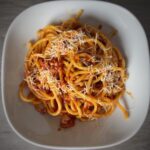
Bucatini all'Amatriciana
Bucatini all'Amatriciana is a four-ingredient Roman pasta sauce built on slow-rendered guanciale fat, crushed tomatoes, and Pecorino Romano — where technique matters more than the ingredient list.
Servings: 6 people
Calories: 633kcal
Equipment
- large pot for pasta
- fry or saute pan
Ingredients
- 1 pound bucatini pasta
- 1 cup guanciale diced
- 1 tablespoon olive oil
- 1 splash white wine to deglaze the guanciale
- 1 cup yellow onion minced
- 2 tablespoons garlic minced
- hot pepper flakes to taste
- 2 tablespoons tomato paste
- 28 ounce can diced tomatoes
- ¼ teaspoon oregano dried
- salt and pepper to taste
- pecorino romano cheese freshly grated
Instructions
Salt & Start the Pasta Water
- Fill a large pot with water and bring it to a boil over high heat. Salt it heavily — the water should taste noticeably salty, not like the sea, but close to it.
This is the only opportunity to season the pasta itself. Start the water early; it takes longer than you think.
Cold-Pan Guanciale
- Place the diced guanciale in a cold, wide pan — don't preheat it. Turn the heat to medium-low. As the pan warms, the fat in the guanciale will slowly melt out slowly. This is the point. You're building a rendered-fat cooking base, not searing meat.
- Stir occasionally and cook until the pieces are golden and slightly crisp at the edges, 6–8 minutes. The fat in the pan should look clear and glossy, not brown.
Deglaze with White Wine
- Add a splash of white wine (about 2–3 tablespoons) to the pan. It will sizzle hard. Use a wooden spoon to scrape up any browned bits stuck to the bottom — that's concentrated flavor. Let the wine cook off until the sharp alcohol smell fades, about 60 seconds.
Sweat the Onion
- Add the minced yellow onion to the guanciale fat. Cook over medium-low heat until the onion turns translucent and soft, about 3 minutes. You're not browning it — you're sweating it. The goal is sweetness and body in the background, not caramelized flavor up front.
Add Garlic
- Add the minced garlic and stir. Cook for about 2 minutes, until fragrant but not browned. Garlic turns bitter fast once it colors. Keep the heat moderate and keep it moving.
Toast the Tomato Paste
- Push the onion and garlic to the sides of the pan and add the tomato paste to the center. Let it sit undisturbed for about 30 seconds — you want it to make direct contact with the hot pan. Then stir it into the fat and cook, stirring, for another 30–45 seconds. It should shift from bright red to a slightly darker, brick-red tone. This step builds depth that you can't get any other way.
Add Tomatoes & Simmer
- Pour in the diced tomatoes and add the dried oregano. Stir everything together and lower the heat to a gentle simmer.
- Cook uncovered for 10–12 minutes. The sauce should reduce slightly and the tomatoes should soften and break down. Don't push it past 15 minutes — you want the tomatoes to retain some brightness.
Season with Heat & Salt
- Add hot pepper flakes to taste. Stir and taste the sauce before adding salt — the guanciale and Pecorino both carry significant salt, and the dish can easily tip over. Adjust with black pepper as needed.
Cook the Bucatini
- Add the bucatini to the boiling water. Cook according to the package, but start tasting 2 minutes early. You want it just short of fully cooked — still with a little resistance at the center (al dente). Before you drain, scoop out at least ½ cup of pasta water and set it aside.
Finish the Pasta in the Sauce
- Drain the pasta and add it directly to the saucepan over medium-low heat.
- Toss the pasta in the sauce for 60–90 seconds, letting the bucatini absorb the sauce rather than just sitting in it. If the sauce looks tight or the pasta clumps, add pasta water a splash of pasta water at a time and keep tossing. The finished dish should look glossy and cohesive — sauce clinging to every strand, not pooling at the bottom of the pan.
Plate & Finish
- Divide into bowls. Grate Pecorino Romano directly over the top — generously, not decoratively.
- Serve immediately. This dish does not wait.
Notes
Nutritional information is automatically calculated using the WP Recipe Maker nutrition database and should be considered only an estimate. Actual values may vary depending on ingredient brands, product variations, substitutions, and portion sizes.
Nutrition
Calories: 633kcal | Carbohydrates: 66g | Protein: 16g | Fat: 34g | Saturated Fat: 12g | Polyunsaturated Fat: 1g | Monounsaturated Fat: 2g | Cholesterol: 43mg | Sodium: 410mg | Potassium: 524mg | Fiber: 5g | Sugar: 7g | Vitamin A: 240IU | Vitamin C: 16mg | Calcium: 71mg | Iron: 3mg