

Fast Answer
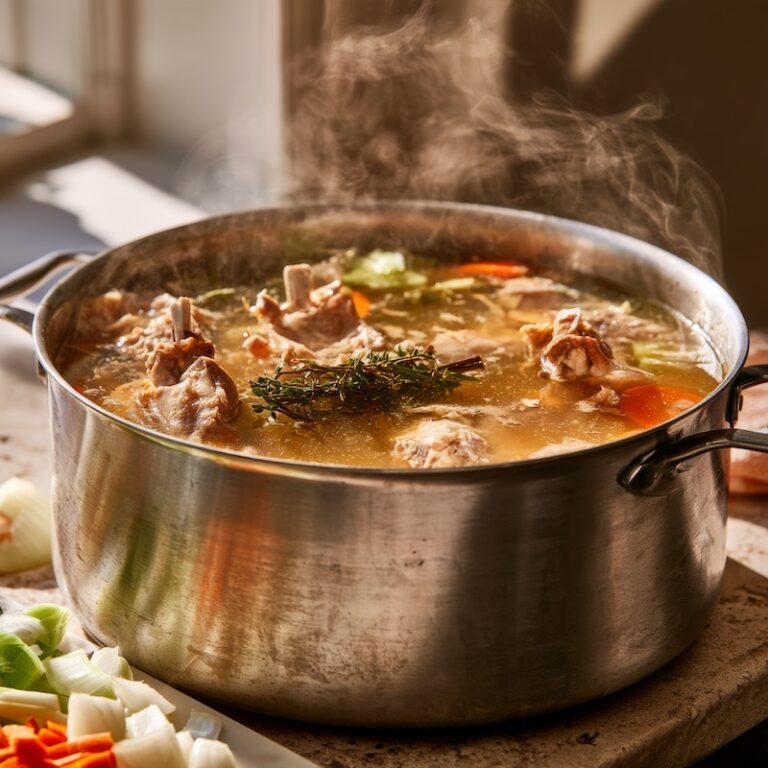
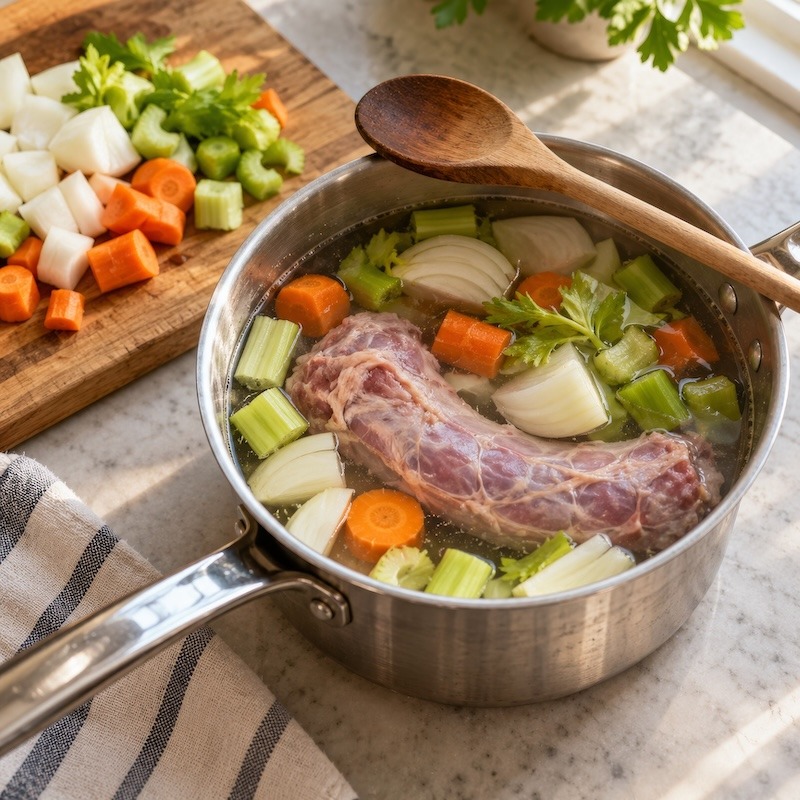
Put a roasted turkey carcass in a large stockpot with onion, carrots, celery, parsley, bay leaves, and peppercorns. Cover with cold water by about an inch and simmer gently for several hours, without boiling. It's done when a small bone snaps easily. Strain, skim the fat, and cool it quickly.
What Is Turkey Stock?
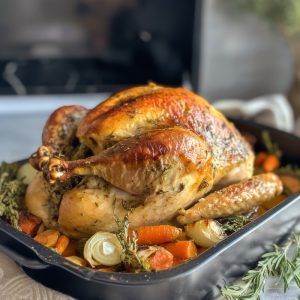
Turkey stock is made by simmering turkey bones with onion, carrot, celery, and herbs until the bones give up their flavor. I was taught to use the giblets for a quick gravy stock, and I use the roasted carcass for a bigger pot of stock for soup. Below is the carcass method, plus how I make the gravy stock before Thanksgiving.
How Stock Works
Making stock is an extraction process. As such, you have a fair amount of latitude in choosing the vegetables and seasonings you put in, but some vegetables are common to many stocks that you should undoubtedly add to your stock pot.
Start Here
- Use a roasted carcass. Pick as much meat off it as you can first, and save the meat for soup or turkey salad.
- Cold water: about 1 quart per pound of bones and trimmings, enough to cover by about 1 inch.
- Simmer, don't boil. Boiling clouds the stock and boils off water.
- Skim the foam that rises in the first stretch of simmering.
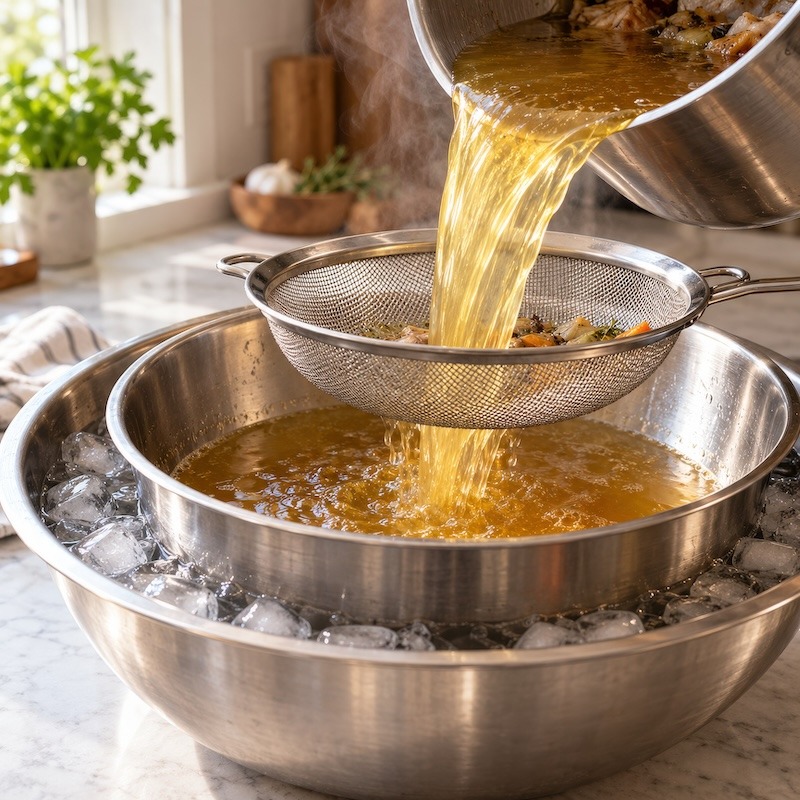
- Cool it quickly in an ice bath.
Stock for Gravy
- When: before or on Thanksgiving, while you're taking the turkey apart for cooking.
- What goes in: some of the bones, plus the neck, giblets, and trimmings.
- The method is the same: cold water, vegetables, a gentle simmer, then strain.
- The carcass is for soup. I make that stock after the holiday.
How Much Water Do I Need?
A good starting ratio for turkey stock is 1 quart of water per pound of bones and trimmings. The practical rule is to break up the carcass, pack it into a snug pot, and add enough cold water to cover it by about an inch.
| Bones and trimmings | Starting water | Expected strained stock* |
|---|---|---|
| 2 pounds | 2 quarts | 1½ quarts |
| 3 pounds | 3 quarts | 2–2½ quarts |
| 4 pounds | 4 quarts | 2½–3 quarts |
*The amount of strained stock depends on how long you simmer and how much the stock reduces.
Turkey Stock Recipe
Equipment
- stock pot
Ingredients
Standard Turkey Stock
- 1 roasted turkey carcass
- 1 yellow onions skin on, cleaned and cut in half
- 2 large carrots scrubbed and cut in half
- 2 ribs celery leaves included, cut in half
- 3 stems parsley
- 3 bay leaves
- 10 whole peppercorns
- cold water about 1 quart per pound of bones and trimmings, enough to cover by 1 inch
Other additions or substitutions
Chinese-Style Turkey Stock - in addition to the standard ingredients add:
- ½ inch fresh ginger
- 2 whole star anise pods
Italian-Style Turkey Stock - in addition to the standard ingredients add:
- white wine about 1/8 of the amount of water
- 2 tomatoes quartered and seeded
- 2 sprigs tarragon
Instructions
Pick the Carcass
- Pick as much meat as possible from the turkey carcass as possible, and reserve it for soup or turkey salad.
Fill the Pot
- Place the whole carcass in a large stockpot. Add large chunks of vegetables, a few whole spices, and herbs.
- Fill the pot with cold water to cover the ingredients by about an inch.
Bring to a Simmer
- Set the pot on the stove over medium heat. Once the water reaches a fairly active simmer, adjust the heat so the liquid bubbles gently.
Skim the Foam
- As the stock simmers, a layer of grayish protein foam will rise to the surface. Carefully skim it off with a large spoon or ladle.
Simmer for Several Hours
- Let the stock simmer for several hours, adding as much water as necessary to maintain the volume. If you've kept it at a slow simmer, you shouldn't have much evaporation.
Strain
- Strain the stock through a fine strainer, pressing down on the solids. Discard the solids, and strain the stock again.
Skim the Fat
- If you're using the stock right away, carefully skim off the fat that rises to the top. If not, leave the fat on, since it's easier to remove once it has solidified.
Chill It Quickly
- Pour the stock into a metal bowl inside a larger metal bowl filled with ice, and stir until it has cooled.
Notes
What Most Cooks Get Wrong
- Boiling it: the stock clouds and too much water evaporates.
- Skipping the skim: the foam makes the stock look and taste muddy.
- Not skimming the fat: turkey stock can get greasy.
- Cooling it slowly: use an ice bath.
Why This Works
- A gentle simmer extracts flavor from the bones without boiling off the liquid.
- Cold water to start lets the flavor come out slowly.
- Large chunks of vegetables add flavor without turning to mush before the bones are done.
- Straining twice gives you a cleaner stock.
Quick Fixes and Tips
- Greasy? Skim the fat off the top, or chill the stock and lift off the solid fat.
- Cloudy? It boiled. The flavor is fine, and a gentle simmer gives a clearer stock next time.
- Weak? Keep simmering, or let it reduce a little.
- Running low on water? Add water as needed to keep the volume up.
What to Use It For
- Gravy: some of the stock goes into the gravy.
- Soup: most of it goes into turkey soup.
- Make a creamy risotto. Use it as the base for all sorts of soups.
- Use it as a sauce component for stir-fries.
- Use it as a braising liquid for stews.
- Use it for cooking vegetables.
- Cooking vegetables.
- Use it to make Deer Valley Chili.
Frequently Asked Questions About Turkey Stock
How much water do I need for turkey stock? A good starting ratio is 1 quart of water per pound of bones and trimmings. Break up the carcass, pack it into a snug pot, and add enough cold water to cover it by about an inch.
Which is better, turkey broth or turkey stock? They’re different. Stock is made mostly from bones and simmered for hours, so it has more body. Broth is lighter and made with more meat. This recipe is stock.
How long do you let turkey stock simmer? Several hours. How long depends on how much water you add, how many bones you have, and how much the stock reduces. It’s done when you can snap a small turkey bone in half with little effort.
Should you roast the turkey carcass before making stock? The carcass in this recipe is the one left over from the roasted turkey, so it has already been roasted. I haven’t made stock from a raw carcass.
What can you use turkey stock for? Gravy and soup are the two I use it for. It also works in risotto, as a braising liquid for stews, as a base for stir-fry sauces, and for cooking vegetables.
Can I make turkey stock before Thanksgiving? Yes. When I take the turkey apart for cooking, I use some of the bones along with the neck, giblets, and trimmings to make a stock for gravy. The roasted carcass goes into a bigger pot for soup after the holiday.
Why is my turkey stock greasy? Turkey stock can get greasy. If you’re using it right away, skim the fat off the top. If not, leave the fat on and chill the stock, and the fat will solidify and lift off more easily.
Why is my turkey stock cloudy? The stock boiled. Boiling makes the proteins and fats released from the bones emulsify. It doesn’t change the flavor, but a gentle simmer gives you a clearer stock.
How do I cool turkey stock quickly? Pour the stock into a metal bowl set inside a larger metal bowl filled with ice, and stir until it cools. You can also freeze plastic bottles of water and set them in the stock.
Does celery make turkey stock bitter? Some people say it does. I haven’t found that to be the case, but you can leave it out.