
What Is the Difference Between Prime Beef and Choice Beef?
When you shop for beef, you often see labels like Prime and Choice. These terms can be confusing if you are unfamiliar with their meanings. Prime and Choice are USDA beef grades that indicate the quality, tenderness, and flavor of the meat.
Understanding the differences helps you pick the right cut for your recipe. It also enables you to decide how much you want to spend at the butcher or grocery store.
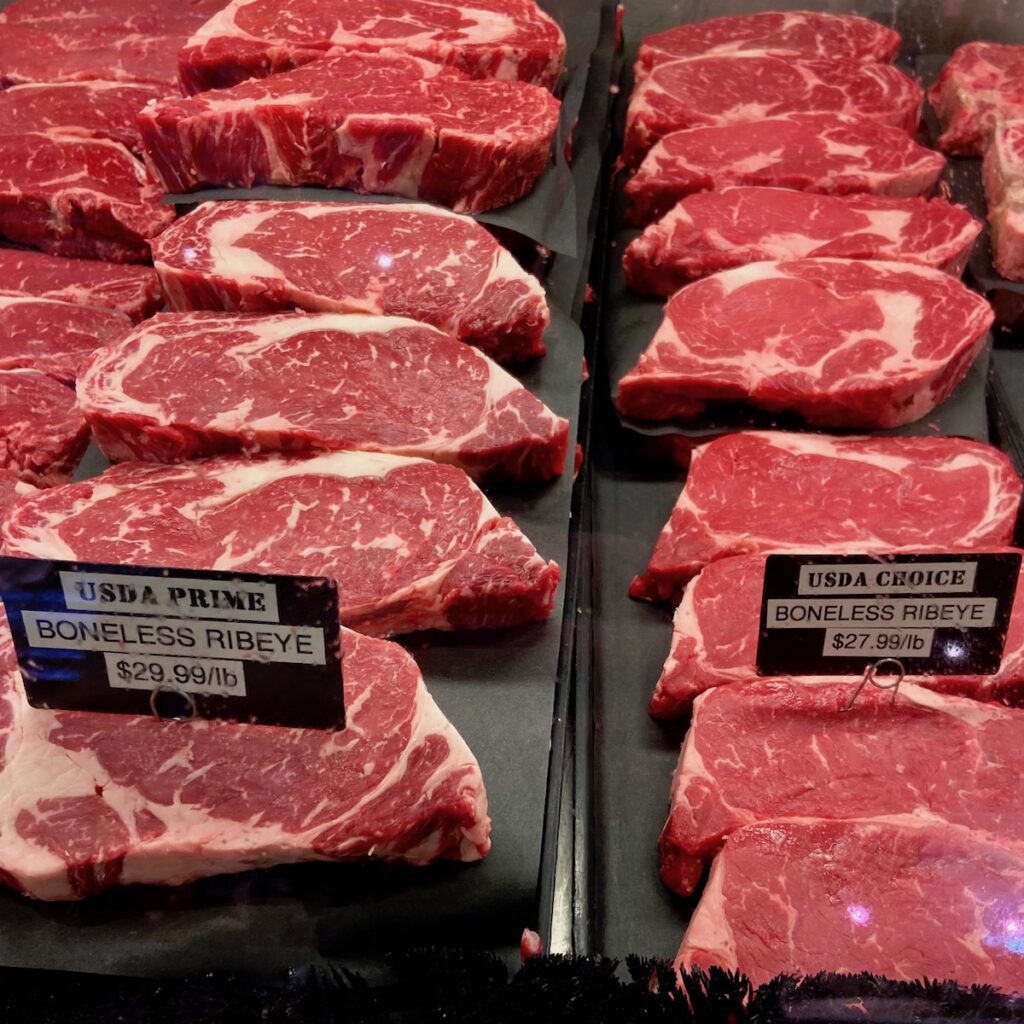
Prime beef is the highest grade. It comes from younger cattle and has more marbling, which means more fat running through the meat. This marbling gives Prime cuts incredible flavor and tenderness. Prime is often served in steakhouses and is great for grilling, roasting, or searing.
Choice beef is the next grade down. It still offers good quality, but with less marbling than Prime. Choice cuts can be tender and flavorful, especially when cooked with the correct method. Braising, slow roasting, or marinating can bring out the best in Choice beef.
Knowing the difference between Prime and Choice beef saves you money and improves your cooking. In this guide, you’ll learn how these grades compare and which one fits your needs for everyday meals or special occasions.
How Is Beef Graded?
The USDA grades beef to help shoppers understand quality. Inspectors look at the meat closely before assigning a grade. They focus on two main things: marbling and maturity.
Marbling is the tiny streaks of fat within the muscle. More marbling usually means more flavor, tenderness, and juiciness.
Prime beef has the most marbling, while Select and Standard have much less. That’s why Prime steaks taste rich and buttery, while leaner grades need different cooking methods.
Maturity refers to the age of the animal. Younger cattle produce more tender beef. Inspectors check the bone structure, color, and texture of the meat to judge maturity. Meat from older cattle tends to be tougher and less juicy.
They also notice firmness, color, and texture. Firm, fine-grained meat with a bright red color gets higher marks. Meat with a softer texture and a darker shade typically receives lower grades.
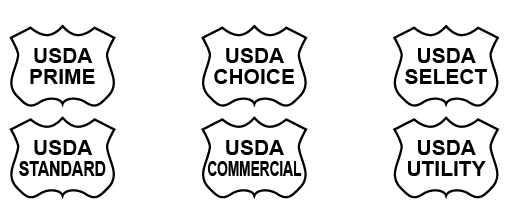
The USDA then combines all these factors to decide the grade: Prime, Choice, Select, and so on. This system helps you know what to expect before you buy.
When you see a label at the store, it’s not just a name. It’s a quick guide to flavor, tenderness, and how best to cook that cut.
| Grade | Marbling | Maturity | Texture | Firmness | Color of Lean | Overall Quality |
|---|---|---|---|---|---|---|
| Prime | Abundant marbling | Young cattle | Fine-grained | Very firm | Bright, cherry red | Highest tenderness, juiciness, and flavor |
| Choice | Moderate marbling | Young cattle | Fine to slightly coarse | Firm | Bright red | High quality, tender and flavorful with proper cooking |
| Select | Slight marbling | Young cattle | Lean and uniform | Moderately firm | Light red | Lean, less tender, benefits from moist cooking |
| Standard | Traces of marbling | Young cattle | Coarser texture | Less firm | Dull red | Lower quality, lacks juiciness and tenderness |
| Commercial | Little to no marbling | Older cattle | Coarse | Soft | Darker red | Best for ground beef or processed products |
| Utility | Virtually no marbling | Older cattle | Very coarse | Soft and weak | Dark red | Not sold as retail cuts; used for ground beef or processed foods |
USDA Prime
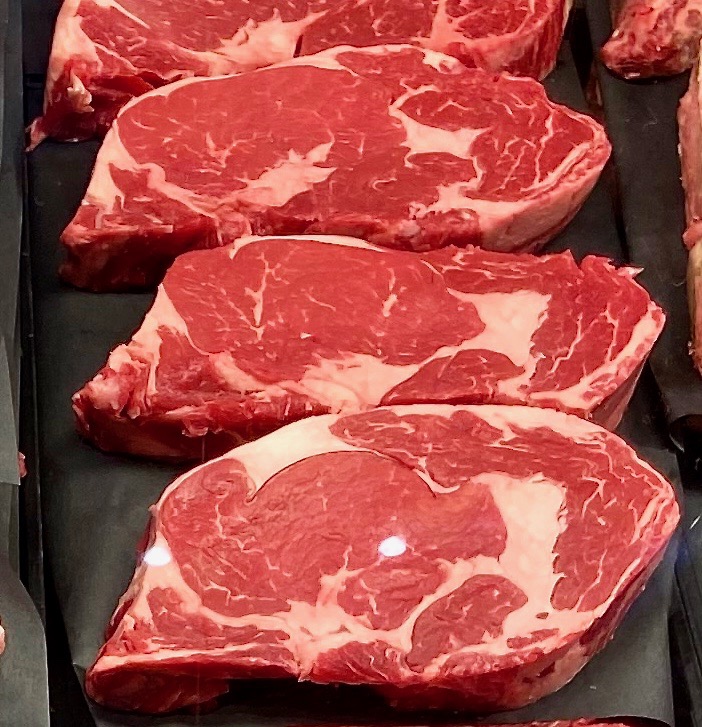
Making up a small percentage of graded beef, USDA Prime is considered the top tier of beef. It is described as “melt in your mouth,” “the ultimate in tenderness,” “buttery,” and “the juiciest” beef you can buy.
This may all be true, but it depends on how you prepare it. It doesn’t matter how much marbling Prime beef has; if you overcook it, it can end up like shoe leather. In my opinion, one should not cook any Prime steak more than medium, and it is better at medium – rare, but everyone has their likes and dislikes.
Saying that, I wonder if you grill a Prime steak and Choice steak to medium-well or well done, would the Prime be juicier and more tender than the Choice? Just a thought.

Tips for Buying USDA Prime
| Tip for Buying Prime | Notes |
|---|---|
| Look for abundant marbling | Fine white streaks of fat running through the meat signal tenderness and flavor. |
| Check the USDA label | Only meat marked “USDA Prime” has been officially graded at that level. |
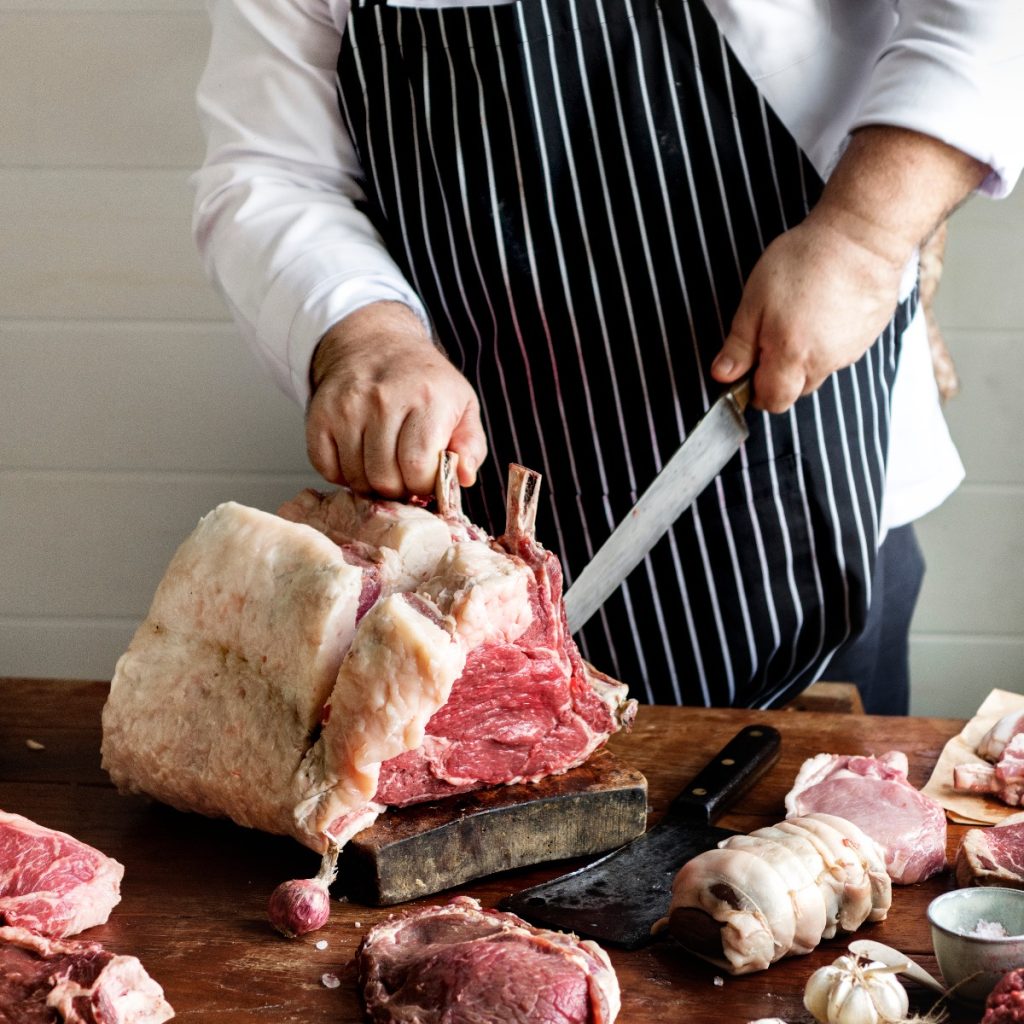
| Buy from trusted butchers | Specialty shops often carry more Prime cuts than supermarkets. |
| Expect higher prices | Prime beef costs more because of its limited supply and superior quality. |
| Choose the right cut | Prime ribeye, strip, and tenderloin deliver the most consistent results for grilling or searing. |
| Plan for special occasions | Prime is often best reserved for celebrations, holidays, or when you want a steakhouse experience at home. |

USDA Choice
Choice beef is the second-highest USDA grade and a popular option for home cooks. It offers good quality at a more affordable price than Prime.
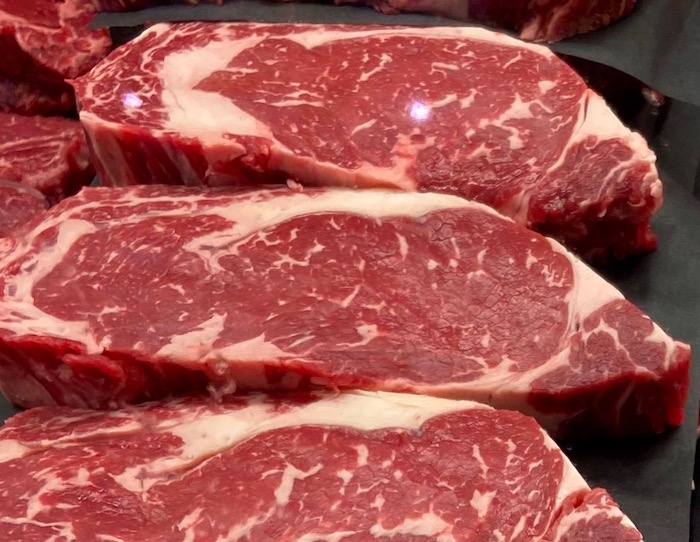
Choice beef has moderate marbling, which means it still carries plenty of flavor and tenderness, though not as rich as Prime. Many cuts, like ribeye or strip steak, perform very well on the grill or in a hot skillet.
Leaner cuts, such as round or sirloin, may need marinades or slower cooking methods to keep them moist and tender. Choice beef is versatile, widely available, and a smart balance between taste and cost.
It works well for everyday meals or special dinners, making it a reliable option when you want quality beef without paying premium prices.
Most Graded Beef Is USDA Choice
Interestingly, USDA Choice represents around 50 percent of all graded beef. You can find USDA Choice in most supermarkets, which is the go-to beef grade in restaurants. So if a restaurant is selling Prime, they will let you know, which will be reflected in the check.
And remember, if a steer is graded Choice, the entire steer is graded Choice. That means if you buy a flank steak or chuck steak, it will be Choice too.
USDA Choice is an excellent grade of beef. However, some say it is less tender, has a slightly coarser texture, and is as tender or juicy as Prime. That might be true, but a lot depends on how you cook your beef.
For example, if you like your meat medium-well or well done, don’t waste your money on Prime. You’ll cook the tenderness and juiciness right out of the steak.
Tips for Buying USDA Choice
| Tip for Buying Choice | Notes |
|---|---|
| Look for moderate marbling | Choice beef has less fat than Prime but still offers good tenderness and flavor. |
| Check the USDA label | Only meat officially marked “USDA Choice” has been graded at this level. |
| Pick cuts with more marbling | Ribeye, strip, or chuck roasts perform best with dry heat methods like grilling or roasting. |
| Use moist cooking for leaner cuts | Sirloin, round, or brisket benefit from braising, marinating, or slow cooking. |
| Compare prices | Choice beef delivers good value—better than Select but less costly than Prime. |
| Buy in bulk | Family packs or larger roasts often save money and freeze well for later use. |
USDA Select
Select beef is the third USDA grade and is leaner than both Prime and Choice. It has only slight marbling, so it doesn’t deliver as much juiciness or tenderness.
Select beef often has a firmer texture and a lighter red color. Because it contains less fat, it can dry out quickly if overcooked. That makes the cooking method very important.
Select cuts like sirloin, round, or flank benefit from marinating, braising, or slow cooking to help keep them moist. While Select steaks won’t taste as rich as Prime or Choice, they can still be flavorful when appropriately handled.
Select beef is also more affordable, making it a budget-friendly option for families. It’s a good choice for everyday meals when cost matters most.
USDA Standard and USDA Commercial
When you see beef without a USDA grade at the supermarket, it’s usually Standard or Commercial. These cuts have little to no marbling, so they taste less tender and less juicy. Commercial beef often comes from older cattle. Don’t get fooled by store labels like “Blue Ribbon Select.” Those names sound fancy but don’t mean much. Always look for the official USDA grade to know the real quality.
USDA Utility, Cutter, and Canner
These grades go into cheap ground beef or processed meats like bologna and hot dogs. You won’t find them sold as fresh cuts in your supermarket. If you do, skip them. They come from older cattle, have no marbling, and offer very little flavor. Save your money for higher grades.
Beef Grades to Be Wary Of
What you have to be careful of is supermarket labeling used to get you to think you are buying steaks and beef that are better than they are. For example, “Premium” is not a USDA grade and doesn’t give you a clue about the quality of the beef.
I’m not saying that their Premium beef is not good, but how do you know if it doesn’t have the USDA Shield? Some other “buyer beware” marketing names supermarkets give beef are:
| Marketing Label | What It Likely Means |
|---|---|
| USDA Certified Tender | USDA process verification for tenderness based on testing, not an official grade. |
| Butcher Shop | Branding term suggesting a traditional or premium butcher source. |
| Texas Star Beef | Private brand name, not linked to USDA grading. |
| Hotel Cut | A larger cut or thicker portion, often used for food service, not quality-based. |
| Angus | Refers to cattle breed. Can be any USDA grade unless certified by a program like “Certified Angus Beef.” |
| USDA Heavy Beef | Older cattle with larger carcasses, often tougher meat. Not a quality grade. |
| Top Choice | Marketing phrase, usually Choice grade but made to sound superior. |
| Special | Generic label for sale or promotion, no relation to grade. |
| Best Cut | Marketing term implying premium selection, not an official designation. |
| Prime Cut | Often used in marketing but does not guarantee USDA Prime grade. |
| Choice Cut | Suggests USDA Choice, but sometimes used loosely as a marketing label. |
Grading Versus Wholesomeness
You may not know that all meat is inspected for wholesomeness and is mandatory and paid for with public funds. However, if a meat processor wants to grade for quality, it is voluntary and is paid for by them.
Therefore, it makes sense that a meat processor would pay for grading because they can get much more money for beef that is graded Prime and Choice than the other grades.
If you want to learn more about Inspection and Grading, I recommend you go to the USDA site or check out this excellent video about how meat is graded.

What Makes the Perfect Steak
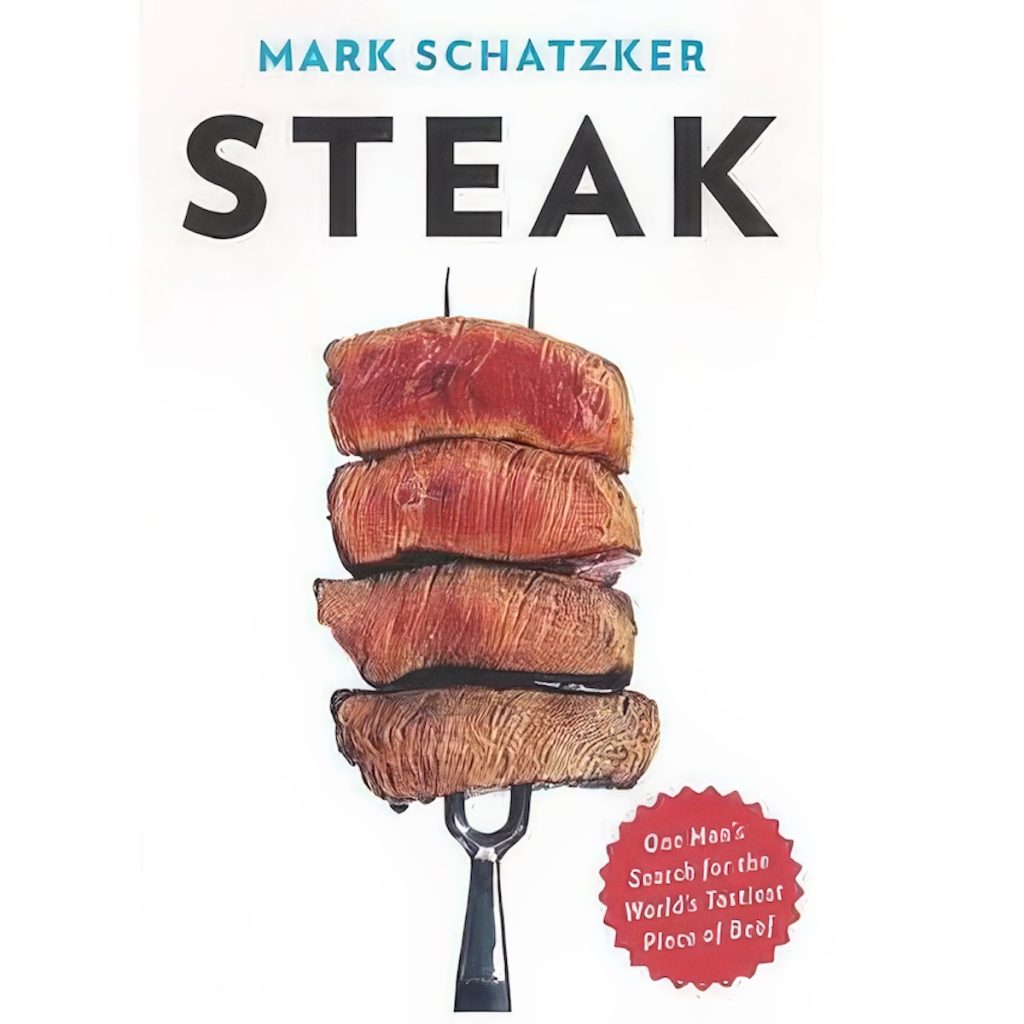
If you want to find the “perfect” steak and learn everything you want about the beef industry, I recommend you read Mark Schatzker’s book Steak: One Man’s Search for the World’s Tastiest Piece of Beef. To learn more about this fantastic look at beef, check out my interview with Mark at What Makes the Perfect Steak.





2 Responses
Great info. I want to get a nice standing rib roast for Christmas Eve dinner. I can remember my mother recommending the small end. I was in a local grocery store talking to the butcher and he said I could ask for that cut. Another shopper, who we were right next to, said she wanted a center cut roast. Do you have any recommendations on the standing rib roast cut? Is the center or small end preferable? I did ask the butcher if what they had on sale was prime, choice or select. He said it was all select or higher. Then I came here to see what select meant. Thank you!
You are welcome Elaine. I am a bigger fan of center cut but it really has to do with your own personal preferences and budget. Your butcher gave you a pretty vague answer. He should know if what you are buying is prime, choice or select and if he/she doesn’t know, it’s time to find a new butcher. Personally, I would stay away from select and choose choice. Prime is great but incredible expensive. Happy Holidays.