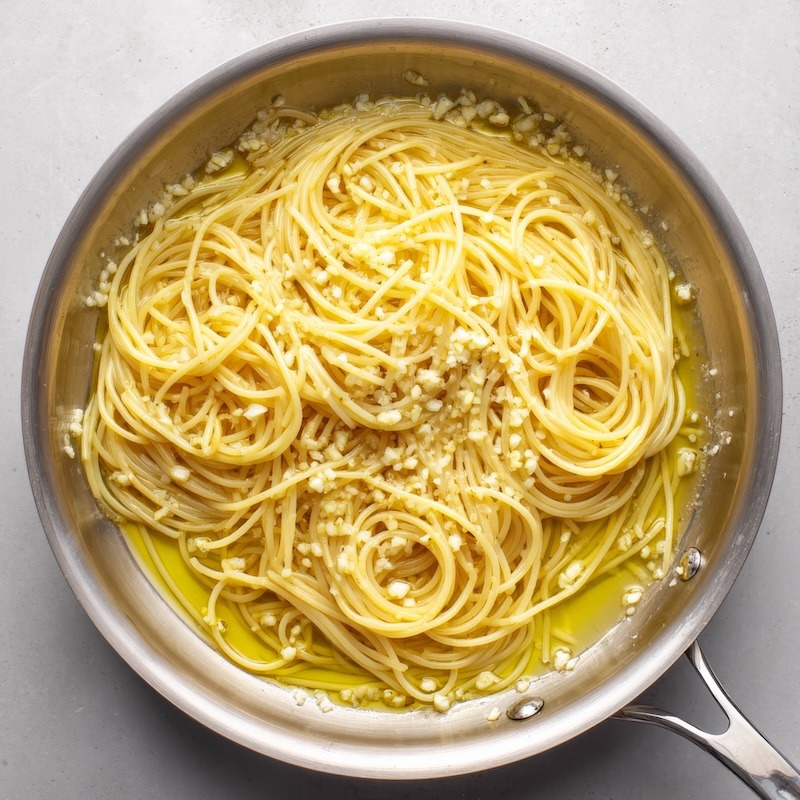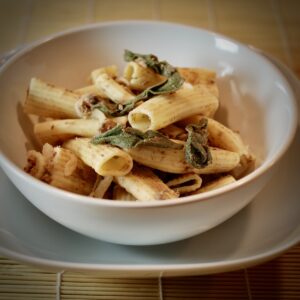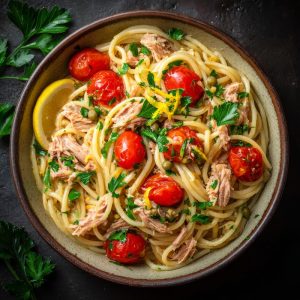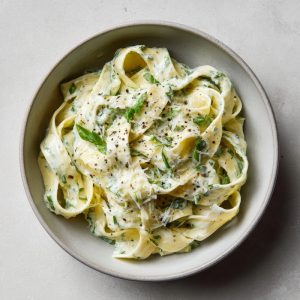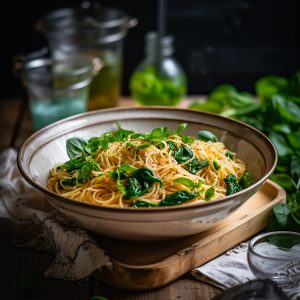
Think pasta with garlic and oil sounds boring? Please. This humble Italian classic is bold, fragrant, and proof that a handful of pantry staples can outshine complicated sauces. When garlic sizzles in olive oil and clings to perfectly cooked pasta, magic happens. Ready to make simplicity taste seriously sexy? .
How to Make Garlic and Oil Pasta Without Burning the Garlic
Pasta with garlic and oil looks effortless. It isn’t careless cooking. It’s precise cooking with very few ingredients.
This dish succeeds or fails in small moments. Heat. Timing. Oil quality. When to add garlic. When to stop.
Get those moments right, and you get something greater than the ingredient list suggests. Silky pasta. Fragrant oil. Garlic that tastes sweet, not sharp.
This recipe walks you through those decisions. Not just the steps, but the why. You’ll know how hot the pan should be. You’ll know what the garlic should look like before it turns bitter. You’ll know how to use pasta water to bind everything together instead of leaving oil at the bottom of the bowl.
This isn’t a restaurant trick. It’s a weeknight skill. One you can repeat without thinking once you understand it.
By the end, you won’t just make pasta with garlic and oil. You’ll know how to control it.
Key Decisions That Make or Break Garlic and Oil Pasta
How Hot Should the Oil Be?
Warm, not aggressive. The oil should shimmer, not smoke. Garlic fries in hot oil and turns bitter fast.
When Does the Garlic Go In?
After the oil warms. If the oil bubbles hard around the garlic, it’s already too hot.
Do You Add Chili Flakes Early or Late?
Early for infused heat. Late for sharper spice. Choose on purpose.
Why Pasta Water Matters
It turns oil into sauce. Without it, the dish tastes greasy instead of silky.
Fast Answer: Pasta with Garlic and Oil
Use good olive oil. Flavor matters.
Heat oil gently. Never brown the garlic.
Slice garlic evenly for consistent cooking.
Add pasta water to emulsify the sauce.
Finish with salt and heat, not cheese.
Pasta with Garlic and Oil Recipe
Ingredients
- 1 pound pasta
- salt and pepper freshly ground pepper, to taste
- ½ cup extra virgin olive oil
- 4 cloves garlic peeled & chopped
- ½ cup fresh parsley chopped
- hot pepper flakes to taste, optional
Instructions
Bring the Pasta Water to a Boil
- Bring a large pot of well-salted water to a rolling boil. It should taste like the sea. This is your only chance to season the pasta itself.Why this matters: Under-salted water leads to flat pasta that no sauce can fix.
Cook the Pasta
- Add the pasta and cook until just shy of al dente. Reserve at least 1 cup of the pasta cooking water before draining.Look for: Tender with resistance. Not fully soft. The pan will finish it.
Warm the Olive OIl
- While the pasta cooks, add the olive oil to a wide skillet over low to medium-low heat. Let the oil warm gently until it shimmers. Do not let it smoke.Decision cue: If the oil smells sharp or bitter, it’s too hot.
Add the Garlic
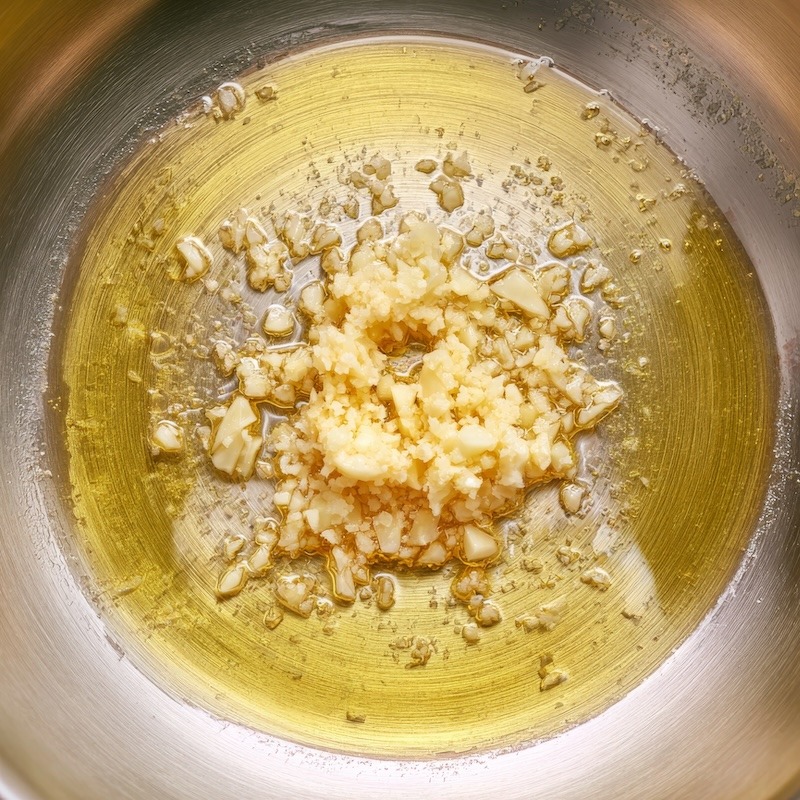
- Add the sliced garlic to the warm oil.
- Cook gently, stirring often, until the garlic turns pale blonde and fragrant, about 30 to 60 seconds.Stop point: As soon as you see brown edges, remove the pan from the heat. Burned garlic ruins the dish.
Add Red Pepper Flakes (optional)
- Add the red pepper flakes and cook for 5 to 10 seconds, just until they bloom them in the oil.Control the heat: Longer means hotter. Shorter keeps it subtle.
Add Pasta & Pasta Water
- Add the drained pasta directly to the skillet. Pour in about ¼ cup of the reserved pasta water and toss.What’s happening: The starchy water binds with the oil to create a sauce, not a puddle.
Emulsify the Sauce
- Increase the heat to medium and toss continuously for 30 to 60 seconds. Add more pasta water as needed, a tablespoon at a time, as needed, until the pasta looks glossy and coated.Visual cue: The sauce clings. It does not pool at the bottom of the pan.
Season & Finish
- Season with salt to taste. Remove from heat and taste again. Adjust salt or chili if needed.Optional finish: Fresh parsley or a squeeze of lemon for brightness. Use restraint.
Serve Immediately
- Serve hot. Garlic and oil pasta waits for no one.
Extraordinary Pasta with Garlic and Oil
Chef Ricco DeLuca once said, “A good cook is one who can make a great dish with only a few ingredients.”
This pasta is a perfect example. It uses just a handful of ingredients, but each one matters—and how you prepare them makes all the difference.
When you sauté the garlic in the oil, take a moment to breathe in that amazing aroma. It’s one of the most unforgettable smells in cooking and a sign you’re on the right track to something delicious.
My Q & A with Chef Ricco Deluca About This Recipe
Questions I had before making this recipe:
Some cookbooks suggest 1 pound of pasta for four people. When you serve pasta in your restaurant, how much do you serve per individual?
When I say one pound of pasta for six people, I hope you will give them more than just pasta; how about a salad and a vegetable, or better yet, how about two vegetables on the plate? I get 5 to 6 orders out of a pound in the restaurant.
Most cookbooks I’ve read say not to brown the garlic because it makes the sauce bitter. Why brown the garlic?
Many think browning garlic is the same as letting it burn. Not true. The garlic browning gives it the aroma of toasted nuts and a tart taste. That is why the garlic is kept whole…for that toasted nut flavor.
Why can’t you mash the garlic with your fork in the pan? Why remove it first?
Take the garlic out of the pan because you don’t want to continue cooking…. release the oils. When I make this dish, I don’t remove it, but I’ve made the dish hundreds of times, and you can’t work as fast as me yet.
Can you substitute pepper flakes for the dry, hot chili pepper?
Dry chili pepper and what you call pepper flakes are the same.
If you don’t have fresh flat-leaf parsley, can you use curly-leaf parsley? What about dried parsley?
Flat leaf parsley, also called Italian parsley, is best, but you can substitute curly leaf parsley, although there’s not as much flavor as flat leaf. Don’t use dry parsley….there is no flavor.
Why "no cheese, please"?
There are a few pasta dishes Italians don’t put cheese on, and this is one of them. You want to taste garlic and olive oil. Besides, my father would turn in his grave if I gave you this recipe, and it included cheese.
Questions & Comments I had after making this recipe:
Ricco, I made this last night and loved it. The flavors were so intense and prominent that the house was still filled with the smell of cooked garlic this morning. My wife was not as thrilled as I was. She thought the flavor was a little too strong for her taste. To me, it was nothing but straightforward and intense flavor. I had three bowls of it. I thought 1 cup of oil was a little too much. A lot of oil was left at the bottom of the pan after I tossed it well. Any ideas?
Here are a couple of tips. As you know, oil and water don’t mix. When you drain the pasta, keep it in the colander until it’s completely dry, so when you put it in the oil, the pasta will absorb the oil like a sponge. You could also whip two egg whites to a froth and toss them in at the end. The egg whites will make the oil coagulate with the pasta. If you like less oil, try ¾ cup.
When I put the garlic back in the pan, it quickly started to cook. It started to burn. Is this what should happen, or was the oil too hot?
The browned garlic should still be in a raw state. All you are doing is infusing the oil with garlic oil. Because you can’t work as fast as I do, you may want to try turning down the heat a little.
When I added the parsley, it crisped instantly. It sounded as though it was cracking. It seemed a little burnt.
I want the parsley to make that cracking sound; that’s the moisture coming out. You don’t want it to burn, so you might want to reduce the heat again.
Would you use this technique with other pasta dishes?
This technique works wonders with all oil base sauces; the only thing I would do differently is tone down the garlic if adding additional ingredients. This is the way I usually prepare it in the restaurant. However, if I’m in the weeds, I may cheat by chopping the garlic to hurry up the cooking process. Not too often, though.
How can I tone down the strong garlic flavor so my wife can enjoy this simple and incredible recipe?
There are a few ways to tone it down. You can use three cloves of garlic or brown all four cloves to infuse the oil and only mash and return 2 of them. You could then use the remaining 2 for your dish.
How long does it take the garlic to brown?
Depends on the temperature of the oil, but ideally, you want the garlic in the hot oil for a least 3 to 4 minutes and the golden brown color of a walnut. I hope you try this recipe and enjoy it as much as I do. Be careful when adding the parsley to the hot oil; it splatters.
| Tip | Description |
|---|---|
| Portion Size | Figure about 4 ounces of dry pasta per person. A 1-pound package should yield four servings. |
| Water Amount | Use plenty of water (at least 4 quarts per pound) so the pasta doesn't stick together. |
| Salt the Water | Add approx. 1 tablespoon of sea salt per pound of pasta. This brings out the pasta's flavor. Add pasta once the water returns to a boil. |
| Don't Break the Pasta | Use a wooden spoon to bend long pasta like spaghetti as it softens—don’t snap it to fit the pot. |
| Stir Often | Stir pasta frequently while cooking to prevent it from sticking together. |
| Don't Overcook | Spaghetti takes about 8–10 minutes. Check frequently and cook until “al dente” (firm to the bite). |
| Drain Immediately | As soon as the pasta is cooked, drain it using a colander to stop the cooking process. |
| Saucing | Depending on the dish, either top the pasta with sauce or mix them together before serving. For this dish, mix them immediately. |
| Don't Over-Sauce | Use just enough sauce to coat the pasta. Let the pasta’s flavor shine through. |
| Cheese | If a recipe calls for grated cheese (this one doesn’t), toss some in before serving and offer extra at the table. |
Pasta
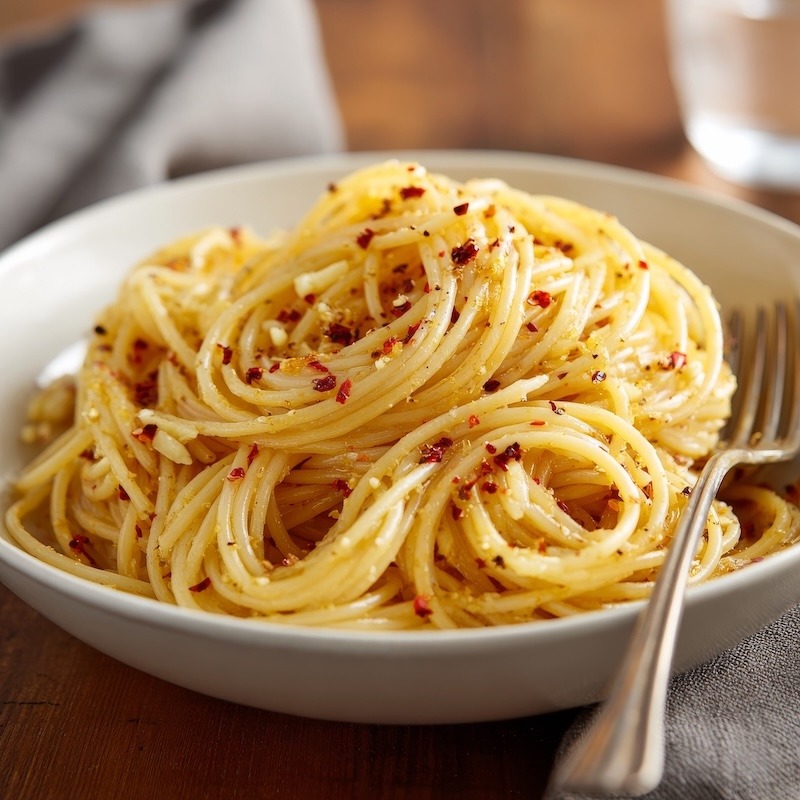
The best pasta for this recipe is either a dry factory-made spagetti or very thin spaghettini because of its ability to stand up and not be overpowered by the oil-based sauce. A fresh homemade, egg-based pasta would be overpowered and absorb too much of the sauce.
Pasta Cooking Tips
Salt
Used throughout the ages, the salt I prefer is sea salt. It comes from evaporating seawater and is more expensive than mined salt, but it adds more depth and character to your cooking. Because we don’t add any salt to this recipe, it’s vital to add it to the water when we cook the pasta.
Extra Virgin Olive Oil
There is more to know about olive oil than I will ever learn in this lifetime. With so many types of olives and different growing areas, I hope to spend many enjoyable hours tasting and educating my palate. This recipe calls for Extra Virgin, which is cold pressed (no use of heat or chemicals allowed), comes from the first pressing, and has a maximum Oleic Acid (bitterness) content of 1%. Virgin olive oil, on the other hand, comes from the 2nd or 3rd pressing with a maximum Oleic Acid content of 4%. Which oil you use depends on what you like and how deep your pockets are..
Garlic
What can I say? I love it! I grew up on garlic powder, as many of you may have. But I was hooked for life when I started cooking with real garlic. There are three types of garlic; which one you use will depend on taste and availability. The three are:
- American garlic, which is white-skinned and has the most robust flavor.
- Italian garlic, which has mauve-colored skin and more mild flavor.
- Elephant garlic is huge and has the mildest flavor of the three.
When choosing, look for firm heads with dry skin that feel heavy for their size. Avoid shriveled, brittle, turning yellow, or coming in a jar already cut up. For the record, after years of effort, I finally persuaded my folks to make the switch.
Parsley
Although there are more than 30 varieties, I’m familiar with two types of parsley: flat-leafed Italian and curly-leafed. Is there a difference in flavor? I think so. I like to cook with flat-leafed parsley and use the curly leafed to decorate my plates. And in most recipes, fresh is better than dried.
Black pepper
It comes from black peppercorns that are picked slightly unripe and dried until they shrivel. The best black peppers are known to be the Tellicherry and Lampong and have a spicy hot, but sweet flavor. Note once you grind a peppercorn, it will quickly lose its aroma.
Making Pasta with Garlic & Oil Super – From Simple to Special
Once you master pasta with garlic and olive oil, you gain the power to transform its flavor with countless ingredient combinations. It might sound like a stretch, but this simple dish truly unlocks a world of culinary possibilities. Why? Because it’s not just a recipe—it’s a set of foundational cooking techniques.
At its core, this dish involves:
-
Cooking pasta
-
Heating oil in a pan
-
Combining the pasta and sauce
When you break it down this way, it becomes easy to see how much room there is for personalization. Choose your pasta, infuse your oil with your favorite flavors, and you’ve created something unique. Think of the pasta, garlic, and oil as a flexible framework. You can layer on almost anything to make it your own.
Still with me? Good. Let’s dig in.
Check Your Spice Cabinet For Ideas
Look in your spice cabinet right now. See all those spices you have there? Heat any of them along with the oil to give a different flavor to the finished pasta. Adding red pepper flake will bring excellent heat to your dish. Aside from red pepper flakes, consider adding some lemon pepper, Cajun Seasoning, Old Bay–almost any pre-packaged spice blend, or your favorite blend of spices, that you like.
Add Some Aromatics
And there is no need to stop there. Along with (or instead of) the garlic, you can also mince up other aromatics to add to the oil: onions, shallots, leeks, celery, carrots, ginger–any of these would work nicely. And how good would some oil-packed sundried tomatoes be? Good.
Bring In Some Herbs
Herb-wise, the sky is the limit. Fresh herbs are always more vibrant than dried, although dried tend to have a more intense flavor. Also, dried herbs, such as Italian seasoning or Herbes de Provence, often blend. Buying an herb blend is often more convenient and cost-effective if you’d like to use a blend of herbs and don’t have your own herb garden.
Otherwise, I generally prefer to use fresh herbs. If you use dried herbs, hold some in your palm before adding them to the dish and crush them with your thumb. This helps to release more of the essential oils and ups the flavor.
How About Some Nuts
To add some crunch to your dish, you might add some dried nuts. Pinenuts, crushed peanuts, walnuts, almonds–almost any nut you can think of will bring subtle differences in flavor. They will also add some protein and up the nutritional profile of your pasta.
Okay, even my head is starting to hurt a little bit. Take a look at the following chart. To create your own take on pasta with garlic and olive oil recipe, just choose one or two complementary ingredients from each column, and you’re good to go.
Of course, this chart is just a starting point. You, indeed, are limited only by your imagination. Let me know what you come up with.
| Aromatics | Spices | Crunchies |
|---|---|---|
| onion | pepper | pinenuts |
| leeks | red pepper | walnuts |
| celery | curry powder | pecans |
| sun-dried tomatoes | chili powder | almonds |
| chili pepper | cumin | cashews |
| lemon zest | nutmeg | soynuts |
| chow mein noodles | ||
| Herbs | Extras |
|---|---|
| dried herb blends | crisp bacon |
| basil | dice ham (cooked) |
| cilantro | chicken, pork, beef |
| rosemary | grated cheese |
| sage | citrus zest |
| oregano | |
| flat leaf parsley |


38 Responses
Sounds good to me,just like I remembered it as a child.
I made this dish but added a bit of fresh grated Ramano cheese just before serving. While the pasta was hot sprinkle liberally with the cheese, toss to begin melting and coat. Serve immediately!
This is very tastey and simple. Love it eat it all the time.
I have eaten this dish for many more years I want to remember mr forefathers ,from Italy all loved it ,it was served after wedding parties ,and many other times,as an excuse to enjoy our home made wine,and enjoy each company.found with too much grated cheese it became too heavy . But each to his own taste .
Wonderful ,simple dish to enjoy our Italian heritage
Added onions to oil and garlic, and used fresh basil instead of parsley, and it blended nicely with penne. Was awesome. 🙂
seems that green capsicum ( bell pepper ) sliced thin and long, would go well with this dish too, add a few slices towards the end of the cooking, so that they will be crisp…..maybe it’s worth a try.
Yes! I am going to add green and red bell pepper to this dish!!
The garlic and olive oil is the whole flavor thing about this tasting so wonderful! If you do not have good olive oil, you are wasting your time!
I like to add some mussels steamed with garlic,butter olive oil ,parsley now that good eatting…
This was simple! I added dry basil, fresh lemon, spinach and tomato…so delicious !
My grandmother used to make this all the time for me when I was a kid qith her homemade seasoned breadcrumbs. It gives an interesting texture and flavor to the dish.
Do I need to take the cooked garlic out of the oil before I mix the spaghetti in? The recipe doesn’t say.
No Debi, leave the garlic in.
I don’t have real garlic, only garlic powder. I’m trying to make this, but in a different way since I don’t have garlic. Boil the water with salt, add the noodles (elbow macaroni, all we have), when it’s done I’ll drizzle olive oil over the noodles and shake some garlic on it. Do you think this’ll actually work?
M.M., if that’s all you have on hand, go for it and let me know your results.
Can I use minced garlic from a jar?? If so, how much would equal 4-6 cloves. Thanks
Dawn, on average, one clove of garlic equals about ½ teaspoon of minced garlic. So, four cloves = 2 teaspoons of minced garlic, and 6 cloves ≈ 3 teaspoons minced ≈ garlic, 1 tablespoon minced garlic.
Wonderful recipe. I added finely chopped roasted red bell pepper fresh greek and sweet basil and fresh oregano over herb chicken tortelini. Was very good!
I just made this quite similar, but I actually started with some chicken breast strips, seasoned them, then added the ingredients to make the sauce in the same deep pan.. I grated the ingredients, including garlic, and added some fire-roasted peppers, as well as red and green peppers, and onions. Baked some fresh bread to wipe up some of the sauce onto…mmm mm, oh yeah, and added some freshly grated Parmesan Romano cheese.. And I used farfalle, bow ties, Delish 🙂
Question for everyone…
My dad has been told by his doctors he can’t have any salt anymore. I see a lot of great Recipes but all call for Salt. What can I replace this with or can I just drop the Salt out? I cook for him once a month on the grill most of the time and food saver it for him. Any help would be great.
Thanks.
Greg
Hi Greg there’s is a product called Mrs.Dash you can usually find it with the spices. It is a salt alternative doesn’t taste exactly the same sprinkled on but cooked you can’t tell the difference
You generally can’t just remove salt from a recipe without affecting flavor, but there are plenty of ways to make dishes tasty without it. Herbs and spices like parsley, basil, thyme, paprika, cumin, and black pepper add depth, while acidic ingredients such as lemon juice or vinegar brighten flavors and make dishes taste “saltier.”
Umami-rich foods, such as garlic, onions, mushrooms, and roasted peppers, can also enhance savory notes. Other tricks include using toasted nuts or seeds for richness, smoked spices for a savory punch, or unsalted seaweed for natural umami. The key is layering flavors and tasting as you go to keep dishes delicious without sodium.
First, the description of ‘sauce’ was used to describe the oil, parsley & garlic topping, if you will.
Second, The therm ‘sauce’ is used to describe the topping on pizzas & vegetables.
What is traditionally served with and pasta, in the Italian households, is called ‘Gravy’.
In northern Italy there is ‘brown’ gravy due to the red meats that are readily available. In southern Italy there is “red’ gravy due to the tomato crops.
Tony, the main difference between sauce and gravy is how they’re made and used. Sauce is a broader term for any flavored liquid added to food, often thickened with butter, cream, or starch, and can be served with meat, pasta, vegetables, or even desserts.
Gravy specifically refers to the juices released from cooked meat, usually thickened with flour or cornstarch, and served with that meat. This distinction is primarily American—in Italy, the word “salsa” encompasses both, and what Americans call gravy would usually be considered a type of sauce, often with meat drippings or tomatoes added.
Gravy is a Sicilian term.
Mainland Italians call it Sauce.
gravy is not merely a sicilian term!
gravy is sauce with meat in it
leftovers is called “what-a-gain” in our house. Its the term my beloved grandma used and I think of her when I use it
Italians call their tomato based sauces, those used for pasta, ragu. Hence the product called ragu, which is horrible I might add!
Cooking for one is difficult but of course I could always have leftovers which would be good. Just beginning to cook with fresh garlic. Do I mince it or leave it whole. I have been mincing it and I think I have been doing it wrong. Oregano and basil, but I am stuck with dried. Buying fresh means I throw out a lot. How much dried. I have been making this dish but it seems to need more of everything. Help.
Hi Ellen, this dish really needs to be made with fresh garlic and parsley. Rather than throwing out the fresh parsley, oregano or basil, you may want to try freezing it so you have it when you need it.
I mince it and sometimes I add an Italian deli meat cut up called prosciutto. Yum and Good Luck.
Can I replace the olive oil with coconut oil or would you say they are about the same in good fats!?
Sharmayne, I say give it a try and see how you like it. I would think you are going to get a different end result flavor but if you like it better, who cares? I’m always for substituting different ingredients to find what works for you. I use recipes as guides but often change them around to work with ingredients I have on hand or really like.
I added peeled medium/large fresh shrimp to the garlic oil/water and cooked until pink then added the spaghetti
I’m going to try this today!!! We had pasta and meatballs yesterday for dinner but, Made too much pasta!!! AGAIN! I have to remember now, that when I cook I’m not cooking for 4-5 any longer. However, I’m going to throw in some broccoli and possibly cauliflower! (Looovvveee them two verges) and I think it’ll be a nice additive. I’ll let you all know how we like it! Also will be serving it with garlic bread, (garlic lightly spreaded on Italian bread) and butter.
Sounds like a great meal Debbie.
Tony, sorry but gravy is an American term and sauce for an Italian and by the way I am Sicilian and Napolitano. Lol