
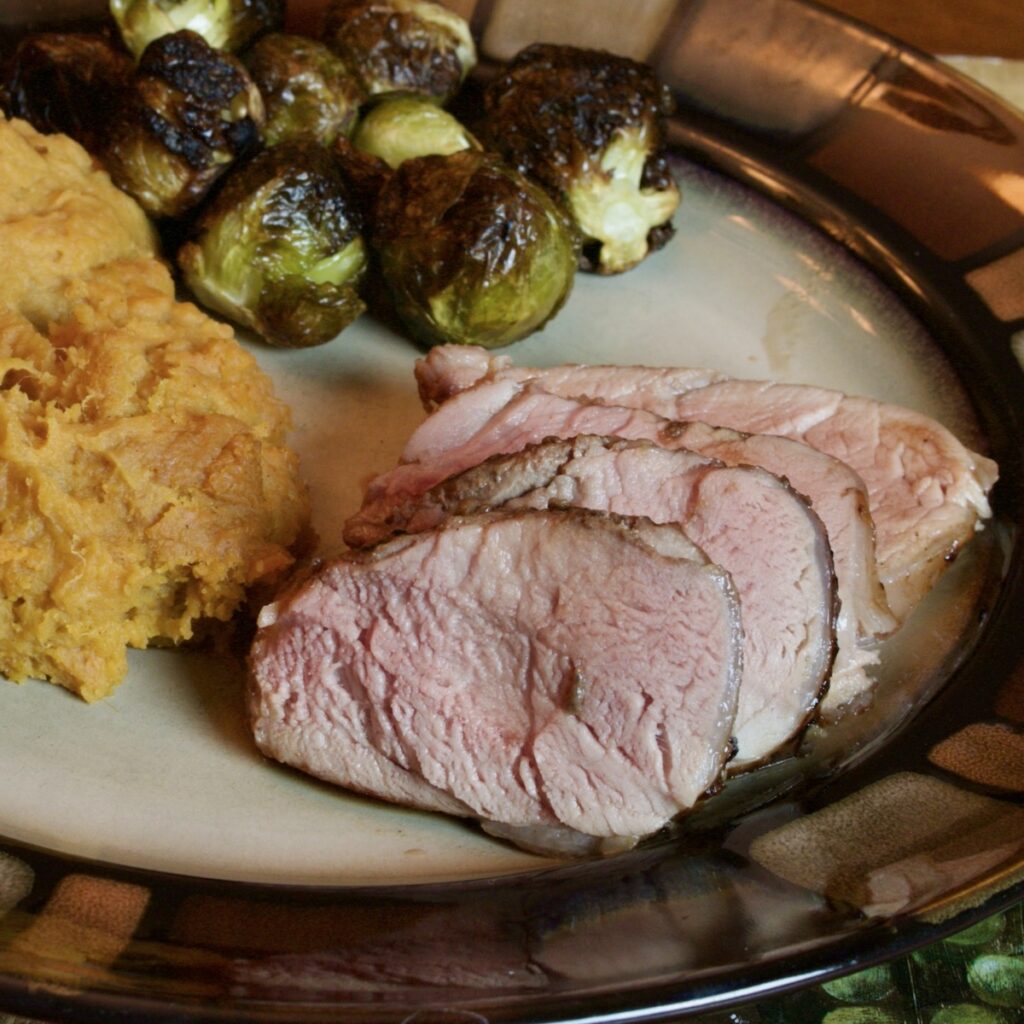

Sous Vide Pork Tenderloin Recipe
Ingredients
- 2 pork tenderloins with the fat and sinew trimmed
- Flavor enhancer dry rub, wet rub, homemade or commercial marinade, bbq sauce, salad dressing, salt & pepper
Instructions
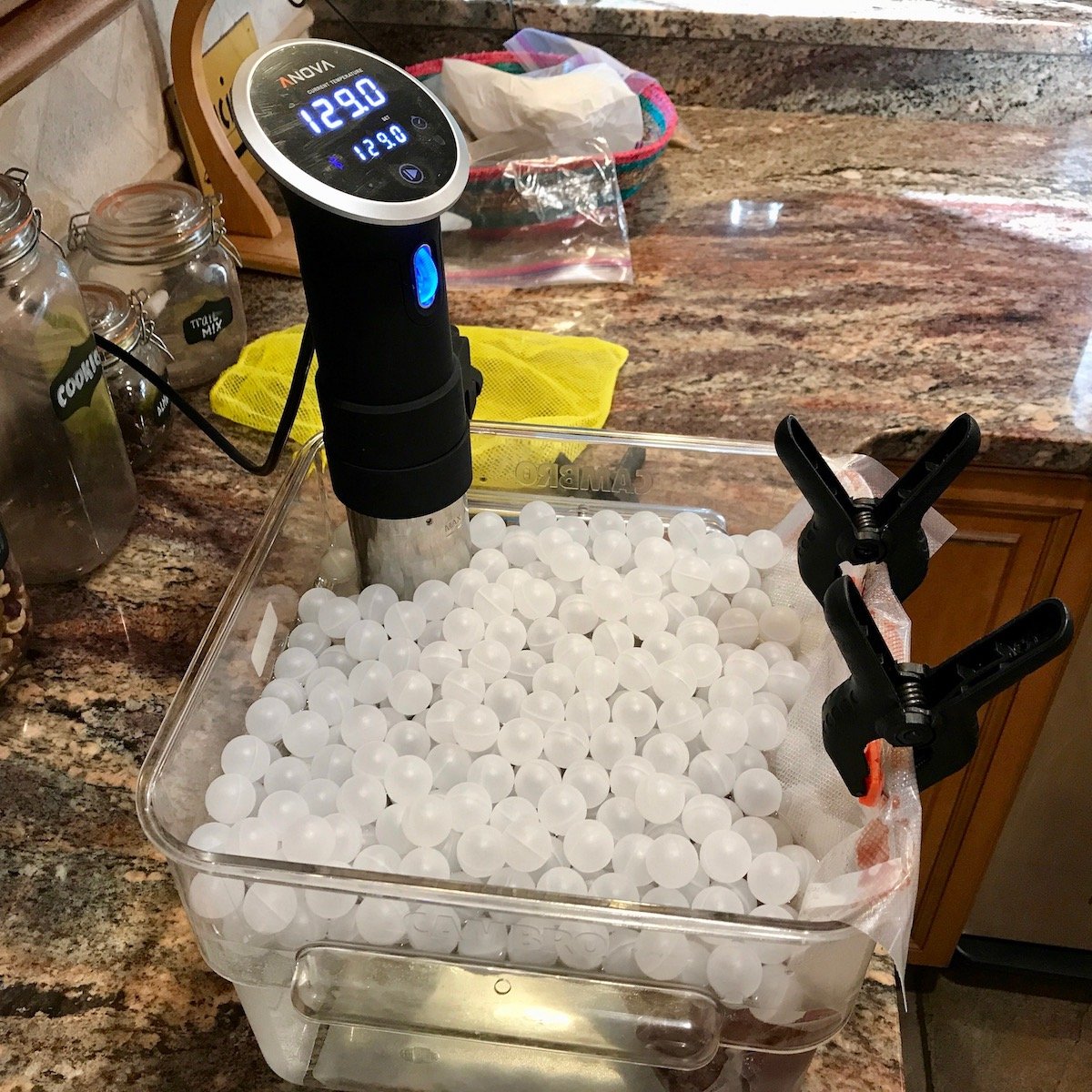
- Set up your sous vide equipment and bring the water temperature up to the desired temp. For pork tenderloin, I went with 140°F but suggest you do you own research to decide if this is a safe temperature for you.My Anova Sous Vide Circulator has an Bluetooth app so I can set up the time and temperature on my phone and it tells me when the water is at the desired temperature and a timer to tell me when the food is done. They even have a more expensive wifi Circulator where the app can be used anywhere you have wifi access.
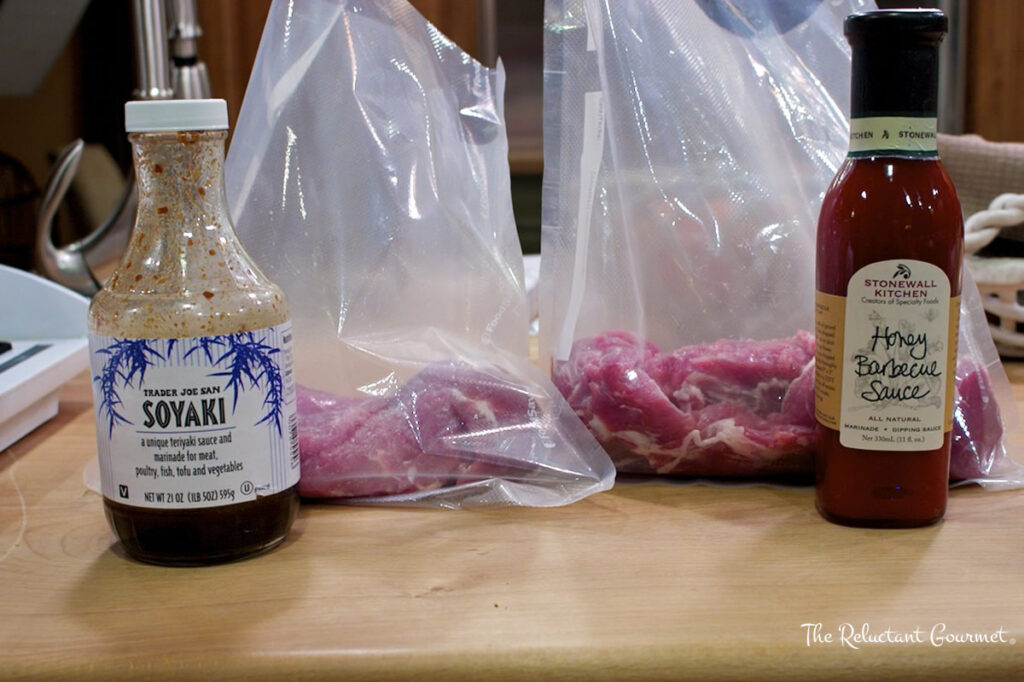
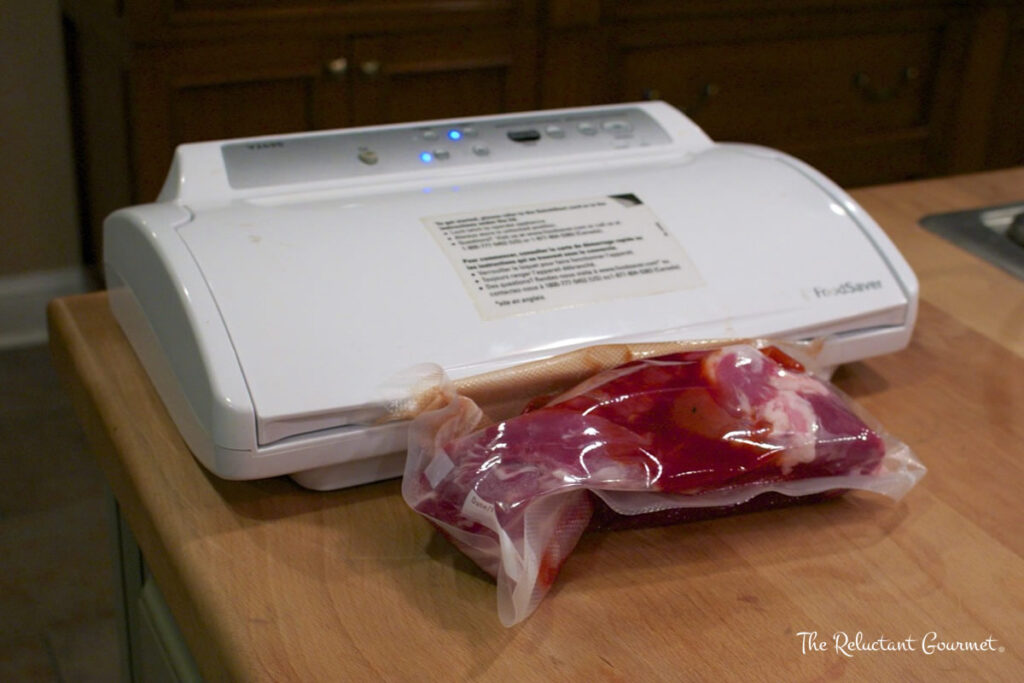
- While the water is heating up, add the pork tenderloins to separate Foodsaver bags (or Ziploc bags), add a flavor enhancer and vacuum seal shut.
- As soon as the water is at the correct temperature, clamp the bags to the side of the water pot making sure the bags are fully submerged and not touching the Anova circulator.
- Set your timer for 2 hours and walk away or start preparing your side dishes and dessert.
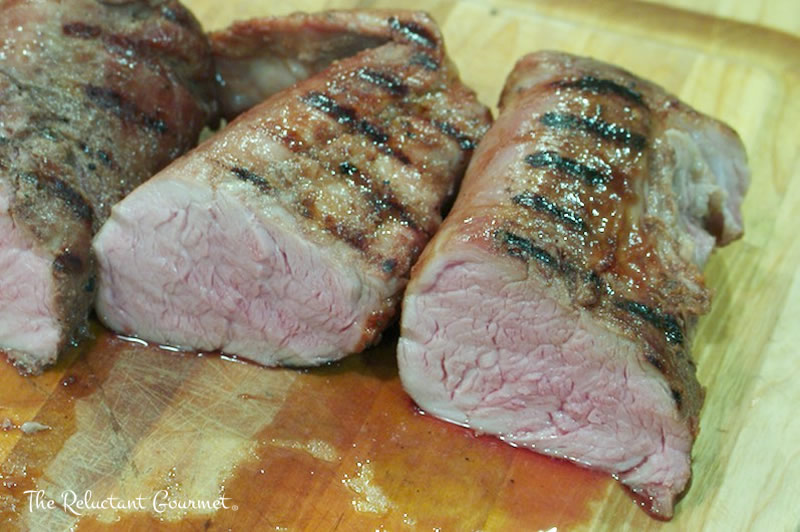
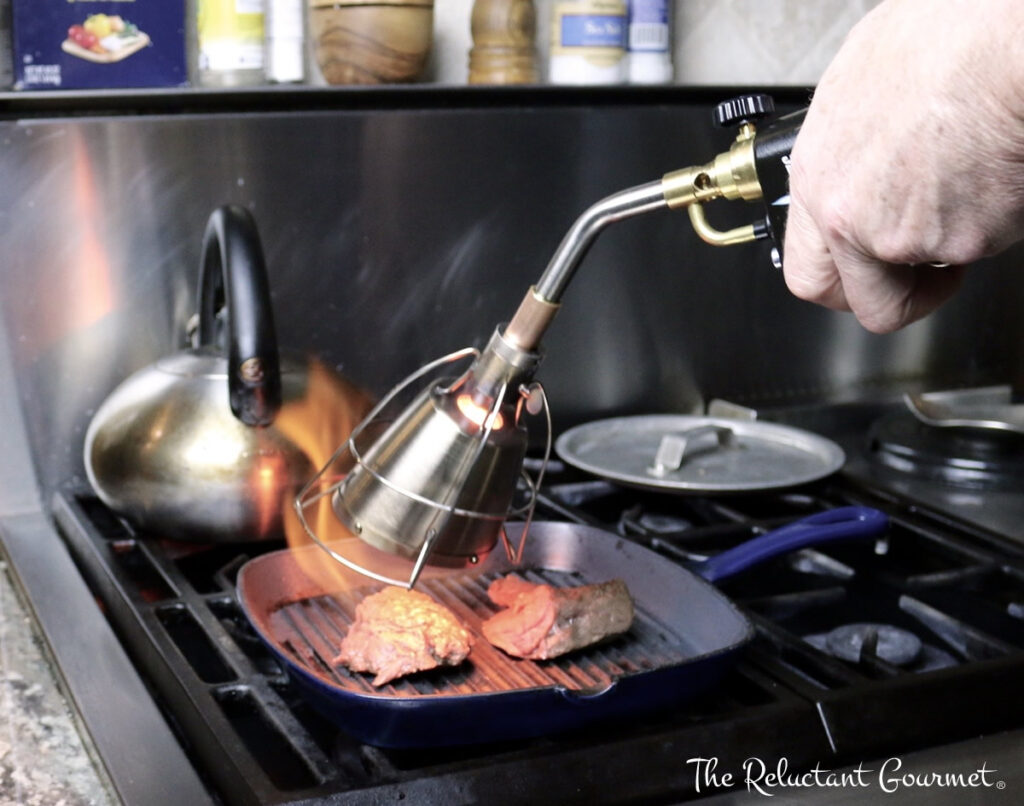
- When the tenderloins are done, remove them from the bag, pat dry with a paper towel and brown them on the grill, in a frying pan or with a Searzall. When the exterior develops a nice crust, transfer to a cutting board, slice and serve.
- Plate with side dishes and serve.
Notes
How to Cook a Pork Tenderloin Sous Vide
Sous vide is a cooking technique that involves vacuum-sealing food in a bag and cooking it in a water bath at a precise, consistent temperature. This method is particularly well-suited for pork tenderloin, a lean cut that can easily become dry and overcooked using traditional methods. Cooking pork tenderloin, sous vide ensures it remains juicy and tender, with a perfect texture throughout.
Preparing the Pork Tenderloin
Start by selecting a high-quality pork tenderloin, trimming any excess fat or silver skin to ensure even cooking. Season the pork generously with salt, pepper, and other desired herbs and spices. Common additions include garlic, thyme, and rosemary, which enhance the flavor without overpowering the meat. Consider marinating the pork tenderloin before sealing it in the vacuum bag for added depth.
Setting Up the Sous Vide
Preheat the sous vide water bath to your desired temperature. For pork tenderloin, the recommended range is typically between 135°F (57°C) and 145°F (63°C). Cooking at 135°F yields a tenderloin that is medium-rare, tender, and juicy, while 145°F results in a firmer texture with a slight pinkness remaining in the center.
Cooking Time and Technique
Once the water bath reaches the set temperature, place the vacuum-sealed pork tenderloin into the bath. Cooking times can vary, but a general guideline is to cook the pork tenderloin for 1.5 to 2 hours. This duration allows the meat to cook evenly and ensures it reaches the desired doneness without becoming overcooked. Since sous vide cooking relies on precise temperature control, the pork will not exceed the water bath temperature, preventing it from drying out.
Finishing Touches
After cooking, remove the pork tenderloin from the bag and pat it dry with paper towels. Drying the meat is crucial for achieving a good sear, which adds flavor and texture. Heat a skillet over high heat with a small amount of oil or butter. Sear the pork tenderloin on all sides until a golden-brown crust forms, usually about 1-2 minutes per side. Be careful not to overcook it during this step.
Serving
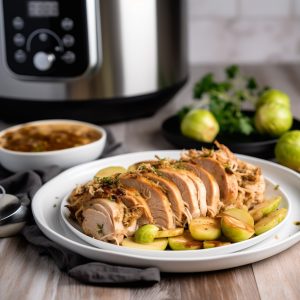
Allow the pork tenderloin to rest briefly before slicing it into medallions. This brief resting period helps retain the juices within the meat. Serve the pork with your favorite sides, such as roasted vegetables, mashed potatoes, or a fresh salad. A sauce or reduction, such as apple cider glaze or mustard cream, can complement the tenderloin’s flavors beautifully.
Sous vide pork tenderloin is a reliable way to always achieve a perfectly cooked, succulent dish. The precision of sous vide cooking ensures the tenderloin is uniformly tender and juicy, making it a favorite among home cooks and professional chefs.
I’ve even posted a new page with a chart of temperatures and times, plus flavor enhancers based on what we’ve learned from cooking sous vide. I’ll update this chart as we learn more.
Resting
Another great aspect of cooking sous vide is no “resting” time. When you roast, grill, or pan fry most meats, you let them rest after they are done cooking to allow the juices in the meat to redistribute throughout the entire cut.
The meat continues to cook during this time, and the internal temperature increases.
Many home cooks don’t consider this, so they cook the pork tenderloin to their target temperature, and by the time they get to cutting and serving, the internal temperature can rise 3° to 5°F. With sous vide cooking, there is no need for resting.
The juices are already distributed because the meat is not cooked at extremely high temperatures, like throwing it on a hot grill. If you wanted, you could serve it right from the vacuum bag….but you wouldn’t because it doesn’t look too appetizing.
Browning
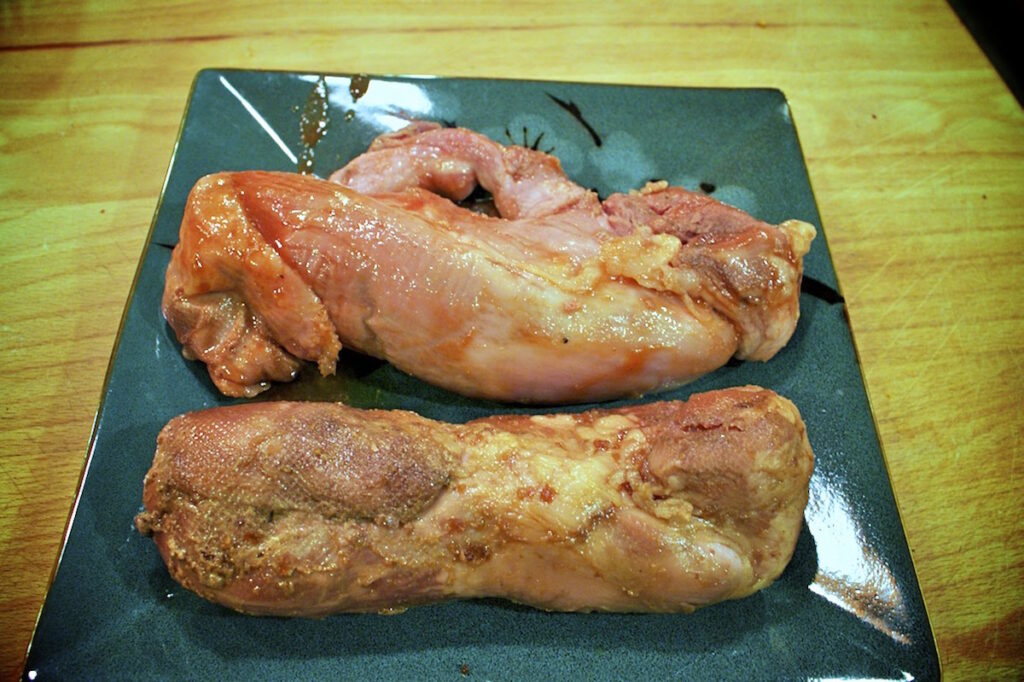
Because you cook pork in a low-temperature environment, the heat is not high enough to give it that nice brown crust we all appreciate. In fact, it will look gray and anemic, as the photo above shows.
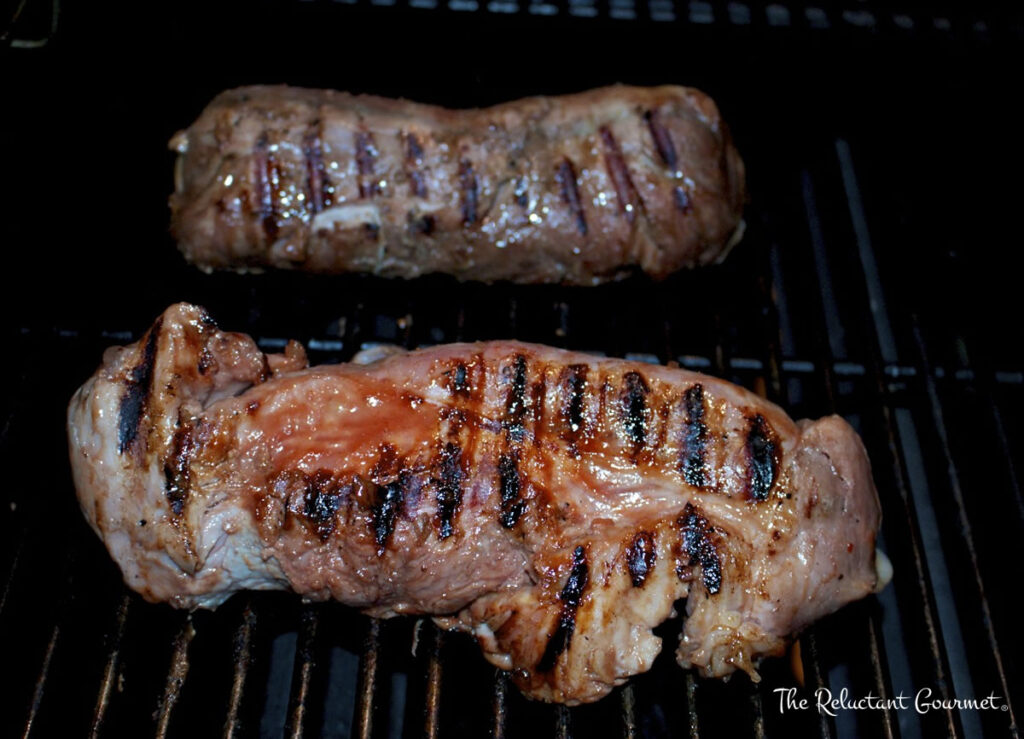
No worries, a quick sear on a hot grill, hot frying pan, or blast from the blowtorch like Searzall will provide a nice-looking and great-tasting brown crust to the exterior.
The browning should be quick, so make sure your grill or fry pan is hot and ready to go. You don’t want to make the effort to sous vide cook a pork tenderloin to the perfect internal temperature only to sear it on the grill for 5 minutes and overcook it.
A quick browning for 1 – 2 minutes should do the trick, not overcook the edges.
Sous Vide Equipment
Sous Vide Machines
Several styles of sous vide products range in price, size, and features. Personally, I like the sous vide circulators that can be used with your own pots and containers compared to the sous vide water ovens that are completely self-contained and more expensive.
I have the Anova brand within the circulator group, but you can also find a Sansaire and Nomiku. Do your homework on which unit offers the features you want and which gets the best ratings.
Although you can use Ziploc bags to remove the air from the plastic bag using a technique called the “Water Displacement Method,” which uses pressure from the water to force the air out of the bag, I like using a vacuum sealer.
Saying that the Ziploc bag method is much cheaper – you don’t have to buy the machine or the FoodSaver bags, which are much more expensive than Ziploc bags. Since I already own a Foodsaver and use it to store leftovers, cheese, and steaks in the freezer, I don’t mind paying a little extra for the bags.
Searzall (optional but fun gadget)
Basically, an attachment to an everyday propane blowtorch that turns it into a “hand-held, supercharged instant-power broiler”.





8 Responses
I’ll be trying your pork tenderloin tonight. Having a ‘real’ sous vide setup is way out of my budget so I purchased a $25 temperature controller from Amazon and use it to control my crock pot. I maintains the temperature within a fraction of a degree which seems to be sufficient. I use plastic napkin holders to keep the bags upright. I haven’t tried the vacuum bags yet, just the zip lock baggies. I plan on using vacuum bags and prepping meals and freezing them – a little bit longer in the water bath and voila’ an easy meal for one or two.
Very cool Jim. Please check out my Facebook group called What I Cooked For Dinner Last Night so you can post some photos of your temperature controlled crock pot. Sounds ingenious.
I found a sous vide heater(manuals included and only used twice), much like the one in above photo, at a yard sale for ten dollars and also a styrofoam cooler for a dollar. I made a mount and cut to fit in the cooler lid. Works great for $11.
Seeing as how I’m retired, cost of Sous Vide equipment must be kept to a minimum. Ordered the Food & Wine unit from HSN for $99.00 @ $25.00 per month Easy Pay. Not sure of the manufacturer. HSN video seemed good.
Trying to determine the maximum amount of water that can be used, where the Sous Vide immersion unit will be able to sustain set heats. Even emailed Food & Wine, but no feedback (yet).
Once I know how much water I can heat, I can look into a suitable container. Just the wife & I at home. Like the idea of the clear plastic containers & the heavy duty clamps. I already have a Foodsaver unit.
Any input would be greatly appreciated.
Hi Sherman, without knowing the make and model of the immersion unit you purchased, it’s difficult to answer your question. Isn’t the manufacturer’s name on the unit itself? Here’s what I found on a review site regarding water levels for different models – “The water level range on the immersion circulators is important for the protection of the unit itself. The minimum level ensures that there is enough water for the actual circulation to work and for the cooling down of the heating element. The maximum level protects the control panel and display from getting wet.” I suggest you also try contacting HSN and ask for the make and model so you can contact them.
A couple of facts pasteurization begins at 130 degrees,cooked through to 130 plus is totally safe.I find that brining gives pork a ham like texture but if you like it that way just do it. Having said that try and stay away from the bottled stuff and make your own it`s cheaper and a better product without the names of ingredients I can`t pronounce Keep up the good work and have fun!
Hi I’m using an Anova and love cooking with it.
My question is:
I’m cooking 3 pork tenderloins which range in size from 2″ to 3″ a round, at one time. I’m using a large square Tupperware water bath for the cooking and want to cook at 140F. Do I use the 90 minutes to 6 hours time frame for the 3 tenderloins or do I increase the time?
Hi Craig, if you have the room for the three tenderloins and the temperature where you want it, I would cook all three for the specified time and not increase it. Not being a sous vide expert, you may want to check around and see what others say but I think you should be fine. Make sure when you are done, use an instant thermometer to make sure you are at the internal temperature you want.