

Fast Answer
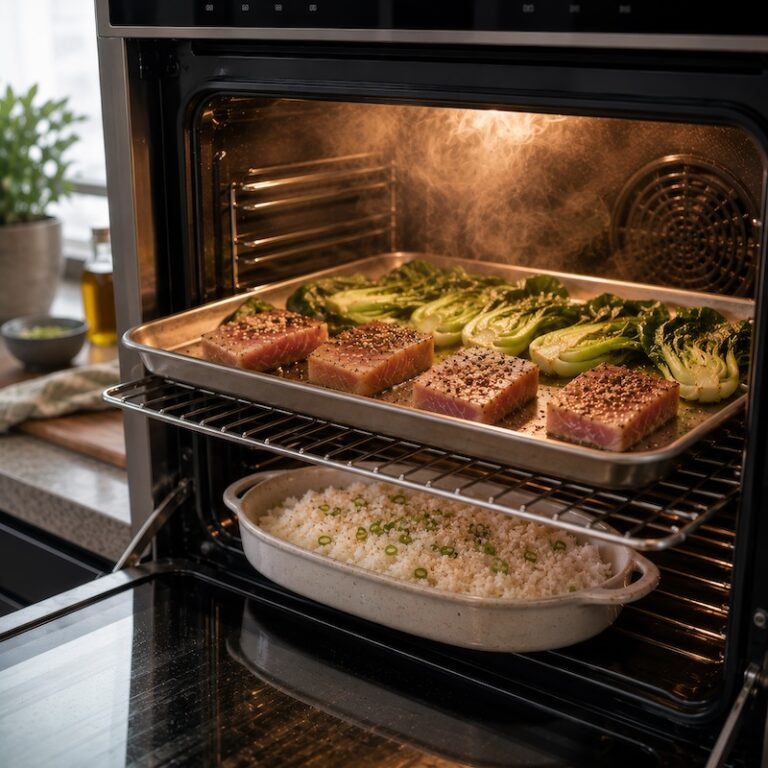
Convection Steam Mode lets tuna, jasmine rice, and bok choy cook together with balanced moisture and airflow. The steam protects the tuna and rice while convection heat keeps the vegetables vibrant instead of soggy.
Tuna, Bok Choy & Jasmine Rice in a Steam Oven
I am trying to learn how to cook more meals in my Wolf convection steam oven. A convection steam oven changes how complete meals come together. Instead of juggling burners and timing multiple pans, the oven handles moisture, airflow, and temperature in one controlled environment.
This tuna dinner works because each ingredient benefits from gentle humidity and circulating heat. The rice stays fluffy, the bok choy cooks quickly without drying out, and the tuna remains moist with almost no gray overcooked edges.
Start Here
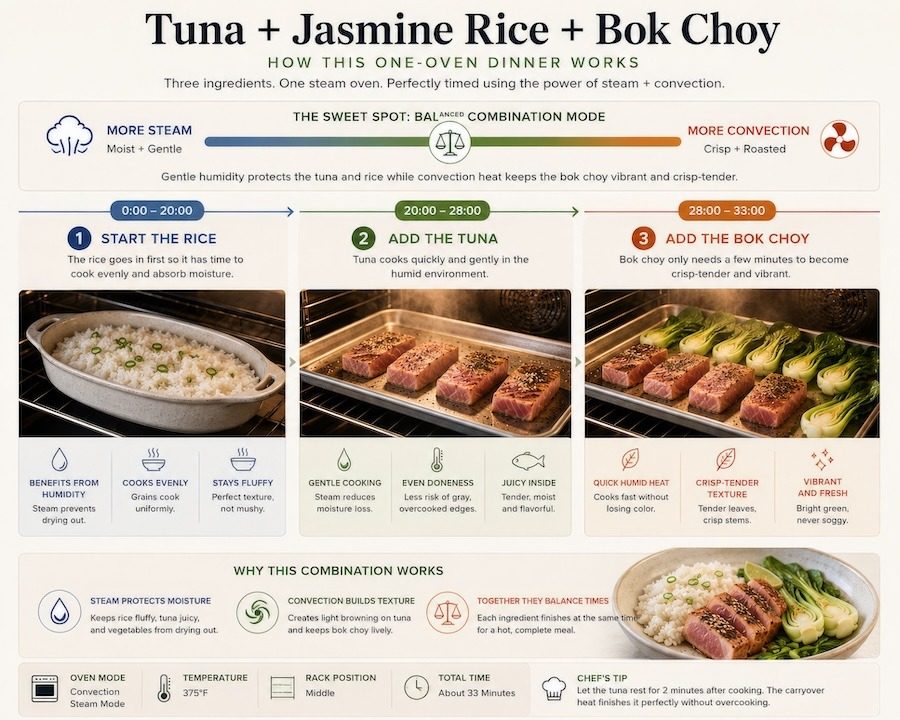
- Use Convection Steam Mode. This combines humidity with moving hot air for balanced cooking.
- Start the rice first. It needs the longest cooking time.
- Add the tuna later. Tuna cooks quickly and benefits from gentle heat.
- Add bok choy near the end. It only needs a few minutes to become tender.
- Do not overcook the tuna. Steam ovens are forgiving, but tuna still cooks fast.
Why This Recipe Works
- The rice benefits from humidity. Steam helps jasmine rice cook evenly without drying out.
- The tuna cooks gently. Combination steam reduces moisture loss and minimizes overcooked edges.
- Bok choy likes quick humid heat. The leaves soften while the stems stay crisp-tender.
- Everything cooks at one temperature. That reduces timing stress and simplifies dinner.
Convection Steamed Tuna with Jasmine Rice and Bok Choy
Ingredients
For the Tuna
- 4 tuna filets 5 to 6 ounces each, about 1 inch thick
- 1 tablespoon olive oil
- kosher salt
- freshly ground pepper
For the Jasmine Rice
- 1 cup jasmine rice
- 1¼ cups water
- 1 pinch kosher salt
For the Bok Choy
- 4 baby bok choy or 2 large bok choy, halved lengthwise
- 1 tablespoon olive oil
- kosher salt
- fresh ground black pepper
Optional Finishes
- lime wedges, seasme seeds, sliced scallions, soy sauce, chili crisp, toasted sesame oil
Instructions
Rince the Rice
- Rinse 1 cup jasmine rice under cold water until the water runs mostly clear. This removes excess surface starch and helps the grains stay separate instead of being sticky.
- Combine the rice with: 1¼ cups water and a pinch of saltPlace in a shallow oven-safe dish and cover tightly with foil or a lid.
Preheat the Steam Oven
- Set the oven to convection steam mode at 375°F
- Place the rice in the oven and cook for 20 minutes
Prepare the Tuna
- Pat 4 tuna fillets dry with paper towels.
- Brush lightly with neutral oil and season with: salt and black pepper
- Optional: Add a light brushing of soy sauce or sesame oil after cooking instead of before. High heat dulls sesame flavor quickly.
Add the Tuna
- After the rice has cooked for 20 minutes, place the tuna fillets on a lightly oiled sheet pan.
- Return to the oven and continue cooking in Convection Steam Mode for 6 to 8 minutes. The exact time depends on the thickness of the filets.
- For medium-rare tuna, aim for an internal temperature of 115°F to 125°F The center should still look slightly translucent.
Add the Bok Choy
- Slice the bok choy lengthwise and toss lightly with oil and salt.Add to the same pan during the final cooking stage.
- Cook for 4 to 5 more minutesThe leaves should soften while the stems remain crisp-tender.
Rest and Finish
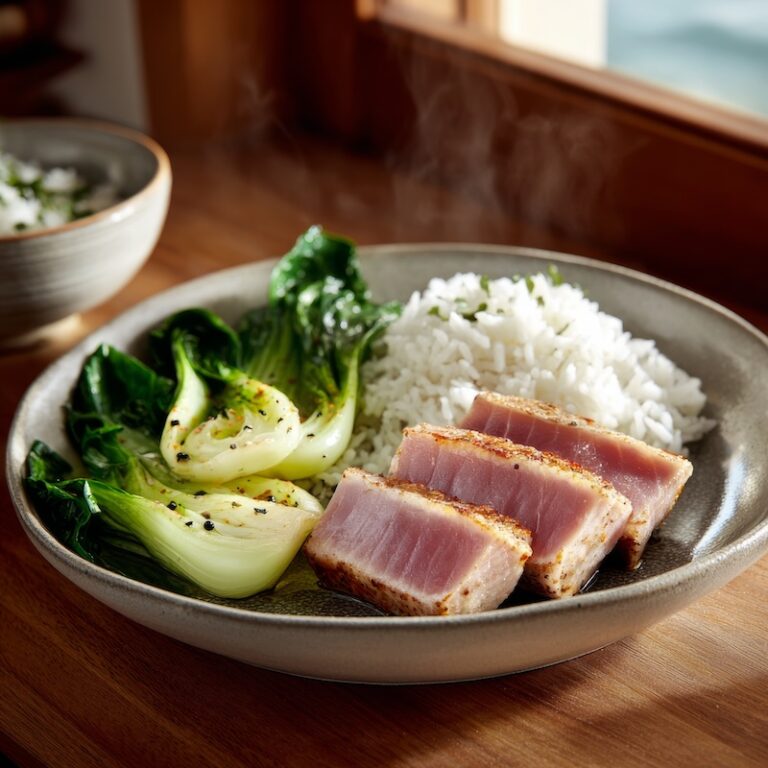
- Let the tuna rest for 2 minutes before slicing.
- Finish the meal with lime juice, sliced scallions, sesame seeds, soy sauce, and chili crisp if desired

What Most Cooks Get Wrong
- Cooking the tuna too long. Tuna should stay slightly translucent in the center for the best texture.
- Adding bok choy too early. It cooks quickly and can become limp fast.
- Using dry convection only. The added humidity is what keeps the tuna silky.
- Skipping the rice rinse. Rinsing removes excess starch and improves texture.
Quick Fixes & Pro Tips
- Use center-cut tuna fillets. They cook more evenly.
- Pat the tuna dry before seasoning. This improves surface texture.
- Trim the bok choy lengthwise. Smaller halves cook more evenly.
- Finish with lime or lemon juice. Acid brightens the entire dish.
- Sesame oil works best as a finishing oil. High heat dulls its aroma.
What You Can Serve With This
- Cucumber salad adds cool crunch and acidity.
- Miso soup keeps the meal light and balanced.
- Pickled vegetables contrast the rich tuna texture.
- Sauvignon Blanc pairs well with the tuna and bok choy.
- Dry Riesling works nicely with ginger and soy flavors.
Storage & Make-Ahead
Store leftovers in an airtight container for up to 2 days. The rice reheats very well in the steam oven. Tuna is best slightly undercooked initially if you plan to reheat it later. Bok choy is best freshly cooked but can still work in grain bowls the next day.
Frequently Asked Questions
Can I use frozen tuna fillets?
Yes, but thaw them completely and pat dry before cooking.
Can I substitute another rice?
Yes. Jasmine rice works especially well, but basmati rice also performs nicely in a steam oven.
What temperature should tuna be cooked to?
Aim for 115°F to 125°F for rare to medium-rare tuna.
Can I use regular convection mode instead?
You can, but the tuna will dry out faster and the rice texture may suffer.
Why does steam help rice cook better?
Humidity reduces surface drying and helps rice cook more evenly.
Can I use baby bok choy?
Yes. Baby bok choy cooks even faster and works beautifully here.
Should I sear the tuna first?
Not necessary. Convection steam keeps the texture clean and delicate.
Can I make this meal ahead?
The rice can be made ahead. The tuna is best cooked fresh.