Fast Answer
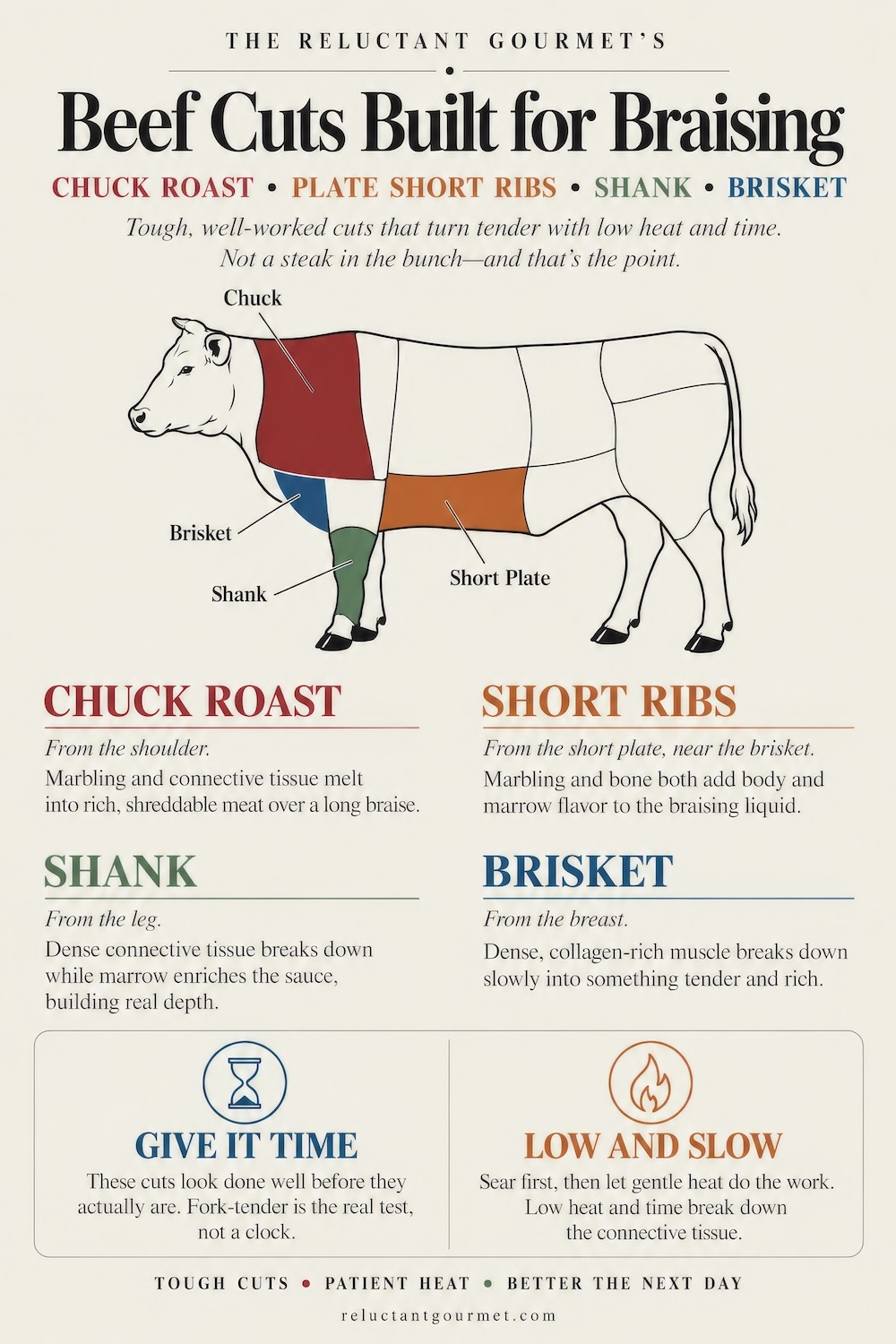
Chuck roast, short ribs, shank, and brisket are the cuts built for braising — tough, well-worked muscle full of connective tissue that breaks down into something tender and rich if you give it low heat and time. None of them are steaks, and that's the whole point.
The Cuts Nobody Grills
It’s a cliché, but it’s the best way to put it: these cuts turn a sow’s ear into a silk purse. Chuck roast, short ribs, shank, and brisket are cheap for a reason — they’re tough, worked hard by the cow, and full of connective tissue no quick sear can soften.
But give any of them a few hours of low, wet heat and that same toughness turns into something a tenderloin can’t touch. This post covers what makes each cut work, and how I actually cook them at home.
Start Here
- What these cuts have in common: All four come from hard-working parts of the cow — shoulder, ribs, shank, breast — which means dense muscle and heavy connective tissue.
- Why that's a good thing here: Connective tissue breaks down into gelatin with slow, moist heat, which is exactly what makes braised dishes so rich. The same toughness that ruins a quick sear is what makes a long braise worth doing.
- When you need one: Pot roast, short ribs, osso buco, barbecue brisket — anywhere you want deep flavor and don't mind waiting for it.
Think Like a Cook
- These cuts aren't lesser versions of a steak — they're built for a completely different job. A ribeye wants high heat and a few minutes. These cuts want low heat and a few hours. Fighting that with a hot pan just gets you a tough, chewy mess. Work with the cut, not against it.
Chuck Roast
- Where it's from: The shoulder — heavily used muscle, which means plenty of connective tissue and marbling.
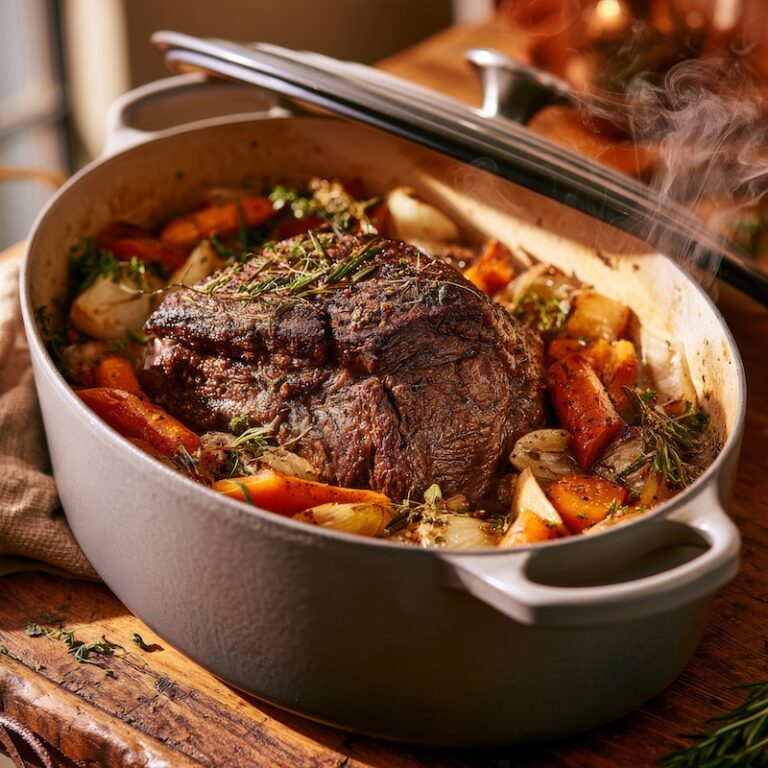
- Why it's the gold standard for pot roast: It's got enough fat and collagen to stay moist through a long braise, and it shreds beautifully once it's done.
- My take: This is the one I make most winter Sundays. The house smells incredible the whole afternoon, and it's honestly better the next day — the flavor just keeps settling in.
Short Ribs
- Where they're from: The short plate, near the brisket.
- Why they braise so well: Heavy marbling and a good bit of bone, which adds body and marrow flavor to whatever sauce or braising liquid they cook in.
- My take: These are my favorite cut to slow-cook, hands down. They're versatile enough to go in a lot of directions — I've got an Asian short rib recipe that leans on some ingredients that aren't always easy to track down, but it's worth the hunt.
Shank
- Where it's from: The leg — heavily exercised muscle wrapped around a marrow-filled bone.
- Why it braises so well: Dense connective tissue and that marrow bone both melt into the braising liquid, building a sauce with real depth.
- My take: Osso buco is the classic use here, and it's one of those dishes that looks a lot fussier than it actually is. Give it time and the shank does most of the work for you.
Brisket
- Where it's from: The breast — dense, collagen-rich muscle that supports a good part of the cow's weight.
- Two main sections: The flat, leaner and easier to slice; the point, thicker and more marbled, with a richer flavor once it's fully broken down.
- My take: I braise brisket often, though I haven't gotten a proper recipe up on the site for it yet — that's overdue, and it's on the list.
What Most Cooks Get Wrong
- Cooking these cuts hot and fast: Treat them like a steak and you'll get something tough and dry — they need time, not high heat, to break down properly.
- Underestimating how long "done" actually takes: These cuts often look done well before the connective tissue has actually broken down. Fork-tender is the real test, not a clock.
- Skipping the rest after cooking: Like a pot roast, these dishes are often better the next day once the flavors settle — don't rush straight from oven to table if you can help it.
Frequently Asked Questions
What is the poor man’s cut of beef?
Chuck roast is usually the answer — cheap, tough, and completely transformed by a long braise.
Can you braise brisket the same way as chuck roast?
Yes — both respond well to low, slow, moist heat, though brisket typically needs a longer cook time given its density.
Why is osso buco made with shank?
The shank’s marrow bone and dense connective tissue both melt into the braising liquid, building a richer sauce than most other cuts can offer.
What’s the difference between short ribs and other rib cuts?
Short ribs come from the plate section near the brisket and carry more marbling and connective tissue than rib cuts closer to the loin, which is exactly what makes them ideal for braising.
Is chuck roast the same as chuck steak?
No — they come from the same primal cut, but chuck roast is meant for slow braising, while chuck steak is a thinner cut sometimes grilled, though it also benefits from slow cooking because of its toughness.
How do I know when a braise is actually done?
Check with a fork rather than a clock — the meat should pull apart easily; if it resists, it needs more time.