Meatloaf Niçois: A French Chef’s Provençal Twist

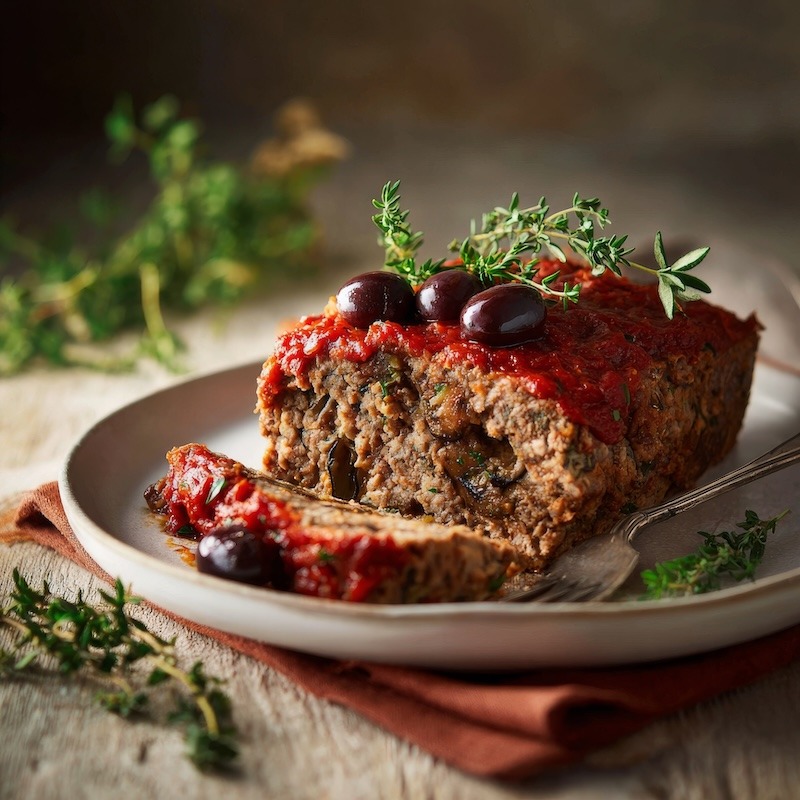
A thick slice of rustic meatloaf on a wide white ceramic plate

The Reluctant Gourmet Newsletter Is Back!

Yes, I'm starting up a new newsletter with step-by-step recipes, helpful cooking tips, and my latest funny cooking cartoons. Would love to have you on board.

American meatloaf is comfort food. French meatloaf is a argument. Chef Alain Braux's Pain de Viande Niçois takes the same humble format — ground beef, egg, breadcrumbs — and rebuilds it with the flavors of Nice: briny Niçoise olives, Provençal herbs, mushrooms, and a tomato sauce that actually belongs there. Same technique, completely different destination.

Fast Answer

Meatloaf Niçois is a French-inspired meatloaf built on ground beef, Niçoise olives, cremini mushrooms, and a Provençal herb blend — topped with a simple crushed tomato sauce. It's gluten-free adaptable, dairy-free, and comes from Chef Alain Braux's cookbook Healthy French Cuisine. One hour in the oven, eight servings, and under $10 to make.

Pain de Viande Niçois — French Meatloaf Done Right

Meatloaf doesn’t need rescuing — but it does reward a good idea. Chef Alain Braux’s version starts with the same bones as any American meatloaf and takes a hard left toward the south of France.

Niçoise olives, cremini mushrooms, thyme, basil, sage, and a crushed tomato finish reframe the whole dish. It’s still comfort food. It just tastes like it came from somewhere with better weather.

About Chef Alain Braux

This recipe comes from Chef Alain Braux’s cookbook Healthy French Cuisine — a book built around the idea that French food doesn’t have to be expensive, complicated, or rich to be worth eating. Chef Braux is a classically trained French chef, culinary nutritionist, and the kind of cook who thinks seriously about what goes into a dish and why.

When I asked him for a recipe I could share with readers — something that showed how good French food could be made for under $10 — he didn’t hesitate. “It’s even gluten- and dairy-free,” he told me. “No one will know the difference. Add steamed haricots verts in vinaigrette and voilà — a meal for about a couple of dollars per serving.”

That’s the spirit this recipe was built in. Read my full interview with Chef Braux here.

Start Here: What to Know Before You Make This

  • This is not a standard meatloaf. The Niçoise profile comes from three things working together: the briny olives, the Provençal herb blend, and the tomato finish. Skip any one of them and it becomes a different dish.
  • Don't skip the mushroom step. Cooking the mushrooms until nearly all their liquid evaporates is critical. Wet mushrooms make a wet meatloaf — it won't hold together and the texture suffers.
  • Niçoise olives are worth finding. They're smaller, brinier, and more complex than Kalamata. Most well-stocked grocery stores carry them. If you can't find them, Kalamata works — but the flavor profile shifts.
  • Use a meat thermometer. Visual cues don't work reliably with meatloaf. Pull it at an internal temperature of 160°F and rest it for at least 5 minutes before slicing.
  • Gluten-free is easy here. Swap standard breadcrumbs for gluten-free and the rest of the recipe stays exactly the same.

Why This Recipe Works

  • Bacon lines the pan. It bastes the meatloaf from the outside as it cooks, adding fat and flavor while creating a slightly crisp exterior. It also makes unmolding cleaner.
  • Mushrooms add moisture without loosening the structure. Cooked down until nearly dry, they contribute umami and texture without turning the interior wet or dense.
  • The herb blend is doing real work. Thyme, basil, and sage together are the flavor signature of Provence. None of them is decoration — each one contributes to the Mediterranean profile Chef Braux is building.
  • Niçoise olives cut through the richness. Mixed into the meat and scattered on top, they provide bursts of brine that keep the dish from feeling heavy despite the beef and bacon.
  • The tomato sauce finishes, not smothers. Two ounces per slice is enough to add brightness and acidity without turning the plate into a mess. It ties the Provençal flavors together at the end.
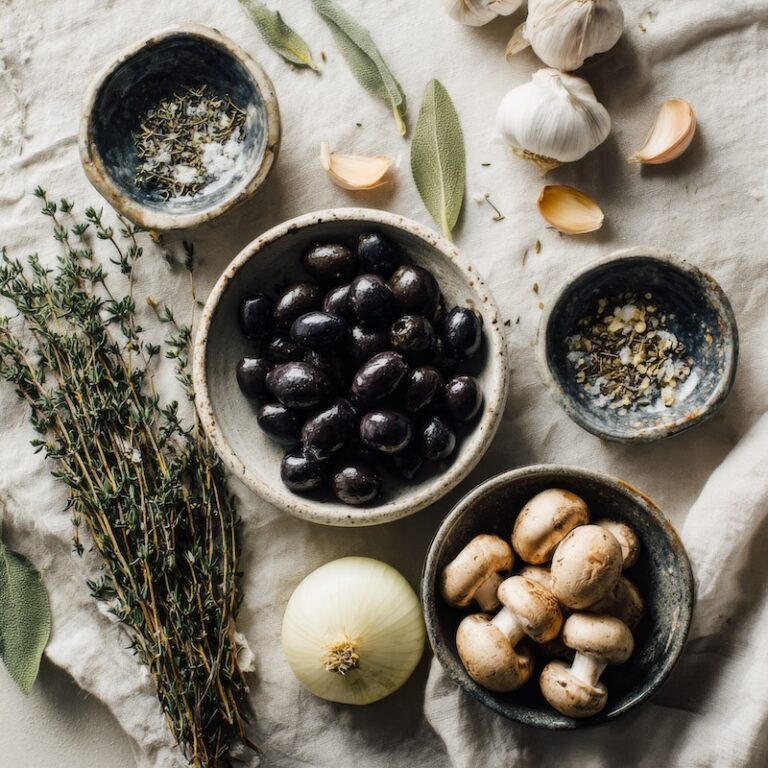
Whole Nicois olives, a bundle of fresh thyme, dried sage and basil in small ceramic bowls
The Provençal ingredients
Have you ever made a French-inspired version of an American comfort food classic? I'm curious whether the Niçoise olives inside the meatloaf surprised you — or whether you made any substitutions that worked. Tell me in the comments.

Meatloaf Nicois Recipe

Chef Alain Braux's Pain de Viande Niçois takes the American meatloaf format and rebuilds it with Niçoise olives, Provençal herbs, cremini mushrooms, and a crushed tomato finish — gluten-free, dairy-free, and under $10 to make.
Prep Time10 minutes
Cook Time1 hour
Total Time1 hour 10 minutes
Course: Main Course
Cuisine: American
Keyword: meatloaf
Servings: 8 servings

Equipment

  • standard loaf pan
  • Skillet
  • large bowl

Ingredients

  • 4 bacon strips
  • 1 tablespoon olive oil
  • 1 medium white onion finely sliced
  • 2 cloves garlic finely chopped
  • 4 ounces cremini mushrooms sliced
  • 1 lb ground beef grass-fed
  • 1 large egg
  • 2 ounces breads crumbs or GF bread crumbs
  • 2 teaspoon Worcestershire sauce
  • 4 chives or green onions, sliced thin or 2 tsp dried
  • 1 teaspoon sea salt
  • ½ teaspoon dried sage
  • ½ teaspoon dried basil
  • ½ teaspoon dried thyme
  • ½ teaspoon black pepper ground
  • ¼ cup Nicois olives pitted and roughly chopped
  • 15 ounces crushed tomatoes
  • sea salt and tomato to taste

Instructions

Preheat & Prep the Pan

  • Heat your oven to 350°F.
  • Spray a standard loaf pan with olive oil, then line the bottom and sides with the 4 bacon strips, draping them lengthwise so they slightly overlap.
    As the meatloaf bakes, the bacon fat will render and baste the exterior — giving you flavor and a cleaner release when you unmold it.

Crisp the Bacon

  • In a skillet over medium heat, cook the bacon until just crisp.
    Drain on a paper towel and crumble into rough pieces. Set aside.
    You want texture here — not powder, not large chunks. The bacon will be mixed into the meat and should be noticeable in the slice.

Build the Aromatic Base

  • In the same skillet, add the olive oil over medium-low heat. Add the sliced onion and a pinch of salt. Cook gently, stirring occasionally, until the onion is fully soft and translucent — about 5 to 6 minutes.
  • The salt draws out moisture and speeds softening.
  • Add the garlic and cook for another 2 minutes, keeping the heat moderate.
    Garlic burns fast; you want it fragrant, not browned.

Cook the Mushrooms Dry

  • Add the sliced cremini mushrooms to the onion and garlic. Raise the heat slightly to medium and cook, stirring occasionally, until the mushrooms have released all their liquid and the pan looks nearly dry — about 8 to 10 minutes.
    This step matters. Wet mushrooms add water to the meatloaf and compromise its texture. You want the flavor of mushrooms without the moisture. Set the mixture aside to cool slightly.

Mix the Meat

  • In a large bowl, combine the ground beef, crumbled bacon, cooked mushroom mixture, egg, breadcrumbs, Worcestershire sauce, chives, sea salt, sage, basil, thyme, black pepper, and ¾ of the Niçoise olives (reserve the remaining ¼ for the top).
  • Mix with your hands until just combined — evenly distributed but not overworked.
    Overmixing tightens the protein structure and produces a dense, rubbery loaf.
    Stop when you can no longer see distinct streaks of egg or breadcrumb.

Test Your Seasoning

  • Pinch a small amount of the raw mixture and fry it in a dry pan over medium heat for about 2 minutes per side. Taste it.
    This is your only opportunity to adjust salt, pepper, or herbs before an hour of baking locks everything in. The Niçoise olives and bacon both carry salt, so go carefully.

Form and Top

  • Transfer the mixture into the bacon-lined loaf pan and press it in firmly, to eliminate any air pockets.
    Scatter the reserved Niçoise olives across the top and press them lightly into the surface so they don't roll off when you slice.

Bake

  • Bake at 350°F for approximately 60 minutes, or until an instant-read thermometer inserted into the center reads 160°F.
    Start checking at 50 minutes — ovens vary.
  • If the top is browning faster than you'd like, tent loosely with foil and remove it for the final 10 minutes to firm the crust.

Make the Tomato Sauce

  • About 15 minutes before the meatloaf finishes, warm the crushed tomatoes in a small saucepan over low heat.
    Season with salt, black pepper, and a pinch of dried thyme or basil.
  • Simmer gently — you're not building a complex sauce, you're warming and seasoning.
    Taste it. It should be bright, slightly chunky, and just acidic enough to cut through the richness of the beef and bacon.

Rest, Unmold, & Slice

  • Remove the meatloaf from the oven and let it rest in the pan for at least 5 minutes.
    This allows the juices to redistribute rather than run out when you cut it.
  • Run a knife around the edges, invert onto a cutting board, and peel away the bacon strips if they've stuck to the pan rather than the loaf.
    Cut into 8 even slices

Plate & Serve

  • Spoon approximately 2 ounces of warm tomato sauce over each slice.
    The sauce should drape, not flood.
  • Finish with a few fresh thyme leaves or a small drizzle of good olive oil if you have it.
  • Serve immediately.

Notes

Recipe from Chef Alain Braux's Healthy French Cuisine. Niçoise olives added to the original recipe — a natural fit for the Niçoise profile.
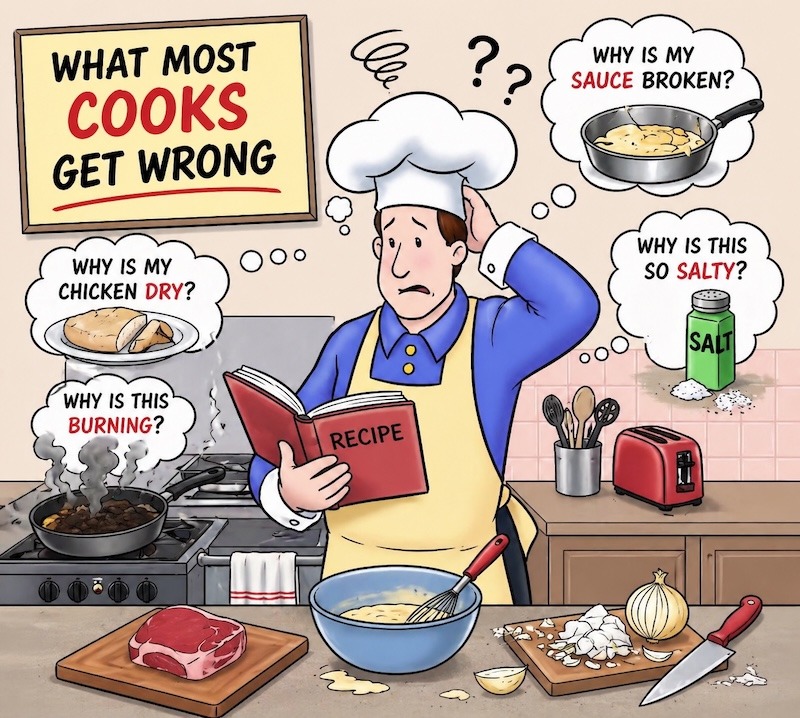
Frustrated cook making common mistakes.

What Most Cooks Get Wrong with Meatloaf

  • Overmixing the meat. The more you work ground beef, the tighter the protein bonds become. Mix until just combined — use your hands and stop when everything is evenly distributed. Overmixed meatloaf is dense and rubbery.
  • Skipping the rest. Cutting into meatloaf straight from the oven means the juices run out onto the board. Five minutes of resting lets them redistribute through the loaf. You get a juicier slice and cleaner cuts.
  • Wet mushrooms in the mix. Mushrooms release a significant amount of liquid as they cook. If you don't cook that liquid off before adding them to the meat, it migrates into the loaf and compromises the texture.
  • Under-seasoning the meat mixture. Everything in a meatloaf is raw when you mix it. Taste your seasoning by frying a small patty of the mixture in a pan before it goes into the loaf pan. Adjust before baking — you can't fix it after.
  • Baking without checking temperature. Oven times are guidelines. Meatloaf is done at 160°F internal temperature, not at the 60-minute mark. Use a thermometer.
Quick Fixes & Pro Tips

  • Meatloaf crumbling when sliced? It needed more binding or more rest time. Make sure the egg and breadcrumbs are fully incorporated, and always rest at least 5 minutes before cutting.
  • Too salty? The bacon, Worcestershire, and Niçoise olives all carry significant salt. Hold back on any additional salt until you've done the test patty fry. Add conservatively.
  • Want a darker crust? Remove the foil (if using) for the last 15 minutes of baking. The direct heat will firm and color the exterior without drying the interior.
  • Can't find Niçoise olives? Kalamata olives are the best substitute — pit and roughly chop them. They're larger and slightly more intense, so use a touch less.
  • Making ahead? The full loaf can be mixed, formed, and refrigerated uncooked overnight. Pull it from the fridge 20 minutes before baking to take the chill off evenly.
  • Test patty method: Pinch a small amount of the raw mixture and fry it in a dry pan for 2 minutes per side. Taste it. This is your only chance to adjust seasoning before it bakes for an hour.
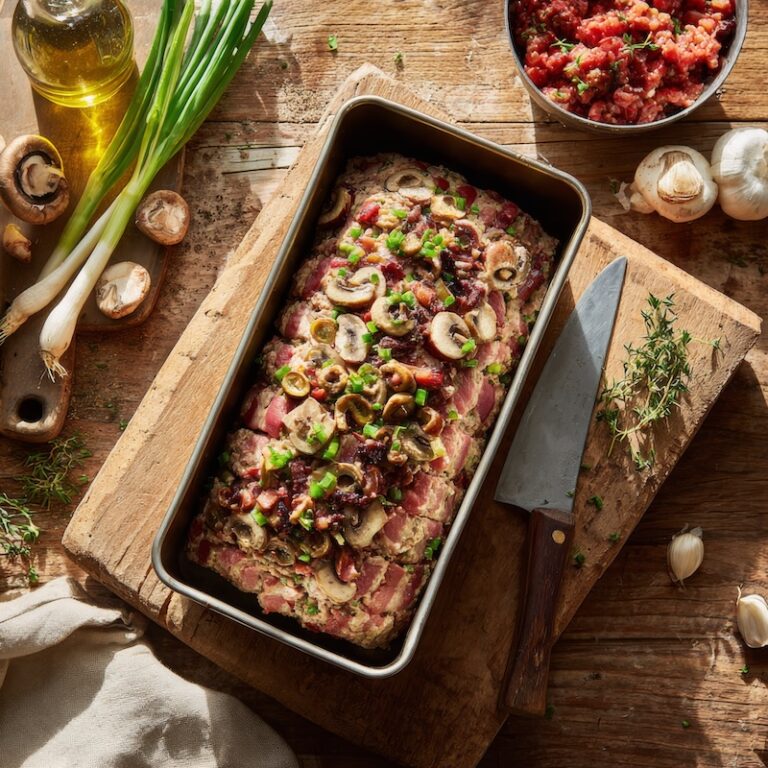
Nicois style meatloaf packed into a standard loaf pan just before baking

What to Serve With Meatloaf Niçois

  • Haricots verts in vinaigrette. Chef Braux's own suggestion — and the right one. Steamed thin green beans dressed simply with a shallot vinaigrette keep the Provençal thread running through the whole meal.
  • Roasted Niçoise potatoes. Small potatoes roasted with olive oil, thyme, and garlic. Earthy and unfussy alongside the meatloaf.
  • Simple green salad. Arugula or frisée with lemon and olive oil. The bitterness cuts through the richness of the beef and bacon.
  • Crusty French bread. For dragging through the tomato sauce. Not traditional, but hard to argue with.
  • Wine — Provençal rosé. A dry Bandol or Côtes de Provence rosé is the obvious call. Enough acidity to cut the fat, enough fruit to match the tomato.
  • Wine — if you prefer red. A lighter southern Rhône — Côtes du Rhône Villages or a Grenache-forward blend. Avoid anything too tannic; it fights the olives.

Storage & Make-Ahead

  • Refrigerator. Cooked meatloaf keeps well, tightly wrapped, for up to 4 days. Store the tomato sauce separately and reheat both gently.
  • Freezer. Slice before freezing for easier portioning. Wrap individual slices in plastic then foil and freeze for up to 3 months. Thaw overnight in the fridge.
  • Make-ahead uncooked. Mix and form the loaf up to 24 hours ahead. Cover tightly and refrigerate. Pull it out 20 minutes before baking to take the chill off.
  • Reheating. Place slices in a baking dish with a spoonful of tomato sauce over each one, cover with foil, and reheat at 325°F for 15–20 minutes. The sauce keeps the slices from drying out.

Explore More on This Topic

  • The chef behind the recipe: I sat down with Alain Braux when this recipe first appeared on the site — he talks about healthy French cooking, the $10-a-day challenge, and why gluten-free doesn't have to mean flavor-free.
  • Where this dish comes from: If you want to understand why these ingredients belong together, start with the cuisine that inspired them — the flavors that define Nice and why the Mediterranean pantry works the way it does.
  • The fat that starts the dish: Not all olive oil behaves the same in a hot pan — a guide to choosing the right olive oil for the sauté and when it matters versus when it doesn't.
  • The sauce underneath: Crushed tomatoes vary more than most cooks realize — what to look for and which brands consistently deliver.
  • The ingredient doing quiet work: Two teaspoons of Worcestershire shows up in a lot of meat recipes — what it's actually doing here and why it's not just a flavor shortcut.

Frequently Asked Questions about Nicois Meatloaf

Q: What makes this a Niçois meatloaf specifically? The name references Nice, the French city on the Mediterranean coast whose cuisine is defined by olive oil, tomatoes, Niçoise olives, and Provençal herbs — thyme, basil, sage. This recipe applies that flavor profile to the meatloaf format. The combination of Niçoise olives, the herb blend, and the crushed tomato finish is what separates it from a standard American meatloaf.

Q: Where do I find Niçoise olives? Most well-stocked supermarkets carry them in the olive bar or the specialty foods aisle. Whole Foods, Trader Joe’s, and any Italian or French specialty grocer will have them. They’re small, dark brown to black, and typically sold unpitted. Buy them pitted if you can — pitting small olives is tedious. Kalamata is the best substitute if you can’t find them.

Q: Is this recipe actually gluten-free? Yes, with one swap. The only source of gluten is the breadcrumbs. Replace them with certified gluten-free breadcrumbs and the rest of the recipe is naturally gluten and dairy-free as written. Chef Braux developed it that way intentionally.

Q: Can I use a different ground meat? Ground beef is the right call here — it has enough fat to keep the loaf moist through an hour of baking. Ground turkey or chicken can work but will produce a drier result; add an extra tablespoon of olive oil to the mix if substituting. Ground pork or a beef-pork blend also works well and stays close to the original flavor profile.

Q: Do I have to line the pan with bacon? No — but you should. The bacon serves two purposes: it bastes the outside of the loaf as the fat renders, and it prevents sticking. If you skip it, brush the pan well with olive oil and expect a slightly less flavorful crust.

Q: How do I know when the meatloaf is done? Internal temperature of 160°F, measured at the center of the loaf with an instant-read thermometer. Time is a guideline; temperature is the answer. Start checking at 50 minutes.

Q: Can I make this without a loaf pan? Yes. Form it freehand on a rimmed baking sheet. A free-form loaf develops more crust on all sides, which some people prefer. The cook time stays roughly the same — check the temperature at 50 minutes.

Q: Where can I learn more about Chef Braux? I interviewed Chef Braux when I first made this recipe — he talks about his philosophy around healthy French cooking, the $10-a-day challenge, and how he approaches flavor without relying on dairy or gluten. Read the full interview here.

Leave a Reply

Your email address will not be published. Required fields are marked *

Recipe Rating


This site uses Akismet to reduce spam. Learn how your comment data is processed.