
Korean Beef Stir Fry with Kimchi — and Why It Works

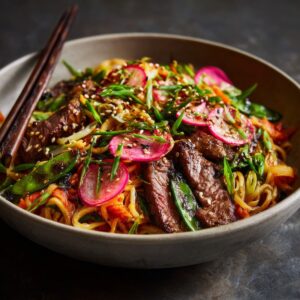
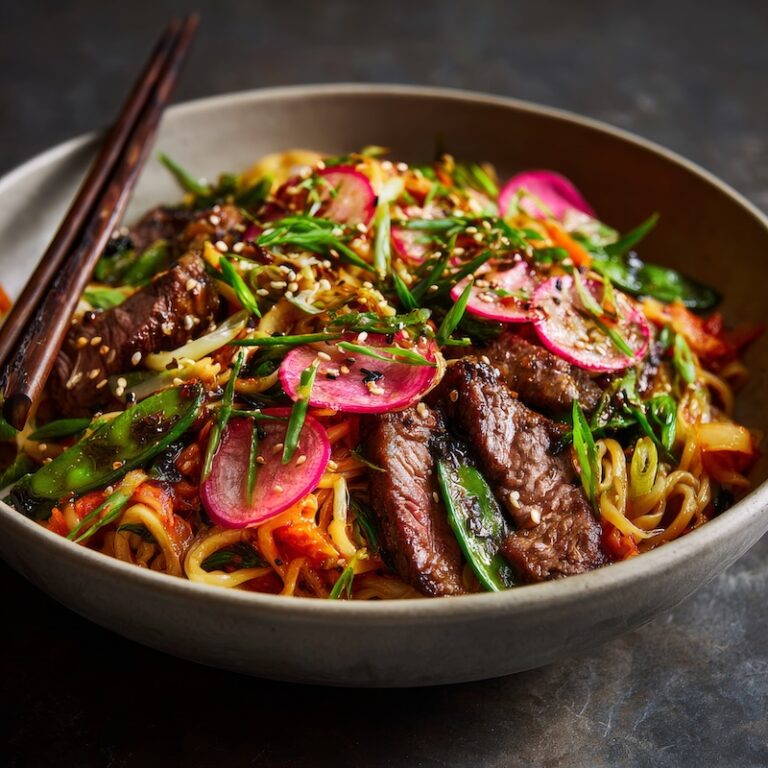
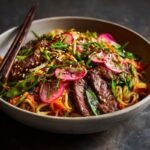
A wide bowl of Korean beef stir fry over rice noodles

The Reluctant Gourmet Newsletter Is Back!

Yes, I'm starting up a new newsletter with step-by-step recipes, helpful cooking tips, and my latest funny cooking cartoons. Would love to have you on board.

Most Korean beef stir fry recipes treat kimchi like a garnish — a tablespoon tossed in at the end for color. That's not how it works and it's not what this recipe does. Kimchi is the flavor engine here. Once you understand what it's doing in a hot wok, you'll use it differently in everything.

Fast Answer

Korean Style Beef Stir Fry is thinly sliced New York strip marinated in soy sauce, sesame oil, and brown sugar, seared hard in a hot wok, then finished with kimchi, sugar snap peas, carrots, and a beef broth sauce over rice noodles. The kimchi isn't a garnish — it cooks into the sauce and provides the fermented heat and depth that makes this taste like more than the sum of its parts. Total time is about one hour including a 30-minute marinade.

Korean Style Beef Stir Fry: The Kimchi Makes the Dish

Have you ever cooked with kimchi, pronounced [KIHM-chee]  , also spelled kimchee?

Stir fry is one of those techniques that looks fast and simple until you’re standing at the wok, wondering why your beef is steaming instead of searing, and your vegetables are limp.

The technique matters here — high heat, dry meat, no crowding. But the ingredient that sets this apart from a generic Asian beef stir-fry is the kimchi. This post explains what it’s doing and how to use it right.

Start Here: What to Know Before You Fire Up the Wok

  • The marinade is also the sauce base. The soy, sesame oil, and brown sugar that the beef marinates in gets combined with beef broth and cornstarch to finish the dish. Don't discard it.
  • 30-minute marinade minimum. The beef needs time to absorb the soy and sesame. Don't skip it — but don't go longer than 2 hours or the salt in the soy starts breaking down the texture of the meat.
  • Dry the beef before it hits the pan. Wet meat steams. Pat the cubes dry with a paper towel after marinating and before they go into the wok — you'll get a real sear instead of gray, steamed beef.
  • High heat is non-negotiable. Stir fry lives or dies on pan temperature. The wok needs to be properly hot before anything goes in. If your kitchen fan can't handle some smoke, crack a window.
  • Mise en place matters more here than almost anywhere. Everything cooks fast. Have every ingredient prepped, measured, and within arm's reach before you turn the heat on.
  • Time the noodles carefully. Rice noodles go soft fast. Start them just before the stir fry goes into the final assembly stage — not earlier.

Why This Recipe Works

  • New York strip is the right cut. It has enough fat to stay tender through a fast, high-heat cook and enough structure to hold up as bite-sized cubes without falling apart. Tenderloin is too lean and too expensive for this application.
  • Soy-sesame-brown sugar is a balanced marinade. Soy provides salt and umami. Sesame oil adds a nutty, roasted depth. Brown sugar encourages caramelization when the beef hits the hot pan — that's the color and flavor you're chasing at the sear stage.
  • Peanut oil handles the heat. It has a high smoke point and a neutral-to-slightly-nutty flavor that doesn't compete with the sesame and soy. Don't substitute olive oil — it smokes too early and adds the wrong flavor.
  • Kimchi provides fermented depth. Cooked kimchi caramelizes and mellows — it becomes the umami backbone of the sauce rather than a sharp acidic note. This is what separates a Korean stir fry from a generic Asian one.
  • Cornstarch tightens the sauce. Combined with the reserved marinade and beef broth, it gives the sauce enough body to cling to the noodles and coat the beef rather than pooling at the bottom of the bowl.
  • Sugar snap peas and carrots stay crisp. They go in late and cook fast — 2 to 3 minutes is enough. You want texture contrast against the soft noodles and tender beef, not limp vegetables.

What Kimchi Is Actually Doing in This Dish

Most home cooks know kimchi as a condiment — something that comes out of a jar alongside Korean barbecue. Cooking with it is a different conversation.

Kimchi is fermented napa cabbage, typically with gochugaru (Korean chile flakes), garlic, ginger, and fish sauce. The fermentation process produces lactic acid, which is where the tang comes from. That acidity is the key to understanding why it works in a stir fry.

When kimchi hits a hot wok, two things happen. First, the liquid evaporates fast and the sugars in the cabbage start to caramelize, adding a subtle sweetness underneath the heat. Second, the acidity — which would be sharp and bright eaten raw — mellows and deepens under heat, becoming something closer to a fermented umami backbone than a straight sour note.

The result is a sauce that tastes layered and complex without requiring a long list of ingredients to get there. The kimchi is doing work that would otherwise take a dozen components to replicate.

A few things worth knowing when cooking with kimchi:

  • Older, more fermented kimchi works better here than fresh. The more sour it is, the more depth it contributes when cooked. Fresh kimchi stays bright and crunchy; aged kimchi breaks down and integrates.
  • Mild or spicy is your call — but if you use mild, consider adding a teaspoon of gochugaru or gochujang to the sauce to compensate for the missing heat.
  • Don’t drain the kimchi before adding it. The brine carries flavor. Add it liquid and all.

Korean Style Beef Stir Fry Recipe

Korean beef stir fry built on a soy-sesame-marinated New York strip, seared hard in a hot wok, finished with kimchi that caramelizes into the sauce — served over rice noodles with snap peas, carrot ribbons, and toasted sesame.
Prep Time45 minutes
Cook Time15 minutes
Total Time1 hour
Course: Main Course
Cuisine: Korean
Keyword: stir fry
Servings: 4 - 6 servings
Calories: 181kcal

Equipment

  • large heavy skilled or wok

Ingredients

  • ¼ cup soy sauce
  • 1 tablespoon sesame oil
  • 1 teaspoon brown sugar
  • 3 New York Strip steaks fat trimmed and steaks cut into bite size pieces
  • 14 ounces box rice noodles
  • 2 tablespoons peanut oil
  • 1 large red onion thinly sliced
  • 1 jar kimchi mild or spicy
  • 8 ounces sugar snap peas
  • 2 large carrots sliced into ribbons with peeler
  • 1 cup beef broth
  • teaspoons cornstarch optional
  • Garnish toasted sesame seeds, sliced radishes

Instructions

Make the Marinade & Marinate the Beef

  • In a medium bowl, whisk together the soy sauce, sesame oil, and brown sugar until the sugar dissolves.
  • Add the beef cubes and toss to coat. Cover and refrigerate for 30 minutes.
    While the beef marinates, prep all your vegetables — slice the onion, ribbon the carrots with a peeler, and measure out the kimchi and snap peas.
    Use this time. Once you start cooking, everything moves fast.
  • Don't marinate longer than 2 hours. The salt in the soy sauce starts breaking down the meat's texture beyond that point — you want tender cubes, not mushy ones.

Cook the Rice Noodles - but not yet

  • Read the package and understand the timing. Rice noodles continue absorbing liquid after they're cooked and go soft quickly.
  • Don't start them until the stir fry is in its final 3 minutes. Set a timer, have the pot of water ready, and stay disciplined about the timing.

Pat the Beef Dry & Sear in Batches

  • Remove the beef from the marinade and pat it dry with paper towels. Reserve the marinade — it becomes the sauce. Dry meat sears; wet meat steams. This step takes 30 seconds and makes a significant difference.
  • Dry meat sears; wet meat steams. This step takes 30 seconds and makes a significant difference.
  • Heat your wok or large heavy skillet over high heat until it just starts to smoke. Add 1 tablespoon of peanut oil and swirl to coat.
    Add the beef in a single layer — do not crowd the pan. If you have too much beef for one layer, cook in two batches.
  • A crowded pan drops the temperature immediately and you'll get gray, steamed beef instead of a seared crust.
  • Sear for 3 to 4 minutes, turning once or twice, until deeply browned on the outside but still slightly underdone at the center.
    Transfer to a plate.
    The beef finishes cooking when it goes back into the sauce at the end — pull it early on purpose.

Build the Aromatics

  • Add the remaining tablespoon of peanut oil to the hot wok.
  • Add the sliced red onion and stir fry for 1 to 2 minutes — you want it softened with a little color at the edges, not fully cooked down.

Add the Vegetables & kimchi

  • Add the sugar snap peas, carrot ribbons, and kimchi — liquid and all — to the wok. Stir fry over high heat for 2 to 3 minutes.
    The kimchi will sizzle hard when it hits the pan. That's correct. The liquid evaporates, the sugars in the cabbage start to caramelize, and the fermented funk mellows into something deeper and more savory. Keep it moving.

Make the Sauce and Thicken It

  •  In a small bowl or measuring cup, whisk the cornstarch into the reserved marinade until smooth, then add the beef broth and any juices that collected on the plate from the resting beef. Pour this mixture into the wok over medium-high heat.
  • Stir constantly for 2 to 3 minutes until the sauce thickens enough to coat the back of a spoon and holds a light glaze when you drag a finger through it. If it seems too thick, add a splash of broth. If too thin, let it reduce another minute.

Return the Beef & Finish

  • Add the seared beef back to the wok. Toss everything together and cook for 1 to 2 minutes, until the beef reaches your preferred doneness.
  • New York strip is best at medium — still slightly pink at the center. It goes tough and chewy beyond that, and this cut doesn't recover from overcooking the way a braise would.

Cook the Noodles Now

  •  If you haven't already, cook the rice noodles according to package directions.
    Drain immediately and do not let them sit — they clump and soften fast.

Plate & Garnish

  • Divide the rice noodles between bowls.
    Spoon the stir fry and sauce generously over the top.
  • Finish with toasted sesame seeds and thinly sliced radishes.
    Serve immediately — this dish doesn't hold.

Notes

Nutritional information is automatically calculated using the WP Recipe Maker nutrition database and should be considered only an estimate. Actual values may vary depending on ingredient brands, product variations, substitutions, and portion sizes.

Nutrition

Calories: 181kcal | Carbohydrates: 16g | Protein: 6g | Fat: 12g | Saturated Fat: 2g | Polyunsaturated Fat: 4g | Monounsaturated Fat: 5g | Sodium: 1641mg | Potassium: 505mg | Fiber: 5g | Sugar: 8g | Vitamin A: 6736IU | Vitamin C: 38mg | Calcium: 87mg | Iron: 5mg
How do you use kimchi in your cooking? Most people pull it out as a side and leave it there. If you've tried cooking with it — in a stir fry, in fried rice, in a soup — tell me what worked in the comments. And if this was your first time, I want to know how it went.

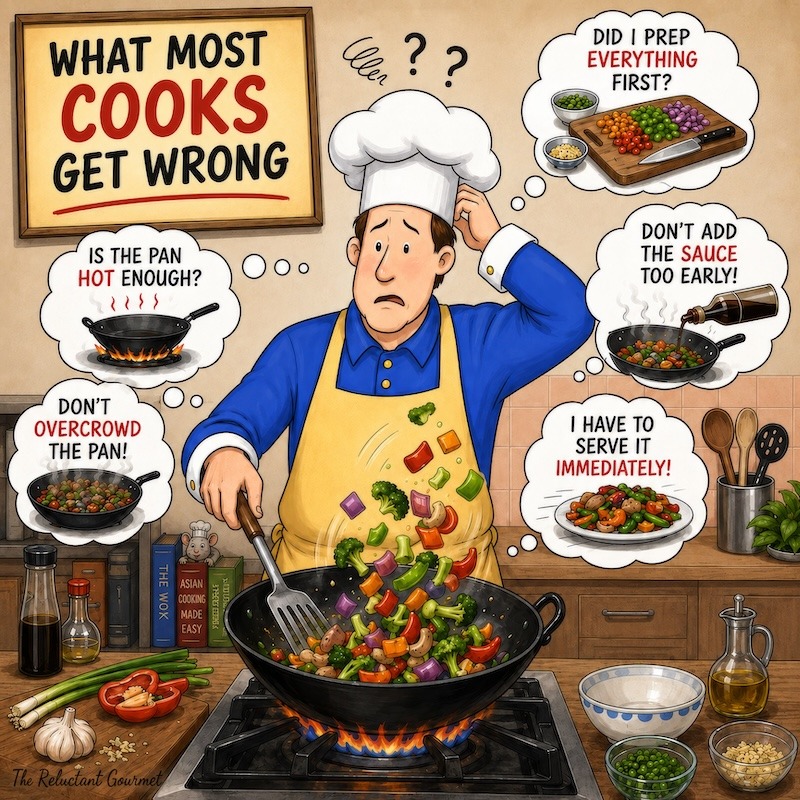
Frustrated cook making common stir fry mistakes.

What Most Cooks Get Wrong with Stir Fry

  • Pan not hot enough. This is the most common stir fry mistake. A pan that isn't properly hot produces steamed, gray meat instead of a seared, caramelized crust. Heat the wok until it just starts to smoke before the oil goes in.
  • Crowding the pan. Too much beef in the pan at once drops the temperature immediately. The meat releases moisture and steams instead of searing. Cook in batches — it takes an extra 3 minutes and makes a significant difference.
  • Wet beef going into the wok. Marinade left on the surface of the meat creates steam on contact with the hot pan. Pat the cubes dry before they go in. The marinade is saved for the sauce — it doesn't need to be on the meat at the sear stage.
  • Overcooking the beef. New York strip goes from tender to tough quickly. Sear it to just underdone at the first stage — it finishes cooking when it goes back into the sauce at the end. If it looks done when you pull it from the wok, it will be overdone by the time you serve it.
  • Adding kimchi too early. If kimchi goes in at the start with the onion, it breaks down completely and loses all texture. Add it with the snap peas and carrots — it needs just 2 to 3 minutes in the wok.
  • Cooking the rice noodles too early. Rice noodles continue to absorb liquid after cooking and go soft fast. Start them when the stir fry is almost done, not when you start cooking.
Quick Fixes & Pro Tips

  • Sauce too thin? Mix an extra half teaspoon of cornstarch with a tablespoon of cold water and stir it in. Give it 60 seconds over medium-high heat — it tightens quickly.
  • Sauce too salty? Add a splash more beef broth and a pinch of brown sugar. The sweetness rounds out excess salt without masking the other flavors.
  • Not enough heat? Add a teaspoon of gochugaru (Korean chile flakes) or a squeeze of gochujang to the sauce. Both are available at most Asian grocery stores and are worth keeping in the pantry.
  • No wok? A large, heavy stainless steel or cast iron skillet works. The key is surface area and heat retention — don't use a nonstick pan, it can't handle the temperature this dish requires.
  • Beef still chewy? It was either overcooked or not cut thin enough. Slice against the grain and aim for pieces no thicker than ½ inch. Partially freezing the steak for 20 minutes before slicing makes thin cuts much easier.
  • Want to prep ahead? Marinate the beef, prep all vegetables, and make the sauce mixture the night before. Everything goes into the fridge separately. Day-of cooking time drops to about 15 minutes.

What to Serve This Stir Fry On

  • Rice noodles (as written). Thin and chewy, they absorb the sauce well and let the beef and kimchi stay in the foreground. Don't overcook — pull them while they still have a little resistance.
  • Steamed jasmine rice. The most neutral base — mild, slightly sticky, and good at soaking up the beefy broth. The right call if you want the stir fry flavors to do all the work.
  • Udon noodles. Thick and sturdy, they hold up to the sauce without going soft. A heartier result than rice noodles — good if you want more presence from the base.
  • Brown rice. Adds a nutty, slightly chewy texture that works well against the tender beef. Takes longer to cook, so plan ahead.
  • Cauliflower rice. Low-carb and fast. It won't absorb the sauce the same way — serve the stir fry on top rather than mixing it in.
  • Quinoa. Unusual but it works — the nuttiness complements the sesame and soy. More on cooking with quinoa here.
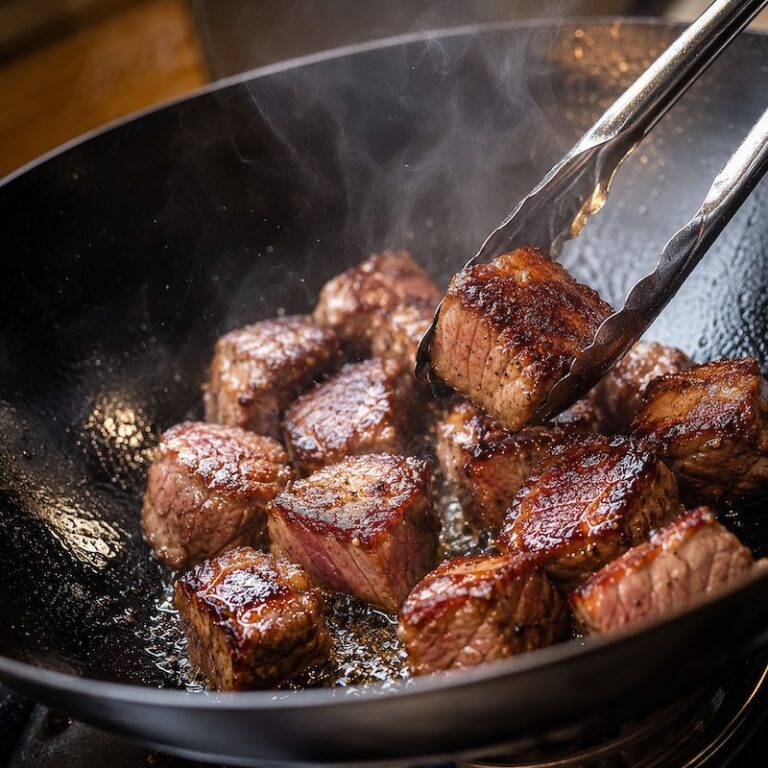
Cubes of steak being stir fried in wok

What to Serve Alongside

  • Extra kimchi on the side. Always. Serve it cold as a contrast to the hot stir fry — the temperature difference and the raw crunch work well against the cooked version in the dish.
  • Cucumber salad. Thinly sliced cucumbers with rice vinegar, a pinch of sugar, and sesame oil. Cool, crisp, and acidic — it cuts through the richness of the beef.
  • Steamed edamame. Simple, salty, and easy. Good for adding protein if you're stretching the dish for a larger group.
  • Wine — dry off-dry Riesling. The slight residual sweetness in an Alsatian or German Kabinett Riesling handles the chile heat and complements the soy-sesame profile without fighting it.
  • Beer — Korean lager. Hite or Cass if you can find them. Clean, cold, and low enough in bitterness that they don't clash with the kimchi.

Storage & Make-Ahead

  • Store stir fry and noodles separately. Noodles left in the sauce overnight absorb all the liquid and turn soft. Keep them in separate containers and combine when reheating.
  • Refrigerator. The stir fry keeps for up to 3 days tightly covered. The flavors actually deepen overnight — day-two leftovers are often better than day one.
  • Reheating. In a wok or skillet over medium-high heat with a splash of beef broth to loosen the sauce. Don't microwave — it overcooks the beef and makes the vegetables limp.
  • Freezing. Not recommended for this dish. The texture of the beef and vegetables suffers significantly after freezing and thawing.
  • Full prep-ahead. Marinate the beef, slice all vegetables, and mix the sauce the night before. Store separately in the fridge. Day-of cooking is about 15 minutes.

Explore More on This Topic

  • The ingredient doing the real work: If the kimchi section got your attention, this goes deeper — what kimchi actually is and how fermentation works, why older kimchi behaves differently than fresh, and what you're tasting when that tang mellows in a hot pan.
  • The gluten-free swap that actually works: Soy sauce contains wheat — here's why tamari is the right swap for gluten-free cooking and how the flavor profile compares so you know what you're trading.
  • Not all onions behave the same: Red onion in a hot wok acts differently than yellow onion in a braise — a guide to how red onion behaves under stir fry heat and when that sharpness works in your favor.
  • The liquid doing quiet work: The beef broth in the sauce matters more than most cooks realize — why homemade stock changes the depth of any pan sauce and how to make it.
  • The aromatic that burns fastest: Garlic goes into stir fry after the onion for a reason — the narrow window between fragrant and bitter and how to keep garlic from burning in a hot wok.
  • If you're serving this on quinoa: An unusual base for a Korean stir fry but it works — how quinoa's nutty flavor holds up against bold sauces and what to know before you cook it.

Frequently Asked Questions

Q: What cut of beef works best for Korean stir fry? New York strip is the call here — enough fat to stay tender through high heat, enough structure to hold up as bite-sized cubes. Ribeye also works and is slightly richer. Avoid lean cuts like sirloin tip or round — they toughen fast under stir fry heat. Flank steak is a good budget alternative if sliced thin against the grain.

Q: Can I use store-bought kimchi? Yes — and you should. Making kimchi from scratch is a multi-day project that has nothing to do with getting this dish on the table. Any jarred kimchi works. For cooking, older and more fermented kimchi produces better results than fresh — the sour depth integrates into the sauce in a way that fresh kimchi doesn’t.

Q: How spicy is this dish? That depends entirely on your kimchi. Mild kimchi produces a gently seasoned dish. Spicy kimchi brings real heat. The recipe as written doesn’t add any additional chile — if you want more heat, add a teaspoon of gochugaru or a squeeze of gochujang to the sauce.

Q: Can I substitute a different protein? Yes. Thinly sliced chicken thighs work well — cook to 165°F internal temperature. Pork tenderloin is another good option. Firm tofu works for a vegetarian version — press it dry, cut into cubes, and sear it the same way as the beef. Use vegetable broth instead of beef broth.

Q: Why is my beef chewy and tough? Two likely causes — overcooked or sliced with the grain instead of against it. Always slice beef against the grain for stir fry. And pull the beef from the wok while it still looks slightly underdone — it finishes cooking when it goes back into the sauce.

Q: Do I have to use peanut oil? No, but use a high smoke point oil. Vegetable oil, grapeseed oil, and avocado oil all work. Don’t use olive oil — its smoke point is too low for stir fry temperatures and the flavor competes with the sesame.

Q: What if I can’t find rice noodles? Udon noodles are the closest substitute in texture — chewy and substantial. Soba noodles also work and add a nutty buckwheat note. Plain steamed jasmine rice is the simplest fallback and works perfectly well.

Q: Is this dish gluten-free? Not as written — soy sauce contains wheat. Swap in tamari (same flavor profile, no wheat) and use gluten-free breadcrumbs if any binding is needed elsewhere. Check your kimchi label too — most traditional kimchi is gluten-free, but some commercial versions use additives.

2 Responses

Leave a Reply

Your email address will not be published. Required fields are marked *

Recipe Rating


This site uses Akismet to reduce spam. Learn how your comment data is processed.