

Mustard and White Wine Sauce — A Restaurant Technique You Can Actually Skip

A friend made this for me in New York — just told me it was mustard and white wine, served it over chicken, and let me figure out the rest. That two-word description sent me down a research rabbit hole. This is what I came up with.

Fast Answer

This sauce uses two types of mustard — powder dissolved in water and whole-grain — added at different stages. The powder goes in early to build depth; the whole-grain goes in at the end, off the heat, so the seeds stay intact and don't turn bitter.

Start Here

  • Match your stock to your protein. Serving this with chicken? Use chicken stock. Fish or shellfish? Use fish stock or a light seafood stock. The sauce picks up the character of whatever you simmer into it.
  • Have everything measured and ready before you turn on the heat. This sauce moves fast once the wine goes in. Shallots, mushrooms, both mustards, cream, stock — all of it prepped and within reach.
  • Use a heavy-bottomed saucepan. Thin pans run hot and uneven, which makes it easy to brown the shallots when you want to sweat them, and harder to control the reduction at the end.
  • The cognac is optional but worth it. Even a tablespoon adds a layer of flavor you can't quite get from wine alone. Armagnac works just as well — slightly more rustic, slightly more complex.

How a Friend's Chicken Dinner in New York Became My Go-To Pan Sauce

She served it over chicken, told me the two main ingredients, and that was it. No recipe, no quantities, no technique. So I did what any reluctant gourmet would do — read everything I could find, pulled the best ideas from a few different versions, and tested it until it tasted like what I remembered.

The combination I landed on — two mustards, a pinch of curry, a splash of cognac — is now the version I reach for whenever I want a pan sauce that feels like it came from a restaurant kitchen.

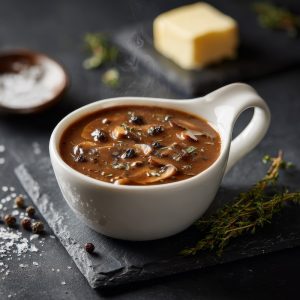
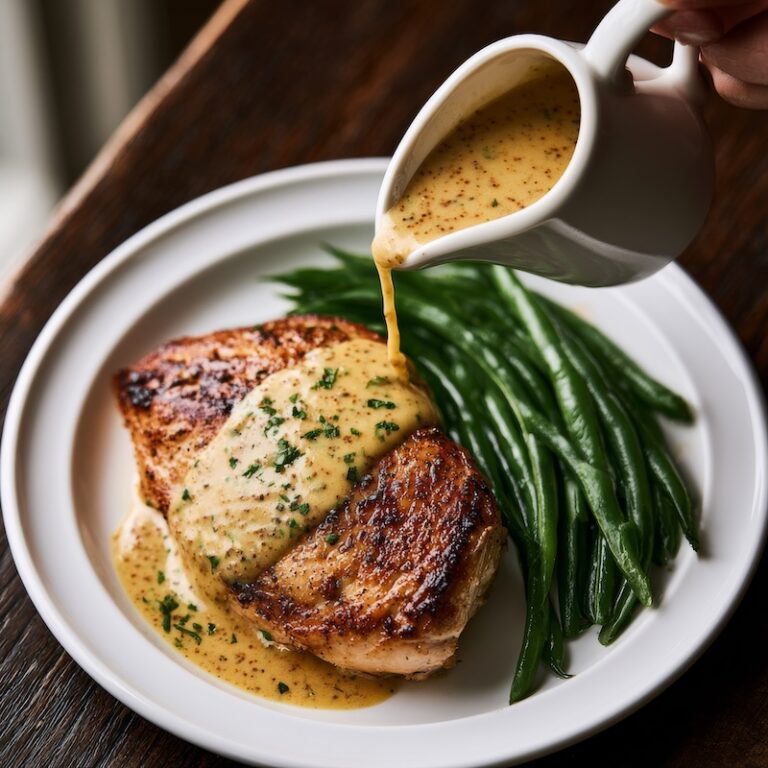
Mustard white wine sauce in a small white ceramic pitcher being poured over a pan-seared chicken breast
Print Recipe
No ratings yet

Mustard and White Wine Sauce Recipe

How to prepare a mustard and white wine sauce for chicken and fish.
Prep Time10 minutes
Cook Time20 minutes
Total Time30 minutes
Course: Sauces
Cuisine: French
Keyword: French sauce, mustard
Servings: 4 servings

Equipment

  • Sauce pan

Ingredients

Instructions

  • Prep all your ingredients. One of the most important steps to cooking is to have everything ready to go before you start. This tip can save you from lots of potential mistakes.
  • Heat a saucepan over medium heat and when hot, add the butter and let it melt.
  • Add the shallots and sweat (cook but do not brown) for a minute or two, making sure you are staring so they do not brown.
  • Add the mushrooms and saute for a few minutes until they release moisture, but don’t let them brown.
  • Stir in the curry powder and add the cognac or Armagnac and wine. Bring to a boil, and reduce the liquid by one-third.
  • Pour in the chicken stock, simmer for 5 minutes, then add the cream and the reconstituted mustard and cook until the sauce is thick enough to coat the back of a spoon.
  • Season to taste with salt and pepper and pass the sauce through a wire-mesh conical strainer. Stir in the whole-grain mustard.
  • The sauce is now ready to serve.

What Most Cooks Get Wrong

Adding the whole-grain mustard too early. If it goes in while the sauce is still simmering hard, the seeds break down, the texture disappears, and you lose the bright, sharp hit that makes the sauce interesting. Take the pan off the heat — or drop it to the lowest possible simmer — before you stir in the whole-grain mustard at the very end. The mustard powder, dissolved in water, goes in earlier and builds the background flavor. They're doing two different jobs.

Sauces add to the meal.

Why This Works

Two mustards instead of one is the move most home versions skip. The dissolved mustard powder cooks into the sauce and becomes part of its backbone — it mellows, integrates, and adds depth without announcing itself. The whole-grain mustard added at the end stays bright and textured, giving the sauce a sharp, fresh top note that cuts through the cream. The pinch of curry does something similar — it doesn't make the sauce taste like curry, it just adds a warm complexity that makes people ask what's in it without being able to name it.
Quick Fixes and Tips

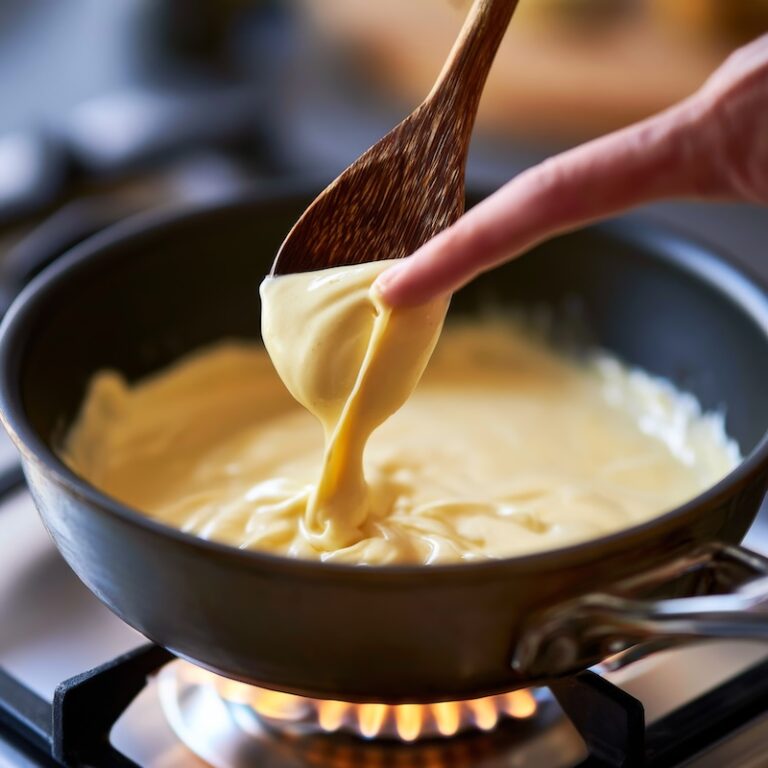
  • Sauce too thin? Keep simmering over medium-low heat, stirring frequently. It thickens as it reduces — you're looking for the point where it coats the back of a spoon and holds a clean line when you drag your finger through it.
  • Sauce broke and looks greasy? Take it off the heat and whisk in a tablespoon of cold cream. This usually brings it back together.
  • No cognac? Skip it — don't substitute something else. A splash of extra wine works, or just leave it out. The sauce holds up fine without it.
  • On straining: Professional chefs strain this type of sauce through a fine-mesh conical strainer to get a silky, restaurant-clean result. Honestly? I usually skip it. The mushrooms add texture, and when you're trying to get dinner on the table, it's one step you can leave out without the sauce suffering much. If you want the cleaner, more elegant version — strain it. If you don't, don't worry about it.
  • Make it ahead? You can make this sauce 1–2 hours ahead and reheat gently over low heat, stirring. Don't boil it after the cream is in. Add the whole-grain mustard fresh when you reheat.

What to Serve With This

  • Pan-seared chicken breast or thighs — the obvious move, and the right one. The sauce is rich enough to stand up to thighs but refined enough not to overwhelm a breast.
  • Sautéed or poached fish — salmon, halibut, or cod work well. Use fish stock in the sauce if going this route.
  • Steamed new potatoes or mashed potatoes — something to catch the sauce. Don't waste it on a plate with nothing to soak it up.
  • Blanched green beans or haricots verts — the slight bitterness cuts the richness of the cream sauce cleanly.

Wine pairing: A white Burgundy or unoaked Chardonnay if you're serving with chicken. A crisp Sancerre or Muscadet if it's going over fish. You're already cooking with white wine — keep it consistent and pour a glass of the same.

Cream sauce in a heavy-bottomed saucepan at the moment it coats the back of a wooden spoon

Storage and Make-Ahead

  • Refrigerator: Store in an airtight container for up to 2 days. The cream will thicken further as it chills — that's normal.
  • Reheating: Warm gently over low heat, stirring. Add a splash of cream or stock to loosen it if needed. Do not boil.
  • Whole-grain mustard: If making ahead, hold the whole-grain mustard and stir it in fresh when you reheat. It keeps its texture and brightness better this way.
  • Freezing: Not recommended. Cream-based sauces separate when frozen and thawed.
Made this? I'm curious whether you strained it or skipped that step — and whether it mattered to you. Also interested to hear what you served it with if you went in a different direction than chicken.

Useful Resources

  • Match your stock to your protein. This sauce is only as good as what you build it with. If you're serving it over chicken, homemade chicken stock makes a real difference over commercial. Going the fish route? fish stock is easier to make than most people think — just be warned, it will fill the kitchen.
  • Want to understand why this sauce works? This recipe follows the logic of classical French pan sauces — reduce, add liquid, finish with cream and an acid. If you want to understand how French pan sauces work at a deeper level, that's worth reading before you start.
  • Try it with duck. Chicken is the obvious pairing, but this sauce works well with duck too — the richness of the meat handles the cream sauce without being overwhelmed by it.
  • Other sauces worth having in your rotation. If you liked this, tarragon cream sauce uses a similar technique with a completely different flavor profile. And if you want to go deeper into the classical French tradition, classical velouté-based sauces are the next step.
  • On the supporting ingredients. If you've ever wondered what makes shallots worth using instead of onion, or what a pinch of curry powder actually does to a cream sauce, both of those pages are worth a few minutes.

Frequently Asked Questions

Can I make this sauce ahead of time?
Yes, with one caveat: hold the whole-grain mustard and stir it in fresh when you reheat. Made fully ahead, it keeps for up to 2 days in the fridge. Reheat over low heat with a splash of cream or stock to loosen it — don’t let it boil.

Do I have to strain the sauce?
No. Professional chefs strain this type of sauce through a fine-mesh conical strainer to get a silky, restaurant-clean result. But in a home kitchen, with dinner to get on the table, skipping it doesn’t ruin the sauce. The mushrooms add texture that some people actually prefer. Strain it if you want the more elegant version; leave it if you don’t.

What can I substitute for cognac or Armagnac?
Just leave it out — it’s already listed as optional, and the sauce works fine without it. Don’t swap in something like brandy extract or another spirit in hopes of approximating it; a small splash of extra white wine is the better call, or simply skip it entirely.

Can I use Dijon mustard instead of whole-grain?
You can, but you’ll lose the texture and the visual appeal of the seeds. Dijon will make the sauce smoother and slightly sharper. If whole-grain isn’t available, Dijon is the next best option — just use the same amount and add it the same way, off the heat at the end.

What’s the difference between mustard powder and whole-grain mustard, and why use both?
They’re doing different jobs. The mustard powder, dissolved in water and added mid-cook, builds background flavor — it mellows into the sauce and adds depth. The whole-grain mustard added at the end stays bright, sharp, and textured. Using both gives the sauce more dimension than either one alone.

What does the curry powder do — won’t it make the sauce taste like curry?
Not at all — a pinch is enough to add warmth and a subtle complexity without reading as curry. Think of it as a background spice that makes people ask “what’s in this?” without being able to name it. Don’t be tempted to add more.
Can I use half-and-half or milk instead of heavy cream?
Technically yes, but the sauce won’t thicken as well and may break more easily. Heavy cream is what gives this sauce its body and richness. If you use half-and-half, watch the heat carefully and expect a thinner result.

What stock should I use?
Match it to your protein. Chicken stock if you’re serving this over poultry; fish or seafood stock if it’s going over fish or shellfish. The sauce takes on the character of the stock, so it’s worth getting this right.

2 Responses

  1. The directions appear to tell you in two places to melt the butter the sweat the shallots then mushrooms. Also what is English mustard.

    1. Thanks for pointing out the mistake. English mustard is just one variety of hot mustard. English mustard is a mix of yellow and brown mustard seeds. You can use whatever mustard you prefer. Some like it hot; others do not.

Leave a Reply

Your email address will not be published. Required fields are marked *

Recipe Rating


This site uses Akismet to reduce spam. Learn how your comment data is processed.