


Béchamel isn’t just a sauce—it’s the moment you stop following recipes and start cooking with confidence. Master this simple combination of butter, flour, and milk, and you unlock everything from creamy pastas to restaurant-quality gratins.
How to Make Béchamel Sauce Step by Step
Béchamel sauce is one of the classic French mother sauces, and it’s much easier to make than you think. This smooth, creamy white sauce uses just a few simple ingredients—milk, butter, and flour. When you master it, you open the door to countless recipes. From macaroni and cheese to lasagna, baked vegetables, and soufflés, béchamel provides a rich, silky base that ties everything together.
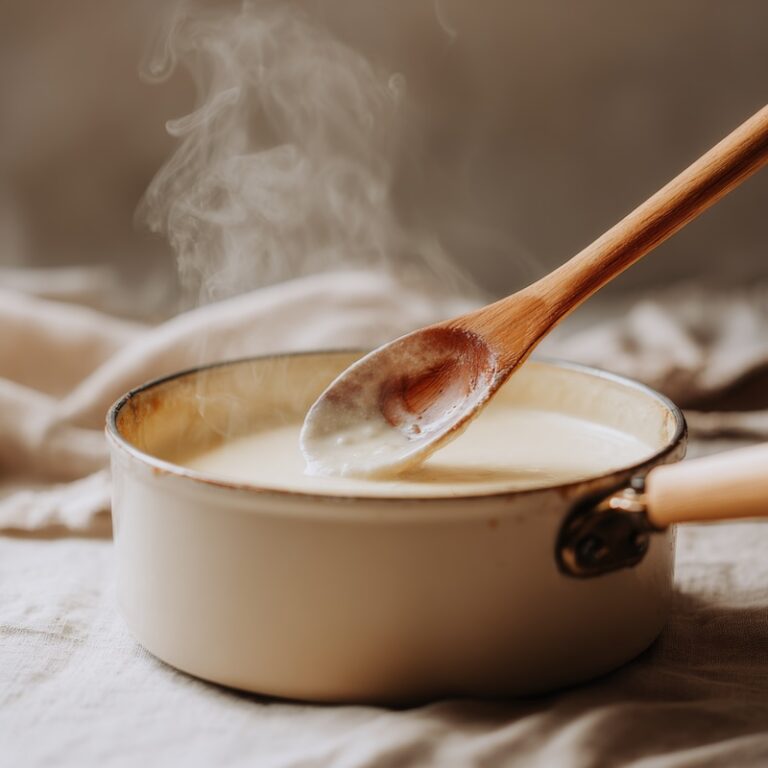
You start with a roux, a quick mix of butter and flour, then slowly whisk in warm milk. The result is a velvety sauce that coats a spoon and elevates any dish. Béchamel sauce brings comfort and elegance to the table. It’s versatile, mild, and customizable—you can add cheese for a quick Mornay sauce or season it with nutmeg, herbs, or pepper for extra depth.
This recipe teaches you how to make béchamel sauce step by step. The process is quick, the ingredients are affordable, and the results are impressive. With a little practice, you’ll use this white sauce as a foundation for countless meals. Whether you’re new to cooking or want to refine your French technique, béchamel is a recipe worth learning. It’s the secret ingredient that makes simple dishes shine.
🥄 Start Here: Master Béchamel in 3 Moves
- Make a smooth roux: Melt butter, whisk in flour, cook briefly—no browning.
- Add milk slowly: Whisk constantly to avoid lumps.
- Control thickness: Simmer gently until it coats a spoon.
Think Like a Cook: You’re not memorizing a recipe—you’re learning how sauces thicken.
✨ Why This Recipe Works
- Equal parts butter + flour: Creates a stable thickening base (roux).
- Gradual milk addition: Prevents lumps and builds a silky texture.
- Gentle heat: Keeps the sauce smooth instead of grainy.
Pro Insight: The roux is doing the heavy lifting—master it once, and you can build dozens of sauces from it.
Béchamel Sauce
Equipment
- medium saucepan
Ingredients
- 2 tablespoons butter sweet, unsalted
- 3 tablespoons all-purpose flour
- 1 cup milk
- salt & pepper to taste
- nutmeg freshly grated or ground, to taste
Instructions
Melt the Butter
- Add the flour to the melted butter. Whisk constantly for 1–2 minutes until smooth and slightly foamy.Goal: Cook out the raw flour taste while keeping the roux pale.
Start the Milk Slowly
- Add a small splash of warm milk (just a few tablespoons). Whisk vigorously until the mixture becomes smooth and paste-like.Why this matters: This step prevents lumps before they start.
Add the Remaining Milk Gradually
- Slowly pour in the rest of the milk while whisking continuously. Keep the mixture moving so it stays smooth.Tip: Don’t rush—steady pouring = silky sauce.
Simmer & Thicken
- Reduce the heat to medium-low. Cook, whisking frequently, until the sauce thickens enough to coat the back of a spoon, about 5–7 minutes.Test: Run your finger across the spoon—if the line holds, it’s ready.
Season & Finish
- Add salt, white pepper, and a pinch of nutmeg (optional but classic). Stir well and taste.Adjust: Add more milk if too thick, simmer longer if too thin.
Notes
Once you make this, what did you turn it into—mac and cheese, lasagna, something else? Share it below so others can see how one simple sauce turns into dozens of dishes.
⚠️ What Most Cooks Get Wrong
- Adding milk too fast: Leads to lumps.
- Skipping the roux cook time: Leaves a raw flour taste.
- Heat too high: Causes scorching or separation.
- Not whisking enough: Texture suffers immediately.
Quick Fix: If it gets lumpy, keep whisking over low heat—it often smooths out.
⚡ Quick Fixes & Pro Tips
- Lumpy sauce? Whisk vigorously over low heat or strain it.
- Too thick? Whisk in a splash of warm milk.
- Too thin? Simmer longer to reduce.
- Skin forming? Press plastic wrap directly on the surface.
🍝 What You Can Make From Béchamel
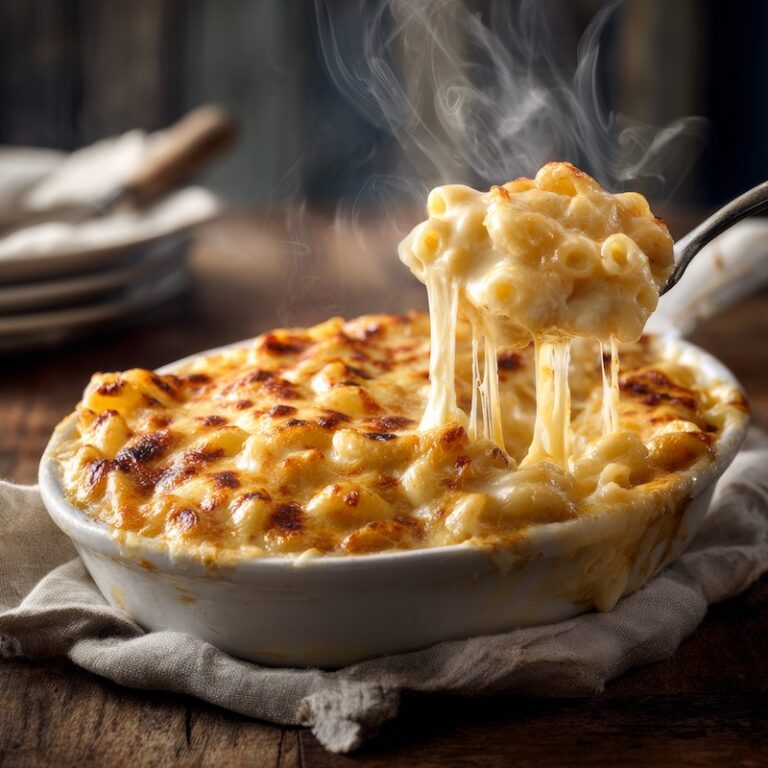
- Mornay Sauce: Add cheese → mac & cheese, gratins
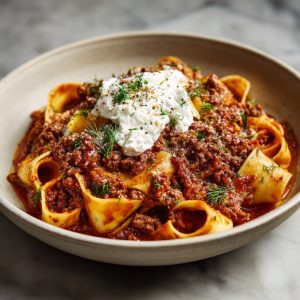
- Lasagna: Classic creamy layering sauce
- Moussaka: Greek casserole with eggplant, meat & sauce layers
- Soufflés: Structure + richness
- Creamed vegetables: Instant upgrade
Big Idea: One sauce → dozens of dishes.
📏 Béchamel Thickness Guide
- Thin: For soups or light sauces
- Medium: For pasta, casseroles
- Thick: For croque monsieur or soufflés
Rule: More milk = thinner, longer cooking = thicker.
Béchamel Story
It is one of the grand or mother sauces of French cuisine. Unctuous, it tastes even richer than its ingredients would suggest. As a result, the finished product will be more reminiscent of cream than milk.
It is a little time-consuming but so worth the effort. Pronounced (bay-shah-mel), this classic is one of France’s five “Mother Sauces,” but no one knows when it was first created or by whom.
Most likely, it was first prepared by someone who worked for King Louis XIV (1643-1715) of France.
Some say it was either the Marquis Louis de Bechamel, the king’s chief steward, or Francois Pierre de la Varenne, the king’s chef, who dedicated the sauce to Louis de Bechamel. Either way, we know it starts with a roux made from butter and flour with boiled milk added to it.
❓ Béchamel Sauce FAQ
What is béchamel sauce made of?
Béchamel is a classic white sauce made from butter, flour, and milk. The butter and flour form a roux, which thickens the milk into a smooth, creamy sauce.
What is béchamel used for?
Béchamel is one of the five French “mother sauces” and is used as a base for dishes like lasagna, mac and cheese, gratins, soufflés, and creamed vegetables.
How do you keep béchamel sauce from getting lumpy?
Add the milk slowly while whisking constantly, especially at the beginning. Starting with a small amount of milk helps create a smooth base before adding the rest.
How do you fix lumpy béchamel sauce?
Keep whisking over low heat—many lumps will smooth out. If needed, strain the sauce or blend it briefly to restore a silky texture.
More FAQ Questions
How thick should béchamel be?
It depends on how you plan to use it. For most dishes, it should be thick enough to coat the back of a spoon. Thicker versions work well for casseroles, while thinner ones are better for sauces.
Can you make béchamel ahead of time?
Yes. You can make it up to a few days in advance and store it in the refrigerator. Press plastic wrap directly onto the surface to prevent a skin from forming.
How do you reheat béchamel sauce?
Reheat gently over low heat while whisking. Add a splash of milk to loosen the sauce if it has thickened too much.
Can you freeze béchamel sauce?
You can, but the texture may change slightly when thawed. Reheat slowly and whisk well to bring it back together.
What’s the difference between béchamel and Alfredo sauce?
Béchamel is made with milk and thickened with a roux. Alfredo is typically made with butter, cream, and cheese and does not use a flour-based thickener.
What is Mornay sauce?
Mornay sauce is a variation of béchamel with cheese added, often Gruyère or Parmesan. It’s commonly used for mac and cheese and gratins.
Why does my béchamel taste like flour?
The roux likely wasn’t cooked long enough. Cook the butter and flour together for at least 1–2 minutes before adding milk to remove the raw flour taste.
Can you make béchamel without butter?
Yes, you can substitute another fat like olive oil, but butter provides the best flavor and classic results.
Can you make béchamel with alternative milk?
Yes. You can use plant-based milks like oat or almond milk, though the flavor and thickness may vary slightly.
Do you have to use warm milk?
Warm milk blends more easily into the roux and helps prevent lumps, but cold milk can work if added slowly and whisked well.
Why did my béchamel break or separate?
This usually happens from too much heat or not enough whisking. Keep the heat moderate and stir frequently to maintain a smooth texture.
How do you add flavor to béchamel?
Classic additions include salt, white pepper, and nutmeg. You can also infuse the milk with onion, garlic, or herbs for extra depth.