

Fast Answer
You can lose weight without dieting by changing small daily habits. Control your environment, portion sizes, and eating pace to naturally reduce how much you eat without strict rules.
Start Here
- No calorie counting required
- No foods are off-limits
- No complicated systems to follow
- Just small, practical habits that quietly reduce how much you eat
- Think like a cook: control your setup, your portions, and your pace
Why You Don’t Need a Diet… You Need Better Kitchen Habits
You don’t need a new diet. You need better everyday habits. Most weight gain doesn’t come from one big mistake. It comes from small, automatic decisions made throughout the day.
Change those decisions, and you naturally eat less without feeling restricted. This approach focuses on simple, practical ways to adjust how you shop, cook, and eat so weight loss becomes a side effect, not the goal.
The 3 Places Where Weight Gain Actually Happens
Most overeating doesn’t come from hunger. It comes from habits. And those habits show up in three predictable places.
1. Your Environment
What’s around you determines what you eat.
If food is visible, easy to grab, or already open, you’re more likely to eat it—even if you’re not hungry.
2. Your Portions
You rarely eat less than what you serve yourself.
If your plate is full, your brain expects you to finish it.
3. Your Pace
Your body needs time to register fullness.
Eat too fast, and you’ll eat more before your body catches up.
Common Sense Environment Habits
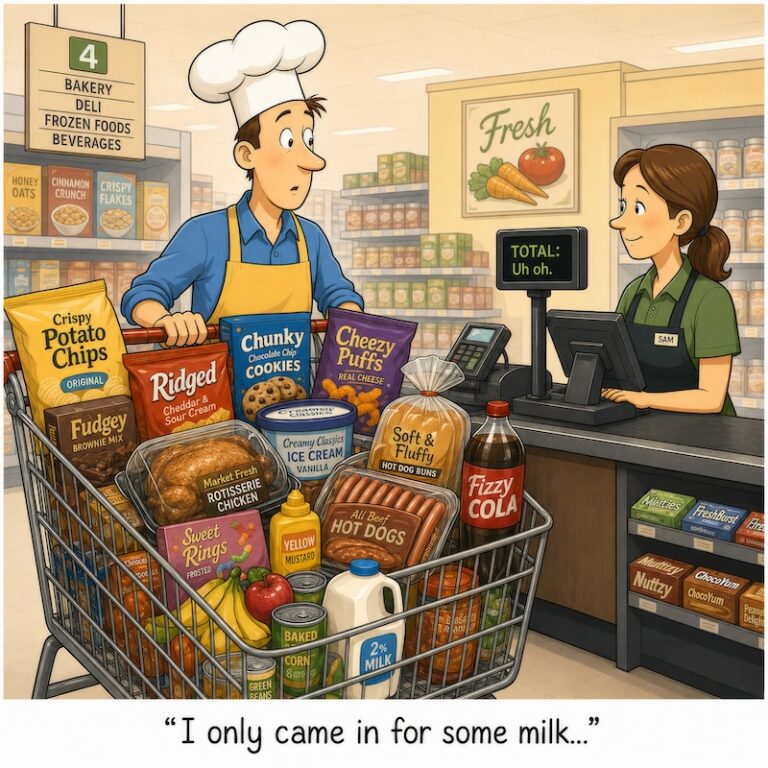
- Don’t go to the supermarket hungry
- If you don’t want to eat it, don’t buy it
- Keep high-calorie snacks out of sight, not on the counter
- Don’t eat just because food is there (office snacks, leftovers, etc.)
- Make healthier foods easier to grab than less healthy ones
Common Sense Pace Habits
- Chew your food more than usual
- Pause halfway through your meal
- Avoid eating while watching TV or scrolling your phone
- Use smaller utensils to naturally slow down eating
- Put your fork down between bites occasionally
Common Sense Daily Habits
- Don’t get more food just to keep watching TV
- Eat when you’re hungry, not when you’re bored
- If you want dessert, balance it with a little more activity that day
- Keep a simple record of what you eat and your activity level
- Consider smaller, balanced meals instead of a few large ones
What Most People Get Wrong
- They try to change everything at once instead of starting small
- They rely on willpower instead of setting up their environment
- They think one “bad meal” ruins everything
- They focus on strict rules instead of consistent habits

Common Sense Portion Habits
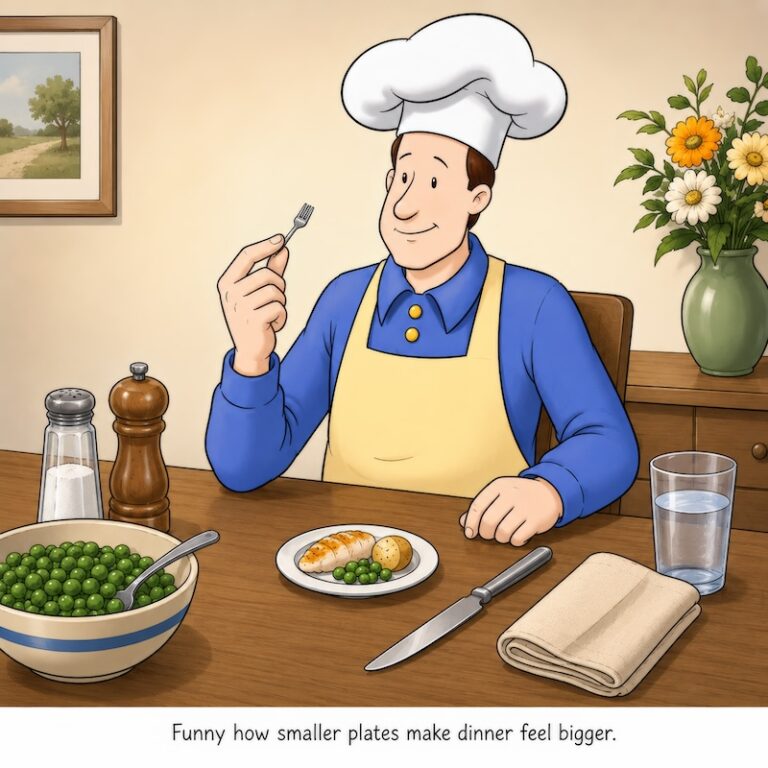
- Use smaller plates so portions look satisfying
- Take snacks out of the bag and put them on a plate
- When eating cheese, cut a portion, rewrap the rest, and put it away
- Don’t bring the whole container to the table or couch
- Avoid going back for seconds out of habit, not hunger
Quick Wins You Can Start Today
- Use a smaller plate at your next meal
- Drink a glass of water before eating
- Don’t bring snacks to the couch or TV
- Pause halfway through your next meal
- Close the kitchen after dinner (lights off, done for the night)
Note: I’m not a doctor or nutritionist. These are practical, common sense habits for everyday eating. If you have a medical condition, take medication, or need a specific weight-loss plan, talk with your healthcare provider.
Frequently Asked Questions
Yes, many people can lose weight by changing daily habits instead of following a strict diet. Portion control, slower eating, better grocery choices, regular movement, and paying attention to hunger cues can all help reduce how much you eat over time. Health organizations also point to steady habits, physical activity, sleep, and stress management as part of healthy weight management.
What is the easiest way to start losing weight without dieting?Start by changing your food environment. Don’t shop hungry, don’t keep tempting snacks in plain sight, and don’t bring the whole bag or container to the couch. These small changes reduce mindless eating without requiring a complicated plan.
Why does eating from the bag lead to overeating?Eating from the bag removes the stopping point. When you put chips, cookies, crackers, or nuts on a plate, you create a visible portion. That small step helps your brain see how much you are eating.
Do smaller plates really help with portion control?Smaller plates can help because they make a moderate portion look more satisfying. They don’t magically cause weight loss, but they can make it easier to serve less without feeling deprived.
More Question & Answers
Does eating slowly help you lose weight?
Eating slowly can help because your body needs time to register fullness. When you rush through a meal, you may eat past the point of comfort before your body catches up.
What is mindful eating?
Mindful eating means paying attention while you eat. You notice the food, the pace, the flavor, and whether you are still hungry. It is the opposite of eating on autopilot in front of the television, computer, or phone.
How do I stop eating when I’m bored?
Pause before eating and ask, “Am I hungry, or am I looking for something to do?” If it is boredom, try a short walk, a glass of water, a phone call, or another small reset before reaching for food.
Should I keep track of what I eat?
Keeping track can help because it makes invisible habits visible. You do not have to count every calorie. A simple note about what you ate, when you ate, and why you ate can reveal patterns quickly.
Is exercise necessary for weight loss?
Exercise helps, but it does not have to be extreme. Regular physical activity helps burn calories and supports overall health. The CDC notes that activity, along with eating habits, sleep, and stress management, plays an important role in healthy weight management.
Can I still eat dessert and lose weight?
Yes, but portion and frequency matter. A small dessert eaten intentionally is different from grazing through cookies all night. If you want dessert, plate it, enjoy it, and stop there.
What should I do if I want seconds?
Pause for a few minutes before getting more food. Ask whether you are still hungry or simply continuing because the food tastes good. If you are truly hungry, take a smaller second portion.
Is it better to eat small meals throughout the day?
It depends on the person. Some people do better with smaller meals because they avoid getting overly hungry. Others prefer three regular meals. The best pattern is the one that keeps you from overeating and feels realistic.
Why should I avoid grocery shopping when hungry?
Hunger makes everything look like a good idea. Shopping after a meal or snack helps you make calmer choices and avoid buying foods you did not plan to eat.
What foods should I keep visible in the kitchen?
Keep easy, better choices visible: fruit, cut vegetables, plain yogurt, water, or simple leftovers. Keep snack foods and sweets less visible or harder to reach. Your kitchen setup should make the better choice, the easy choice.
What is the biggest mistake people make when trying to lose weight?
The biggest mistake is trying to change everything at once. Most people do better by choosing one or two simple habits, practicing them until they feel normal, and then adding another.
When should I talk to a doctor about weight loss?
Talk to a healthcare provider if you have a medical condition, take medication, have a history of disordered eating, or plan to make major changes to your eating or exercise routine. Common sense habits are useful, but they are not a substitute for medical advice.