
Fast Answer
Searing does not lock in juices. It never did. What it actually does — and why you should still do it — is something else entirely. A German chemist named Justus von Liebig started this myth in 1847, and it took over 150 years for the food world to officially let it go.
I Was Wrong About Searing Meat... So Was Almost Everyone Else.
For years I told you that searing locks in the juices. I was confident. I was wrong. Here's what actually happens.
| Then vs. Now | What I Used to Say | What’s Actually True |
|---|---|---|
| The claim | Searing seals the surface of the meat, trapping juices inside. | Searing creates a flavorful crust through the Maillard reaction. No sealing involved. |
| The science | High heat creates a physical barrier that prevents moisture loss. | High heat causes proteins and sugars to brown, creating hundreds of new flavor compounds. |
| Moisture loss | Searing prevents it. | Moisture loss is controlled by internal temperature and resting time, not how you start the cook. |
| Should you still sear? | Yes, to lock in juices. | Yes, but for flavor, color, and texture. Not moisture retention. |
| Origin of the myth | It seemed logical and got repeated everywhere. | Justus von Liebig, German chemist, promoted the idea in 1847. Wrong from the start. |
Why This Myth Refuses to Die
- The “searing seals in juices” theory dates back to 1847.
- Professional chefs, culinary schools, and cookbooks repeated it for generations.
- Modern food science proved it wrong decades ago.
- Searing improves flavor, color, and texture — not moisture retention.
- And yes… I taught it too.
How a Kitchen Myth Survived 150 Years
Here’s what fascinates me about this whole thing: the theory started in 1847 and somehow survived longer than canned ham at the back of a fallout shelter.
German chemist Justus von Liebig proposed that searing meat created a barrier that locked juices inside. The idea sounded logical, so chefs repeated it. Culinary schools taught it. Cookbooks printed it. Eventually, nobody questioned it anymore.
I even found it in my copy of The Food Lover’s Companion by Sharon Tyler Herbst, one of the most respected culinary references on my shelf. Right there under “sear,” it says the purpose is to seal in juices.
That’s how cooking myths survive. One trusted cook tells another. Then another. Then eventually the idea becomes kitchen scripture.
The problem? Science never supported it.
In 2004, food scientist Harold McGee addressed the myth directly. Later, Kenji López-Alt tested it extensively at Serious Eats. The results were crystal clear: seared meat loses just as much moisture as unseared meat.
The crust isn’t a waterproof jacket. It’s flavor. Delicious flavor, but flavor nonetheless.
And honestly, I have to include myself in this story too. Back in 2015, readers started pointing this out in my comments section. My response at the time was careful and diplomatic:
“I agree that searing meats to ‘seal in juices’ is no longer acknowledged by chefs today.”
Which is a pretty elegant way of saying, “I may have been driving the wrong bus.”
So this post is my official correction. Better late than never.
What Searing Really Does
- Searing creates flavor through the Maillard reaction.
- It does not create a waterproof barrier.
- Juiciness is controlled by internal temperature and resting time.
- A good crust adds flavor, aroma, color, and texture.
- Think of searing as flavor-building, not moisture-locking.
The Flavor Comes From the Maillard Reaction
The Flavor Comes From Browning, Not Sealing
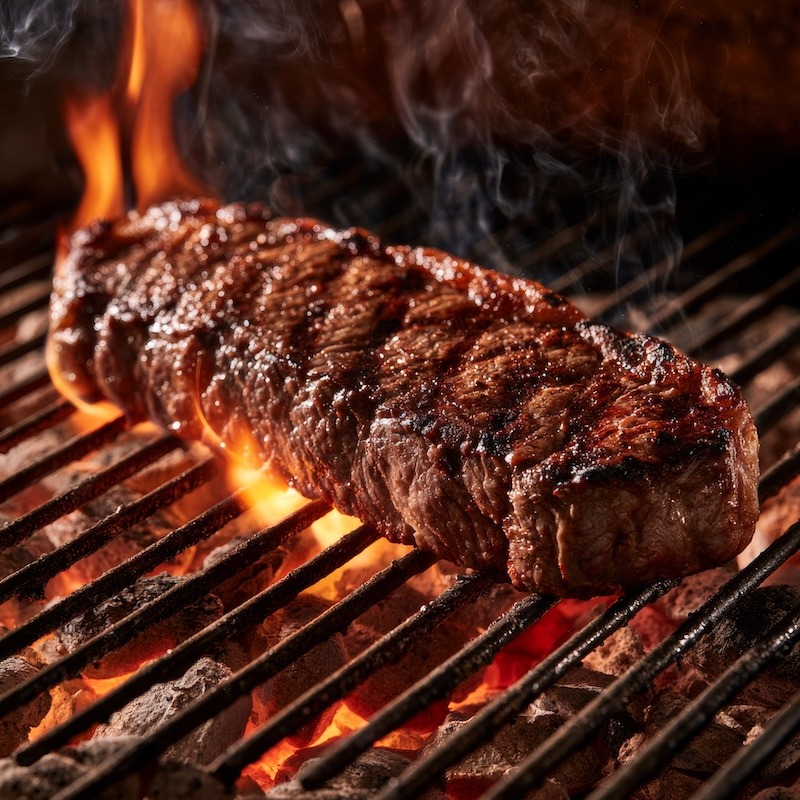
When meat hits a very hot pan or grill, the surface temperature climbs above about 280°F (140°C). At that point, proteins and natural sugars begin reacting together in what’s called the Maillard reaction.
That reaction creates hundreds of new flavor compounds. Nutty. Savory. Roasted. Toasty. Complex.
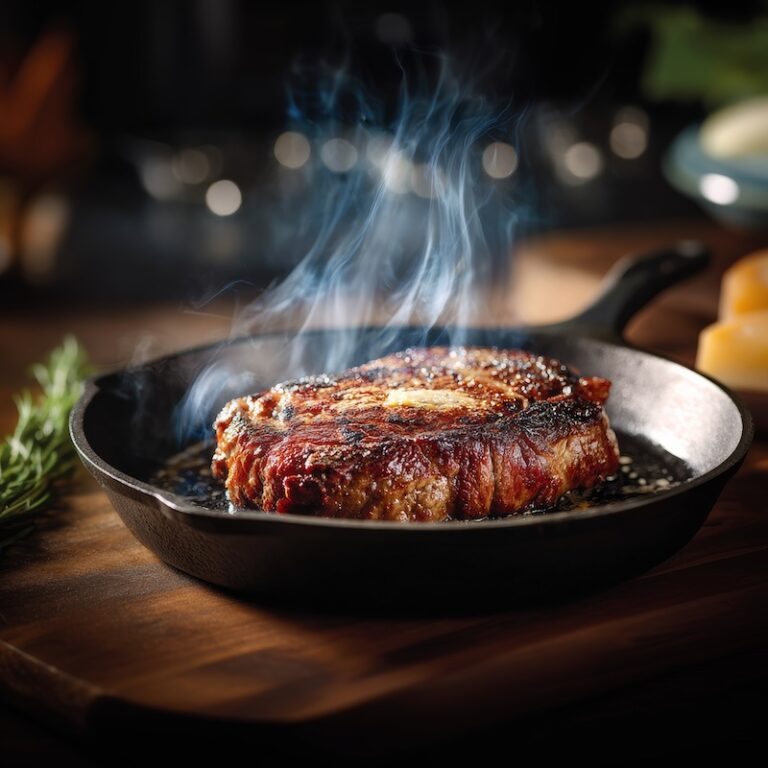
That deep brown crust on a steak? That’s not a moisture shield. It’s a flavor factory.
The smell drifting through your kitchen while a steak sears isn’t “juices being trapped.” It’s chemistry throwing a tiny dinner party in your skillet.
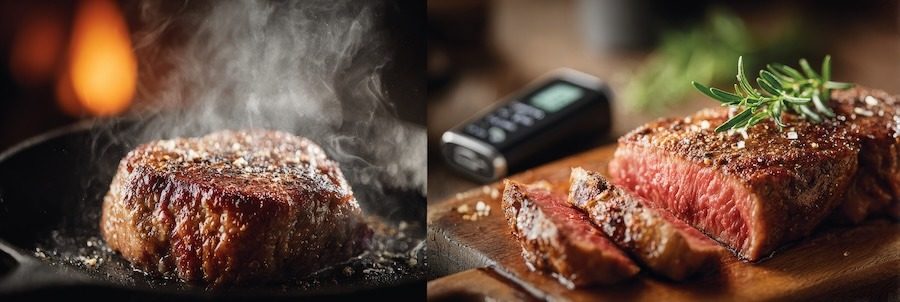
What Searing Actually Creates
Flavor
Hundreds of new savory compounds form during browning.
Texture
The crust adds contrast against the tender interior.
Aroma
The Maillard reaction creates the smells that make people wander into the kitchen asking, “How long until dinner?”
What Actually Keeps Meat Juicy
Juiciness Depends on Temperature, Not Searing
What actually determines juiciness is internal temperature.
As meat cooks, muscle fibers tighten and squeeze out moisture. The higher the temperature climbs, the more juice gets pushed out. That happens whether you sear first, sear last, or never sear at all.
Resting matters too.
When meat comes off the heat, the juices are still moving aggressively inside the muscle fibers. Resting gives those juices time to redistribute instead of flooding your cutting board the second you slice into it.
In other words, if you want juicy steak, your thermometer matters far more than your sear.
Should You Still Sear?
So Should You Still Sear Meat?
Absolutely.
A hard sear creates flavor, color, texture, and aroma. Some cuts practically beg for it. A ribeye without a crust feels unfinished, like toast without butter.
But not every food benefits equally.
A delicate fish fillet may need gentler treatment. A long braise develops flavor differently over time. Sometimes aggressive searing adds bitterness instead of complexity.
The goal isn’t “locking in juices.”
The goal is building deliciousness.
That shift in thinking changes how you cook almost everything.
So if searing doesn’t lock in juices, what actually matters in the kitchen?
What This Means for How You Cook
-
Watch your internal temperature.
An instant-read thermometer does more for juicy meat than any searing technique ever will. Pull your steak at the right temperature and let it rest. -
Rest your meat after cooking.
About 5 minutes for steaks and much longer for large roasts. Resting allows juices to redistribute instead of flooding your cutting board. -
Still sear — just know why.
A proper sear builds flavor, color, aroma, and texture through the Maillard reaction. Pat meat dry before cooking so the surface browns instead of steams.
Up Next in Myths I Helped Spread
The fork myth: I told you never to pierce meat while grilling because the juices would escape.
Turns out I was wrong about that too.
Same logic. Same problem. Same 30-year correction.
Coming soon.