

One-Oven Meals Using Steam and Convection

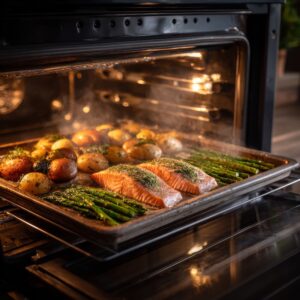
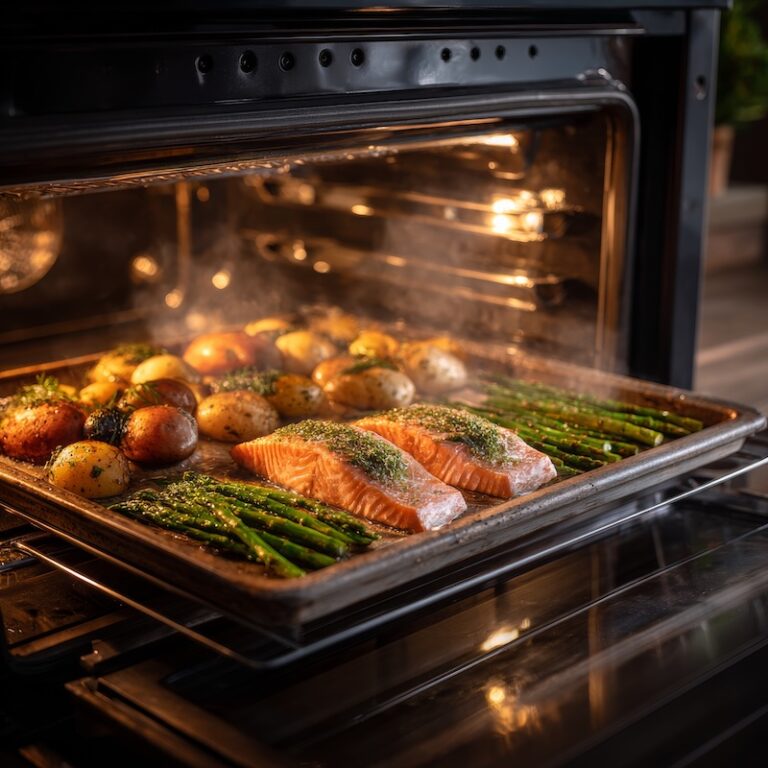
convection steam oven with the door open during cooking, complete one-oven dinner inside including salmon fillets, roasted baby potatoes and asparagus

The Reluctant Gourmet Newsletter Is Back!

Yes, I'm starting up a new newsletter with step-by-step recipes, helpful cooking tips, and my latest funny cooking cartoons. Would love to have you on board.

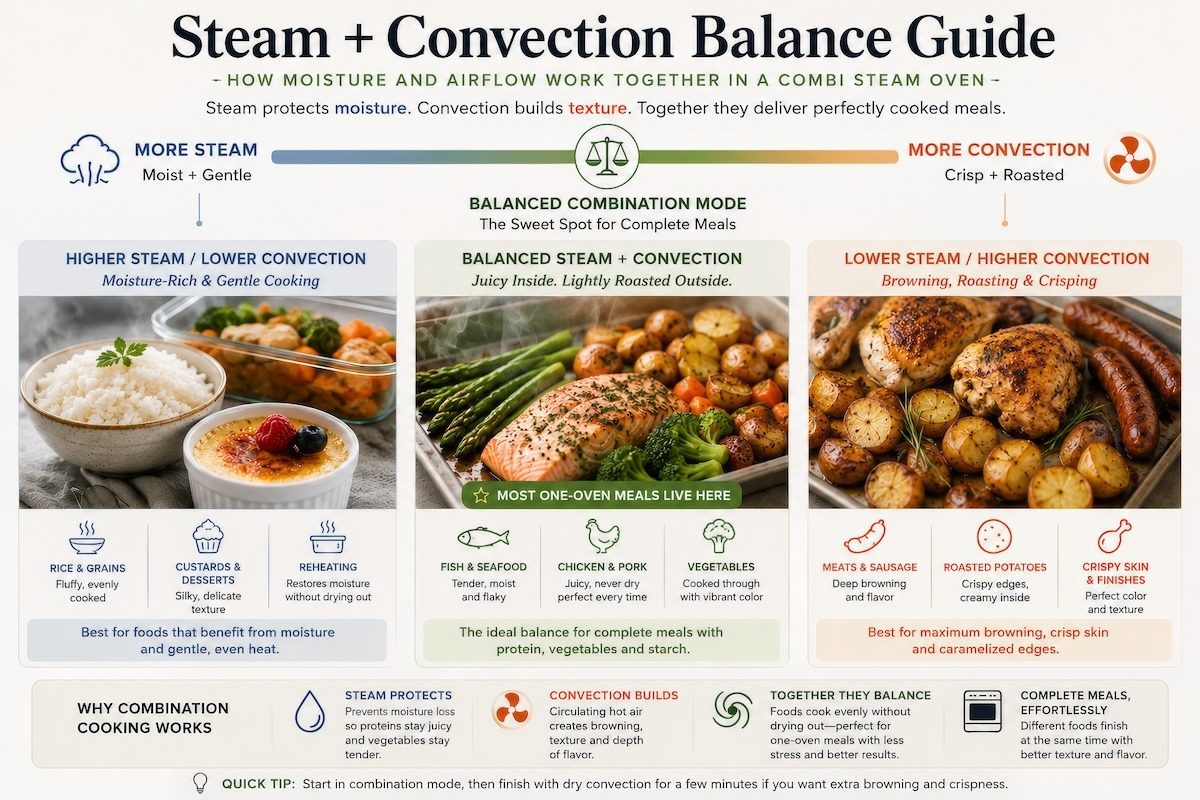
Steam buys forgiveness. Convection buys browning. Together they turn a steam oven into one of the easiest ways to cook a complete dinner at home. Proteins stay juicy, vegetables roast without drying out, and starches cook more evenly with less juggling, fewer pans, and surprisingly little stress.

Can You Cook an Entire Meal in a Steam Oven?

  • Yes. A convection steam oven lets you cook protein, vegetables, and starches together with better moisture control than a traditional oven.
  • Combination steam settings help proteins stay juicy while vegetables roast and starches cook evenly.
  • The key is choosing ingredients with compatible cooking temperatures and timing.
  • Sheet pans, shallow casserole dishes, and perforated pans work best for one-oven meals.

Start Here

  • Use combi steam for most full meals
  • Choose ingredients that cook within 10 to 15 minutes of each other
  • Use convection for browning at the end
  • Avoid overcrowding the oven
  • Steam helps protect delicate proteins like fish and chicken breasts

Cooking an entire dinner in a steam oven gets much easier once you stop thinking in recipes and start thinking in compatible cooking partners. The goal is simple: choose foods that enjoy similar temperatures, benefit from a little humidity, and finish within roughly the same cooking window.

How to Build a One-Oven Steam-Convection Meal

  • Choose the protein first. Fish, chicken thighs, pork tenderloin, and sausages all respond beautifully to combination steam cooking.
  • Match vegetables by cooking time. Tender vegetables like asparagus cook quickly while root vegetables need more time and benefit from the added humidity.
  • Pick a starch that likes moisture. Potatoes, rice, polenta, couscous, and sweet potatoes all perform well in a steam environment.
  • Adjust the steam level carefully. Lower steam encourages browning while higher steam protects lean proteins from drying out.
  • Finish with dry convection if needed. A few minutes of convection heat at the end adds crisp edges, caramelization, and better color.
a chart describing cooking with both steam and convection

Why This System Works

  • Steam slows moisture loss. Proteins stay juicy while vegetables cook more evenly.
  • Convection keeps the oven active. Circulating heat prevents foods from feeling soggy or steamed.
  • Humidity speeds certain starches. Potatoes and grains often cook faster and more evenly with controlled steam.
  • One temperature simplifies dinner. Instead of managing multiple burners, the oven handles most of the work.

Steam Oven Salmon with Baby Potatoes & Asparagus

One-Oven Dinner Using Combination Steam + Convection

This complete steam oven dinner uses a combination of steam and convection heat to cook salmon, baby potatoes, and asparagus together in one oven with remarkably little stress.

The steam keeps the salmon moist and tender while convection heat roasts the potatoes and lightly browns the edges. It’s one of the easiest ways to cook a balanced dinner without juggling multiple pans on the stovetop.

Why Steam + Convection Works So Well Here

  • Steam protects the salmon. The fish cooks gently and stays moist instead of drying out.
  • Convection helps the potatoes roast. Moving hot air creates caramelized edges while steam keeps the interiors creamy.
  • Asparagus cooks quickly. It benefits from the humid environment without shriveling.
  • Everything finishes close together. Combination cooking reduces timing stress and helps the meal cook more evenly.

Fast Answer

  • Use Combination Steam Mode at 400°F with 30% steam.
  • Start the potatoes first since they need the most time.
  • Add the salmon and asparagus later so everything finishes together.
  • Finish with a few minutes of dry convection if you want extra browning on the potatoes.

Steam Oven Salmon with Potatoes & Asparagus

Prep Time5 minutes
Cook Time35 minutes
Total Time40 minutes
Course: Main Course
Cuisine: American
Keyword: asparagus, potatoes, salmon

Equipment

  • steam oven

Ingredients

For the Salmon

For the Potatoes

  • pounds baby potatoes halved
  • 2 tablespoons olive oil
  • Kosher salt
  • black pepper
  • 1 teaspoon fresh rosemary or thyme chopped

For the Asparagus

Instructions

Preheat the Wolf Steam Oven

  • Set the oven to: Convection Steam Mode at 400°F
  • Use the middle rack position.
  • Wolf’s Convection Steam Mode combines steam with circulating convection heat. You do not need to choose a steam percentage. The oven manages the moisture for you.

Start the Potatoes First

  • Toss the halved baby potatoes with olive oil, salt, pepper, and rosemary or thyme.
  • Spread them cut-side down on a sheet pan or shallow roasting pan. Cook in Convection Steam Mode at 400°F for 20 minutes.
  • The potatoes go first because they need more time than the salmon and asparagus.

Add the Salmon

  • Pat the salmon fillets dry. Brush them lightly with olive oil and season with salt and pepper.
  • After the potatoes have cooked for 20 minutes, add the salmon fillets to the same pan.
  • Return the pan to the oven and continue cooking in Convection Steam Mode at 400°F for 8 minutes.

Add the Asparagus

  • Toss the trimmed asparagus with olive oil, salt, and pepper.
  • After the salmon has cooked for 8 minutes, add the asparagus to the pan.
  • Continue cooking in Convection Steam Mode at 400°F for 5 to 7 minutes, or until the salmon flakes gently and the asparagus is tender but still bright.

Check for Doneness

  • The salmon should be moist and just cooked through. For best results, check with an instant-read thermometer.
    Aim for: 125°F to 130°F for moist, tender salmon.
  • The potatoes should be tender when pierced with a knife, and the asparagus should be cooked but not limp.

Optional Browning Finish

  • If the potatoes need more color, remove the salmon and asparagus to a warm plate. Switch the oven to Convection Mode at 425°F.
    Return the potatoes to the oven for 3 to 5 minutes, or until the edges are browned and lightly crisp.
    This final dry convection step adds texture without overcooking the salmon.

Notes

Total Cooking Timeline
0:00            Start potatoes in Convection Steam Mode at 400°F
0:20            Add salmon
0:28           Add asparagus
0:33 - 35  Check doneness
Optional:    Remove salmon/asparagus and crisp potatoes in Convection Mode at     425°F    for 3–5 minutes

How Wolf’s Convection Steam Mode Works

  • You do not manually choose a steam percentage. Wolf automatically balances humidity and convection airflow based on the selected cooking mode.
  • Convection Steam Mode combines moisture and circulating heat. This helps foods roast while staying tender inside.
  • The oven continuously adjusts humidity during cooking. The goal is better texture, browning, and moisture retention with less guesswork.
  • For extra browning, finish briefly in Convection Mode.

Leave a Reply

Your email address will not be published. Required fields are marked *

Recipe Rating


This site uses Akismet to reduce spam. Learn how your comment data is processed.