

Fast Answer
Steaming over an aromatic liquid — stock, ginger, lemon peel, herbs — adds a subtle but real layer of flavor to whatever you're cooking. The effect is most noticeable on delicate proteins like fish, shellfish, and chicken, and less so on dense vegetables. It takes under two minutes to set up, uses pantry staples you already have, and produces food that tastes like you did something intentional. Which you did.
Never Steam Over Plain Water Again
Here’s the honest truth about steaming liquids: the flavor transfer is subtle. If you’re steaming dense root vegetables or a thick piece of chicken, you may not notice much difference at all.
But for delicate foods — a fish fillet, a bowl of mussels, a basket of dumplings — the right steaming liquid makes the food taste as if it were cooked with intention rather than just cooked. And the effort involved is genuinely minimal. Five ingredients, two minutes, one saucepan. The master liquid in this post works for almost everything.
The variations that follow take it in different directions depending on what you’re cooking — chicken, fish, vegetables, or into the flavor logic of Chinese, French, Moroccan, or Japanese cooking. None of them requires wine, none of them requires a trip to the store, and all of them are better than water.
Why the Steaming Liquid Actually Matters
- Steam carries flavor compounds: As the liquid simmers, volatile aromatic compounds — the flavor molecules in ginger, lemon peel, herbs, and stock — evaporate along with the water and rise as steam. When that steam contacts the food and condenses, it deposits a trace of those compounds on the surface. The effect is gentle, not dramatic. Think of it as a very light seasoning from the outside in.
- The honest caveat: On dense foods — thick cuts of chicken, root vegetables, potatoes — the flavor transfer is minimal. The steam reaches the surface but the interior is too insulated to pick up much. On delicate foods — fish fillets, shellfish, dumplings, thin cuts of poultry — the effect is noticeably better than plain water. Know when it matters and when it doesn't.
- The liquid becomes a sauce: After steaming shellfish, fish, or chicken, the liquid in the pot has absorbed the drippings and released aromatics from everything that went into it. Strain it, reduce it, finish with a knob of butter — and you have a sauce built from the same cook. This alone is worth the two minutes of setup.
- Why alcohol-free matters: Wine is a classic steaming liquid but it excludes a significant portion of home cooks — non-drinkers, families with kids, anyone who doesn't keep wine in the house. The master liquid in this post delivers comparable aromatic complexity without it. Save the wine for drinking.

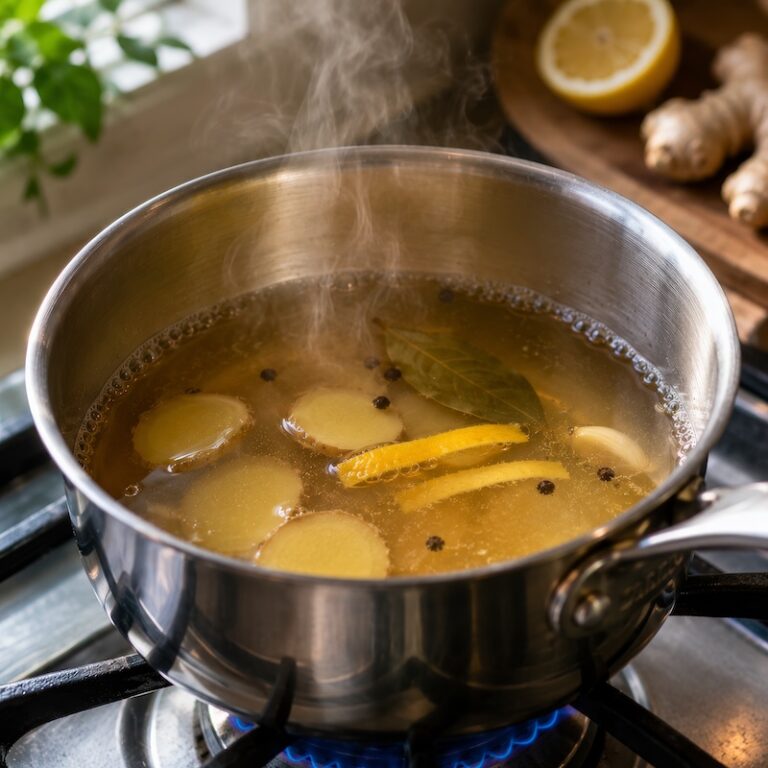
Master Steaming Liquid
Equipment
- saucepan
Ingredients
- 1 quart light vegetable stock or water if you don't have stock
- 4 slices fresh ginger about ¼ inch thick
- 2 strips lemon peel no white pith
- 1 bay leaf
- 10 whole black pepper corns
- 1 smashed garlic clove optional- adds depth, leave out for cleaner flavor
Instructions
- Combine all ingredients in a saucepan.
- Bring to a gentle simmer over medium heat.
- Use as much as you need to fill your steaming vessel ¾ to 1 inch deep. Keep the rest simmering on low and add as needed to maintain the level.
- Do not add salt to the steaming liquid — salt stays in the pot and does not transfer through the steam. Season the food directly instead.
Notes
Nutrition
What to Steam Chicken In
- The master liquid works well here — vegetable stock, ginger, lemon peel, bay, peppercorns. The ginger and lemon peel keep the flavor clean and light, which suits white meat well.
- For a more savory result: Use chicken stock instead of vegetable stock. Add a sprig of thyme and a smashed garlic clove. The steam becomes noticeably more aromatic and the chicken picks up a gentle herbaceous quality — particularly noticeable on thin breast cuts.
- For an Asian preparation: Replace the stock with water. Add 4 slices of ginger, 2 scallions cut in half, and a splash of rice vinegar. This is the base for classic Chinese steamed chicken — clean, fragrant, and designed to be finished with a ginger-scallion sauce poured over the top.
- What to watch for: Chicken breast steamed in an aromatic liquid is noticeably more interesting than chicken steamed over plain water — but it still needs a finish. A drizzle of good olive oil, a spoonful of pan sauce, or a bold condiment is what takes it from functional to worth eating. See Sauce Techniques for ideas.
- Timing: Thin breast cuts 8–12 minutes. Check at 8 — it should be just opaque throughout with no pink. Carryover cooking continues after it leaves the steamer.
What to Steam Fish and Shellfish In
- This is where the steaming liquid makes the biggest difference. Fish is delicate enough that the aromatic steam genuinely permeates the flesh. Plain water produces plain fish. An aromatic liquid produces fish that tastes like it was cooked with care.
- The master liquid: Works beautifully for most white fish — sea bass, halibut, cod, flounder. The ginger and lemon peel keep it clean and bright without overpowering a mild fillet.
- For shellfish — mussels, clams, shrimp: Add a strip of orange peel and a sprig of fresh dill to the master liquid. For mussels and clams especially, the liquid they release as they open combines with the steaming liquid to create an instant broth — too good to waste. Serve it alongside with crusty bread.
- For salmon: Replace lemon peel with orange peel. Add a sprig of tarragon. Salmon is rich enough to handle slightly more assertive aromatics, and the orange and tarragon are a classic pairing with the fish's natural fat.
- For an Asian preparation: Water, ginger, scallion, a splash of rice wine or rice vinegar. Steam the fish, then immediately pour a mixture of hot sesame oil, soy sauce, and fresh ginger over the top. This is one of the best ways to cook fish that exists — clean, fast, and extraordinary.
- Timing: Fish fillets 6–10 minutes depending on thickness. Shrimp 3–5 minutes. Mussels and clams until the shells open — discard any that don't.
What to Steam Vegetables In
- The honest truth about vegetables: Dense root vegetables — potatoes, carrots, parsnips, beets — pick up very little flavor from the steaming liquid. Their cell structure is too thick for much vapor penetration. Where the liquid matters is in the finish, not the steam.
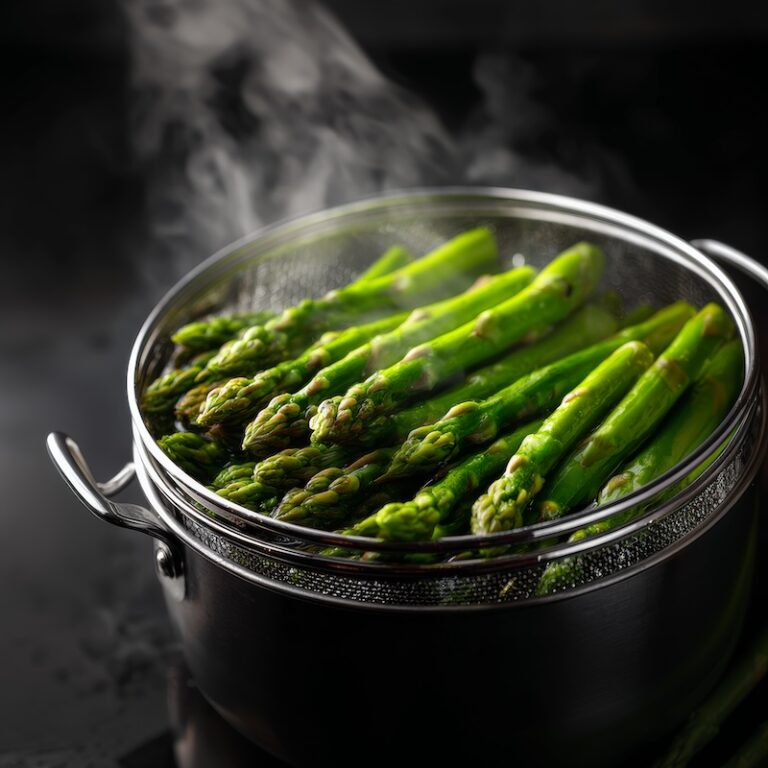
- Tender vegetables are more receptive: Asparagus, green beans, snap peas, broccoli florets, and leafy greens all pick up aromatic steam more readily than dense roots. The master liquid — ginger, lemon peel, bay — adds a brightness that plain water doesn't.
- For asparagus and green beans: Add a strip of lemon peel and a few sprigs of fresh tarragon to the master liquid. The result is subtly herbal and bright — noticeable without being intrusive.
- For broccoli and cauliflower: A smashed garlic clove and a pinch of red pepper flakes in the steaming liquid adds a gentle warmth that works well with these brassicas. Finish with good olive oil and a squeeze of lemon.
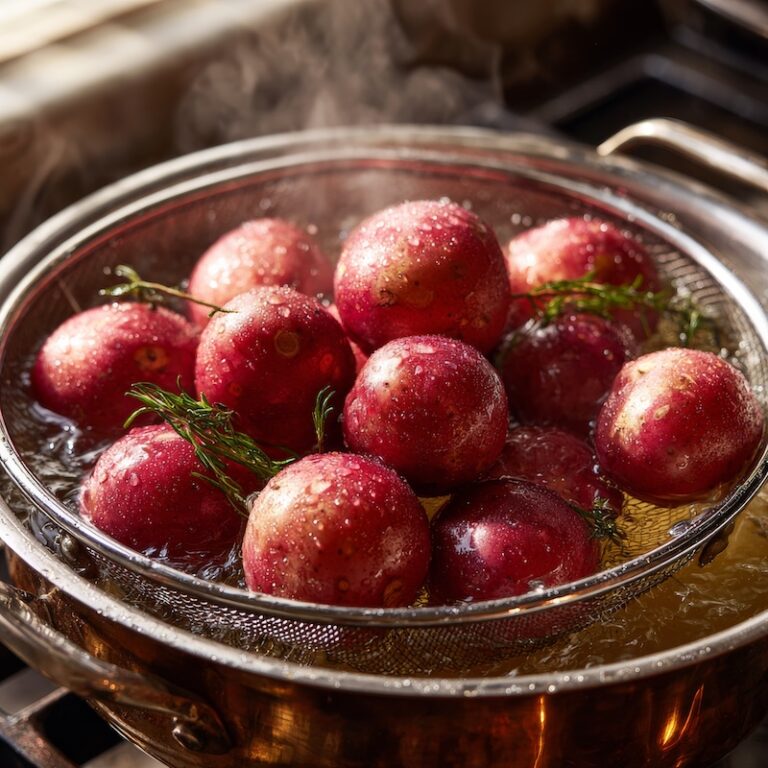
- For steamed potatoes — the upgrade most people never try: Potatoes steamed over plain water are already better than boiled — less waterlogged, cleaner flavor, better texture for mash or potato salad. Add a bay leaf, a smashed garlic clove, and a few sprigs of thyme to the steaming liquid and the potatoes pick up a gentle savory quality that makes them noticeably more interesting. This is the kind of small change that makes people ask what you did differently. The answer is almost nothing.
- Timing: Leafy greens 1–2 min · Asparagus, green beans 4–6 min · Broccoli, cauliflower 5–7 min · Potatoes (cubed 1 inch) 10–15 min · Carrots, parsnips (sliced) 8–12 min
Four World Steaming Traditions Worth Borrowing From
- Chinese — the master of steaming: Chinese cooking is built around steaming more than any other cuisine. The liquid is typically simple — water or light stock with ginger and scallion — because the sauce applied after is where the flavor lives. Steam fish or chicken over ginger and scallion water, then pour a mixture of hot oil, soy sauce, and fresh aromatics directly over the top at the table. The sizzle is part of the dish.
- French — court bouillon: The French steaming tradition centers on court bouillon — an aromatic steaming liquid built from aromatics and acid. The master recipe in this post is essentially a court bouillon without the wine. Use it for fish, shellfish, and vegetables. Strain the liquid after and reduce it for a sauce — nothing is wasted.
- Moroccan — spiced steam over a tagine: Couscous in Morocco is never boiled — it's steamed over a simmering spiced broth, absorbing aromatic steam from saffron, cumin, cinnamon, and whatever is cooking below. To approximate it at home: steam couscous over a broth seasoned with a pinch of saffron, a cinnamon stick, a few coriander seeds, and a strip of orange peel.
- Japanese — dashi as the base: Japanese steaming uses dashi as the liquid base — made from kombu and bonito flakes steeped in hot water for a few minutes. The result is a clean, oceanic, deeply savory liquid that adds umami to everything steamed over it. It sounds exotic but takes five minutes and the ingredients are available in most grocery stores.
Three Variations From the Master Liquid
- Herb-forward (best for chicken and root vegetables): Start with the master liquid. Swap lemon peel for a strip of orange peel. Add a sprig of thyme and a sprig of rosemary. Drop the ginger. The result is warmer and more savory — better suited to chicken thighs, potatoes, and root vegetables than the brighter master liquid.
- Citrus and dill (best for fish and shellfish): Start with the master liquid. Add a strip of orange peel alongside the lemon peel. Add two sprigs of fresh dill. The combination is bright, slightly sweet, and herbaceous — a natural pairing for salmon, shrimp, and mussels.
- Asian-leaning (best for dumplings, fish, and chicken): Replace vegetable stock with water. Use 4 slices of ginger, 2 scallions cut in half, a splash of rice vinegar, and a strip of lemon peel. Drop the bay leaf and peppercorns. Clean, fragrant, and designed to be finished with soy, sesame oil, or a ginger dipping sauce.
The Steamed Potato: A Small Change Worth Making
- Why steamed potatoes are better than boiled: Boiled potatoes absorb water. The longer they sit in the pot, the more waterlogged they become — which dilutes their flavor and makes them harder to season properly afterward. Steamed potatoes don't touch the water. They cook in their own moisture, which means cleaner flavor, better texture for mash or potato salad, and potatoes that actually taste like potatoes.
- The simple upgrade: Add a bay leaf, a smashed garlic clove, and a few sprigs of thyme to the steaming liquid. Cut potatoes into even 1-inch cubes and steam for 10–15 minutes until tender when pierced. The potatoes pick up a gentle savory quality — subtle, but noticeable. The kind of thing that makes someone ask what you did differently.
- For potato salad: Steam to just tender, shock briefly in cold water to stop cooking, and dress while still warm — warm potatoes absorb dressing far better than cold ones. The result is a potato salad with cleaner flavor and better texture than anything made with boiled potatoes.
- For mash: Steam until completely tender, drain any condensation, and mash immediately. Because the potatoes haven't absorbed water, they take butter and cream more readily — which means richer, more flavorful mash with less effort.
Don't Throw Away the Steaming Liquid
- After steaming fish or shellfish: The liquid has absorbed drippings, released aromatics, and picked up flavor from everything that cooked over it. Strain it, put the pan back on medium heat, and reduce by half. Finish with a knob of cold butter and you have a sauce made from the same cook — nothing wasted, maximum flavor. See Simple Pan Sauces for the full technique.
- After steaming chicken: The liquid becomes a light poultry broth. Strain it and use it as a base for soup, a braising liquid, or a sauce. It won't be as rich as a proper stock but it's better than opening a can.
- After steaming vegetables: Less useful than fish or chicken liquid but still worth saving if you're making soup. The vegetable flavors have infused the liquid — it makes a reasonable vegetable broth.
- After steaming mussels or clams: This is the best case. The shellfish release their own liquid as they open — intensely flavored, naturally salty, oceanic. Combined with your aromatic steaming liquid, it's essentially a bisque starter. Strain it carefully, serve it alongside the shellfish with crusty bread, and watch people ask for the recipe.
- Storage: Strain the used liquid and refrigerate for up to 3 days. Use within the week or freeze in ice cube trays for adding to sauces and braises.
Steaming Liquid Cheat Sheet
- Master liquid (works for everything): Vegetable stock · ginger · lemon peel · bay leaf · peppercorns · optional garlic
- For chicken: Chicken stock · thyme · garlic · lemon peel. Or water · ginger · scallion for Asian preparations.
- For fish and shellfish: Master liquid · orange peel · dill. Or water · ginger · scallion · rice vinegar for Asian preparations.
- For vegetables: Master liquid for tender vegetables. Plain water or master liquid for dense roots — the difference is minimal. Add bay, garlic, and thyme for potatoes.
- For dumplings and bao: Water · ginger · scallion. Keep it clean — the filling provides the flavor.
- For a French court bouillon approach: Vegetable stock · lemon peel · bay · peppercorns · tarragon.
- For a Moroccan approach: Water or light stock · saffron · cinnamon stick · coriander seeds · orange peel. Best for couscous and vegetables.
- For a Japanese dashi approach: Steep a piece of kombu in hot water for 5 minutes. Add a small handful of bonito flakes, steep 3 minutes, strain. Use as your steaming liquid for fish, custards, and delicate vegetables.
- Always: Don't add salt to the steaming liquid — it stays in the pot, not in the food. Season the food directly.
- Never: Throw away the steaming liquid after cooking fish or shellfish. Strain it and use it as a sauce base.
Explore More on This Topic
- The Complete Steaming Technique Guide — everything about how steaming works, what goes wrong, and how to fix it.
- Simple Pan Sauces — how to turn your steaming liquid into a sauce in under five minutes.
- Sauce Techniques — the finishes that transform steamed food from healthy to memorable.
- Poaching — the technique that uses aromatic liquid most aggressively. Worth understanding alongside steaming.
- How to Season — because the steaming liquid doesn't replace seasoning. It works alongside it.
- Homemade Chicken Stock — if you're going to steam chicken over stock, this is worth having in the freezer.
Frequently Asked Questions
Does the steaming liquid really make a difference?
Honestly, it depends on what you’re streaming. On delicate foods like fish fillets, shrimp, and thin cuts of chicken, yes, noticeably. On dense root vegetables and thick cuts of meat, the difference is subtle enough that you might not taste it. The bigger benefit with those foods is that the liquid becomes a sauce after cooking — which is worth the two minutes of setup regardless.
Can I use the same liquid multiple times?
Yes — and it actually improves with use as the aromatics continue to infuse. Strain it after each use, refrigerate, and use within 3 days. If you’ve been steaming fish or shellfish over it, use it within 2 days and only for fish-based dishes thereafter — the flavor is too oceanic for chicken or vegetables.
What if I don’t have vegetable stock?
Water works fine. The aromatics — ginger, lemon peel, bay, peppercorns — do most of the flavor work. Stock adds depth and body but it’s not essential. If you have chicken stock and you’re steaming chicken, use that instead. If you have nothing but water, use water and don’t worry about it.
Can I add soy sauce or fish sauce to the steaming liquid?
You can, but the flavor transfer is less than you’d expect — these condiments are mostly salt and umami compounds that don’t evaporate readily. You’re better off using them as a finishing sauce applied after steaming, where they’ll have much more impact. Save the soy and fish sauce for the plate, not the pot.
How much liquid do I need?
Enough to fill the steaming vessel 3/4 to 1 inch deep without touching the food above. Too little and it boils dry before the food is done. Too much and you risk the food sitting in liquid rather than steam. Keep a kettle of hot water nearby to replenish if needed — adding cold water drops the temperature and extends cooking time.
What’s the easiest upgrade from plain water?
Three slices of fresh ginger and a strip of lemon peel. Drop them in the water, bring to a simmer, and steam as normal. That’s it. Two ingredients, both pantry staples, and the result is noticeably better than plain water on fish, shellfish, and chicken. Start there before trying anything more complex.