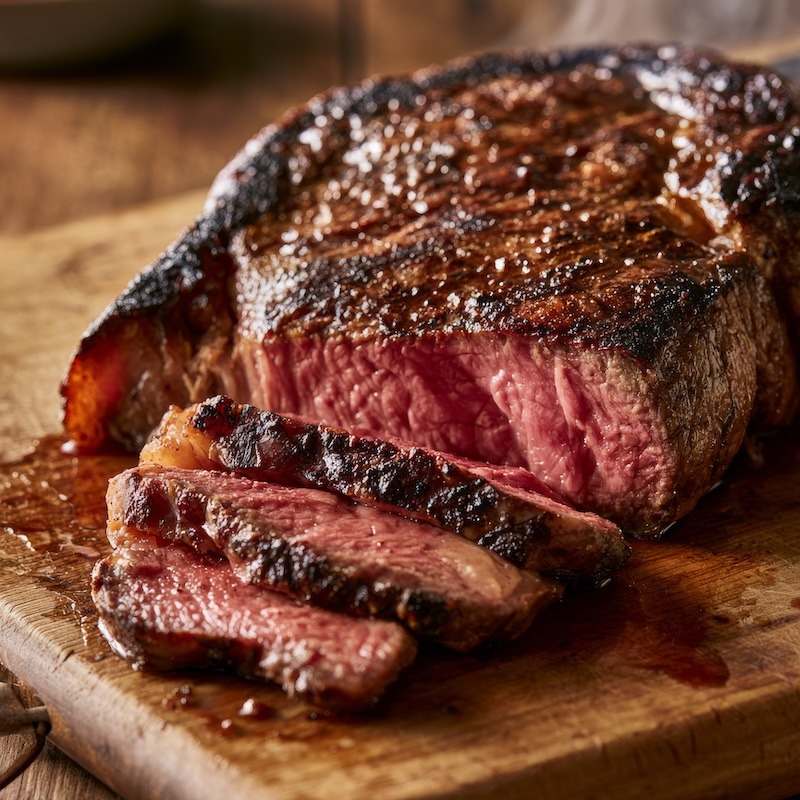
Fast Answer
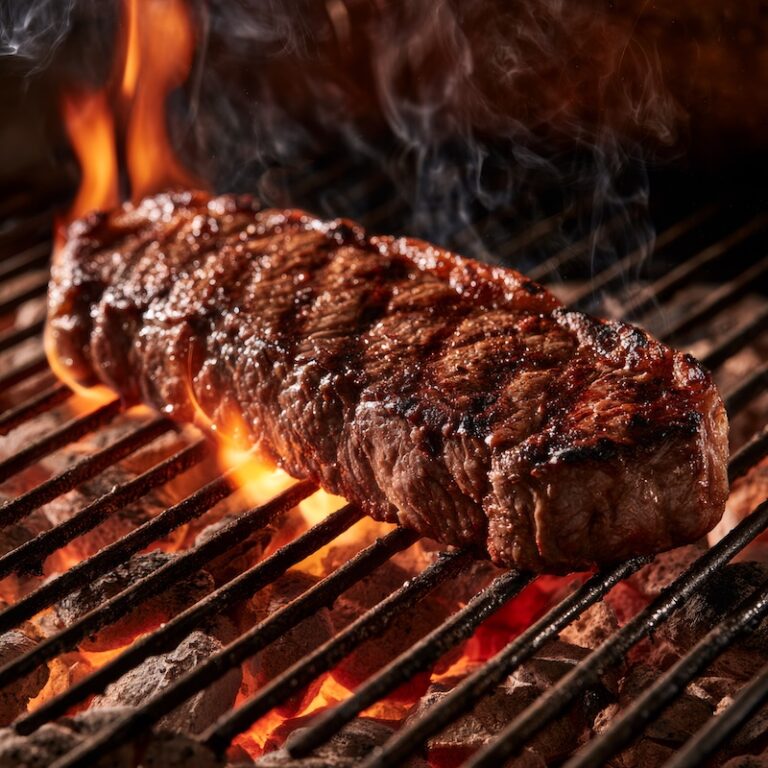
Direct heat grilling means cooking a steak over high heat the entire time, searing and finishing it in the same motion — the fastest method there is, and the one most people learned first. It works best on steaks under an inch thick, cooked hot and fast, checked by feel or a thermometer instead of a guess.
What My Father's Internal Clock Got Right (and What It Missed)
My father cooked steaks the same way for decades — briquettes hot, steaks straight on the grate, timed by instinct instead of a thermometer, no resting before they hit the plate. It worked more often than not, and I grilled steaks that way myself for years before I understood why some of his came out better than others.
Direct heat is still the fastest, simplest way to grill a steak. This page is his method, kept mostly intact, with the one or two things a thermometer and a little patience add.
Start Here
- You want the fastest method, full stop. Direct heat goes from grill to plate quicker than any other technique on the hub page — no waiting, no extra equipment, no separate stages.
- Your steak is under about an inch thick. This is the one condition that matters most. Anything thicker and you're fighting the same problem my father sometimes lost — the outside finishes before the inside catches up.
- You're comfortable cooking by feel, or you'd rather a thermometer stopped the guessing. Direct heat has always been a bit of a guessing game. You can keep it that way, or close the gap with a five-dollar instant-read thermometer.
- You want to grill a steak the way it's always been done. This is the original method — the one most people learned first, long before reverse sear or sous vide existed.
Why This Technique Works
- High, direct heat sears the surface fast while the same heat cooks the inside. Crust-building and doneness happen at the same time, off the same fire — not in separate stages like every other method on the hub.
- There's only one heat zone, so there's no room to correct a mistake mid-cook. The same heat browning the outside is also driving the center toward doneness, which is why timing matters more here than with any other method.
- Thin steaks work well because there's less distance between the sear and the center. The crust finishes right around when the center reaches temperature. Thick steaks don't get that luck — the outside overshoots long before the inside catches up.
Think Like a Cook
- Direct heat isn't a shortcut version of the other four methods on the hub — it's the only one where you're building the crust and cooking the center at the exact same time, off the exact same heat.
- Every other method exists because someone decided to split those two jobs apart. My father never split them. That's not a flaw in his method — it's the whole method. You just have to accept that a good crust and correct doneness now share one clock instead of two.
- Once you see it that way, direct heat's limits stop feeling like failures. A thick steak overcooking on the outside before the inside catches up isn't you doing it wrong — it's the method doing exactly what it was always going to do on the wrong cut.
Step-by-Step: Direct Heat Grilling
- Bring the steak close to room temperature, 20–30 minutes, then pat it dry. Look for: no visible moisture beading on the surface — a wet steak steams instead of searing.
- Season generously with salt right before it hits the grill. Pepper too, if you want it on before cooking rather than after.
- Get the grill hot. Charcoal: briquettes ashed over gray, glowing underneath. Gas: preheated to high, 450–550°F, lid closed 10–15 minutes. Look/feel for: heat you can't hold your hand over for more than a second or two.
- Place the steak directly over the heat. Listen for an immediate, steady sizzle — that's good contact. Silence means the grill isn't hot enough yet.
- Don't move it. Let it sear undisturbed, roughly 3–4 minutes for a ¾- to 1-inch steak. Look for: the steak releasing naturally from the grate on its own. If it's sticking and tearing, it isn't ready to flip.
- Flip once. Sear the second side the same way. Watch for flare-ups from dripping fat — move the steak to a cooler spot on the grill if flames get big, then bring it back.
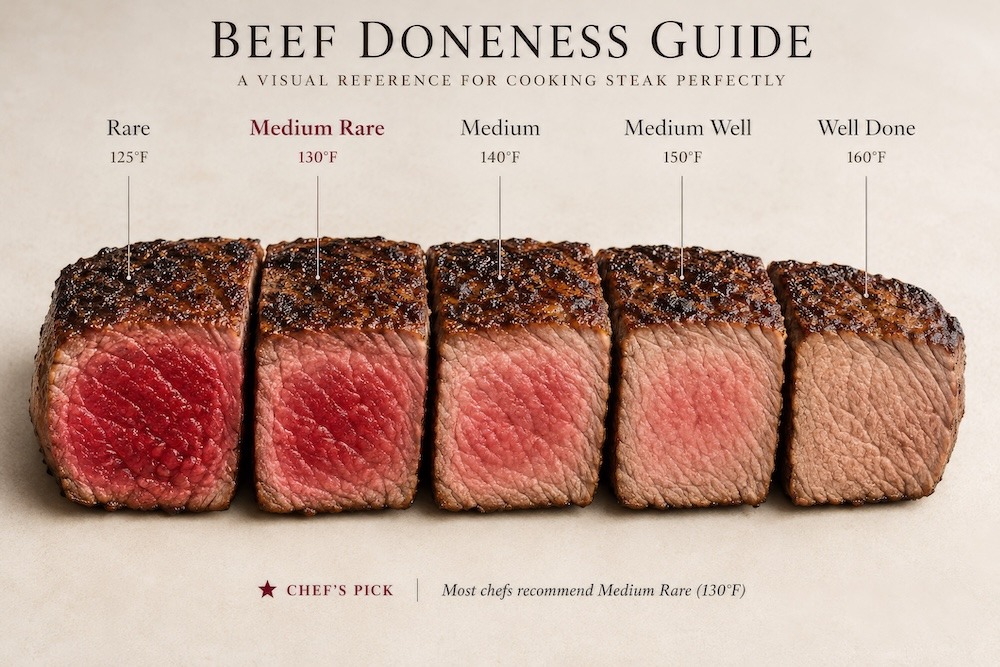
- Check doneness. An instant-read thermometer closes the exact gap my father's method left open — pull the steak 3–5°F under your target, since a hard sear still carries a little heat forward.
- Rest it for 5 minutes before cutting. This is the one step I've added that my father skipped — grate to plate worked for him, but a short rest keeps more juice in the steak instead of on the cutting board.
What Most Cooks Get Wrong
- They crank the heat as high as it goes, thinking hotter is always better, then panic-flip when flare-ups start — steady high heat beats an inferno you can't control.
- They flip constantly instead of leaving the steak alone. Every flip resets the crust that's forming and adds time without adding precision.
- They use direct heat on a thick steak and end up with a charred outside and a cool center — that's not a mistake in execution, it's the method's actual tradeoff, applied to the wrong cut.
- They skip resting because "that's how it's always been done" — which was genuinely my father's approach, and it's the one place I'd tell you to do it differently than he did.
What Went Wrong (and Why)
- Outside charred, center still raw → the steak was too thick for direct heat → switch to two-zone or reverse sear for anything over about 1¼ inches.
- Steak dried out even though you pulled it "on time" → no rest before cutting → let it sit 5 minutes off the heat, even though it feels like a wasted step on a fast method.
- Steak tore when you tried to flip it → flipped before a crust had actually formed → wait for it to release naturally from the grate, usually 3–4 minutes on the first side.
- Every steak turns out a little different even though you cook them the same way → doneness judged by feel or time alone, no thermometer → an instant-read thermometer removes the exact guesswork my father's method never solved.
- Flare-ups keep scorching the crust → fat dripping onto open flame directly under the steak → shift it to a cooler part of the grill until the flare dies down, then move it back.
Control the Variables
- Heat level: higher heat sears faster but narrows your margin for error. 450–550°F is the useful range for most home grills, charcoal or gas.
- Steak thickness: this is the variable the whole method hinges on. Under 1 inch is the sweet spot, 1 to 1¼ inches is workable if you're watching closely, anything thicker and it's time to switch methods.
- Time per side: roughly 3–4 minutes per side for a ¾- to 1-inch steak at high heat — adjust based on thickness and what the sizzle and smoke are telling you, not the clock alone.
- Fat content and marbling: well-marbled cuts like ribeye tolerate direct heat's flare-up risk better than lean cuts like filet, which can dry out fast if left even slightly too long.
When to Use This Technique
- Best for: thin steaks (strip, flank, skirt, sirloin under 1 inch), weeknight cooking, and anyone who wants minimal equipment and minimal time.
- Not ideal for: thick-cut ribeyes or porterhouses over 1¼ inches, cooking for guests where consistent doneness matters more than speed, or anyone still building confidence reading a grill by sound and smoke — two-zone grilling gives more margin for error while you learn.
Apply It to Real Food
- New York strip: the classic direct-heat cut — usually under an inch, marbled enough to handle high heat without drying out.
- Skirt or flank steak: thin and lean, cooks in minutes over direct heat. The real risk is overshooting past medium, since there's so little mass to buffer the heat.
- Ribeye: works well under an inch, but a thick-cut ribeye is exactly the cut that pushes direct heat past its limit — that's the moment to switch methods.
- Filet mignon: lean and often thick, a genuine edge case. Direct heat can dry out the outside before the center catches up, making this one of the better candidates for two-zone instead.
Frequently Asked Questions
What is direct heat grilling? Cooking a steak directly over the hottest part of the grill for the entire cook, with no separate zones or stages — the same heat sears the surface and brings the center to doneness at once.
How long do you grill a steak over direct heat? Roughly 3–4 minutes per side for a ¾- to 1-inch steak at 450–550°F, adjusted for exact thickness and the actual temperature your grill is running at.
What grill temperature is best for direct heat steaks? 450–550°F, whether charcoal or gas. Charcoal briquettes should be ashed over gray with visible glow underneath; a gas grill should be preheated on high with the lid closed for 10–15 minutes.
Can I use direct heat on a thick steak? Not well. Past about 1¼ inches, the outside overcooks before the center catches up — that’s the exact tradeoff this method makes. Reverse sear or two-zone grilling separate the two jobs and handle thick cuts better.
Do I need a meat thermometer for direct heat grilling? No, but it helps. This method has traditionally been a guessing game — my father never used one — and an instant-read thermometer closes that gap if you’d rather not leave doneness to instinct.
Should I rest a steak cooked over direct heat? Yes, even though the traditional version of this method skips it. Five minutes off the heat before cutting keeps more juice in the steak instead of on the board.
Charcoal or gas for direct heat grilling? Charcoal gives a smokier flavor and a slightly higher ceiling for heat; gas gives easier, more consistent temperature control. Both work well for direct heat as long as the grill gets hot enough.
Why does my steak turn out different every time even though I cook it the same way? Usually, inconsistent heat or judging doneness by time instead of temperature. Direct heat leaves less room for error than other methods, so small differences in grill heat or steak thickness are more noticeable.

- Not sure direct heat is the right call for your cut? Compare all five ways to grill a steak: How to Grill a Steak: Pick the Right Method.
- Want the exact temperature for your target doneness? Steak Doneness Guide.
- The same doneness-by-temperature logic applies beyond steak: Meat Doneness Temperatures.
- Got a cut over 1¼ inches? Reverse Sear, Step by Step separates the sear from the cook instead of doing both at once.
- Want more margin for error while you're still learning to read a grill? Two-Zone Grilling Explained.