Fast Answer
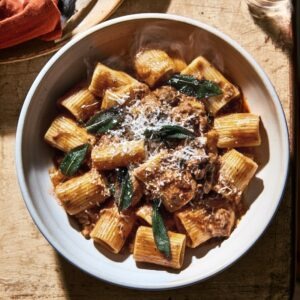
Bucatini all'Amatriciana is a Roman pasta sauce built on guanciale (cured pork jowl), crushed tomatoes, and Pecorino Romano. The key technique is rendering the guanciale in a cold pan so the fat releases slowly, giving you a glossy, flavorful base — not greasy, not burnt.
Bucatini all'Amatriciana: Start the Guanciale Cold
Amatriciana is one of the four canonical Roman pasta sauces, and it’s the one most people get subtly wrong. Not because it’s complicated — it isn’t — but because the small decisions matter more than the recipe suggests.
Which fat. Which cheese. How do you build the pan? This guide walks through the technique behind the dish, not just the steps, so you understand what you’re making and why it works.
My oldest daughter taught me how to prepare this dish and it’s one we love to cook together.
Start Here: What to Know Before You Cook
- This is a short-ingredient dish. That means every ingredient carries weight. Don't substitute carelessly — understand what you're trading away.
- Guanciale is the foundation. It's cured pork jowl, not bacon. The fat renders differently and the flavor is deeper. If you can't find it, pancetta is the next-best substitute.
- Cold pan start is non-negotiable. Starting guanciale in a cold pan lets the fat render gradually, building flavor instead of burning it off.
- Reserve pasta water before you drain. It's not optional here — starchy water is what binds the sauce to the pasta at the end.
- Bucatini takes longer than spaghetti. Check the package, but budget an extra 2–3 minutes over thin pasta. Taste it — don't trust the timer.
Why This Recipe Works
- Cold-pan rendering. Starting guanciale in a cold pan draws the fat out slowly over medium-low heat. You get rendered fat as your cooking medium and crisp, golden meat — not burnt bits in dry oil.
- Tomato paste before the tomatoes. Cooking tomato paste for 60 seconds in the rendered fat deepens its flavor through caramelization. It shifts from sharp and raw to rich and slightly sweet.
- Onion adds body without showing up. Traditional Amatriciana omits onion, but a small amount sweated in guanciale fat adds natural sweetness that rounds out the acidity of the tomatoes — without announcing itself.
- White wine deglazes and brightens. The splash of wine lifts the fond (those browned bits) off the pan and adds a note of acidity that keeps the sauce from feeling heavy.
- Pecorino finishes, not melts. Grated over the top at the end, not stirred in over heat, so it keeps its sharp, salty character rather than turning gluey.


Bucatini all'Amatriciana
Equipment
- large pot for pasta
- fry or saute pan
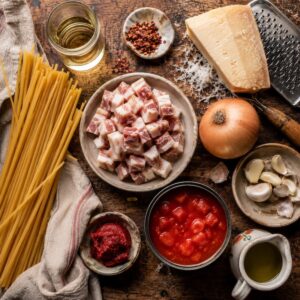
Ingredients
- 1 pound bucatini pasta
- 1 cup guanciale diced
- 1 tablespoon olive oil
- 1 splash white wine to deglaze the guanciale
- 1 cup yellow onion minced
- 2 tablespoons garlic minced
- hot pepper flakes to taste
- 2 tablespoons tomato paste
- 28 ounce can diced tomatoes
- ¼ teaspoon oregano dried
- salt and pepper to taste
- pecorino romano cheese freshly grated
Instructions
Salt & Start the Pasta Water
- Fill a large pot with water and bring it to a boil over high heat. Salt it heavily — the water should taste noticeably salty, not like the sea, but close to it.
Cold-Pan Guanciale
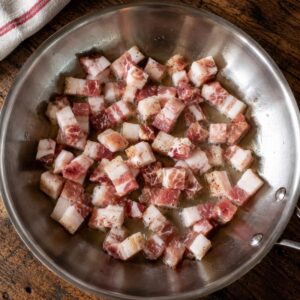
- Place the diced guanciale in a cold, wide pan — don't preheat it. Turn the heat to medium-low. As the pan warms, the fat in the guanciale will slowly melt out slowly. This is the point. You're building a rendered-fat cooking base, not searing meat.
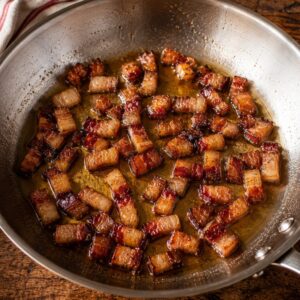
- Stir occasionally and cook until the pieces are golden and slightly crisp at the edges, 6–8 minutes. The fat in the pan should look clear and glossy, not brown.
Deglaze with White Wine
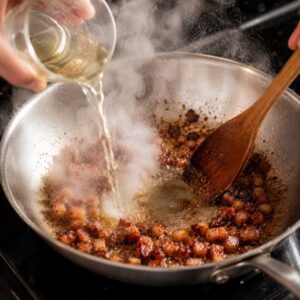
- Add a splash of white wine (about 2–3 tablespoons) to the pan. It will sizzle hard. Use a wooden spoon to scrape up any browned bits stuck to the bottom — that's concentrated flavor. Let the wine cook off until the sharp alcohol smell fades, about 60 seconds.
Sweat the Onion
- Add the minced yellow onion to the guanciale fat. Cook over medium-low heat until the onion turns translucent and soft, about 3 minutes. You're not browning it — you're sweating it. The goal is sweetness and body in the background, not caramelized flavor up front.
Add Garlic
- Add the minced garlic and stir. Cook for about 2 minutes, until fragrant but not browned. Garlic turns bitter fast once it colors. Keep the heat moderate and keep it moving.
Toast the Tomato Paste
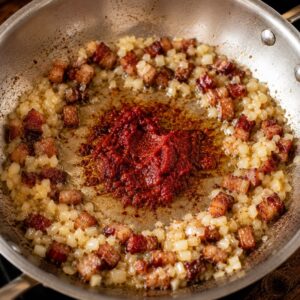
- Push the onion and garlic to the sides of the pan and add the tomato paste to the center. Let it sit undisturbed for about 30 seconds — you want it to make direct contact with the hot pan. Then stir it into the fat and cook, stirring, for another 30–45 seconds. It should shift from bright red to a slightly darker, brick-red tone. This step builds depth that you can't get any other way.
Add Tomatoes & Simmer
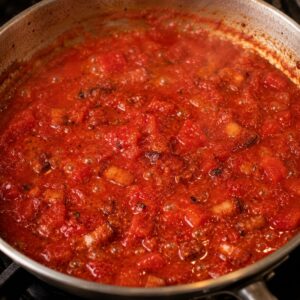
- Pour in the diced tomatoes and add the dried oregano. Stir everything together and lower the heat to a gentle simmer.
- Cook uncovered for 10–12 minutes. The sauce should reduce slightly and the tomatoes should soften and break down. Don't push it past 15 minutes — you want the tomatoes to retain some brightness.
Season with Heat & Salt
- Add hot pepper flakes to taste. Stir and taste the sauce before adding salt — the guanciale and Pecorino both carry significant salt, and the dish can easily tip over. Adjust with black pepper as needed.
Cook the Bucatini
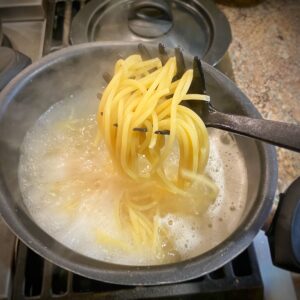
- Add the bucatini to the boiling water. Cook according to the package, but start tasting 2 minutes early. You want it just short of fully cooked — still with a little resistance at the center (al dente). Before you drain, scoop out at least ½ cup of pasta water and set it aside.
Finish the Pasta in the Sauce
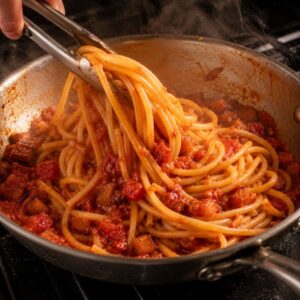
- Drain the pasta and add it directly to the saucepan over medium-low heat.
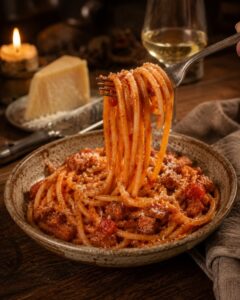
- Toss the pasta in the sauce for 60–90 seconds, letting the bucatini absorb the sauce rather than just sitting in it. If the sauce looks tight or the pasta clumps, add pasta water a splash of pasta water at a time and keep tossing. The finished dish should look glossy and cohesive — sauce clinging to every strand, not pooling at the bottom of the pan.
Plate & Finish
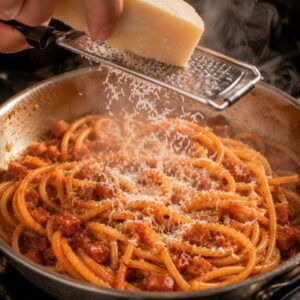
- Divide into bowls. Grate Pecorino Romano directly over the top — generously, not decoratively.
- Serve immediately. This dish does not wait.
Notes
Nutrition
What Most Cooks Get Wrong
- Starting guanciale in a hot pan. The fat seizes instead of rendering. You end up with chewy meat and greasy oil rather than a silky, emulsified base.
- Using bacon as a 1:1 swap. Bacon is smoked. That smokiness competes with the tomato and cheese instead of supporting them. Pancetta is the right substitute if guanciale isn't available.
- Skipping the tomato paste step. Adding it directly to the liquid means it never caramelizes. You lose a layer of depth that takes 60 seconds to build.
- Draining pasta and walking away from the water. The pasta water is the only tool you have to adjust sauce consistency once you combine them. Forget it and you're stuck.
- Adding Pecorino too early. Over direct heat, the cheese seizes and turns grainy. Add it off heat or at the very end, and it stays smooth and sharp.
- Overcooking the sauce. Amatriciana isn't a long-simmer sauce. Ten to fifteen minutes is enough. Cook it longer and the tomato brightness that defines the dish disappears.
Quick Fixes & Pro Tips
- Sauce too thick? Add pasta water a splash at a time while tossing. The starch helps it cling to the bucatini rather than pooling at the bottom of the bowl.
- Sauce too acidic? A pinch of sugar works, but a better fix is cooking the tomatoes a few minutes longer. Heat mellows acidity more cleanly than sugar does.
- Guanciale too salty? Skip adding any salt until you've tasted the fully assembled dish. Between the cured pork and the Pecorino, the sauce is often seasoned enough.
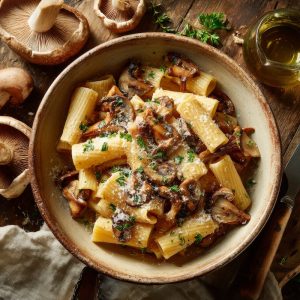
- Can't find bucatini? Spaghetti works. Rigatoni also works — the tubes trap the sauce well. Avoid anything too delicate; this sauce needs pasta with structure.
- Want more heat? Add the chile flakes to the rendered guanciale fat, before anything else goes in. Blooming spices in fat extracts more flavor than adding them to liquid.
- Finishing move: Toss the drained pasta directly in the sauce pan over low heat for 60–90 seconds. The pasta absorbs the sauce rather than just wearing it.
What to Serve With Bucatini all'Amatriciana
- Simple green salad. Arugula with lemon and olive oil. The bitterness cuts through the richness of the guanciale without competing with the sauce.
- Crusty bread. You want something to drag through the remaining sauce in the bowl. A plain baguette or ciabatta — nothing flavored.
- Roasted broccoli or broccolini. The slight char complements the tomato base and adds a vegetable without cluttering the plate.
- Wine — Dry Italian red. A Montepulciano d'Abruzzo or a medium-weight Barbera d'Asti. Both have enough acidity to match the tomato and enough fruit to stand up to the guanciale.
- Wine — if you prefer white. A dry Vermentino or Falanghina. More unusual, but the mineral edge works surprisingly well with the salt and richness of the sauce.
Storage & Make-Ahead
- Sauce stores well; pasta does not. Make the sauce up to 3 days ahead and refrigerate. Cook fresh pasta the day you're serving — bucatini doesn't reheat well once sauced.
- Freezing. The sauce freezes fine for up to 2 months. Store in an airtight container. Thaw overnight in the fridge and reheat gently on the stovetop over low heat.
- Reheating. Add a splash of water when reheating — the sauce thickens in the fridge. Stir over medium-low heat until loose and glossy again.
- Already-sauced pasta. Keeps in the fridge for 1–2 days. Reheat in a pan with a bit of water or olive oil. It won't be the same as fresh, but it's still worth eating.
Guanciale
Guanciale (pronounced gyaan-chaa-lay) is cured pork jowl — the cheek and jaw of the pig, not the belly. That distinction matters more than it sounds. The fat in guanciale is softer and more delicate than pancetta, and it renders at a lower temperature, which is exactly why you start it in a cold pan. Push the heat too high, and you lose the slow melt that gives this sauce its silky base.
The flavor is less salty than pancetta and carries a subtle sweetness that you won’t notice as guanciale — you’ll just notice that the sauce tastes rounder and more complete.
It’s not easy to find in most supermarkets. A good Italian grocer or specialty market is your best bet, and it’s worth the trip. If you can’t find it, pancetta is the right substitute — same cold-pan method, slightly leaner result. Bacon is a last resort; the smokiness competes with the tomato and cheese rather than supporting them. And while I’ve suggested prosciutto as a backup before, I’d steer you toward pancetta first — prosciutto doesn’t render the same way, and you’ll miss the fat.
Pecorino Romano
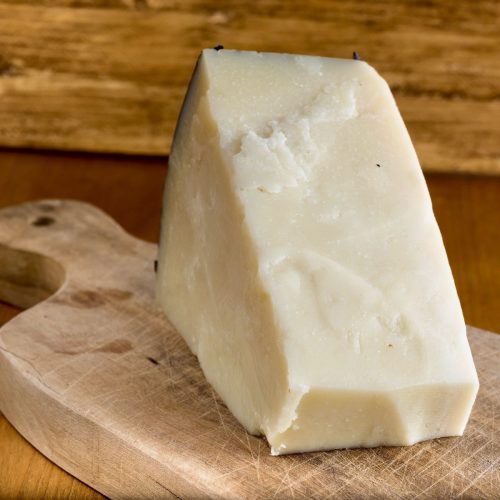
Pecorino Romano is an aged sheep’s milk cheese — sharper, saltier, and more pungent than Parmesan. That edge is not incidental. In Amatriciana, it’s doing real structural work: the salt reinforces the guanciale, the acidity cuts through the fat, and the sharpness keeps the whole dish from feeling heavy.
My favorite brand is Locatelli, which has been around for over 200 years — and honestly, I sometimes eat a small piece straight while I’m cooking if there’s any extra. No apologies for that.
One thing to keep in mind: Pecorino Romano is significantly saltier than Parmesan. If you swap in Parmesan or use a blend, taste the dish before adding any salt. The seasoning balance shifts more than you’d expect. And grate it fresh — pre-grated Pecorino is drier and doesn’t distribute evenly.
Bucatini
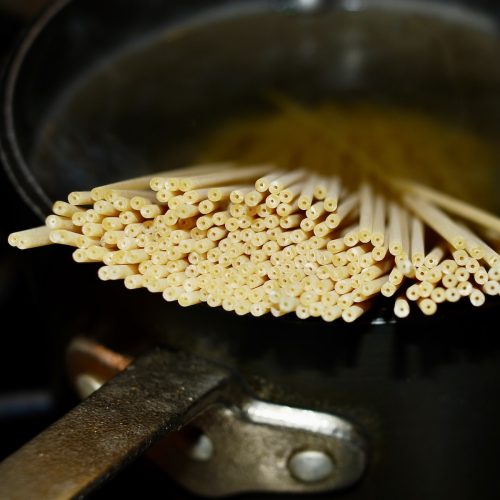
Bucatini is a pasta that looks a lot like spaghetti but it is thicker and has a whole running down through the strand. My kids like to say it looks like a straw made out of pasta.
If you lived in Naples, Italy, you would call this pasta perciatelli. Same pasta, but just called something different in a different part of Italy.
For years you could only find bucatini pasta in speciality markets or Italian grocers, but now I’m finding it in my local supermarkets. I guess it is becoming more popular and is being used in more Internet recipes.
The Italian word for hole is “buco” so this is where this pasta gets its name. If you can’t find bucatini, try substituting spaghetti or linguini.
Explore More on This Topic
- The meat that makes this dish: Understand what guanciale actually is — why the fat renders differently and what you lose when you substitute.
- The cheese question: Why Pecorino Romano outperforms Parmesan here — and why the swap changes more than just flavor.
- The fat you cook in: A guide to choosing the right olive oil — and when it matters versus when it doesn't.
- The technique behind the onion: What's actually happening when you're sweating onion in rendered fat — and why it's not the same as sautéing.
- The paste step most cooks rush: Why tomato paste matters — and what you're building when you let it toast in the pan.
- Garlic done right: How garlic behaves at different heats — the line between fragrant and bitter is closer than you think.
- Same pasta, different name: Meet perciatelli — what Neapolitans call bucatini — and why the name change tells you something about Italian food culture.
Frequently Asked Questions
Q: What is guanciale and where do I find it? Guanciale is cured pork jowl — the cheek and jowl of the pig, not the belly. It has more fat than pancetta and a more delicate, less salty flavor. Look for it at Italian specialty markets, good butcher shops, or online. If you can’t find it, pancetta is the right substitute. Bacon is a last resort — the smoke flavor will change the dish noticeably.
Q: Can I use pancetta instead of guanciale? Yes. Pancetta is cured pork belly and works well in this sauce. It renders similarly to guanciale, though the flavor is slightly leaner. Use the same cold-pan method. Don’t use smoked pancetta if you can avoid it.
Q: What if I can’t find bucatini? Spaghetti is the most common substitute and works fine. Rigatoni is a good alternative if you want something with more surface area to catch the sauce. Avoid anything too thin or delicate — the sauce is substantial and needs pasta that can hold up to it.
Q: Is onion traditional in Amatriciana? Strictly speaking, no. The most traditional versions from Amatrice use only guanciale, tomato, Pecorino, and chile. But many Roman cooks — and this recipe — use a small amount of finely minced onion sweated in the rendered guanciale fat. It adds sweetness and body. If you want the most traditional version, leave it out.
Q: Can I use Parmesan instead of Pecorino Romano? You can, but it changes the dish. Pecorino Romano is sharper, saltier, and more pungent — that edge is part of what makes the sauce work. Parmesan is milder and sweeter. If you use it, the result will taste good but different. A blend of the two (mostly Pecorino) is a reasonable middle ground.
Q: Why start the guanciale in a cold pan? Starting in a cold pan allows the fat to render slowly, which does two things: it keeps the meat from seizing and toughening, and it builds a flavorful fat base to cook everything else in. Starting hot rushes the process and risks burning the exterior before the interior fat has a chance to release.
Q: Why reserve pasta water? Pasta water is starchy from the cooking process. When you add it to the sauce, that starch acts as an emulsifier — it helps the fat and tomato bind together rather than separate, and it lets you adjust the sauce consistency after combining it with the pasta. Plain water won’t do the same job.
Q: How long should I simmer the tomato sauce? Ten to fifteen minutes is the right window. This sauce is not built for long cooking. The tomatoes should retain some brightness and freshness. Simmer it too long and the acidity that balances the richness of the guanciale cooks off — you’re left with something flat.


2 Responses
I’m on a “diet program”, really a better lifestyle change. But I’m cutting calories, & salt.
Any idea about the nutrition values for this (wonderful) meal?
Thanks, I’m enjoying your website after just finding it.
Hi Hazel, thanks for contacting me. I’m trying to cut calories and salt myself but I do splurge sometimes. I don’t have the nutrition values for this dish but I’m guessing it’s rich. You may be able to find a site online that you can plug in the ingredients and it will give you the nutritional breakdown. Best.