

Homemade Mayonnaise Recipe — Why It’s Better, How to Make It, and How to Fix It When It Breaks

I've broken this batch more than once — watched a perfectly good yolk and a cup of oil turn into something closer to salad dressing, then had to start over. Homemade mayonnaise isn't a guaranteed win. Here's what it actually gets you, and what it costs.

Fast Answer

Homemade mayonnaise takes about five minutes to make and keeps roughly a week refrigerated. It can break if the oil goes in too fast — worth making for ingredient control, not because it's a guaranteed upgrade over a good jar.

Is Homemade Mayonnaise Actually Worth It?

Short answer: sometimes. What you get is full control — the oil you choose, no fillers, no preservatives, flavor adjusted exactly how you like it. What you don’t get is a guarantee.

The emulsion can break, and when it does, the ingredients are wasted, and you’re starting over. I’ve had it happen more than once. This post covers both sides honestly, plus exactly how to fix it when it does go wrong.

Start Here

  • This isn't foolproof: the emulsion can break, and when it does, you're starting over with fresh ingredients.
  • It doesn't keep long: about a week refrigerated, versus months for a store-bought jar with preservatives.
  • Room temperature ingredients matter: a cold egg yolk is a common reason mayo won't come together.
  • The payoff is control, not a guarantee: you choose the oil, skip the fillers, and adjust the flavor — that's the real reason to make this, not an assumption it'll taste dramatically better every time.

Why This Works

  • The egg yolk is the emulsifier: it holds the oil and water-based ingredients together in a way they wouldn't combine on their own.
  • Slow oil addition builds a stable structure: adding it gradually breaks the oil into tiny enough droplets for the emulsion to hold; add it too fast and the droplets are too large to stay suspended.
  • Mustard helps, but isn't required: it contains its own emulsifying compounds, which adds a small margin of stability if you're new to this.
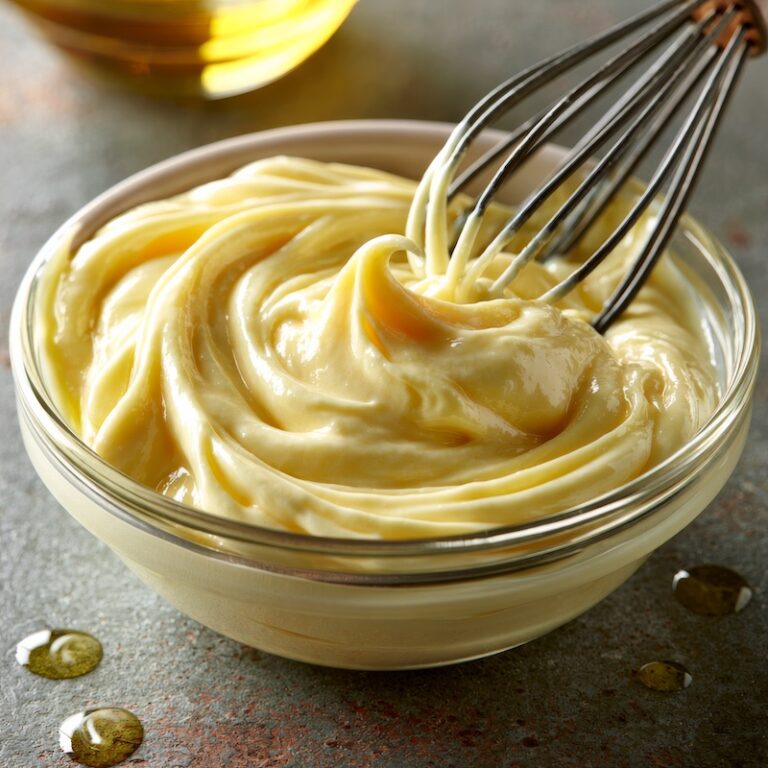
A small bowl of finished, glossy pale-yellow mayonnaise with a whisk resting against the side
Print Recipe
5 from 2 votes

Homemade Mayonnaise Recipe

How to make homemade mayonnaise.
Prep Time5 minutes
Cook Time10 minutes
Refrigerate1 hour
Total Time1 hour 15 minutes
Course: Sauces
Cuisine: American
Keyword: mayonnaise
Servings: 4 servings

Ingredients

  • 1 large egg yolk at room temperature
  • 1 pinch salt
  • 1 teaspoon sugar
  • black pepper use white if you don’t want black specks in your mayonnaise
  • 2 teaspoons lemon juice
  • 1 teaspoon vinegar or 1 teaspoon cold water
  • 1 cup neutral oil
  • 1 teaspoon Dijon mustard optional – adds flavor and helps with the emulsion

Instructions

  • Whisk the egg yolk, salt, sugar, and pepper together until well blended and the yolk lightens in color — this is your emulsion base.
  • Whisk in the vinegar, lemon juice, and water (and the Dijon mustard, if using).
  • While whisking constantly, drizzle in the oil very slowly — a drop or two at a time to start.
    Once about half the oil is incorporated, add the rest in a thin, steady stream. Don't stop whisking.
  • The finished mayonnaise won't be as thick as store-bought. Refrigerate it for at least half an hour before using — it firms up as it chills.
  • Stir, then taste for seasoning. If needed, whisk in a bit more salt, sugar, or vinegar. Give it a minute before tasting — salt takes a while to fully dissolve in the oil.

Notes

To scale this recipe up or down, the ratio is one yolk to 3/4 - 1 cup oil but in my experience I find if you make a larger batch, it is much easier to break the mayo.
Note that raw egg yolk is used as the emulsifier. As with all raw eggs, there is some risk of salmonella contamination. The USDA advises that the elderly, very young and those with compromised immune systems should avoid raw eggs. Use the freshest eggs possible or substitute pasteurized eggs.
Made this? Click the stars at the top of the recipe card to leave a rating — it takes two seconds and helps other cooks find the recipe.

Frustrated cook making common mistakes.

What Most Cooks Get Wrong

  • Adding the oil too fast: the emulsion needs it in a slow, thin stream, especially at the start — dump it in and it breaks.
  • Starting with a cold egg yolk: cold ingredients emulsify less reliably than room-temperature ones.
  • Making too large a batch: the ratio gets harder to control as volume increases — smaller batches break less often.
  • Expecting it to keep like store-bought: without preservatives, this is a use-it-this-week condiment, not a pantry staple.
Quick Fixes and Tips

  • Mayo broke or won't thicken? Start fresh with a new egg yolk in a clean bowl, whisk in a little oil until it emulsifies, then slowly whisk in the broken mixture — a fix a reader shared that genuinely works.
  • Egg too cold? Stand it in a cup of warm water for a few minutes before you start — cold eggs are one of the most common reasons mayo won't come together.
  • Using a food processor? Run it on low speed while you drizzle the oil in through the feed tube — high speed adds the oil too fast and increases the odds of breaking the emulsion.
  • Want it thicker? Add the remaining oil in a slightly thinner stream, whisking constantly — thickness comes from how gradually the oil goes in, not from adding more of it.

What to Serve With This

  • Sandwiches and burgers: the most obvious use, and the easiest way to actually taste the difference.
  • Potato or pasta salad: binds and adds tang without needing much else.
  • Dips: stir in garlic, herbs, or hot sauce for something you control completely.
  • Deviled eggs: a small-batch use that doesn't require finishing the whole batch before it turns.

Storage and Make-Ahead

  • Refrigerator: keeps about a week in an airtight container — this isn't a set-it-and-forget-it condiment like store-bought.
  • Don't freeze it: freezing breaks the emulsion permanently.
  • Make only what you'll use: given the shorter shelf life, a small batch made when you need it beats a big batch you're racing to finish.
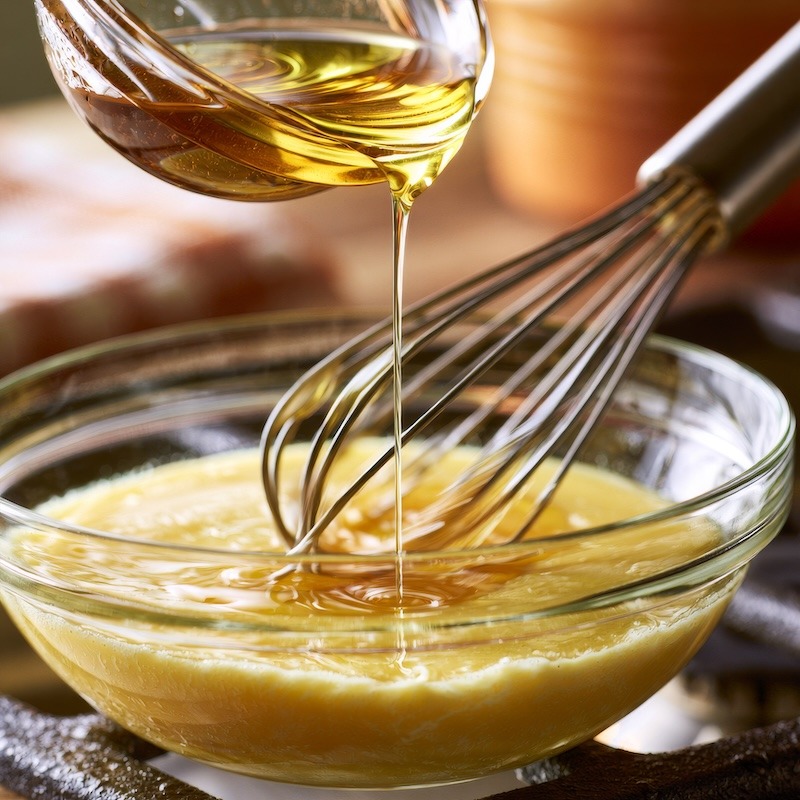
Oil being drizzled in a thin stream into a bowl of pale yolk mixture mid-whisk

Using Kitchen Gadgets

You can also make mayonnaise in a blender, an immersion blender, a stand mixer, or by hand with a balloon whisk. The procedure is the same as the food processor method.

Food Processor Mayo

A food processor gives you a stable emulsion with very little effort — probably the easiest hands-off method if you own one.

Put the egg yolk, salt, sugar, pepper, and vinegar in the processor bowl fitted with the standard blade. Pulse briefly to combine.

Run the processor on low speed and begin adding the oil through the feed tube, a few drops at a time. Low speed matters here — high speed adds the oil too fast and raises the odds of breaking the emulsion.

Once about half the oil is incorporated, add the rest in a thin, steady stream with the machine still running. Scrape down the sides once if needed to make sure everything’s fully combined.

Blender Mayo

If you do not own a food processor, using a blender is the next best way to make a cup or so of mayonnaise.

Put egg yolk, salt, sugar, pepper and vinegar in the blender container. Put on the lid, taking out the plastic plug in the center.

Turn the blender on medium speed. Once the egg yolk is light in color, begin adding the oil, a couple of drops at a time.

Once half the oil is incorporated, add it in a thin stream. You might need to scrape the blender container one or two times with a rubber spatula to make sure that all the ingredients are emulsified.

Immersion Blender Mayo

A good method to make mayonnaise very quickly since the powerful blades of an immersion blender emulsify the oil and vinegar almost instantly.

Put all the mayonnaise ingredients in a tall, narrow container, such as a straight-sided beaker.

Insert the immersion blender right down to the bottom of the beaker. Turn it on high, and very slowly raise it to the top of the beaker. Instant mayonnaise.

Stand Mixer Mayo

Use this method to make large quantities of mayonnaise. You will probably need at least four yolks since stand mixers are designed so that the attachments don’t touch the bottom or sides of the bowl.

Put egg yolk, salt, sugar, pepper and vinegar in the bowl of your stand mixer. Using the whip attachment, whip egg yolk mixture on medium-high speed until light in color.

Add the oil, a drop at a time, until you have incorporated half. Then, add the rest of the oil in a thin stream.

Balloon Whisk Mayo

Since you control the whisk, this is a good method to use if you just want a small amount of mayonnaise. You can whisk in all directions, making sure that even ¼ cup worth of mayonnaise is nicely emulsified.

Do use handmade mayonnaise right after making, since the emulsion is not quite as stable. There is no way for a human arm to break the fat into droplets as small as a mechanical device can (unless you have a bionic arm).

Put egg yolk, salt, sugar, pepper and vinegar in a large metal or glass bowl. Use a bowl that is much bigger than you think you will need to give you plenty of room to whisk.

Whisk yolk mixture until light in color. Add the oil, a drop or two at a time. Whisk each addition of oil until it is emulsified before adding more.

Plain Mayonnaise? Not Very Exciting…

You can make endless mayonnaise variations either by adding ingredients during the initial blending or by stirring them in after the fact. In general, stir in ingredients with texture—capers, fresh herbs, chopped pickle or onion, etc—after you make the base mayonnaise.

Ingredients to Add with the Yolks Ingredients to Mix Into Finished Mayonnaise
Curry powder Relish or finely chopped pickles
Cayenne pepper Dill (fresh or dried)
Old Bay or Crab Boil Cilantro (fresh or dried)
Chili powder Basil (fresh or dried)
Any flavor of mustard Fennel fronds
Your favorite hot sauce Sage (fresh or dried)
Soy sauce Oregano (fresh or dried)
Reconstituted wasabi powder Thyme (fresh or dried)
Lemon juice (substitute for vinegar) Minced onion
Flavored salts (smoked or truffle) Minced roasted garlic
Garlic paste Capers
Finely minced or Microplaned lemon zest Green peppercorns
Chopped peppers or chilies
Prepared horseradish

Ways to Use Mayonnaise

Use Description Why It Works
Sandwich Spread Spread on bread for sandwiches and burgers. Adds moisture, flavor, and a creamy texture that complements meats and veggies.
Salad Dressing Base Blended with vinegar, herbs, or mustard for creamy dressings. Acts as an emulsifier, giving dressings a smooth, rich consistency.
Potato Salad and Pasta Salads Mixed into cold salads for flavor and binding. Holds ingredients together while adding a tangy creaminess.
Cole Slaw Used as a base for creamy slaw dressings. Balances the crunch and sharpness of cabbage with a smooth texture.
Dip Base Combined with herbs, garlic, or spices for dips. Creates a flavorful, thick base that clings to veggies or chips.
Burger or Fry Sauce Mixed with ketchup, mustard, or hot sauce for condiments. Enhances flavor and adds creaminess without overpowering other ingredients.
Grilled Cheese Helper Spread on bread instead of butter before grilling. Creates an ultra-crisp, golden crust and adds subtle tang.
Baking Ingredient Used in cakes or breads to boost moisture. Eggs and oil in mayo enhance tenderness and richness.
Marinade or Binder Coats proteins before roasting or grilling. Seals in moisture and helps seasonings stick to the surface.
Deviled Eggs Filling Mixed with yolks and seasonings for the filling. Gives a smooth, creamy texture with tangy balance.

Do I Have to Use Plain Oil?  Boring!

You can use any type of oil that you’d like. Using a neutral vegetable oil will allow any other ingredients to shine as it takes a background position, but feel free to experiment with using a peppery extra virgin olive oil or even one of the flavored oils that are available now, such as lemon or hot pepper.

You do not only have to use one type of oil, either. Experiment with using different proportions of neutral oil to flavored oil. Use oils with a very assertive flavor, such as toasted sesame oil, as an accent only.


What About Aioli? Isn’t That Just Like Mayonnaise?

Traditionally, aioli is made with minced garlic and extra virgin olive oil. Many chefs in restaurants serve “garlic aioli” as a dipping sauce, but if they only stirred some minced garlic into some mayonnaise, it’s just a flavored mayo.

Aioli sounds more “classy” than mayonnaise, so many chefs use the term on their menus, even if they aren’t making it with pricey extra virgin olive oil.

To make a classic aioli, use 1 egg yolk and 1 teaspoon of minced fresh garlic to one cup of extra virgin olive oil. You can season it with a bit of lemon juice, salt and pepper.

Popular Brands of Commercial Mayonnaise

Brand Flavor Profile Country of Origin
Hellmann's (Best Foods) Creamy, slightly tangy, balanced United States
Kewpie Rich, umami, slightly sweet, eggy Japan
Duke's Tangy, bold, no sugar United States
Heinz Classic, slightly sweet, smooth United Kingdom
Blue Plate Rich, slightly tangy, creamy United States
Sir Kensington's Natural, tangy, artisanal United States
Kraft Mild, slightly sweet, familiar United States
Naturalia Organic, subtle, fresh France
Thomy Egg-rich, creamy, mild spice Switzerland
Calvé Balanced, creamy, mild tang Netherlands
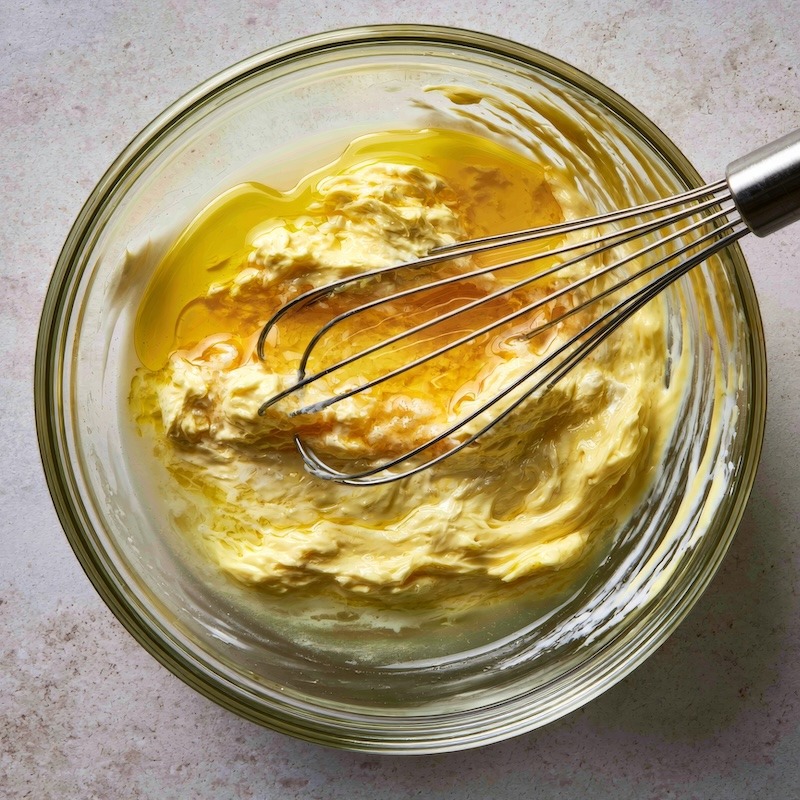
A broken, curdled batch of mayonnaise in a glass bowl visibly split
Broken Mayonnaise

Frequently Asked Questions About Making Mayonnaise

Is homemade mayonnaise actually worth making? Sometimes. You get full control over the oil and ingredients, but no guarantee it’ll taste dramatically better than a good store-bought jar — the real payoff is control, not an automatic upgrade.

Why did my mayonnaise break? Almost always because the oil went in too fast, or the egg yolk was cold when you started. Both make the emulsion unstable.

How do I fix broken mayonnaise? Start fresh with a new egg yolk in a clean bowl, whisk in a little oil until it emulsifies, then slowly whisk in the broken mixture until it comes together.

What setting should I use on a food processor? Low speed, with the oil added slowly through the feed tube — high speed adds the oil too fast and raises the odds of breaking the emulsion.

Is it safe to eat raw egg yolk? For most healthy adults, yes, if the eggs are fresh. The USDA recommends the elderly, very young, and immune-compromised avoid raw eggs, or you can substitute pasteurized eggs.

How long does homemade mayonnaise last? About a week in the refrigerator. It doesn’t have the preservatives that give store-bought mayo its months-long shelf life.

Can I use a whole egg instead of just the yolk? This recipe is built around the yolk alone, which gives a richer, more stable emulsion — a whole-egg version is really a different recipe with different ratios.

What oil should I use? A neutral oil lets other flavors come through; a light olive oil adds character, but a robust, peppery one can overpower the mayo.

More On This Topic

Has your mayo ever broken on you? I want to know what worked to fix it, and whether you've found homemade worth the occasional hassle or not.

11 Responses

  1. You reference adding sugar into the blender recipe, but you did not include a suggested amount.

    Oops, my mistake and one I’ll fix right away. You can add about 1 teaspoon of sugar or a bit more if you want something more like a Miracle Whip Salad Dressing.

  2. Mustard is a MUST if you want to make mayo at home.
    I made it with a whisk for the first time today and it went well.
    It tastes a lot like what you get in Kewpie Japanese mayo, which I love much better than other commercial mayos.

  3. I made one batch of mayo decades ago and it turned out well. I realized I was out of mayo as I was making a sandwich this noon. I started to mix the ingredients for the yolk mixture in a bowl and it just coated the bowl, so I transferred it to a blender. The blade barely touched it. I then added the other ingredients (including water and lemon juice) as instructed. Finally I added the oil VERY slowly.

    Unfortunately, it curdled. I must admit the egg yolk was from the refrigerator, as I was in the middle of making the sandwich. I put it in the refrigerator. Maybe it will recover.

    1. Making Mayo absolutely requires all ingredients to be at room temperature. I often will stand a cold egg in a cup of warm water to bring the temperature up if I am in a hurry.

      But..

      If your mayo does split, it is easy enough to fix.

      Start with a new egg in a clean bowl and s little oil to get the emulsion going, once this has happened, slowly add the split mayonnaise. It should all come together nicely.

  4. You don’t mention using a hand mixer as an option. Would this also work? Seems like a good option for smaller batches and the mayo would be more stable than using hand whisk.

    1. Hi Lori, yes a hand mixer would be a great option. Just be careful not to overwork the oil and egg yolk. I have prepared homemade olive oil in a food processor and overworked it to the point where I had to throw it out and start over.

5 from 2 votes

Leave a Reply

Your email address will not be published. Required fields are marked *

Recipe Rating


This site uses Akismet to reduce spam. Learn how your comment data is processed.