


Asparagus Risotto Recipe
An inspired recipe for asparagus risotto.
Servings: 4 - 8 servings
Ingredients
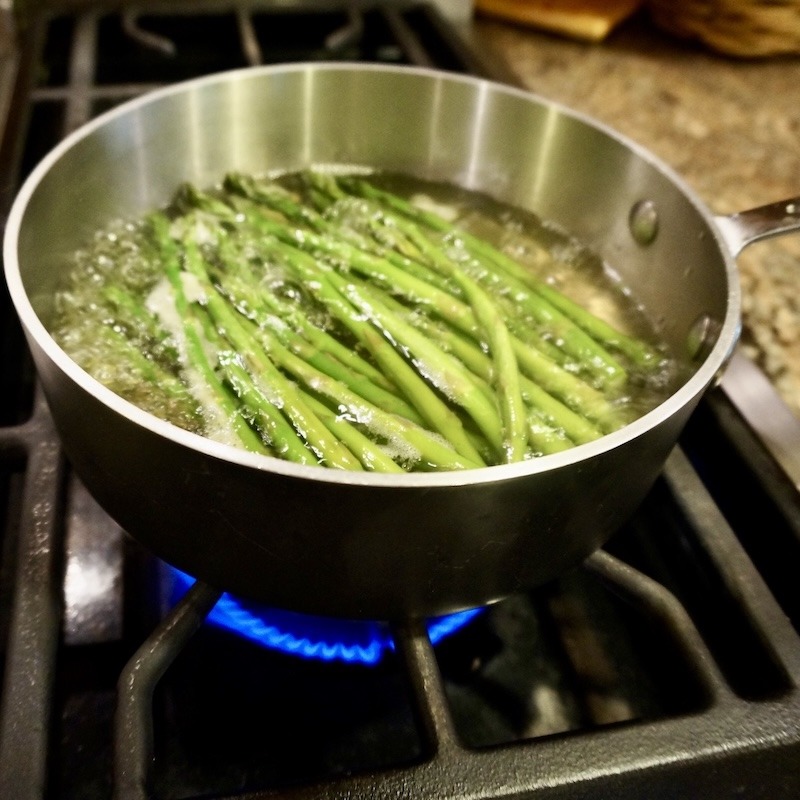
- 1 bunch asparagus trimmed and blanched tender
- 2 tablespoons butter
- 3 tablespoons olive oil extra-virgin
- 1 large white onion cut in a tiny dice
- 1 pound risotto rice preferably Canaroli or Arborio
- 2 cups white wine
- 1 quart chicken stock heated
- 1 quart water asparagus blanching
- Parmesan cheese Freshly ground, to taste
- freshly ground pepper to taste
Instructions
Warm Your Liquids
- Heat the chicken stock and keep it warm on a back burner.
Cold liquid slows the cooking and can make the risotto uneven.
Start the Base
- In a 9–10-inch straight-sided skillet, melt the butter over medium heat. Add the olive oil and let it heat until fragrant.
Butter first, oil second, helps prevent burning while building flavor.
Cook the Onions
- Add the finely diced onion with a light sprinkle of salt.
- Sauté 3–4 minutes until soft and translucent, not browned.
Keep the heat moderate—browned onions will change the flavor of the dish.
Toast the Rice
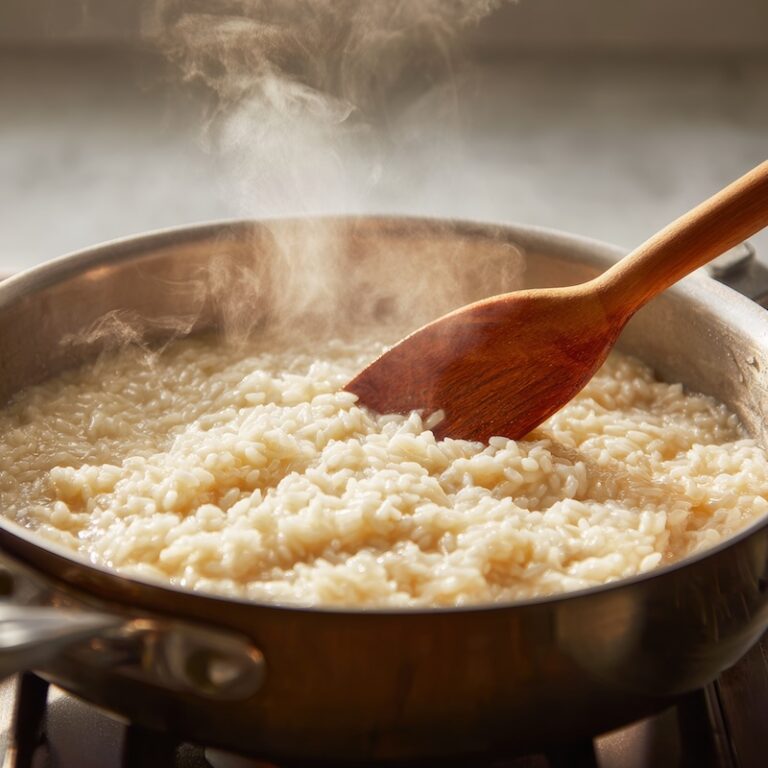
- Add the risotto rice and stir to coat with the fat. Cook until the grains turn slightly opaque.
This step builds structure and helps the rice cook evenly later.
Deglaze with Wine
- Increase the heat slightly, add the white wine, and stir until it mostly evaporates.
You should smell the alcohol cook off—what’s left is pure flavor.
Begin the Risotto Rhythm
- Lower the heat to a gentle simmer. Add enough warm stock to just cover the rice.
- Stir frequently as it cooks.
Repeat & Build
- As the liquid absorbs, add more stock, one ladle at a time. Continue stirring and letting each addition reduce before adding the next.
Taste as you go. Season lightly—remember, the liquid reduces and intensifies.
Add Asparagus Flavor
- When you’re close to done, blend about 6 asparagus spears with some of the blanching water. Stir this into the risotto as your final addition of liquid.
Check for Doneness
- The rice should be tender but still slightly firm in the center, with each grain holding its shape.
Rest the Risotto
- Turn off the heat and let it sit for 5 minutes.
This allows the rice to absorb the last bit of liquid and “fluff” naturally.
Serve & Finish
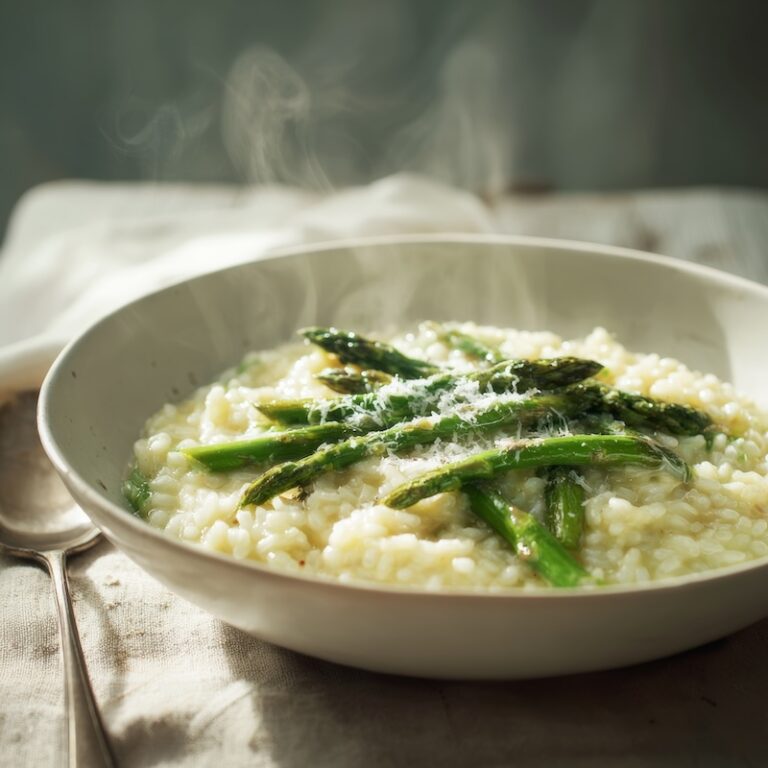
- Spoon into shallow bowls. Top with whole asparagus stalks, freshly grated Parmesan, and a few grinds of black pepper.
Notes
When I made this recipe, I used my blender to make the liquefied asparagus water and didn't use all that much of it to finish off the risotto.
This is one of the best risotto I've ever made. It is creamy, simple and delicious.

8 Responses
hi Gary
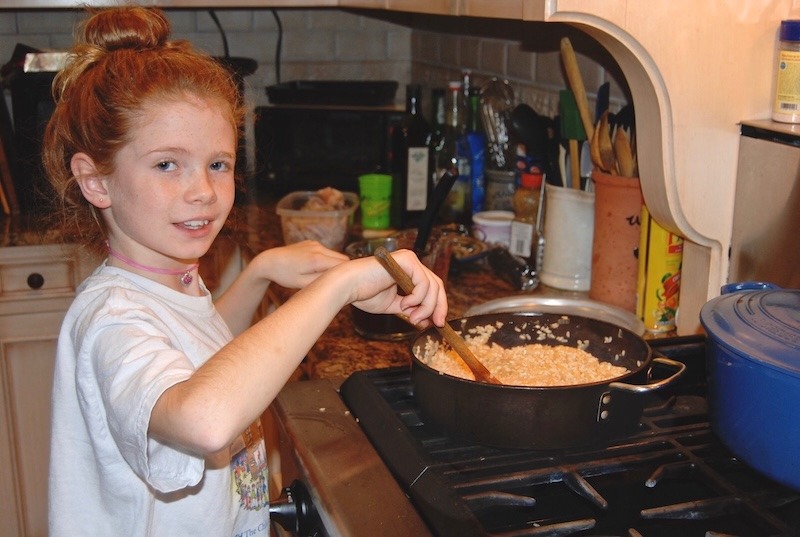
This found it’s way back to me.thanks for doing such a nice job and it’s a treat to see your young red-haired assistant. She looks like she’s into it.
happy new year.
Robert
This looks amazing! Will be trying in on one of these cold, blustery nights for sure. Happy New Year to you and yours – loved the Christmas card from you all. In case The Boss forgets to thank your boss 🙂
The best risotto ever is a lemon risotto from Patricia Well’s Trattoria. I make it with my 24-hour homemade chicken stock. I usually serve it with Chicken carmadon from Simply Recipes’ website. I also balance fresh asparagus and toss it with a little olive oil, lemon, and parmesan as a side dish.
I’m a huge fan of Patricia Wells and her cookbooks. Thanks for reaching out.
Carmen’s 24 hour chicken stock sounds intriguing, could you publish the recipe?
Reading this, it’s early October but the days have been cool already, it made my mouth water for a warm mushroom risotto finished with oven roasted tomatoes from the garden.
Thanks,
I’ve found using smaller and smaller amounts of liquid as the rice cooks also helps develop a creamier texture.
Hi John, thanks for that tip. – RG
I just made a dairy-free risotto. It was the first time I’d tried it without the butter and Parmesan and it worked really well. Happy cooking! 🙂
Sounds great green. – RG
Can I cook RISOTTO using water as a base, rather than a stock like substance?
Hi Pamela, you can but it won’t have the same flavor as when using a good stock? Is there a reason you don’t want to use stock or broth?