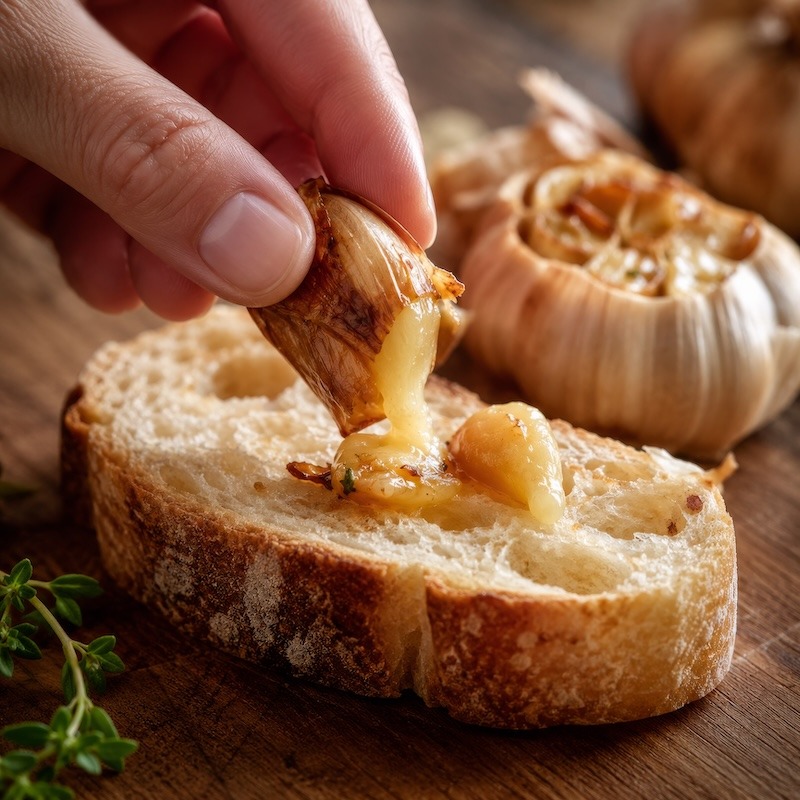
I didn't really understand roasted garlic until a restaurant in Philadelphia set a whole head on the table next to warm bread, top sliced off, meant for squeezing straight onto the crust. That one plate taught me more about garlic than years of cooking with it raw ever had.
Fast Answer
Roasting mellows garlic's sharp bite into something sweet and spreadable by breaking down the sulfur compounds responsible for its raw pungency. Wrap a single head in foil and roast at 400°F for 40–45 minutes, or roast several heads uncovered in a pan at 400°F for 30–35 minutes.
What a Restaurant Bread Basket in Philadelphia Taught Me About Garlic
That Philadelphia dinner is the reason I started roasting more garlic than I ever used raw. A whole head, wrapped in foil or roasted in a pan, turns from sharp and stinging into something soft enough to spread with a butter knife.
This post covers both methods — foil for a single head, an open pan for a batch — plus why the transformation happens, how to store what you don’t use right away, and where roasted garlic actually earns its place in a dish.
Start Here
- This is for you if: you've only ever used garlic raw or sautéed, and haven't tried what heat and time alone do to it.
- Use the foil method for one or two heads, especially if you're roasting something else in the oven at the same time.
- Use the pan method when you're roasting a batch to keep on hand for the week.
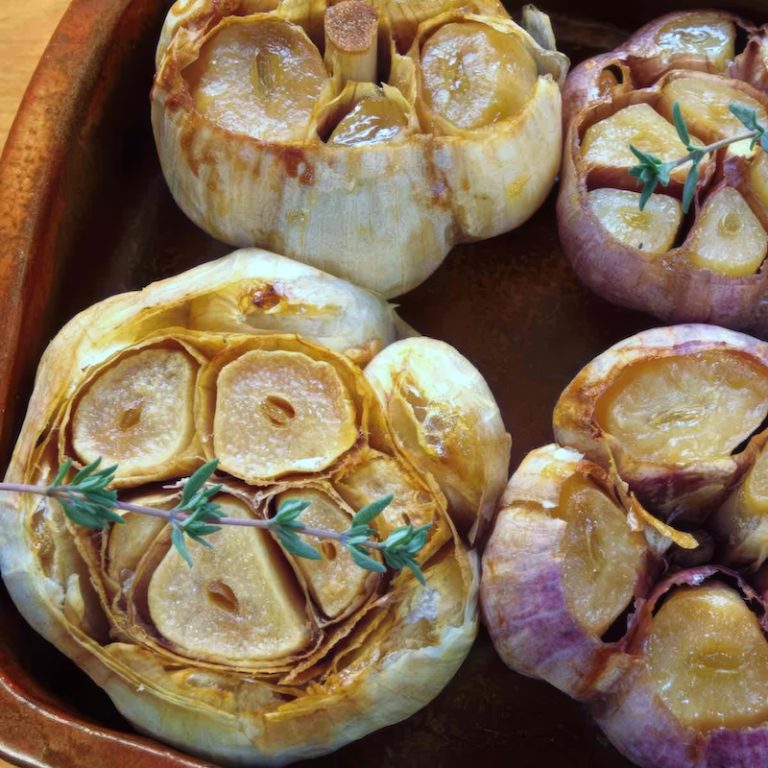
- Success looks like: cloves that are deep golden, soft enough to squeeze out with light pressure, and sweet rather than sharp when tasted.
Why This Technique Works
- Raw garlic's sharp bite comes from sulfur compounds released when its cells are damaged — the same reaction that makes your eyes water from onions.
- Sustained heat breaks those compounds down over time, converting them into milder, sweeter byproducts. This is a slower process than most people expect — it's why rushing at higher heat doesn't actually get you there faster.
- At the same time, the natural sugars in the clove caramelize, which is where the sweetness comes from, and the cell walls soften enough that the clove turns creamy instead of firm.
- Cutting the top off the head isn't just for looks — it exposes the individual cloves directly to heat and oil, which is what lets this breakdown happen evenly through the whole head instead of just at the surface.
Think Like a Cook
- Roasting garlic isn't really about cooking it until it's "done" the way you'd cook a piece of meat — it's about giving heat enough time to fully break down the sharp compounds.
- That's why time matters more than precision here. A slightly longer roast at a moderate temperature will out-perform a rushed one at high heat almost every time.
- Once you think of it that way, "is it ready" becomes an easy question to answer: deep golden color and soft give, not just "has it been in there a while."
Step-by-Step: Roasting Garlic
- Preheat the oven to 400°F.
- Peel off only the loose, papery outer layers of the head, leaving the cloves intact underneath.
- Slice off the top quarter-inch of the head so the tops of the cloves are exposed. This is what lets the oil and heat actually reach them.
- Drizzle olive oil directly onto the cut surface until it's visibly coating the exposed cloves, then season with salt and pepper.
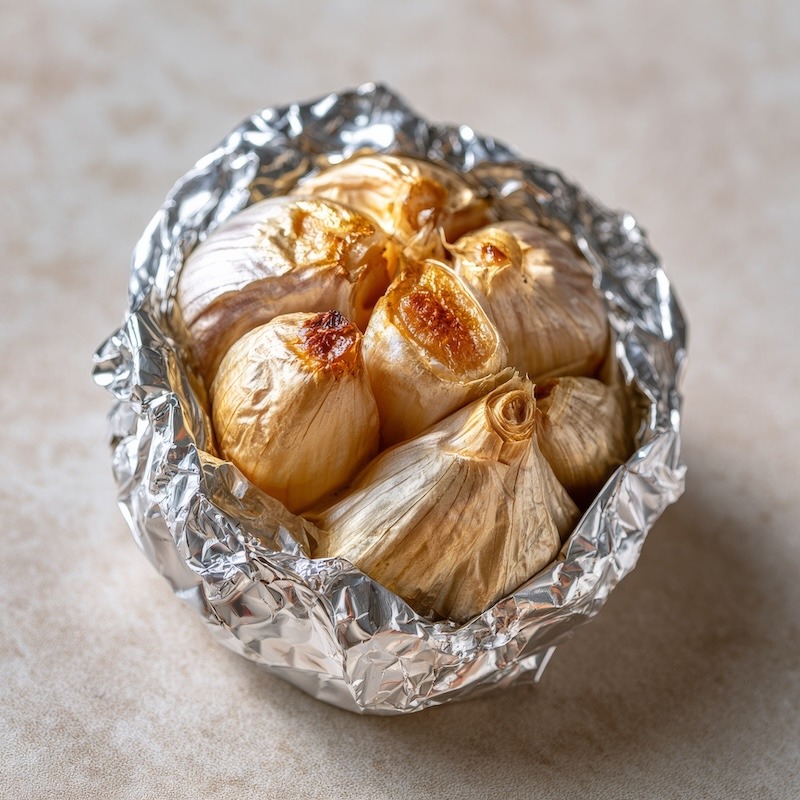
- For one or two heads: wrap tightly in foil and place directly on the oven rack. Roast 40–45 minutes.
- For a batch of heads: place cut-side up, uncovered, in a small baking dish. Roast 30–35 minutes.
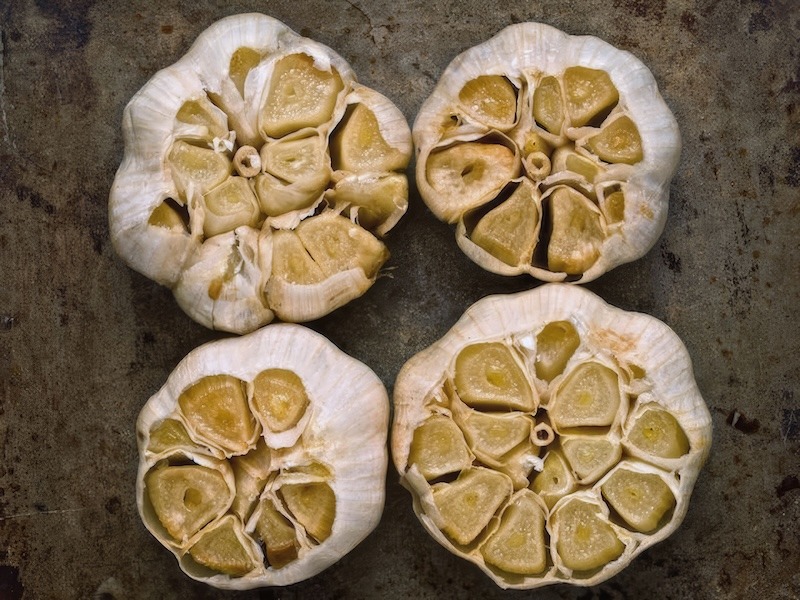
- Look for deep golden color at the cut surface and a soft give when you press the head gently — if it still feels firm or looks pale, give it another 5–10 minutes.
- Let it cool before handling. It holds its heat, and you'll want to squeeze it, not burn your fingers doing it.
- Squeeze each clove out from the root end once cool enough to handle.
How to Roast Garlic
Roasted garlic transforms pungent raw cloves into sweet, soft, and buttery gems perfect for spreading, mashing, or flavoring any dish.
Prep Time10 minutes mins
Cook Time35 minutes mins
Total Time45 minutes mins
Course: Herbs & Spices
Cuisine: American
Keyword: garlic, roasted garlic
Ingredients
- 1 head garlic
- olive oil for the drizzle
- sea salt
- freshly ground pepper
- minced rosemary or lemon zest optional
Instructions
Prepping the Garlic
- Start by removing any loose layers of skin from the whole head of garlic. Don't take too much off; you don't want the cloves breaking off.
- With a sharp knife, carefully cut off the top ¼ of the head so the cloves are exposed. Then, you can toss the part you cut off and reserve the rest of the head.
- If you are only roasting one or two garlic heads, tear off one or two sheets of aluminum foil large enough to wrap the entire head of garlic.
- If you are roasting multiple heads of garlic, place the heads, cut side up, in a small roasting pan or baking dish large enough to accommodate the number of heads you are roasting.
- Drizzle a little olive oil onto each head and season with sea salt and freshly ground pepper. If you want to play around with some different flavors, try to experiment by adding a little minced rosemary or lemon zest to the seasoning. Again, the number of options is huge.
Roast the Garlic
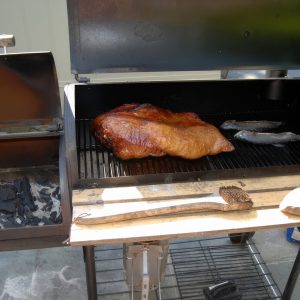
- If you are using aluminum foil, tightly wrap the garlic head in foil and place it directly onto the oven rack. This works great when roasting another ingredient because the garlic takes up very little space.You can even use this method when firing up the barbecue to grill vegetables, steaks, or chicken. Depending on the temperature of the oven or grill, it should take about 40 - 45 minutes for the garlic to turn a golden brown as they soften up.
- If you are roasting a bunch of heads in a baking dish, place the pan into the oven uncovered and roast for 30 - 35 minutes until the garlic turns golden brown and the cloves become tender. If they are not softened enough, just put them back in the oven for 5 - 10 minutes more.
After The Garlic Is Roasted
- No matter what method you use to roast the garlic, let them cool down after removing them from the oven before handling it.
- Then, when they are cool enough to handle, unwrap them from the aluminum foil or remove them from the roasting pan and squeeze out the garlic from the bottom of each clove with your fingers.
- Yes, it's messy, but please resist the urge to overeat the garlic while squeezing. The aroma of roasted garlic is so intoxicating that you will have to use all your willpower to keep yourself from eating too much.
Notes
If you are roasting the garlic for a meal you are cooking that day, use what you need and store the rest in an airtight container in the refrigerator for up to two weeks. If you don't have a recipe calling for roasted garlic later in the week, try substituting in any recipe calling for garlic or just spread some on a slice of Italian bread for a quick snack.
This is an easy cooking technique and if you do it while roasting something else, it really doesn't add that much time or effort to what you are cooking but it really makes a big difference.
What Most Cooks Get Wrong
- They don't cut deep enough into the head, so the top layer of cloves gets oil and heat while the ones underneath stay raw and sharp.
- They pull it as soon as it looks "roasted" rather than checking for actual softness — a head that's lightly golden but still firm needs more time, even if the color looks close enough.
- They wrap the foil loosely, which lets moisture escape and leaves the cloves drier and less spreadable than they should be.
What Went Wrong (And Why)
- Garlic still tastes sharp after roasting → not enough time, or oven ran cool → give it another 10 minutes and check for deep golden color and soft give, not just time on the clock.
- Edges burnt or bitter → foil wasn't sealed, or the pan method ran uncovered too long → seal the foil fully, or start checking the pan method a few minutes early.
- Cloves dried out and hard to squeeze → not enough oil, or the foil packet leaked → use more oil than feels necessary, and double-wrap if you're not confident in the seal.
- Uneven softness across the head → the top quarter-inch wasn't cut deep enough to expose all the cloves → cut a little deeper next time so the oil reaches everything.
Control the Variables
- Oil quantity matters more with multiple heads — one reader, Jean, adds a third to a half cup of olive oil when roasting 2–4 heads together in a sealed foil packet inside a baking dish, which also gives you garlic-infused oil worth saving.
- Foil vs. open pan changes moisture retention, not just convenience — foil traps steam and is more forgiving; an open pan is faster for a batch but needs closer watching near the end.
- Roasting alongside another dish works well since garlic tolerates a range of oven temperatures — if you're already roasting a chicken at 350°F, add the garlic and give it slightly longer than the 400°F times above.
| Method | Amount | Oven Temp | Time | Notes |
|---|---|---|---|---|
| Foil-wrapped | 1–2 heads | 400°F | 40–45 min | Best if roasting something else at the same time |
| Open pan | 3+ heads | 400°F | 30–35 min | Add more oil per Jean's tip above; save the leftover oil |
| Alongside a roast | Any | 350°F | 50–55 min | Lower oven temp needs more time |
When to Use This Technique
- Batch it when you're already running the oven for something else — the multitasking costs you almost nothing extra.
- Roast ahead if you meal-plan; it keeps well and gives you a flavor base ready to go mid-week.
- Skip it when a dish specifically needs raw garlic's sharp bite — a vinaigrette or a raw salsa, for instance, where roasted garlic's sweetness would work against the dish.
Apply It to Real Food
- Bread or toast: squeeze it straight onto warm bread — the way I first had it in Philadelphia. No prep needed beyond that.
- Mashed potatoes: mash a few cloves in with the potatoes for a sweeter, rounder garlic flavor than raw or sautéed garlic gives you.
- Dressings: whisk mashed cloves into oil and vinegar — it adds body along with flavor, unlike raw garlic, which just adds bite.
- Soups: puree it into potato, tomato, or cauliflower soup for depth without the sharp edge raw garlic would bring.
- Compound butter: mash into softened butter for steaks, vegetables, or more bread.
FAQ
- Why does roasted garlic taste so different from raw garlic? Heat breaks down the sulfur compounds responsible for raw garlic's sharp bite while caramelizing its natural sugars — the result is sweet and mellow instead of pungent.
- What temperature should I roast garlic at? 400°F works for both methods below. Time is what changes, not temperature.
- How long does it take to roast garlic? 40–45 minutes wrapped in foil for one or two heads, or 30–35 minutes uncovered in a pan for a batch.
- How do I know when it's done? Look for deep golden color at the cut surface and a soft give when you press the head gently. Pale color or firmness means it needs more time.
- How long does roasted garlic keep? About two weeks refrigerated in an airtight container.
- Can I freeze roasted garlic? Yes — one reader, Joe, freezes the squeezed-out mash in ice cube trays, then transfers the cubes to a resealable bag for garlic on demand straight from the freezer.
- Can I roast garlic alongside something else in the oven? Yes — it tolerates a range of temperatures, so add it whenever you're already roasting a chicken or braising something at a lower temperature, just give it a bit longer.
- Do I need to cut the top off the head? Yes — it's what exposes the cloves to oil and heat directly. Skipping this step is the main reason roasted garlic comes out unevenly soft.
- Want a smoother, ready-to-spoon version instead of squeezing cloves by hand? Try the roasted garlic puree.
- Roasted garlic works beautifully folded into this lemon garlic yogurt sauce.
- See it used as a bold finishing touch in buffalo roast with chipotle roasted garlic jus.
- The most common home for roasted garlic is right in garlic mashed potatoes.
- Not sure how to prep the head before it goes in the oven? See prepping garlic cloves for cooking.
- Roasting a whole chicken at the same time? Here's the full roasting technique for meat and poultry.
How do you keep roasted garlic on hand once you've made a batch? I'd like to hear what you freeze it in, or if you've found a dish where roasted garlic made a bigger difference than you expected.


4 Responses
Great piece on roasted garlic – TY!! I grow so much of it in my garden annually that I now roast a large part of it. After it’s squeezed out, I fill ice cube trays with the “mash” and once frozen, pop them into resealable vac seal bags. I have roasted garlic at my disposal at all times; 15 seconds in he microwave and it’s ready to use!!
PS. I enjoy your website and the articles you present. I too am in a Wall Street profession as founder of my RIA firm, but still working (happily)!! Love to spend down time with all types of food activities, from homemade pastas, to canning, to a variety of charcuterie. Keep up the good work with your site!!
Thanks Joe for the garlic tip. If you don’t mind, I’ll add it to my text for other cooks to enjoy. Glad to hear you are still enjoying “the business”. Please keep me updated with your cooking adventures.
Love, love roasted garlic and I’m so glad you’re putting your method out for everyone. May I add just one thing – for 2-4 heads of garlic to be roasted, I add 1/3 to 1/2 cup of olive oil and after wrapping in foil, putting the pkg. (to prevent leaks) inside a larger baking bowl. The garlic oil from the garlic heads, I put in a container and freeze. Having garlic oil at your finger tips is as good as having the garlic (which I put the cloves in a baggie for the freezer, too.
Thanks for sharing you tips Jean. I’ll have to give this one a try.