
Classic Hummus Recipe: Creamy, Easy & Homemade

How to Make Hummus from Scratch: Simple & Delicious

Hummus is one of those recipes that feels both simple and special. You can make it in minutes with just a handful of ingredients, yet the flavor always impresses.

When you make classic hummus at home, you get a creamy dip that tastes fresh and rich, with no fillers or preservatives. Chickpeas, tahini, lemon juice, garlic, and olive oil blend together into a smooth spread that works for snacks, appetizers, or even part of a meal.

Many home cooks search for the best hummus recipe because they want that perfect texture and balanced flavor. The good news is that you don’t need fancy tools or skills.

A blender or food processor handles the work. The key is to use good tahini, fresh lemon juice, and quality olive oil. Those ingredients bring out the nutty, tangy, and earthy flavors that make hummus so popular.

This classic hummus recipe is vegan, gluten-free, and naturally healthy. It’s packed with protein and fiber, making it a smart snack you’ll feel good about serving. Pair it with warm pita, crisp vegetables, or spread it on sandwiches. Once you make hummus from scratch, you’ll never want to go back to store-bought.

Hummus

How to prepare classic hummus at home.
Prep Time10 minutes
Total Time10 minutes
Course: Side Dish
Cuisine: Middle Eastern
Keyword: chickpeas, hummus
Servings: 6 servings

Equipment

  • Food Processor

Ingredients

  • 1 15 ounce can chickpeas drained, rinsed, reserve 3 tablespoons liquid
  • ¼ cup tahini
  • 3 tablespoons fresh lemon juice
  • 1 clove garlic peeled
  • 2 tablespoons olive oil extra virgin, more for serving
  • ½ teaspoon ground cumin
  • ½ teaspoon salt more to taste
  • 3 tablespoons reserved chickpea liquid or water
  • paprika for garnish

Instructions

Prepare chickpeas

  • Drain and rinse the chickpeas. Set aside 2–3 tablespoons of the liquid for blending.

Blend base

  • In a food processor, combine tahini and lemon juice. Process for 1 minute until creamy. This step helps create a smoother hummus.

Add flavor

  • Add garlic, cumin, and salt. Process for 30 seconds to mix well.

Add chickpeas

  • Add half the chickpeas. Blend 1 minute. Scrape sides. Add remaining chickpeas. Blend another 1–2 minutes until thick and smooth.

Adjust texture

  • With the processor running, slowly add 2–3 tablespoons of reserved chickpea liquid. Blend until hummus reaches desired creaminess.

Finish

  • Drizzle in olive oil while blending briefly. Taste and adjust seasoning.

Serve

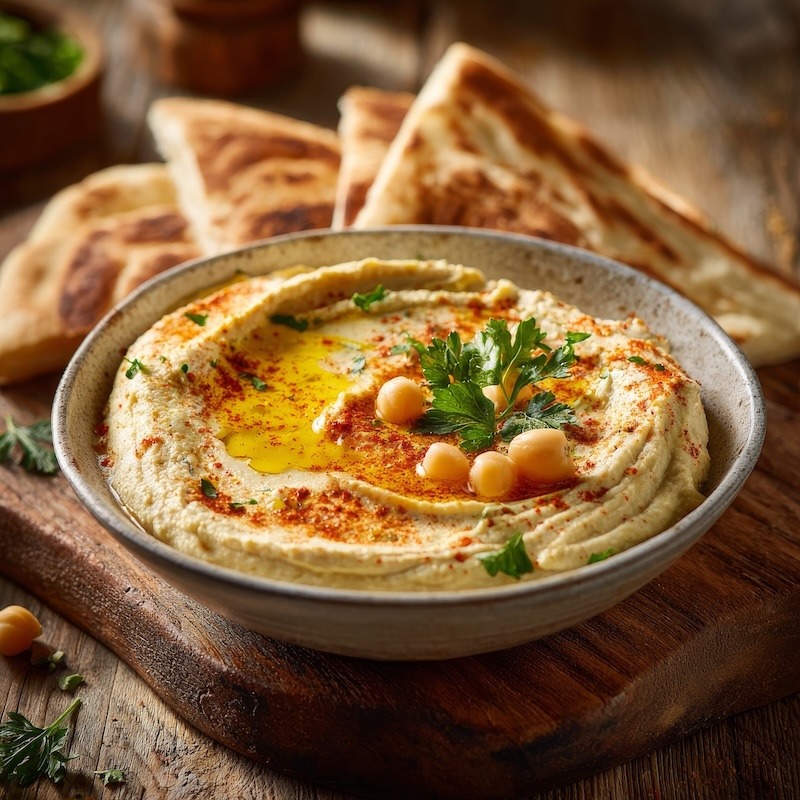
  • Spoon into a bowl. Swirl the top, drizzle with more olive oil, and sprinkle with paprika if desired.

Notes

Enjoy with pita bread, fresh vegetables, or as a spread for sandwiches.
Ingredient Variations

Ingredient Variation Description When to Add
Roasted Red Peppers Adds a sweet, smoky flavor and vibrant color. Blend with chickpeas for a smooth puree.
Avocado Makes hummus extra creamy with a mild, buttery taste. Blend with chickpeas at the end for smooth texture.
Beets Gives hummus a naturally sweet, earthy flavor and bright pink color. Cook or roast first, then blend with chickpeas.
Spicy Chili or Harissa Adds heat and depth of flavor. Blend with garlic and tahini for even distribution.
Herbs (Parsley, Cilantro, Basil) Fresh herbs brighten flavor and add color. Fold in at the end or blend lightly with chickpeas.
Sun-Dried Tomatoes Gives tangy, concentrated tomato flavor. Blend with chickpeas after soaking in warm water if dried.
Extra Lemon or Lime Juice Enhances tanginess and brightness. Add while blending tahini and garlic.

Popularity

In the 20th and 21st centuries, hummus became a worldwide phenomenon. Its vegan, gluten-free, and protein-rich profile helped it gain popularity in Europe and North America as a healthy snack, dip, or spread.

Hummus is a creamy chickpea and tahini spread with deep roots in the Levant region, including Lebanon, Israel, Palestine, Syria, and Jordan. Its earliest mentions date back to 13th-century Middle Eastern cookbooks, though chickpeas have been a staple in the region for thousands of years. The word hummus itself comes from Arabic, meaning “chickpeas.”

Traditional hummus is made from a combination of chickpeas, tahini, olive oil, lemon juice, and garlic, resulting in a simple yet flavorful dish. Over time, regional variations developed: Egypt sometimes adds fava beans, while the Levant emphasizes extra tahini for a smoother texture. Modern cooks worldwide experiment with roasted red peppers, beets, herbs, or spices, giving hummus endless flavor possibilities.

Beyond taste, hummus has cultural significance as a staple in family meals, celebrations, and mezze spreads. Its vegan, gluten-free, and protein-rich profile has made it popular globally, turning a centuries-old Middle Eastern dish into a modern favorite snack, dip, and spread for kitchens everywhere.

Serving Ideas

Pairing Description Why It Works
Pita Bread Soft, warm pita cut into triangles or pockets. The mild, fluffy bread complements creamy hummus and allows for easy dipping.
Fresh Vegetables Carrots, cucumber, bell peppers, cherry tomatoes, or celery sticks. Crunchy veggies balance the smooth texture and add freshness and color.
Crackers Whole-grain or seed-based crackers. Adds a nutty crunch and makes hummus a convenient snack or appetizer.
Grilled Meats Chicken, lamb, or beef skewers. The creamy hummus pairs with smoky, savory grilled meats for Middle Eastern-style meals.
Falafel Crispy chickpea patties or balls. Hummus adds creaminess and moisture to contrast the crispy exterior.
Sandwiches & Wraps Use hummus as a spread on wraps, sandwiches, or flatbreads. Enhances flavor, adds protein, and keeps sandwiches moist without mayo.
Cheese Feta, halloumi, or goat cheese crumbles. The salty, tangy cheese complements hummus’s nutty and creamy flavors.
Roasted Vegetables Eggplant, zucchini, sweet potatoes, or peppers. Warm roasted vegetables pair with hummus for a hearty, satisfying dish.

Storing Hummus

In the Refrigerator

Store-bought hummus: Usually lasts 7–10 days once opened. Check the “use by” date.

Homemade hummus: Lasts about 4–7 days in an airtight container.

Tips:

Always cover tightly with a lid or plastic wrap to prevent drying or absorbing fridge odors.

Drizzle a thin layer of olive oil on top to help preserve freshness.


In the Freezer

Hummus can be frozen for up to 3–4 months.

Method: Portion into small airtight containers or freezer bags, leaving a little space for expansion.

Thawing: Move to the fridge overnight, then stir well before serving.

Tip: Texture may slightly change after freezing; adding a teaspoon of olive oil or a bit of water while stirring can restore creaminess.

Leave a Reply

Your email address will not be published. Required fields are marked *

Recipe Rating


This site uses Akismet to reduce spam. Learn how your comment data is processed.