
Best Mashed Potato Tools for Perfectly Creamy Mash
When it comes to making the perfect mashed potatoes, the tool you choose can make all the difference. A traditional potato masher creates a hearty, slightly chunky texture, while a ricer transforms cooked potatoes into a silky, lump-free delight.
Food mills produce light, airy results perfect for special occasions, and stand mixers can quickly whip potatoes into creamy perfection. Even immersion blenders work, though overuse can make the mash gluey. Understanding the effects of each potato masher helps home cooks achieve exactly the texture they want, whether rustic and comforting or smooth and elegant.
In this guide, we’ll explore the top potato mashing tools, share tips for achieving the best consistency, and highlight common mistakes to avoid. From choosing the right equipment to mastering technique, you’ll learn how to make restaurant-quality mashed potatoes at home that impress every time.
Types of Mixers
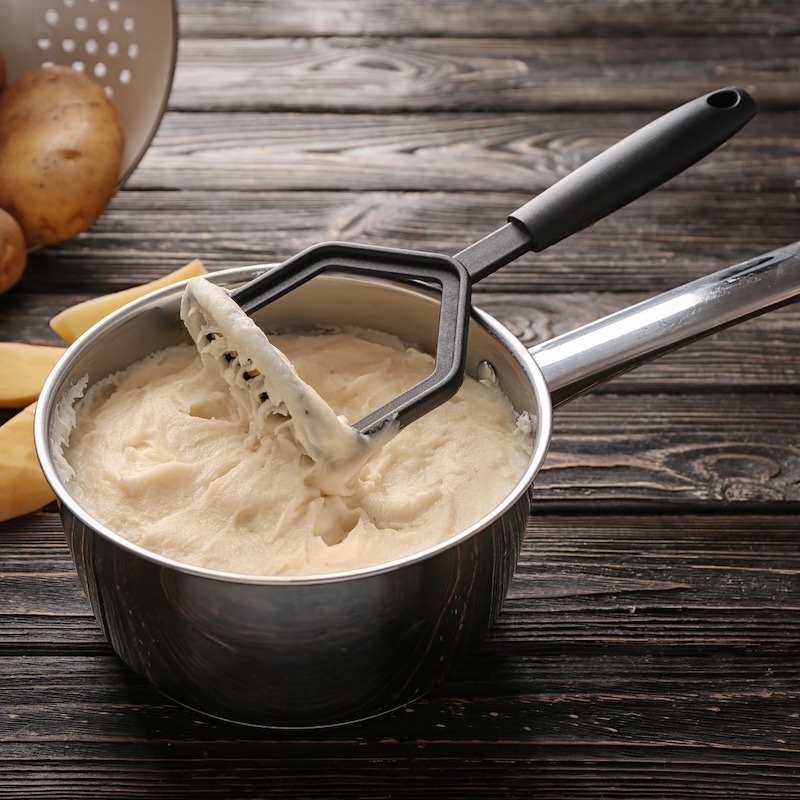
Traditional Masher
Style: Handheld, zig-zag or perforated plate
Result: Chunky to smooth, classic texture
Tip: Perfect for rustic, slightly lumpy mash
Ricer
Style: Presses cooked potatoes through small holes
Result: Silky, uniform, lump-free
Tip: Best for buttery, smooth mash
Food Mill
Style: Hand-crank with interchangeable discs
Result: Ultra-smooth, light, fluffy
Tip: Ideal for large batches or fine textures
Stand Mixer
Style: Paddle attachment on electric mixer
Result: Creamy, cohesive mash
Tip: Don’t overmix—can become gluey
Immersion Blender
Style: Handheld electric blender
Result: Ultra-creamy, sometimes gluey
Tip: Only for fully cooked, soft potatoes; blend lightly
How your spuds turn out has much to do with what you use to mash them!
| Tool | Best For | Texture Result | Pros | Cons | Tip |
|---|---|---|---|---|---|
| Traditional Masher | Rustic mash | Chunky to smooth | Easy, classic | Can leave lumps | Press gently for consistent chunks |
| Ricer | Silky mash | Lump-free | Smooth, elegant | Slow for large batches | Use immediately after cooking |
| Food Mill | Large batches | Light, fluffy | Ultra-smooth | Requires effort | Great for holiday meals |
| Stand Mixer | Quick mash | Creamy | Fast, easy | Can become gluey | Mix on low speed |
| Immersion Blender | Ultra-creamy | Very smooth | Minimal effort | Easy to overmix | Only for very soft potatoes |
Potato Masher FAQ
Which potato masher makes the smoothest mash?
A ricer or food mill produces the silkiest, lump-free mashed potatoes. Traditional mashers give a chunkier texture, while stand mixers and immersion blenders can create creamy mash but risk becoming gluey if overworked.
Can I use a blender or food processor?
Blenders or food processors work only for very soft, fully cooked potatoes. Overmixing can make mash dense and gummy. A hand-held immersion blender works best for small batches.
What is the best potato for mashed potatoes?
Starchy potatoes like Russets or Yukon Golds yield light, fluffy results. Waxy potatoes such as red or fingerlings are better suited for potato salads than mash.
How do I avoid gluey mashed potatoes?
Mash potatoes immediately after cooking while still hot, avoid high-speed blending, and add butter and milk gradually to control creaminess.
Should I peel potatoes before mashing?
Peeling before cooking produces smooth mashed potatoes. Leaving the skins on creates a rustic texture and adds nutrients.
Can I prepare mashed potatoes ahead of time?
Yes. Keep them warm in a slow cooker or reheat gently on the stovetop with added milk or butter to maintain texture. Avoid microwaving at high power to prevent dryness.
How do I clean my potato tools efficiently?
Rinse mashers immediately after use to prevent starch buildup. Food mills may require disassembly for thorough cleaning. Stand mixers and immersion blenders clean easily with warm, soapy water.
What’s the easiest tool for beginners?
The traditional potato masher is simple, forgiving, and requires no extra setup. It’s perfect for weeknight meals and small batches.
Wire Potato Masher
This is the tool most of us are familiar with. I don’t think there’s a kitchen in America that doesn’t have one of these.
I love the wooden handle on this model. Not only does it look good, it is extremely functional and has made some really good mashed potatoes in its time.
Mashing potatoes is not always easy to work, so I highly recommend purchasing a durable masher that feels good in your hand. If you are tasked with mashing 10 pounds of potatoes on Thanksgiving for that family feast, you want something that won’t break apart in your hand.
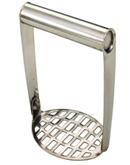
Stainless Steel Potato Masher
Another version of the potato masher is this stainless steel tool with a strong handle for exerting downward pressure and a plate with little holes at the bottom for mashing. I have always found it difficult to use so it is my least favorite model, but my friends swear by theirs.
Potato Ricer / Masher
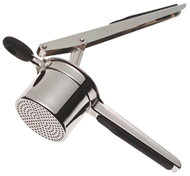
My favorite product is not new at all but a tool that’s been around for quite some time. It is a ricer, and I use it to make perfect mashed potatoes. I know what you’re thinking, “How tough is it to make mashed potatoes?” It’s not, but perfect mashed potatoes are another story.
This ricer, a giant “garlic press” -looking contraption, costs under ten bucks and should be in your arsenal of tools even if you use it just for potatoes. When smooshed in the press, the cooked potatoes look almost like potato noodles, but add a little milk and butter and stir them with a fork and you have perfect mashed. Try it and let me know what you think.
Electric Mixer
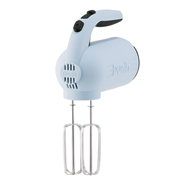
This is the tool my mom used when I was growing up. I can see her in the kitchen whipping those potatoes into a frenzy, adding milk and butter, and every once in a while the mixer slipping and the potatoes going everywhere.
The great thing about having an electric mixer besides using it for mashing potatoes, is its versatility. An electric mixer is indispensable if you are into baking or making whip cream.
onlinesources: Potato Masher
There are many sources for purchasing quality Kitchen Gadgets and Housewares including whisks, spoons, measuring devices, and all the fun gadgets we home cooks have come to love. I suggest you check out your local department stores and kitchen supply shops, but if you’re looking for a wide selection of products and prices, you may want to check out Amazon.com where I buy many of my favorite cookware pieces.


One Response
I like the ricer too-and usually bake the potatoes and just cut them in half and squeeze the pulp right out of their skins-someone said more nutrition remains as compared with boiling i don’t know-more flavorful i think-Yukon Gold are faves with my family-
Great website Gary-and condolences…..
Thanks Tim. Appreciate the feedback too.