Potato Ricer vs Masher: Which Makes Better Mashed Potatoes?
The secret to great mashed potatoes is not just butter, cream, or even the potatoes themselves. The tool you use changes the final texture more than most cooks realize.
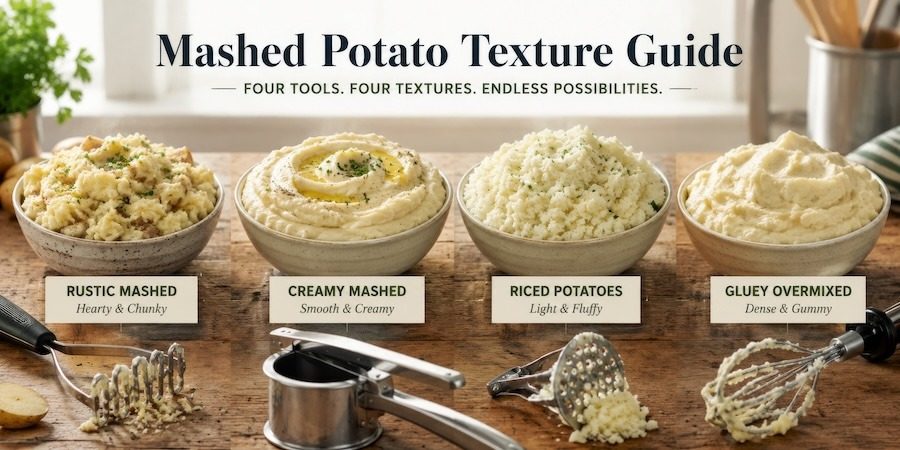
A wire masher creates a rustic, hearty mash while a ricer produces light, silky potatoes worthy of a holiday table. Once you understand what each tool actually does, choosing the right potato masher becomes much easier.
Which Potato Tool Is Right for You?
- Want silky smooth mashed potatoes? Use a potato ricer.
- Want rustic mashed potatoes? Use a traditional wire masher.
- Cooking for a crowd? A food mill handles large batches beautifully.
- Need speed? A stand mixer works fast but can overmix easily.
- Avoid gluey potatoes? Skip high-speed blenders and food processors.
Fast Answer
- For silky smooth mashed potatoes: Use a potato ricer.
- For rustic mashed potatoes: Use a wire potato masher.
- For large holiday batches: A food mill or stand mixer saves time.
- Avoid gluey potatoes: Skip food processors and avoid overmixing.
What Most Cooks Get Wrong
- Overmixing potatoes activates starch and creates gummy mash.
- Using waxy potatoes leads to dense mashed potatoes.
- Cold butter and milk cool the potatoes too quickly.
- Food processors often turn potatoes into paste.
- The wrong masher creates uneven texture and hidden lumps.
Different potato tools create completely different mashed potato textures. Some produce light and fluffy potatoes while others create a rustic, chunky mash. Choosing the right tool may matter more than the recipe itself.
| Tool | Texture Result | Best For | What It Does Well | Potential Problem | Best Potato Choice |
|---|---|---|---|---|---|
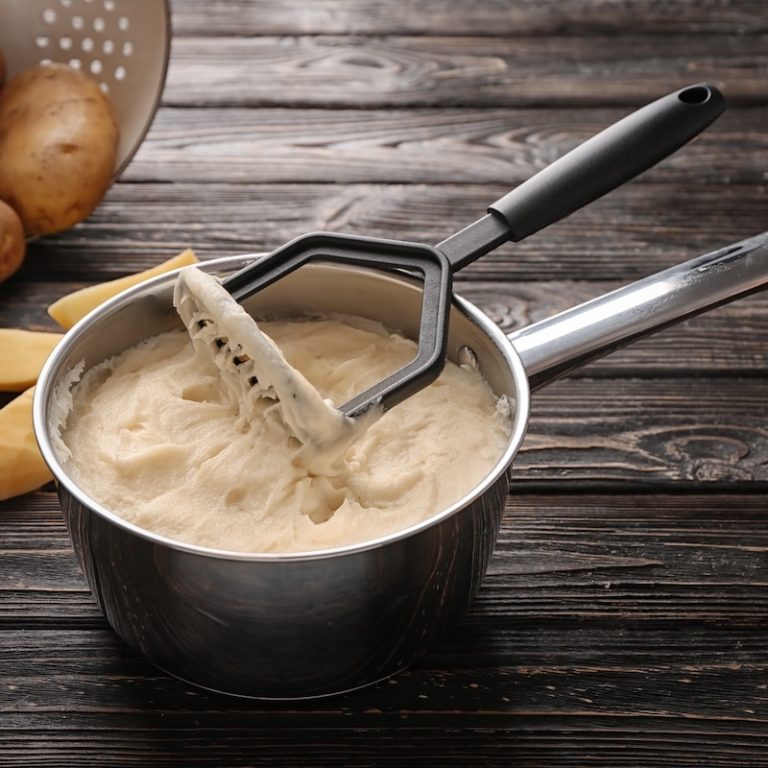
| Wire Potato Masher | Rustic, slightly chunky | Weeknight mashed potatoes | Fast, simple, affordable, keeps some texture | Can leave lumps if potatoes are undercooked | Yukon Gold |
| Potato Ricer | Light, fluffy, silky smooth | Holiday meals and restaurant-style mash | Creates the smoothest texture without overworking starch | Takes longer and requires more effort | Russet or Yukon Gold |
| Food Mill | Ultra smooth and refined | Large batches and elegant mashed potatoes | Removes lumps completely while keeping potatoes airy | Bulky and slower to clean | Russet potatoes |
| Stand Mixer | Creamy and whipped | Large family gatherings | Very fast for big batches | Overmixing can turn potatoes gluey | Yukon Gold |
| Hand Mixer | Smooth but dense | Quick convenience | Easy and fast for everyday cooking | Can overwork starch quickly | Yukon Gold |
| Food Processor | Gluey, sticky, gummy | Almost never recommended | Works quickly | High-speed blades destroy potato texture fast | None recommended |
| Wooden Spoon Only | Very rustic and dense | Traditional farmhouse-style mash | No special tools required | Difficult to get smooth consistency | Yukon Gold |
Potato Masher FAQ
Which potato masher makes the smoothest mash?
A ricer or food mill produces the silkiest, lump-free mashed potatoes. Traditional mashers give a chunkier texture, while stand mixers and immersion blenders can create creamy mash but risk becoming gluey if overworked.
Can I use a blender or food processor?
Blenders or food processors work only for very soft, fully cooked potatoes. Overmixing can make mash dense and gummy. A hand-held immersion blender works best for small batches.
What is the best potato for mashed potatoes?
Starchy potatoes like Russets or Yukon Golds yield light, fluffy results. Waxy potatoes such as red or fingerlings are better suited for potato salads than mash.
How do I avoid gluey mashed potatoes?
Mash potatoes immediately after cooking while still hot, avoid high-speed blending, and add butter and milk gradually to control creaminess.
Should I peel potatoes before mashing?
Peeling before cooking produces smooth mashed potatoes. Leaving the skins on creates a rustic texture and adds nutrients.
Can I prepare mashed potatoes ahead of time?
Yes. Keep them warm in a slow cooker or reheat gently on the stovetop with added milk or butter to maintain texture. Avoid microwaving at high power to prevent dryness.
How do I clean my potato tools efficiently?
Rinse mashers immediately after use to prevent starch buildup. Food mills may require disassembly for thorough cleaning. Stand mixers and immersion blenders clean easily with warm, soapy water.
What’s the easiest tool for beginners?
The traditional potato masher is simple, forgiving, and requires no extra setup. It’s perfect for weeknight meals and small batches.





One Response
I like the ricer too-and usually bake the potatoes and just cut them in half and squeeze the pulp right out of their skins-someone said more nutrition remains as compared with boiling i don’t know-more flavorful i think-Yukon Gold are faves with my family-
Great website Gary-and condolences…..
Thanks Tim. Appreciate the feedback too.