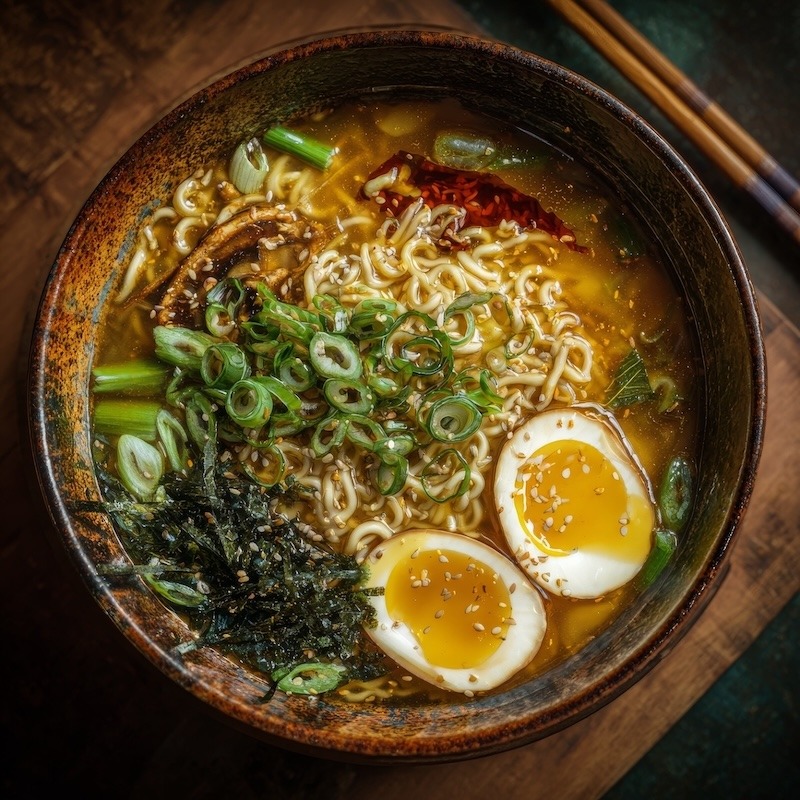
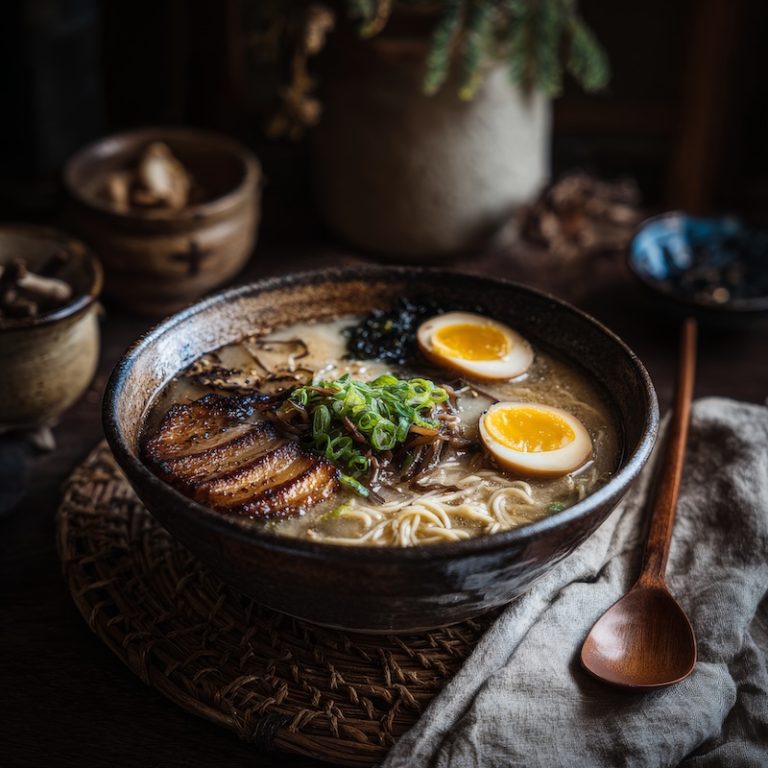
Still treating ramen like a sad dorm backup plan? Big mistake, because with a few smart upgrades, those humble noodles turn into a slurp-worthy bowl that tastes restaurant-level. Quick, affordable, endlessly customizable, and impressive, no more bland packets, only bold, craveable flavor; keep reading and upgrade your ramen game tonight.
Why This Recipe Works
- Layered flavor: Sautéing garlic and ginger first builds a rich, aromatic base for the broth.
- Balanced broth: Soy sauce adds depth while mirin (optional) brings a subtle sweetness to round it out.
- Quick cooking: The entire dish comes together in under 30 minutes, making it perfect for busy nights.
- Customizable: Easily adapt with your favorite proteins, vegetables, and toppings.
- Perfect texture: Cooking noodles separately keeps the broth clear and the noodles springy.
- Beginner-friendly: Simple steps and common ingredients make this recipe approachable for any home cook.
Beginner’s Guide to Homemade Ramen
Ramen is comfort in a bowl. It’s warm, savory, and full of flavor. Making a basic ramen recipe at home is easier than you think.
You don’t need fancy ingredients or hours in the kitchen. With just a few simple steps, you can create rich broth, springy noodles, and delicious toppings that rival takeout in taste.
Homemade ramen starts with building flavor. A good broth is the heart of every great bowl. Add garlic, ginger, and soy sauce for depth.
Fresh noodles give the dish its signature bite, while toppings like soft-boiled eggs, green onions, and sliced pork bring everything together.
This basic ramen recipe is perfect for beginners. You’ll learn how to layer flavors and balance salt, spice, and umami. Once you master the base, you can customize your ramen with your favorite ingredients.
Whether you crave a quick lunch or a cozy dinner, this easy ramen recipe delivers comfort and flavor in every spoonful. Ready to make your own bowl of delicious homemade ramen?
Ramen
Equipment
- Medium Pot
Ingredients
- 4 cups chicken or vegetable broth
- 2 teaspoons soy sauce adjust to taste
- 1 clove garlic minced
- 1 teaspoon fresh ginger grated
- 2 packs fresh or dried ramen noodles
- 1 teaspoon sesame oil
- 2 green onions sliced
- 2 soft boiled eggs
- salt & pepper to taste
Instructions
- Prepare the Broth
- In a medium pot, heat the sesame oil over medium heat. Add garlic and ginger and sauté for 1 minute until fragrant.
Simmer
- Pour in the broth and soy sauce. Bring to a gentle boil, then reduce heat and simmer for 10 minutes. Season with salt and pepper.
Cook Noodles
- While the broth simmers, cook the ramen noodles according to package instructions. Drain and set aside.
Assemble Bowls
- Divide noodles between two bowls. Pour the hot broth over the noodles.
Add toppings
- Place soft-boiled eggs on top and garnish with sliced green onions. Add any optional toppings you like.
Additional Ingredients You Can Add
| Ingredient | Description | Why Add |
|---|---|---|
| Chashu (Braised Pork) | Thinly sliced, tender braised pork belly or shoulder. | Adds rich, savory protein and classic ramen flavor. |
| Miso Paste | Fermented soybean paste, usually red or white. | Boosts umami and deepens the broth’s flavor. |
| Bok Choy | Fresh leafy green with a mild, slightly sweet taste. | Adds texture, color, and light freshness. |
| Spinach | Tender, leafy green vegetable. | Quick-cooking and adds nutrients and a fresh bite. |
| Corn Kernels | Sweet yellow corn, fresh or cooked. | Provides sweetness and crunch contrast to savory broth. |
| Mushrooms (Shiitake, Button, or Enoki) | Earthy mushrooms, sliced or chopped. | Enhances umami and adds meaty texture for vegetarian options. |
| Nori (Seaweed) | Thin, dried seaweed sheets. | Adds a subtle ocean flavor and traditional ramen garnish. |
| Soft-Boiled Egg | Egg cooked to have a slightly runny yolk. | Introduces creaminess and richness to the bowl. |
| Bean Sprouts | Crunchy, fresh sprouts. | Adds texture and lightens the dish. |
| Chili Oil or Sriracha | Spicy oil or sauce made from chili peppers. | Introduces heat and depth for spice lovers. |
| Bamboo Shoots (Menma) | Fermented or marinated bamboo strips. | Adds a crunchy texture and subtle earthy flavor. |
| Kimchi | Spicy fermented cabbage. | Adds tangy spice and complexity to the broth. |
| Garlic Chips | Thinly sliced, fried garlic pieces. | Adds crisp texture and a punch of garlic flavor. |
| Furikake | Japanese seasoning mix with sesame seeds, seaweed, and spices. | Sprinkles flavor, color, and texture on top of ramen. |
| Pickled Ginger | Thinly sliced ginger pickled in vinegar. | Provides a bright, tangy contrast to rich broth. |
Different Types of Ramen
If you were to go to a ramen restaurant, here are some of the various ramen you may be offered:
Shoyu Ramen – Soy sauce-based broth; clear, brown, savory, and slightly tangy. Often lighter and very versatile.
Shio Ramen – Salt-based broth; light, clear, and delicate. Highlights the flavor of the broth and toppings.
Miso Ramen – Miso paste-based broth; rich, hearty, and slightly nutty. Popular in colder regions of Japan.
Tonkotsu Ramen – Pork bone broth; creamy, milky, and intensely flavorful. Known for its thick, rich texture.
Tsukemen – Dipping ramen; noodles served separately from a concentrated, flavorful broth for dipping.
Spicy Ramen – Any base (shoyu, miso, tonkotsu) with added chili oil, paste, or powder for heat.
Curry Ramen – Broth infused with Japanese curry; thick, flavorful, and slightly sweet.
Seafood Ramen – Broth flavored with fish, clams, or shrimp; often light and umami-forward.
Vegetarian/Vegan Ramen – Broth made from vegetables, mushrooms, or kombu; packed with umami without meat.
Hiyashi Chuka – Cold ramen served with toppings; often eaten in summer and dressed with a tangy soy or sesame-based sauce.
Fresh Ramen Noodles
Ramen noodles are a type of wheat-based noodle that originated in China but became a staple in Japanese cuisine. They are primarily made from wheat flour, water, salt, and kansui, a type of alkaline mineral water. Kansui is what gives ramen noodles their springy, chewy texture and slightly yellow color.
Unlike pasta, ramen noodles are typically thin and long, but their thickness and shape can vary depending on the style of ramen. Some are curly, which helps the broth cling to the noodles, while others are straight for a smooth, slippery bite.
Ramen noodles are typically boiled quickly and then served in hot broth, absorbing flavor while maintaining a firm texture. They can be fresh, dried, or even instant, but fresh noodles are preferred in restaurants for their texture and taste.
In short, ramen noodles are the heart of the dish, providing the structure and chewiness that complements the rich broth and toppings. Their unique texture and flavor make them distinct from other Asian noodles, such as udon or soba.
Dried Ramen Noodles
Dried ramen noodles are the shelf-stable version of fresh ramen noodles. They are made from the same basic ingredients—wheat flour, water, salt, and often kansui—but are either air-dried or fried to remove moisture and extend shelf life.
Here’s what makes them different from fresh noodles:
- Texture: Dried noodles are firmer and less springy than fresh noodles. When cooked, they can be slightly chewier, and they don’t have quite the same elasticity as fresh ramen.
- Cooking Time: They take longer to cook than fresh noodles, usually 3–5 minutes depending on thickness, whereas fresh noodles cook in 1–2 minutes.
- Flavor: Some dried noodles are fried in oil (like instant ramen), which gives them extra flavor but can make the broth slightly oily. Air-dried noodles have a cleaner flavor closer to fresh noodles.
- Convenience: Dried noodles are easy to store for months, making them great for quick meals, pantry staples, or when fresh noodles aren’t available.
Essentially, dried ramen noodles are a practical and versatile alternative, and they still absorb broth well, making them a solid choice for homemade ramen if you can’t get fresh noodles.
History
Ramen has a rich history that blends Chinese and Japanese culinary traditions. It likely originated in China as a wheat-based noodle dish and was introduced to Japan in the late 19th or early 20th century.
At first, it was sold in street stalls and small shops, often called “Shina soba”, meaning “Chinese noodles.” After World War II, ramen’s popularity surged in Japan.
Food shortages made wheat flour from the U.S. widely available, which helped noodles become more accessible. Instant ramen was invented in 1958 by Momofuku Ando, making it a global phenomenon.
Over time, ramen has evolved into regional styles in Japan, each with its unique broth and toppings. For example, Sapporo is famous for miso ramen, while Hakata is known for creamy tonkotsu ramen.
Today, ramen has become a cultural icon—offered in casual shops, gourmet restaurants, and instant packs worldwide. Ramen’s history reflects innovation, adaptation, and comfort, transforming it from a simple noodle soup into a beloved, customizable culinary experience.
Ramen Noodles FAQ
What are ramen noodles made of?
Ramen noodles are made from wheat flour, water, salt, and kansui (alkaline water). Kansui gives the noodles their signature chewy texture and slightly yellow color.
What’s the difference between fresh and instant ramen?
Fresh ramen is soft and uncooked, offering better texture and flavor. Instant ramen is pre-cooked and dried, making it quick and convenient but often less nuanced in taste.
Do I have to use the seasoning packet in instant ramen?
No. You can discard or use only part of the packet and create your own broth with soy sauce, garlic, ginger, and stock for better flavor control.
Why should I cook noodles separately from the broth?
Cooking noodles separately prevents excess starch from clouding the broth and helps maintain a cleaner, more refined flavor.
How do I keep ramen noodles from getting mushy?
Cook them just until tender and serve immediately. Slightly undercook them since they will continue to soften in the hot broth.
What is the best broth for ramen?
Popular options include chicken, pork, vegetable, and seafood broths. The best choice depends on the style you’re making, such as shoyu, miso, or tonkotsu.
What are common ramen toppings?
Soft-boiled eggs, sliced pork, green onions, nori, mushrooms, corn, and bean sprouts are all popular additions.
Can I make ramen vegetarian or vegan?
Yes. Use vegetable broth and add ingredients like tofu, mushrooms, seaweed, and miso for deep flavor.
Is ramen healthy?
Ramen can be healthy when made with fresh ingredients, lean proteins, and vegetables. Instant ramen can be high in sodium, so adjust seasoning and add nutritious toppings.
Can I make ramen noodles from scratch?
Yes, but it requires time and the use of alkaline water (kansui). Homemade noodles offer excellent texture but take more effort than store-bought.
What type of noodles should I buy?
Look for fresh or frozen ramen noodles for the best texture. High-quality dried noodles are also a good option if fresh isn’t available.
How long do ramen noodles take to cook?
Most ramen noodles cook in 2–5 minutes, depending on whether they are fresh, dried, or instant.
Can I use ramen noodles in other dishes?
Absolutely. Ramen works well in stir-fries, salads, and even as a base for quick noodle bowls without broth.
What is the difference between ramen and other noodles?
Ramen noodles use kansui, which gives them a firmer, springier texture compared to noodles like udon (thicker and softer) or soba (made from buckwheat).
How do I store leftover ramen?
Store broth and noodles separately in airtight containers in the refrigerator. Reheat the broth and add fresh or reheated noodles just before serving.