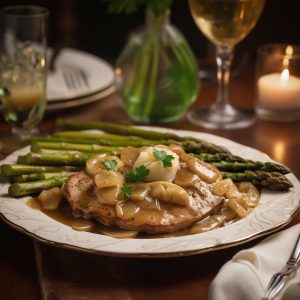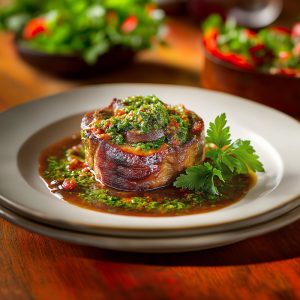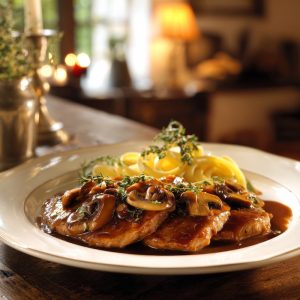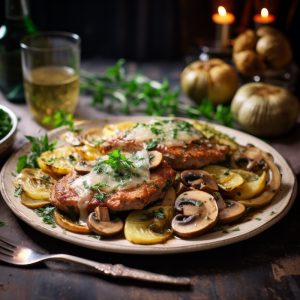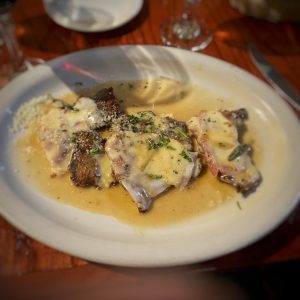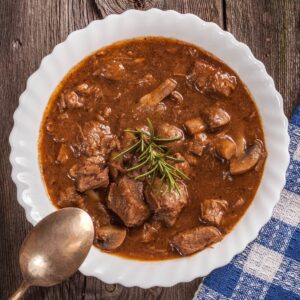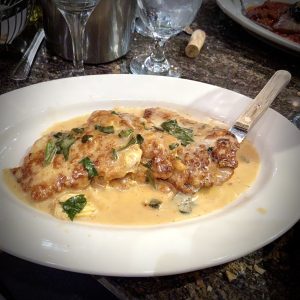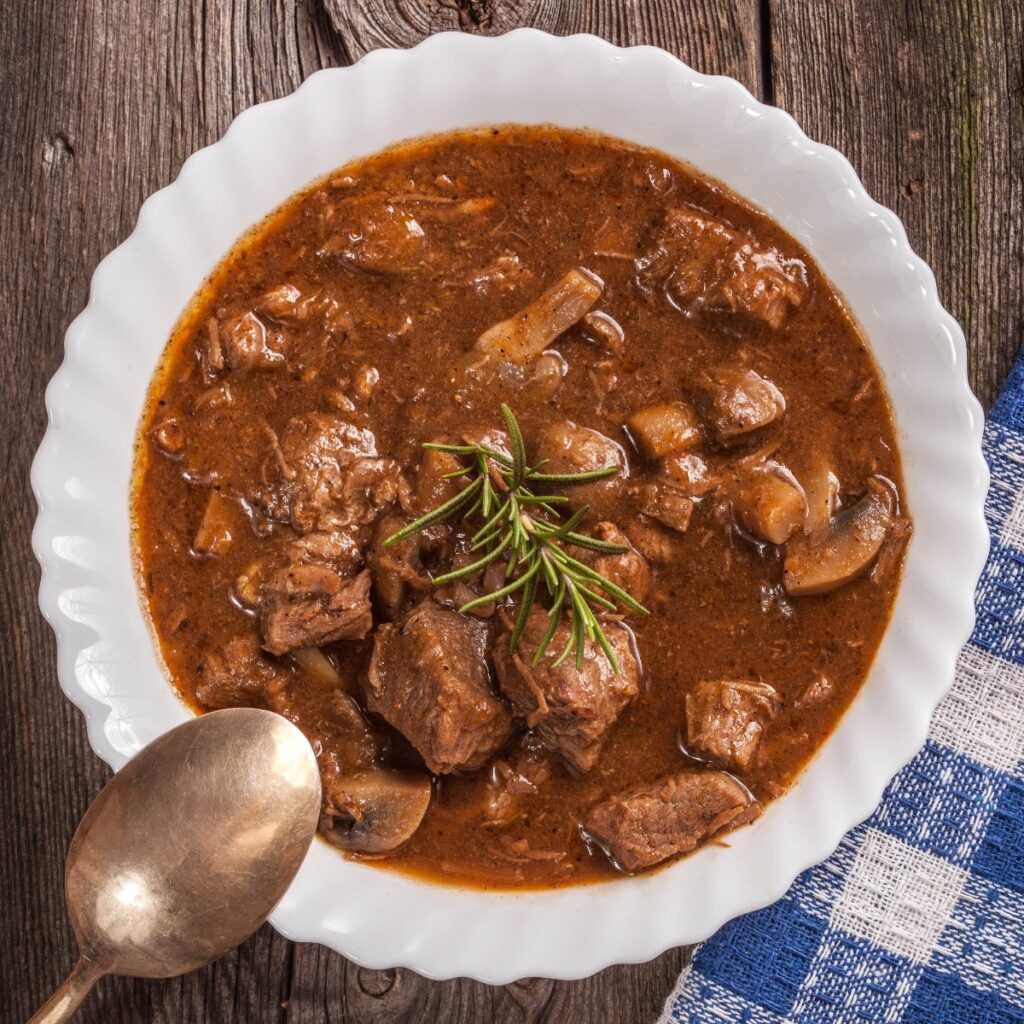

Veal stew is not just beef stew’s lighter cousin. The meat is more delicate, the flavor more refined, and the margin between tender and tough is narrower. When cooked gently and layered with mushrooms and aromatics, veal becomes fork-tender in a silky, deeply savory sauce.
Why This Veal Stew Recipe Works
- Gentle Simmer, Not a Boil: Veal is more delicate than beef. Cooking it at a low, steady simmer keeps the meat tender instead of tightening up and turning tough.
- Layered Browning for Deep Flavor: Browning the veal first builds a rich base of flavor. Deglazing the pan captures those caramelized bits and folds them back into the stew.
- Mushrooms Add Natural Umami: Mushrooms complement veal’s mild flavor without overpowering it. They deepen the savory profile while keeping the stew balanced.
- Balanced Aromatics: Onions, herbs, and stock create complexity without masking the subtle character of the veal.
- Time Does the Tenderizing: A slow, patient cook allows connective tissue to break down naturally, producing fork-tender pieces in a silky sauce.
How to Make a Delicious Veal Stew with Mushrooms Recipe
This classic veal stew with mushrooms focuses on technique as much as ingredients. Instead of aggressive boiling, we use a controlled simmer to preserve the meat’s tenderness. Browning builds depth. Deglazing captures flavor. Mushrooms add earthy balance without overpowering veal’s subtle character.
In this recipe, I’ll show you how to choose the right cut of veal, how to keep it tender, and how to develop a rich sauce that tastes like it simmered all afternoon. The result is an old-fashioned, comforting stew that feels elegant enough for guests but simple enough for a weekend dinner.
Veal Stew with Mushrooms Recipe
Ingredients
- 4 tablespoons butter
- 4 tablespoons olive oil
- 2 pounds veal stew meat cubed, most likely from the shoulder or leg
- flour
- 3 leeks
- 10 oz golden pearl onions
- 3 cloves garlic
- ½ cup Ruby Port you can substitute any Port or even try Sherry or Marsala wine
- 14½ oz diced tomatoes
- 1 cup demi glace
- 5 fresh sage leaves
- 3 tablespoons fresh parsley
- salt & freshly ground pepper
- 8 oz white mushrooms
Instructions
- Prep the Ingredients
- Leeks are usually loaded with sand and grit so it's important to clean them well. I like to chop the white and tender green parts and wash in my ancient salad spinner.
- The pearl onions are the most tedious prep in this recipe. You have probably seen recipes that say to pour boiling water over the pearl onions and the skins will just fall off. No way. Doesn't happen. Yes, it does help some, but you're going to end up peeling them with a knife and your fingernails so be patient.
- Peel and mince the garlic and if you are using whole plum tomatoes, pour them into a bowl and cut up into pieces.
- Chop the parsley and slice the mushrooms.
Make the Veal Stew
- Preheat the oven to 300°F.
- Put some flour into any bowl (I used a soup bowl) to dredge the veal cubes with flour. You can season the flour if you like with a little salt and pepper or your favorite dried seasonings. Be sure the veal is dry before dredging.
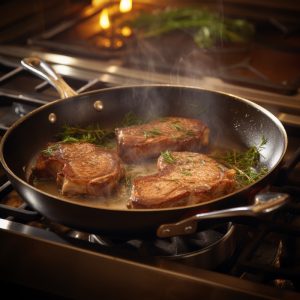
- Heat your sauté pan over medium-high heat; add 2 tablespoons of butter and 2 tablespoons of oil to the pan. When the oil is hot but not smoking, shake off any excess flour from the veal pieces and add them to the sauté pan. Most likely you'll sauté the veal in batches unless you have one giant sauté pan.All we are trying to do is brown the veal on all sides. The cooking will be done in the liquids. The browning will add color and add flavor to the pan that will result in a very tasty stew.
- When one batch of veal is browned, remove it to a plate and start the next batch. When all is meat is browned and reserved, add another tablespoon of butter and oil to the pan and add the leeks, pearl onions and garlic. Sauté the vegetables for about 5 to 7 minutes until the leeks become translucent & slightly brown.
- Add the port wine and deglaze the pan by scraping from the bottom any meat or leeks that may be stuck to the pan. Continuing cooking until most of the port is cooked off, then add the meat back to the pan.
- At this point you want to add the cut up tomatoes with juice along with the cup of demi glace. Add the sage, parsley and season with salt and pepper.
- Cover and place the pan in the preheated oven and cook for about 1 hour.
- While the veal stew is cooking, it's time to sauté the mushrooms in a smaller sauté pan. You want to sauté the mushrooms separately so they release their liquid before adding to the stew.
Cook the Mushrooms
- Heat your smaller sauté pan over medium-high heat until hot. Add the remaining tablespoon of butter and oil. When the butter and oil are hot, add the sliced mushrooms and sauté until most of the liquid has been released and evaporated. Remove the pan from the heat and reserve.
- After the stew has cooked for one hour, add the mushrooms to the stew and continue cooking for an additional 30 to 45 minutes until the veal is for tender.
Notes
Side Dishes That Pair Well with Veal Stew
| Side Dish | Description | Why It Pairs Well |
|---|---|---|
| Mashed Potatoes | Smooth, buttery mashed potatoes | They soak up the savory mushroom sauce beautifully and add comfort. |
| Buttered Egg Noodles | Simple noodles tossed with butter and herbs | Their mild flavor complements the rich stew without overpowering it. |
| Polenta | Creamy or grilled cornmeal base | Its creamy texture balances the hearty stew and adds rustic flair. |
| Crusty French Bread | Freshly baked French bread | Perfect for mopping up the mushroom-rich sauce. |
| Green Beans Almondine | Green beans sautéed with butter and slivered almonds | Adds a bright, crunchy contrast to the tender veal and mushrooms. |
| Roasted Vegetables | Carrots, parsnips, and turnips roasted until caramelized | Earthy sweetness pairs well with the deep flavors of the stew. |
| Garlic Sauteed Spinach | Fresh spinach quickly cooked with garlic and olive oil | Provides a light, healthy balance to the rich main dish. |
| Wild Rice Pilaf | Wild rice cooked with aromatics and herbs | Nutty and chewy, it adds texture and stands up to the sauce. |
| Herb Couscous | Fluffy couscous with fresh herbs and lemon zest | Light and fresh, it lifts the dish and absorbs the stew’s flavor. |
| Simple Salad | Mixed greens with a light vinaigrette | Offers a refreshing contrast and cuts through the richness. |
Best Veal Cuts for Veal Stew
The best cut of veal for veal stew is typically one that is well-marbled with fat and has a good amount of connective tissue, as these characteristics contribute to a rich and flavorful stew. Some popular cuts of veal that work well for stewing include those listed below.
Ultimately, the best cut of veal for stewing depends on personal preference and the availability of the cut. Some cuts may require longer cooking times to become tender, while others may be more tender and flavorful from the start. Experimenting with different cuts can help you find the perfect balance of flavor and texture for your veal stew.
| Veal Cut | Why It’s a Good Cut for Stew | Description |
|---|---|---|
| Veal Shoulder | Well-marbled with connective tissue that breaks down during cooking, adding flavor and richness to the stew | A versatile cut from the upper front leg; slightly fatty and perfect for slow braising |
| Veal Shanks | Loaded with collagen and marrow, which enrich the sauce and create a silky texture | Cross-cut sections of the lower leg, often with a round bone in the center—great for hearty stews |
| Veal Stew Meat | Convenient pre-cut pieces, usually from shoulder or leg, ideal for stews | Cubed veal, often a mix of cuts, trimmed and ready to cook; tenderizes beautifully when simmered |
| Veal Neck | High in connective tissue, adds deep flavor and body to the stew sauce | A flavorful, budget-friendly cut that benefits from long, slow cooking |
History of Veal Stew
The history of veal stew is intertwined with the broader history of stewing and the consumption of veal as a culinary ingredient. Stewing, the slow cooking of ingredients in liquid over low heat, has been a cooking method used for centuries, dating back to ancient civilizations.
Veal, the meat of young calves, has been consumed for thousands of years in various cultures worldwide. Its tender texture and mild flavor make it well-suited for stewing, as it easily absorbs the flavors of other ingredients and becomes tender when cooked slowly.
The specific origins of veal stew are difficult to pinpoint, as stewing has been a common cooking technique in many cultures throughout history. However, variations of veal stew likely emerged in regions where veal was readily available and where stewing was a common cooking method.
For centuries, veal stew has been a traditional dish in European cuisine, particularly in countries such as France, Italy, and Germany. Recipes for veal stews can be found in cookbooks dating back to the Middle Ages, indicating its long-standing popularity.
Over time, veal stew recipes have evolved and diversified, incorporating regional ingredients, spices, and cooking techniques. Today, veal stew remains a classic dish enjoyed in various forms worldwide, with each culture adding its unique twist to this comforting and flavorful meal. Whether simmered with vegetables in a rich broth or braised with wine and herbs, veal stew remains a beloved and versatile dish in the culinary landscape.
Veal Stew Frequently Asked Questions
What cut of veal should I use?
Use well-marbled veal stew meat (usually shoulder or leg pieces). These contain connective tissue and collagen that break down with slow cooking, giving a richer flavor and tender texture.
Can I substitute the veal with another protein?
Yes. If you prefer, you can swap veal for beef stew meat or even pork shoulder. Cooking times might vary slightly because beef and pork take a bit longer to tenderize than veal.
Do I have to use Port wine?
No. The recipe suggests Port for depth, but you can substitute Sherry or Marsala or even a dry red wine you enjoy. The alcohol cooks off and adds flavor.
Why sauté the mushrooms separately?
Mushrooms release a lot of moisture. Sautéing them separately ensures they reduce and brown slightly before adding to the stew so the stew sauce doesn’t get diluted.
Do I have to use pearl onions and leeks?
They’re traditional in this recipe for sweetness and texture, but you can substitute regular yellow onions if needed. Leeks add a more delicate onion flavor.
How long does it take to cook the stew?
Total is about 2 hours, 45 minutes: a bit of prep, plus an oven braise at ~300°F for ~1.5–2 hours until the veal is meltingly tender.Can I make this on the stovetop or in a slow cooker?
Yes.
- Stovetop: Simmer gently on low heat, covered, for ~2 hours.
- Slow cooker: Sear ingredients first, then cook on low for 6–8 hours or high for 4–5 hours until tender.
What if my stew turns out too liquidy?
Cook uncovered for the last 15–20 minutes so excess liquid evaporates. A splash of tomato paste or a slurry of flour/cornstarch + water added at the end can thicken it.
How do I clean leeks properly?
Leeks trap grit between layers. Slice them and rinse in a bowl of cold water, swishing to release sand before spinning or draining.
What sides go best with this stew?
Classic companions include:
- Creamy mashed potatoes
- Buttered egg noodles
- Polenta or wild rice pilaf
- Crusty bread
- Roasted vegetables or a simple green salad
All help soak up the luscious sauce.
Can I use different mushrooms?
Yes! While the recipe calls for white mushrooms, earthy varieties like cremini or porcini will deepen flavor and texture.
Do I need demi-glace? What if I don’t have it?
Demi-glace adds richness and body. If you don’t have it, you can use beef stock + a bit of Worcestershire or bouillon as a substitute — just reduce it longer to concentrate flavor.
Should I check on the stew while it cooks?
While the oven does most of the work, it’s good to peek halfway through to ensure nothing is drying out or scorching — especially if you use a different pot or adjust temperature.
Can I make this ahead of time?
Absolutely! Like many stews, flavors improve after resting. Let it cool, then refrigerate overnight; reheat gently before serving.
How do I store and reheat leftovers?
Store in an airtight container in the fridge for up to 3–4 days. Gently reheat on the stovetop with a splash of broth if it’s thickened.


8 Responses
Hey RG, great recipe but it can be better. Fresh thyme and a couple of bay leaves go very well veal stew. But all in all very good!!!!
Thanks, Chef. I always appreciate your comments. You are the best!
served with the mashed root veggies…in a bowl with the stew on top or on a plate? Sounds delicious, but want to make sure the plating looks as appetizing as the recipe sounds. Thanks
Do you have to keep an eye on it while stewing?
thanks
When cooking anything on the stove or in the oven, I want to be around to keep an “eye on it” but it is not one of those dishes you have to check every so often. In fact, there is nothing to really see while it is in the oven cooking and everytime you open the oven door you let out a lot of heat slowing down the cooking process.
Boiling the onions for two minutes does work very well. after boiling, rinse in cold water then cut the root end, squeeze from the other end and they pop right out.
Thanks for this recipe! I had just scored some veal stew meat from Bristol Farms, and the leeks were fabulous at the farmer’s market today. The mushroom vendor had King oyster and portobellos, so I used those instead of white mushrooms. Didn’t have any pearl onions, but I had some left in the freezer and used those (much easier). I also sauteed about a 1/2 cup of shallots along with/ the garlic and added a couple of bay leaves per another suggestion. Lucky I keep Demi Glace on hand. As for the Port, I had none, but Madera works just as well. The result was spectacular. This recipe is a keeper.
Very good. Never changed a thing was tender crazy. Not lucky like you…no left overs 4 people eating. Rats!
Thanks!
Patty