
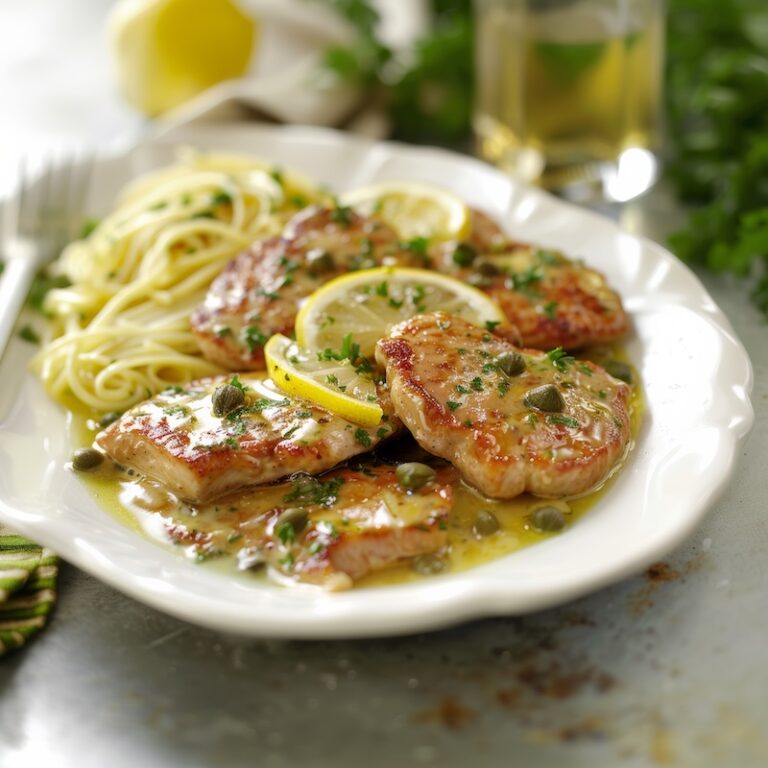

Veal Francaise
Ingredients
- 1 lemon juiced
- 1 lemon slice thin for garnish
- 2 eggs beaten
- 1 pound veal cutlets boneless - 8 cutlets
- salt and pepper to taste
- flour for dredging cutlets
- 2 tablespoons olive oil
- ½ cup chicken stock
- ½ cup dry white wine
- 2 tablespoons butter
- ½ cup heavy cream optional
- 2 tablespoons fresh parsley minced
Instructions
- Prep the ingredients, including juicing one lemon and slicing the other.
- Flatten the veal cutlets to a uniform ¼ inch thickness by placing them between two sheets of wax paper and hitting them with a meat hammer, rolling pin, or saucepan.
- Season the cutlets with salt and pepper.
- If frying four cutlets at a time (see note below), dredge 4 in the flour, knocking off any excess flour, and then into the beaten egg.
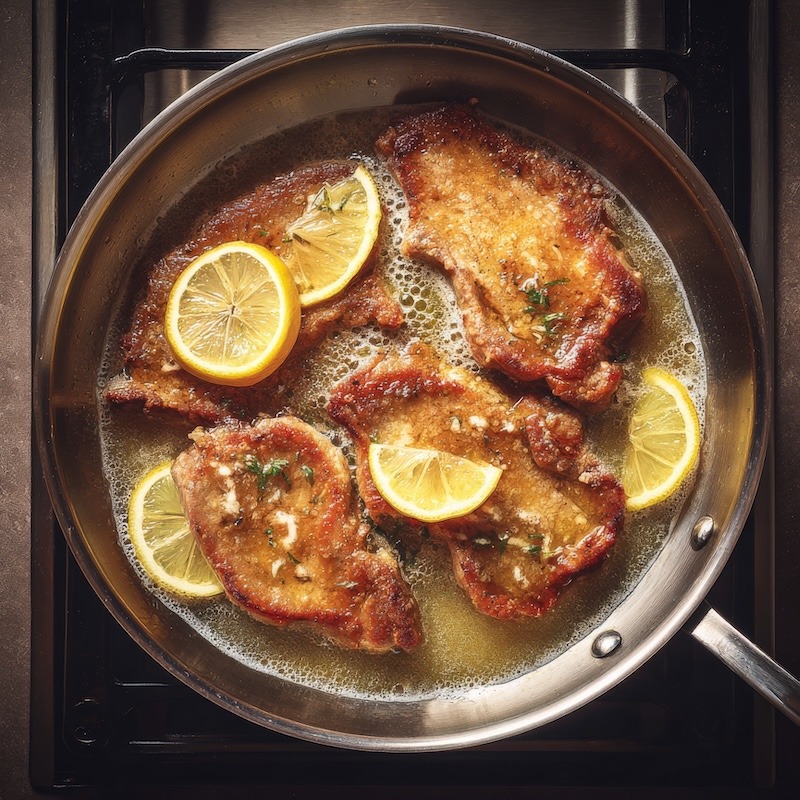
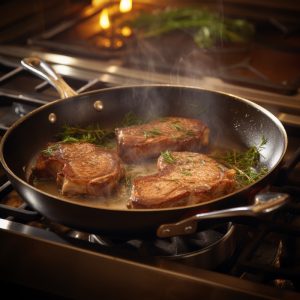
- Heat your fry pan over medium-high heat. Add one tablespoon of olive oil to the pan, and when hot, add the four coated veal cutlets.
- Cook for 2 minutes on one side, flip, and another 2 minutes on the other.
- Transfer the four cutlets to a plate, cover them with foil and keep them warm.
- Repeat the same process with the other four cutlets.
- After removing the last four cutlets from the pan, reduce heat to medium, add the chicken stock, lemon juice, and wine, and stir to combine.
- After 3 minutes, whisk in the butter one tablespoon at a time, and then the heavy cream if using.
- Return the reserved veal cutlets to the pan and cook for a couple of minutes to reheat and combine with the sauce.
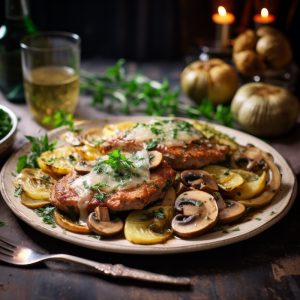
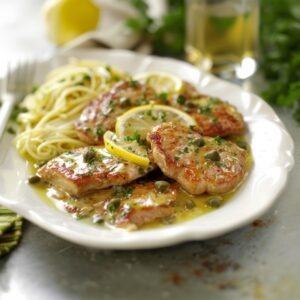
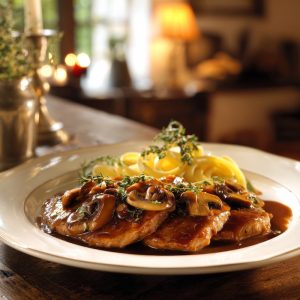
- Add sauce to each plate, top with two cutlets, a little more sauce, and sprinkle with minced parsley.
- Serve.
Notes
What Most Cooks Get Wrong

Common Mistakes to Avoid
- Skipping the pounding step: Uneven cutlets cook unevenly. Thin spots dry out while thicker areas stay underdone.
- Using too much flour: A heavy dredge creates a pasty coating instead of a light, delicate layer that lets the sauce shine.
- Overheating the pan: Too much heat browns the coating too fast and can burn the butter before the veal is cooked through.
- Crowding the pan: Packing in too many cutlets drops the temperature and prevents proper browning. Work in batches if needed.
- Adding lemon too early: Lemon juice loses its brightness when cooked too long. Add it at the end for a fresh, clean flavor.
- Overcooking the veal: Veal cutlets cook quickly. Even an extra minute can make them lose their tenderness.
- Not reducing the sauce enough: A thin sauce slides off. Reduce it slightly so it lightly coats the veal.
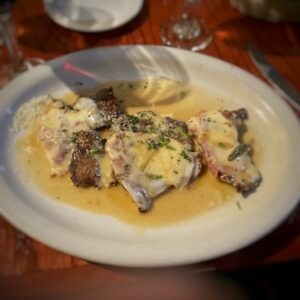
When my friend told me this would be the best Italian food ever, I felt the challenge of finding something on the menu to test his bravado. As soon as I saw veal Francaise, I thought back to my days in New York City when I used to go to a now-closed restaurant called Guido’s in the back of Supreme Macaroni.
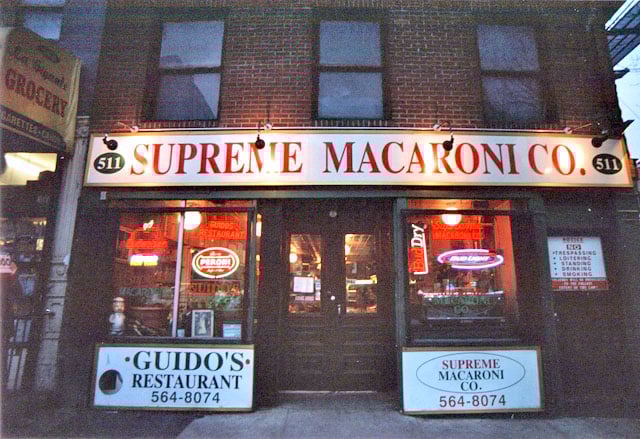 Supreme Macaroni Restaurant in NYC
I’ve written about Guido’s in a post about the best chicken piccata and how it was where they shot the cover for Billy Joel’s The Stranger Album. They also had the best veal Francaise ever, so now I had something to compare with, although it’s been over 30 years since I’ve been to Guido’s.
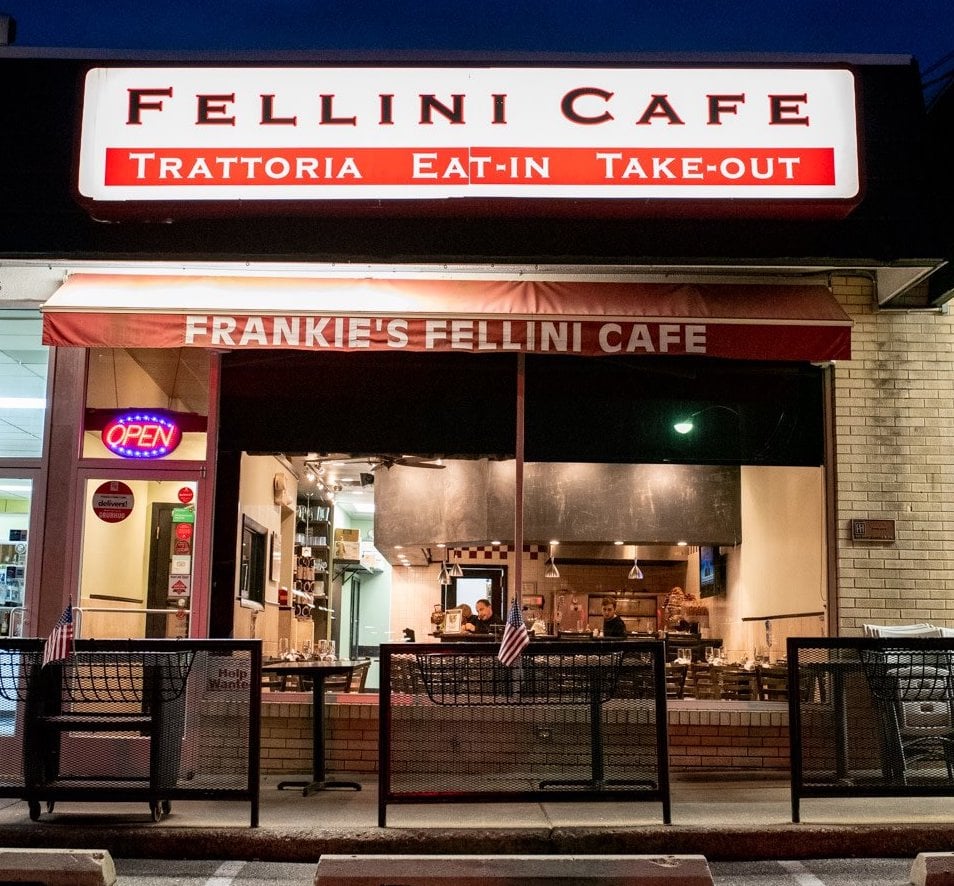
Last night, my wife and I enjoyed a marvelous dinner with our next-door neighbors. Bob and Barbara took us to their favorite local Italian restaurant, Frankie’s Fellini Cafe, which they promised would offer the best Italian food in the area.
This BYOB spot is in a mini strip mall. Its all-glass front gives a clear view of the bustling inside. The spot is cozy and has about 20 tables.
We were greeted by Frankie, who has been in the restaurant business since 1978 and has run this Berwyn, PA, location for 12 years. They make homemade pasta, fresh bread, and hand-filled cannoli from scratch.
The restaurant isn’t fancy or pretentious. The wait staff makes you feel right at home from the moment you sit down—my kind of place.
30 Responses
Absolutely the Best!!!! I also sauteed mushrooms to add to sauce at end!!!
Absolutely delicious … wish I could pin it ???
Thanks Jennifer.
Where can I buy your book please?
Hi Veronica, no need to buy. I posted all the content on my website for you to go and check out.I decided I would rather post the content rather than sell the ebook.
Make this dish every holiday! Thanks for sharing your version
`Have always wanted to make veal and chicken francaise and found your recipe . Had veal ready to go today and I am so glad I tried your recipe!! It was absolutely delicious!!! Simple, easy and turned out amazing!! I love to cook and really surprised that I hadn’t tried a franchise recipe before, guess just I thought it as more complicated. I have now bookmarked it so I’ll always have it. Thanks so much for sharing.
You are very welcome and thanks for reaching out.
I have enjoyed Veal Franchaise my whole life!
This recipe is the prize winner of them all!!
Thank you so much for posting this great recipe!
Rob
Robert, you are very welcome and thanks for letting me know.
I’ve had many different versions of veal francais and I have to say that this was the best I’ve had. I’ve served it over the holidays and my children (who are very picky eaters) absolutely loved this. Thank you.
Stacey, thanks for letting me know. Much appreciated.
I tried this recipe for the first time, and made the sauce without adding cream. My children loved the taste of the veal, both with and without sauce. Thank you!
Hi Kamilia, you are welcome and thanks for letting me know.
I want to make this but always use c
Sherry in chicken French. Is there a reason for white wine?
It’s up to the individual’s taste. If you like sherry, go for it. White wine is more traditional but go for what you like.
O!M!G! This recipe is amazing. It turned out as good as any I’ve had in 5-star restaurants in New York. This is my new favorite veal recipe. I can’t have cream, so I used whole milk and a little added flour to the sauce to thicken it up just a bit. And I adore the flavor of lemon, so I used 2 lemons- I may have had small lemons, IDK, but it tasted amazing. I will be making this again and again and again.
Thanks for letting me know, and love your substitution of whole milk.
I had to make some significant modifications for diet reasons. Almond flour and non-dairy creamer. I also added mushrooms and capers. The almond flour didn’t really work but it was still really good! I hope my digestive system is ok with this. I need some real food!
Love the mushrooms and capers. Thanks for letting me know.
Overall, it was very good but needed help. Before the cream, the sauce was too thin and lemony. After the cream, it was bland. There was no seasoning in the sauce. I added thyme, salt, pepper, and garlic and brought it to a boil for a couple of minutes after I added the cutlets back in so the flour would help to thicken the sauce. With roasted asparagus and ziti, it was very good. Also – I used the whole sauce recipe with a half pound of veal, which was just enough. It does not need sliced lemon- that would be lemon overkill.
Thanks for the suggestions.
I am making this recipe for the first time tonight.
Q. Do you flour the veal before the egg then into the pan with oil ?
Yes, it is flour than egg. Happy Cooking!
What if I don’t have white wine or alcohol for the sauce? Can something be subbed for that?
Hi Chelsi. Thanks for reaching out. Check out my post on Alcohol Substitutions for some ideas. It’s at https://www.reluctantgourmet.com/alcohol-substitutions/
I’ve never known your story. Most likely, too frazzled to pause. Making this dish for dinner tonight. Thank you for sharing your recipe.
Hi Deb, you are welcome and thanks for reaching out.
I tried it and thought it very good. However I left out the heavy cream. I have never seen that in a francaise recipe in 50 years. Where did you find it? To me It destroys the delicate flavors (fat kills flavor) and just adds unnecessary calories. I’m curious if you found it in old recipes? I’m always curious to learn!
Hi Jody, thanks for reaching out. Traditionally, veal Francais is not made with cream. That said, some modern restaurant versions (and home cooks) do enrich the sauce with a splash of cream to make it smoother and a little more indulgent. It’s more of a variation than a standard, similar to how some people add cream to chicken piccata even though it’s not traditional. If you’re going for authenticity, skip the cream. If you want a richer, restaurant-style twist: a small splash of cream can balance the sharp lemon and give the sauce a velvety texture.