
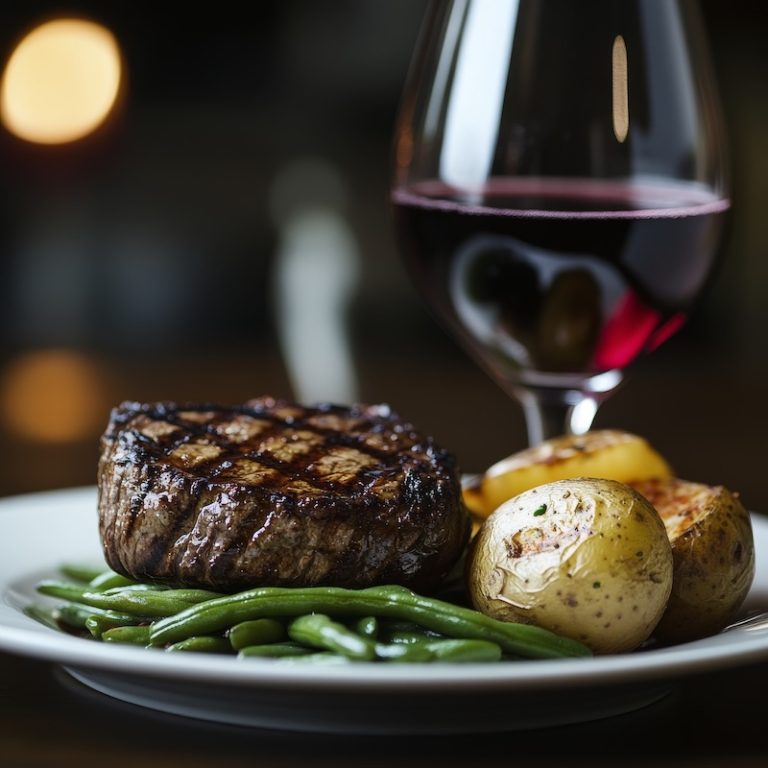
Wine pairing rules are real. Acid really does cut through fat. Tannins really do soften when paired with a good steak. I’m going to walk you through why these things work, because once you understand the why, you stop needing to memorize a chart every time you open a bottle.
But here’s the thing nobody says out loud: none of this is a law. It’s a set of odds. Follow the rules and you’ll probably get a better pairing. Ignore them because you’re in the mood for a big red with your salmon, or a chilled white with your steak? Also fine. I’d rather you enjoy the bottle in your hand than send it back because a guide told you it was wrong.
So here’s the deal for this whole page: I’m going to give you the real logic behind good pairings — not just a list to memorize, but the reasons for the list. Once you have the reasons, you’ll know when to follow them and, just as important, when not to.
Fast Answer
Three principles cover most wine-pairing decisions: match the wine's weight to the dish's weight, use acid to cut through fat and richness, and lean on regional logic when you're stuck. Everything else in this guide is just an application of those three ideas — and none of them outrank what you actually want to drink.
The Framework Behind Every Great Match (and Why It's Not the Whole Story)
Wine pairing has a reputation for being complicated. It isn’t — but most advice out there treats it like a rulebook you’re supposed to pass a test on, instead of a set of tools you can pick up or set down as you like.
The rules aren’t wrong. Acid cuts fat. Tannin softens next to protein. These are real chemical things happening in your mouth. But rules without a “why” are just trivia, and trivia doesn’t help you when the situation doesn’t match the rule — or when you just don’t feel like following it tonight.
So let’s get the logic straight. Once you have it, you can use it as much as you want.
Start Here: Three Principles That Cover Most Situations
- Match weight to weight. A delicate dish — steamed fish, a light salad — usually wants a light wine. A rich dish — braised short rib, a cream pasta — usually wants something full-bodied. Go too heavy and the wine steamrolls the food. Go too light and the wine disappears next to it.
- Use acid as a tool. Acidic wines refresh your palate against fat and richness. It's why Champagne loves fried food, why Sauvignon Blanc works with goat cheese, why a high-acid Chianti cuts right through a fatty Bolognese. When you're not sure what to open with something rich, reach for acidity.
- Lean on regional logic. Foods and wines from the same place grew up together — same ingredients, same traditions, same palates shaping both for centuries. Italian wine with Italian food. Spanish wine with Spanish food. It's not a rule so much as a shortcut, and it works more often than not because someone already worked it out for you a long time ago.
- Drink what you like — full stop. This is the one that actually matters most. These three principles improve your odds of a great pairing. They don't hand you a verdict, and they definitely don't override what you're in the mood for. If you want a chilled white with your steak, pour it. Will a big Cabernet probably pair "better" with that ribeye, by the numbers? Sure. But "probably works better" isn't a rule you're breaking any laws to ignore — it's a suggestion, and you're allowed to want what you want.
Why Wine Pairing Works: The Mechanisms Behind the Rules
If you want to know why these things happen instead of just taking my word for it, here's the actual mechanics. I like knowing why something works — it's the difference between following a recipe and understanding a kitchen.
- Acid cuts fat. Fat coats your palate and mutes flavor. Acid dissolves that coating and hands your taste buds back to you. It's the same reason a squeeze of lemon wakes up a piece of salmon — an acidic wine is doing that same job, just in liquid form.
- Tannins and protein interact. Tannins are the compounds that make red wine feel dry and grippy on its own. Put them next to protein and they soften up — that's why a tannic Cabernet tastes almost sharp by itself but turns smooth alongside a ribeye. Put that same wine next to fish, which has very little protein and a lot of delicate fat, and it can taste metallic and heavy-handed. Doesn't mean you can't do it. Just means you'll notice the difference.
- Sweetness moderates heat. Chili heat gets amplified by alcohol and tannin, but calmed down by a little residual sugar. That's the whole reason off-dry Riesling is a classic with spicy Thai food, and why a big tannic red can make a hot dish taste even hotter.
- Complementary flavors reinforce each other. A buttery, oaked Chardonnay with butter-poached lobster. A minerally Chablis with oysters. Similar flavors played together amplify each other — both the food and the wine end up tasting more like themselves.
- Contrasting flavors create balance. Salty prosciutto against sweet melon. Sharp blue cheese against a honeyed Sauternes. Contrast works when the two things are far enough apart that each one makes the other sharper — not so far apart that they just clash and cancel out.
Wine Grape Reference Guide
Thirty grape varieties, sortable by body weight and filterable by style. Search by grape name, flavor, or food — type "salmon" or "spicy" or "mushroom" and the table shows you which wines apply. Click any column header to sort.
| Grape ↕ | Style ↕ | Body ↕ | Key flavors ↕ | Regions ↕ | Best food pairings |
|---|
Quick Reference & Pro Tips
- Champagne and sparkling wine go with almost everything. High acid, bubbles that cut fat, lower alcohol — it's the most food-friendly category there is. Fried food, salty food, seafood, even pizza. When you genuinely don't know what to open, open something with bubbles.
- Rosé is more versatile than people give it credit for. A dry Provençal rosé sits right between white and red and covers a lot of ground — grilled fish, light pasta, charcuterie, vegetables. It's not the "safe" choice people treat it as. It's a legitimately good one.
- Match intensity, not category. A light, delicate Pinot Noir can work beautifully with salmon. A full-bodied oaked Chardonnay can hold up to pork tenderloin. Don't let the color of the wine boss around the more important question, which is how heavy it is next to your food.
- Acidity in the dish wants acidity in the wine. A tomato sauce, a vinaigrette, a dish finished with lemon — all of these need a wine that can keep up. A flat, low-acid wine next to a bright, acidic dish is going to taste dull by comparison.
- Salty food loves acid or a little sweetness. Salt makes tannin and bitterness feel harsher than they are. If a dish is heavily salted or seasoned, I'd steer away from a big tannic red and toward something with good acidity or a touch of sweetness instead.
- The aperitif rule. Whatever you're sipping before dinner shouldn't outshine what you're pouring with dinner. Start simple, build from there.
Food & Wine Pairing Helper
Tell the tool what you're cooking — the protein, sauce style, cooking method, and dominant flavor — and it returns ranked wine recommendations with a one-line explanation of why each pairing works. The more inputs you fill in, the more specific the suggestions get. Start with just the protein if that's all you know.
Make your selections above to see wine recommendations.
What People Get Told They're Doing Wrong (and Why I Don't Fully Buy It)
A lot of pairing advice spends its time telling you what not to do. I think most of it is more "here's what usually works better" dressed up as "here's what's wrong" — so take these as informed opinions, not violations.
- "Red with meat, white with fish" isn't wrong, it's just incomplete. Salmon with Pinot Noir works. Grilled swordfish with a full-bodied white works. A light chicken piccata with a light red works. Weight and cooking method matter more than the color of the wine — but if you love a rule-breaking combo, that's not a mistake, that's just your palate telling you something the chart didn't account for.
- The sauce usually matters more than the protein. Chicken in a tomato-herb sauce wants a different bottle than the same chicken in a cream sauce. If you're only pairing to the protein, you're pairing to the wrong thing half the time.
- Cooking method changes the wine, too. Grilling brings char and smoke that can stand up to a bolder wine. Poaching gives you something delicate that wants something lighter. Same fish, two different techniques, two different bottles make sense.
- Temperature matters more than people think. Red wine served too warm tastes boozy and flat. White wine served too cold goes numb and mute. Reds are usually best around 60–65°F, whites around 45–50°F — a little cooler and a little warmer than most people default to.
- Expensive doesn't mean better paired. A $15 Muscadet with oysters will beat a $60 oaked Chardonnay with oysters, every time. The right bottle for the dish isn't necessarily the most impressive one on the shelf.
- You don't need one wine for the whole meal. If you're doing multiple courses, you don't need a single bottle that does everything. You need the right wine for each course — start light, build toward richer wines as the meal goes on.
And after all that: if you read through every one of these and still want to open a big red with your fish tonight, do it. I've had pairings on paper that should've been perfect and tasted flat, and "wrong" combinations that I still think about years later. The chart doesn't get a vote on that.
Food and Wine Pairing Checklist
Thirty grape varieties, sortable by body weight and filterable by style. Search by grape name, flavor, or food — type "salmon" or "spicy" or "mushroom" and the table shows you which wines apply. Click any column header to sort.
0 of 10 steps reviewed
Explore More on This Topic
- Classic Food Pairings Guide — The same principles that govern food pairings apply to wine — an interactive ingredient finder covering herbs, proteins, cheeses, and fruits with the mechanism behind every pairing explained.
- Veal Marsala — Why the red wine pan sauce in a Marsala uses the same pairing logic — the wine in the pan and the wine in the glass point toward each other for exactly the reasons this page explains.
- Burgundy Sauce — A red wine reduction sauce that makes the regional pairing obvious — Pinot Noir reduced with shallots and demi-glace, where the sauce and the table wine are effectively the same bottle.
- Umami and Why It Matters — Why umami-rich dishes deepen with earthy wines — understanding the fifth taste explains why mushrooms and aged cheeses pull wine pairings toward specific earthy, mineral styles.
- Pasta with Garlic and Oil — The simplest Italian dish and why Italian wines suit it perfectly — aglio e olio in its purest form, and a live demonstration of why regional terroir logic works better than any pairing chart.
- Chicken Marsala — A dish where the wine in the sauce points toward the wine in the glass — the same terroir and pan-sauce logic as Veal Marsala applied to a weeknight-friendly preparation.