
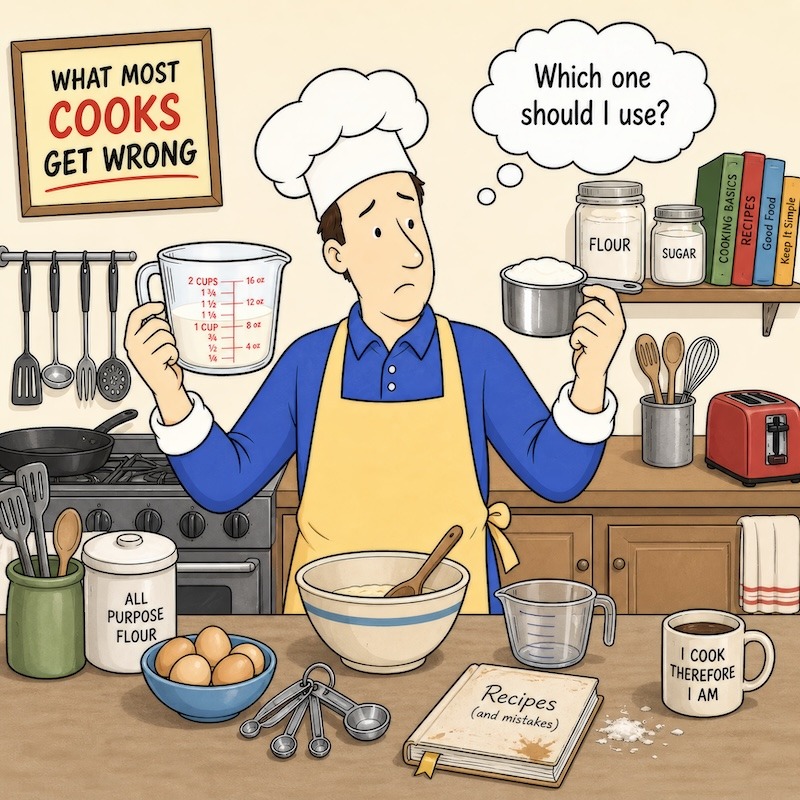
What Most Cooks Get Wrong
- Too much batter in the pan: it makes a thick pancake instead of a crepe, and it won't cook through evenly.
- Too little batter: the crepe tears the moment you try to flip it.
- Flipping too early: follow the 75/25 rule — about three-quarters of the cook time on the first side, a quarter on the second.
- Adding too much flour at once: it gets lumpy fast; add it gradually and whisk as you go.
- Walking away: these cook in under a minute per side — the batter goes from pale to golden brown faster than you'd expect.
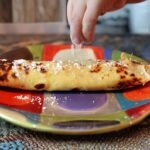
Crepes or Danish Pancakes
How to make my favorite Danish Pancakes
Servings: 3 people
Equipment
- whisk
- small bowl
- spatula
- small nonstick pan
- measuring spoons
- measuring cups
Ingredients
- 2 eggs
- ⅛ teaspoon salt
- 1 cup flour
- 1⅛ cup milk
- ¼ stick butter melted
- ½ teaspoon sugar optional
Instructions
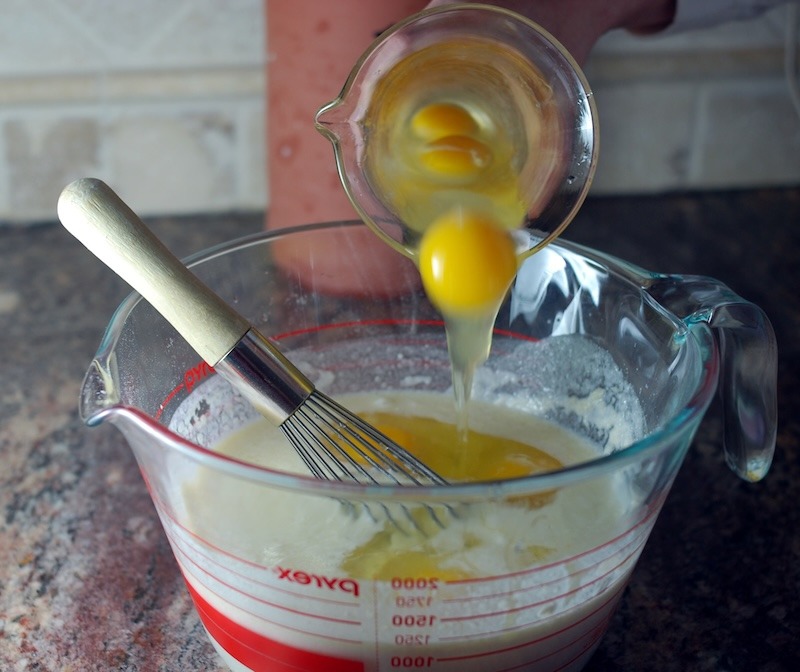
- Crack the eggs into a small bowl and whisk in the salt until the mixture turns fully yellow, with no streaks left.
- Add the flour gradually — a scoop at a time, leveled off with the flat side of a knife — whisking after each addition. The batter will look lumpy at first; keep going.
- Add the milk the same way, a little at a time, whisking until the lumps disappear and the batter pours smoothly, about the consistency of heavy cream.
- Let the batter rest 10 to 15 minutes at room temperature, or refrigerate it overnight if you're prepping ahead.
- Heat an 8-inch nonstick pan over medium heat. It's ready when a flick of water sizzles and evaporates on contact.
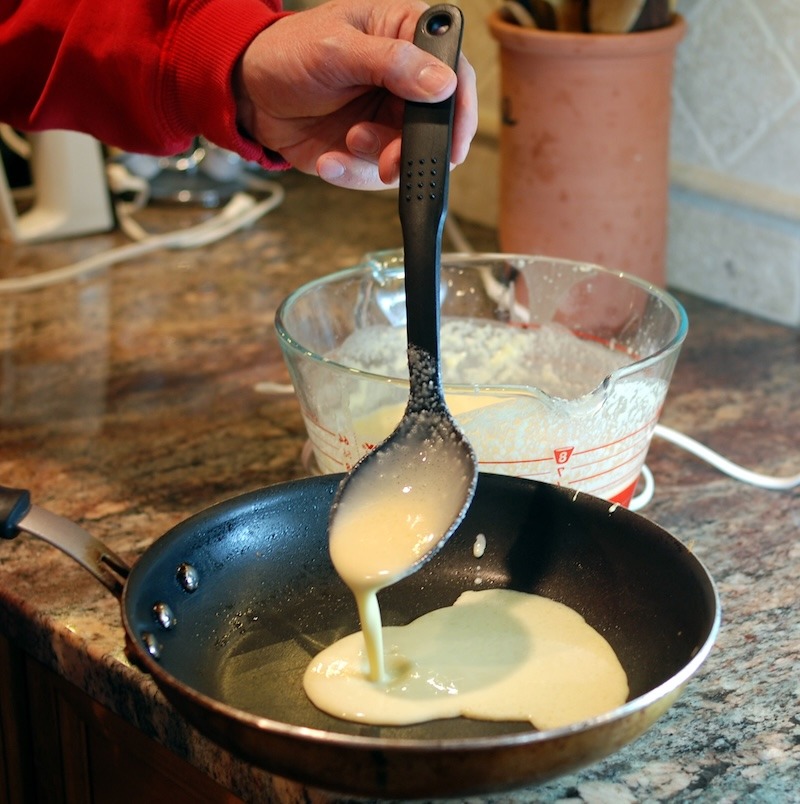
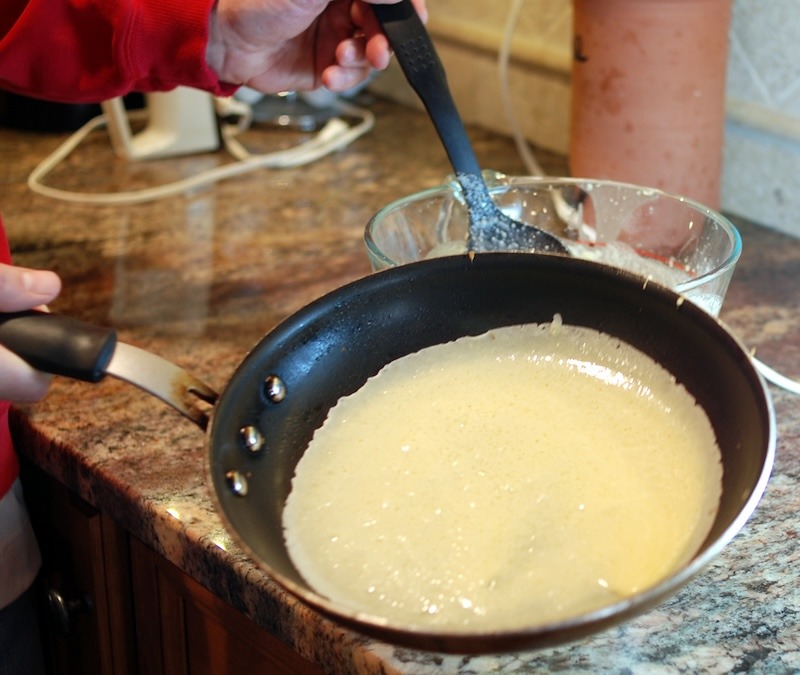
- Pour in just enough batter to coat the bottom of the pan, tilting immediately to spread it thin and even. Cook until the edges turn golden and start to pull from the pan — about 75% of your total cook time.
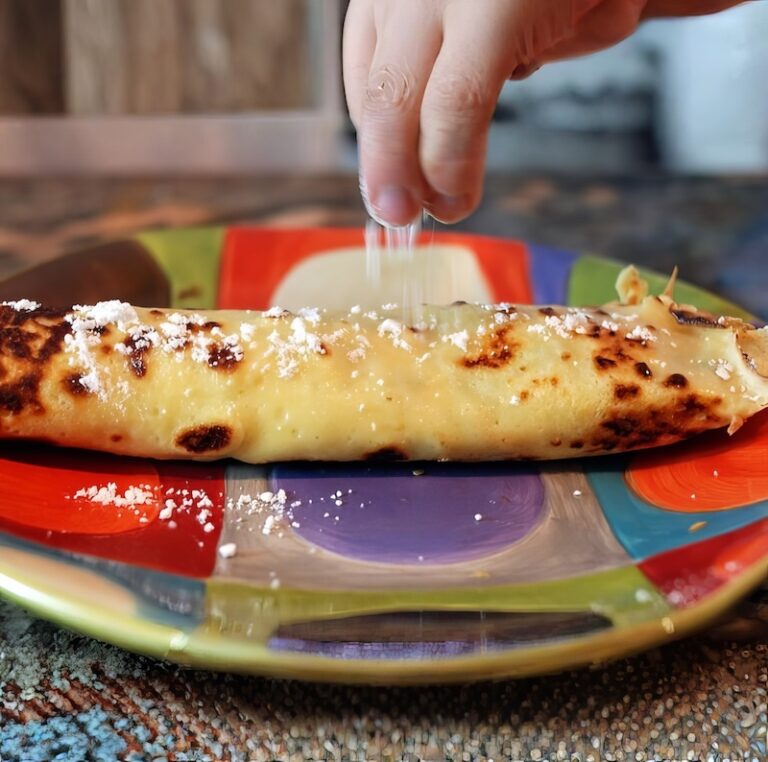
- Flip and cook the remaining 25% of the time, then slide onto a plate.
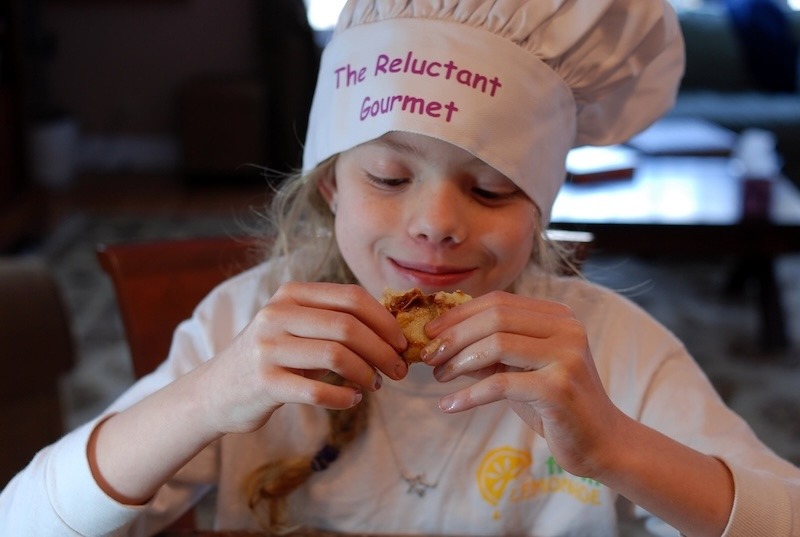
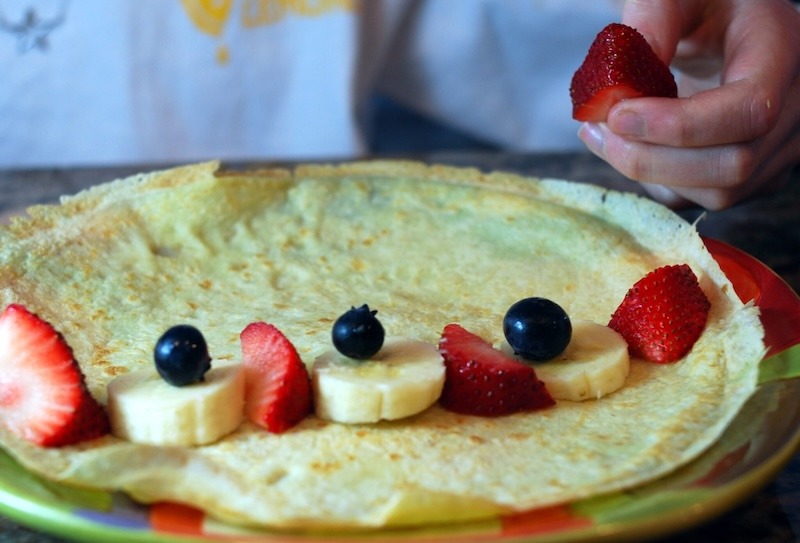
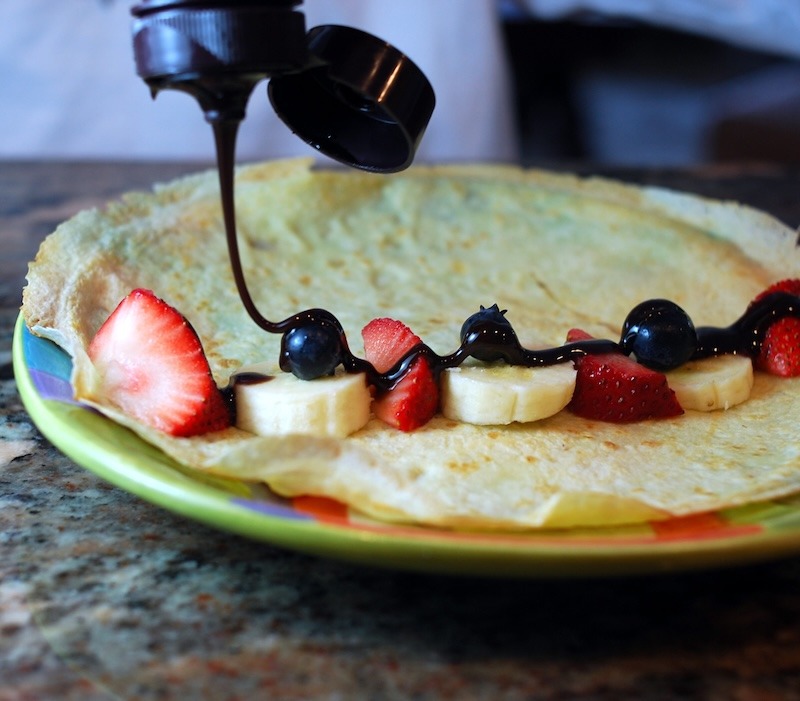
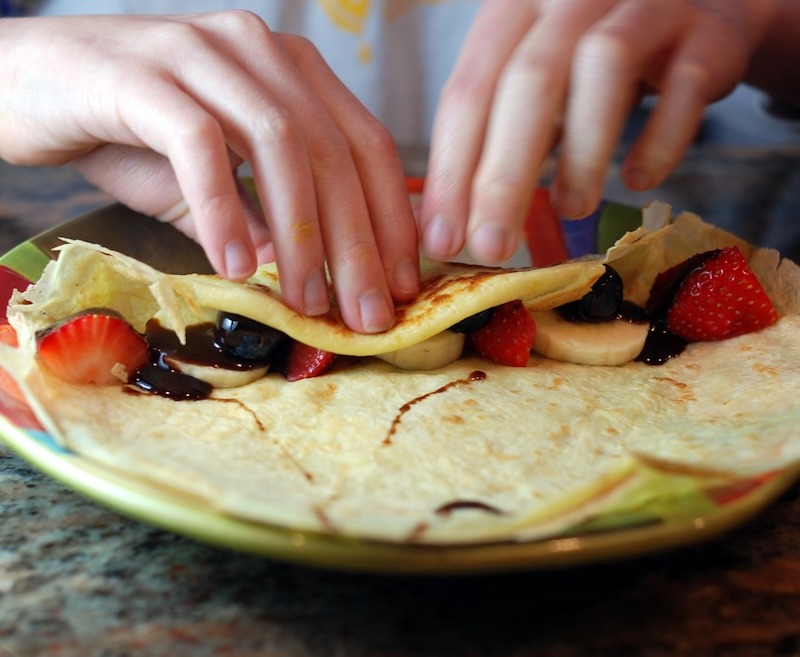
- Fill, roll, and serve immediately. Expect the first one to tear or fold wrong — that's normal, not a failure.
21 Responses
We have been using this recipe for years. At our house, we call these “German Pancakes”, our grandchildren’s favorite dish.
Hi Trudy, I guess every country has a version of these pancakes by a different name. Thanks for commenting.
Great post, Maddie! And your crepes/pandekagers turned out beautifully! Your dad really puts you to work when you have snow days, huh? 🙂
Hey Jenni, I’ll show this to Maddie but please don’t remind her too much. – RG
We love this recipe for Mother’s Day. Especially when children can get involved.
all the best,
Sherry + Wendy
As an American immigrant in Denmark for almost 20 years, I spread tyttebær (Ligonberry) or Bosenberry jam on top of the panakager, roll them up, and soak them with Vermont Maple Syrup. (I import it a gallon at a time).
As long as the panakager have no sugar in the recipe and you don’t add confectioners sugar, the Maple Syrup + either of these jams will provide more than enough of a sweet taste, while the pancakes provide the right texture, especially if they are crispy! I far prefer these to my old love, American pancakes.
Best
Hi Maddie! Good for you making Danish Pancakes in 5th grade. It was probably right around then my Mom started letting me help make them (taught me to pour them, flip them–we used to comment on what the shape was and what animals we would see in the cooking patterns). Danish Pancakes were my Mom’s favorite thing to cook for us on the weekends and to date they’re still my favorite food. You might be interested in knowing Danish pancakes are VERY different from French crepes in that the pancake flavor should NOT be overwhelmed by fillings (or the light coating of jelly we were taught to put in ours) whereas French crepes, crepes from just about everywhere else have little to no flavor. That’s what differentiates Danish Pancakes from “crepes” and IMO, it’s a huge difference. I’m 45 and still make them regularly. I’d honestly never seen a written down recipe as my Mom taught us to make them from memory, feel, consistency, etc… Anyway, thanks for the post. People should know just how much the Danes have added to world cuisine beyond the pastry! Good Job!
Good job with the recipe, some of my best memories as a child in Denmark are my mother making pancakes on a Sunday afternoon and serving them rolled up with vanilla ice cream, yummy, such an easy treat to make with the kids on an afternoon and a way to create memories.
Thanks Birgit. Haven’t rolled them with ice cream yet. I’m afraid to suggest that to the kids. – RG
They look really yummy. My Mother made them for me too when i was little and the father of friends i grew up with too.
We often ate them filled with homemade Strawberry jam, which in my opinion has way more flavor and a better sweet/sour ratio then the store bought and is easy enough to make. My other two favorites would be with apple slices baked in when the upside of the pancake is still slightly moist and sprinkled with cinnamon. Harder to flip but well worth the effort as i love apples in autumn and winter. But as i prefer savory food over sweet most of the time, i also make pancakes with slices of middle aged cheese, usually Gouda. I also often substitute normal flour with whole wheat, gives the pancakes a nuttier flavor and makes them naturally sweeter in my experience. Wow, wrote a lot there… in the end, theirs nothing you cant put on your pancakes if you want ^^ Keep up the good work, i will surely rummage around a bit more on this site. greetings from northern Germany. Anna
Great post. My dad taught me how to make pancakes, but have to admit that I never had the nerve to flip them in the air the way he did.
Pancakes with ice cream is probably the national dessert here in Denmark, and people can have very strong opinions on how they should taste. Some people add Vanilla to the batter but personally I add cardamom – I love the stuff so I just add a lot (approx 1 – 2 tsp.) – It really makes them extra tasty. Also try substituting half the milk with beer – besides adding flavour it makes them more crispy.
You make yours the same way I make mine. Cardamom and beer MAKE the Danish pancake in my opinion. My mother only adds 80mL of beer rather than replacing half the milk with it, but that may be because she didn’t want too much beer in the pancakes for kiddos. 🙂
I add vanilla, but did it on my own. My Mom added neither cardamom nor vanilla, though I will say she used a good deal more sugar than is in this recipe (IIRC, she used ~1/2 cup). I’m not a fan of beer in any shape or form, so that’s right out, but hey, it’s always nice to hear from someone back in the land of the Aesir.
My Danish exchange student and my two kids made this last night after supper. It was so good 🙂 And I believe the kids and hubby enjoyed as well! I’m sure we will be making these again!!
Thank you for sharing – I loved this recipe.
They taste just as the ones my daddy used to make. 😀
Have been trying to find a similar tasting recipe for a while now.
You are very welcom Mallory and thanks for letting me know.
We used to eat Swedish Pancakes when I was a kid, but our neighbor christened them, “Latex Pancakes” and that’s what we always called them. Anyway, I have been researching pancakes and, as far as I can tell, there are a few differences between crêpes and Swedish, Danish, Dutch, German and English pancakes. The differences consist of the proportions of flour, eggs and liquid.
Swedish: 1/2 cup flour : 1 cup milk : 4 eggs
Danish, German, Dutch: 1 cup flour, 1-1/8 cup milk : 2 eggs
English: 1 cup flour : 1 cup milk : 1 egg
French crêpes: 1 cup flour, 1 cup milk, 6 eggs
(I should note here that the recipes in all of these countries vary a lot from cook to cook.)
Swedish pancakes have very little flour but lots of eggs. They are really fragile, but delicious with the traditional lemon juice and powdered sugar. The German, Danish, Dutch and English pancakes were all about the same, a thicker batter and a sturdier pancake (though the English seem to skimp on the eggs). In French Crêpes the proportion of eggs is very high but there is more flour in relation to the wet ingredients than in Swedish pancakes. The difference in the Crêpe recipe makes them tender but sturdy. They can stand up to the lumpiness of the savory as well as the sweet, fruit fillings used in France. (I have also seen crêpe recipes that are almost identical to the Danish one above.) The German, English and Scandinavian pancakes are almost exclusively eaten with light, sweet fillings such as jam or lemon juice and powdered sugar and they don’t need to be as sturdy.
Thanks for sharing your research Jake.
That was a fantastic recipe! I got out of the bathtub to find my poor Danish husband trying to make pancakes for himself and our kids with another recipe, and he’d forgotten the eggs. Needless to say it went horribly wrong so I cleaned it up and found this recipe. I now have happy kids and a happy Dane. Thanks!
My husband says his Granny made something like this but included apples in the batter while cooking and they were served like pancakes with syrup, not rolled up with a filling. She wasn’t a very good cook he says, so it had to be simple. Has anybody seen a version like that? Would adding the apple slices affect the outcome?
My Lithuanian mociute (granma) would lock the kitchen door when she cooked her special dishes. Once, she let me see her make blinai or crepes. She put sour creme in the batter, then rolled them up with like sweet ricotta cheese and fruit jam. Maybe some apricot schnapps too!!